Artwork
Untitled
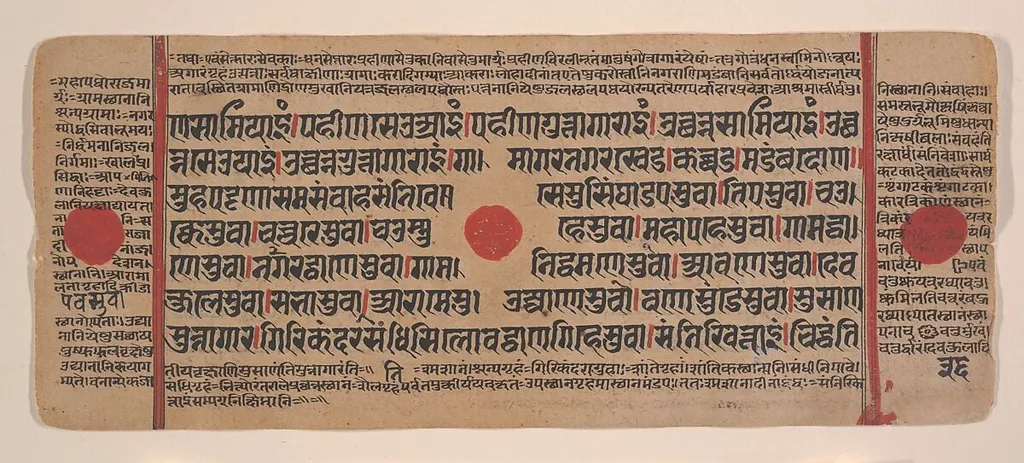
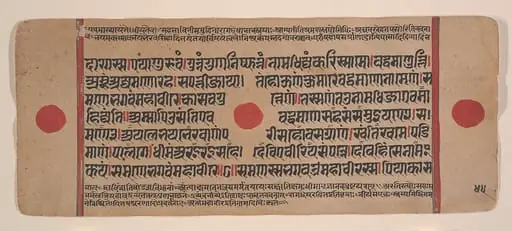
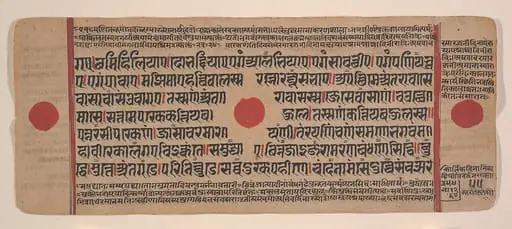
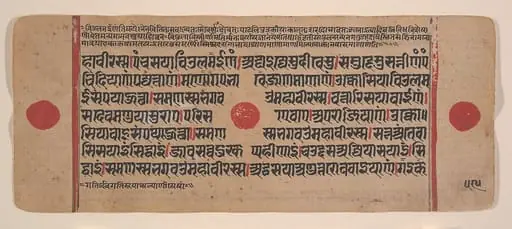
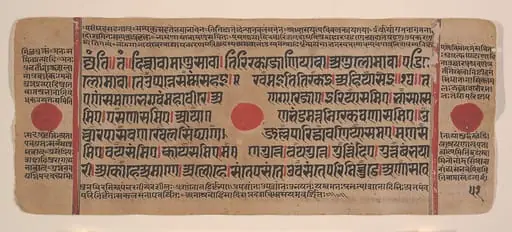
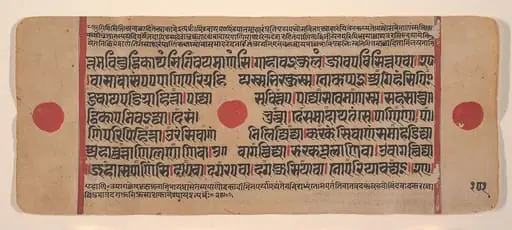
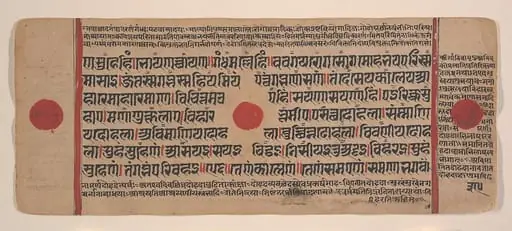
Untitled is a watercolor painting. It dates from 1449 and is held in the collection of the Metropolitan Museum of Art.
About this work
Subject & Meaning
The inclusion of gold leaf alongside the pigments underscores the spiritual significance and sacred nature of the subject matter within the Jain tradition.
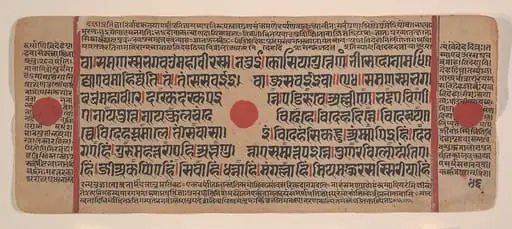
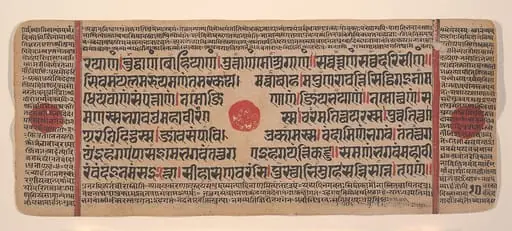
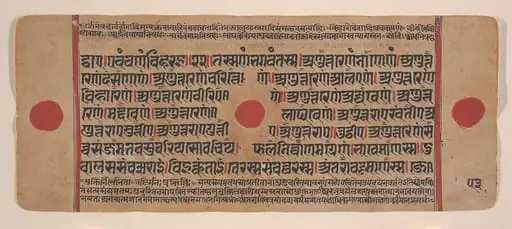
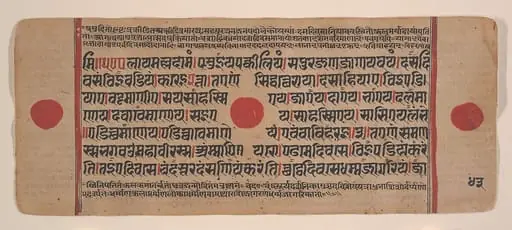
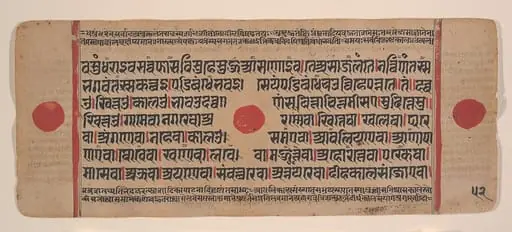
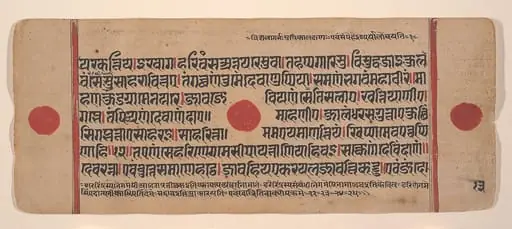
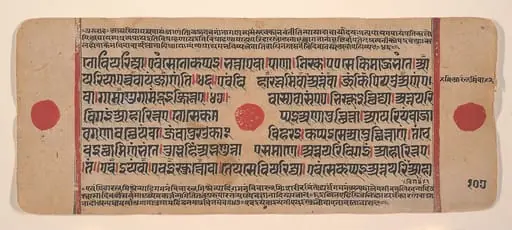
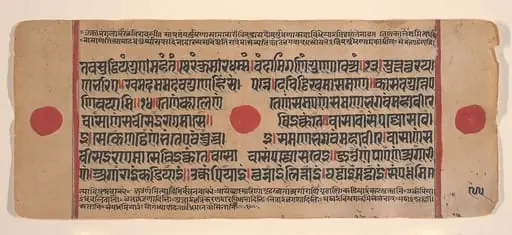
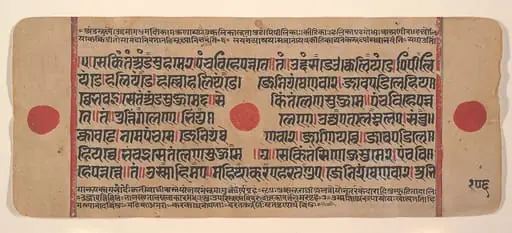
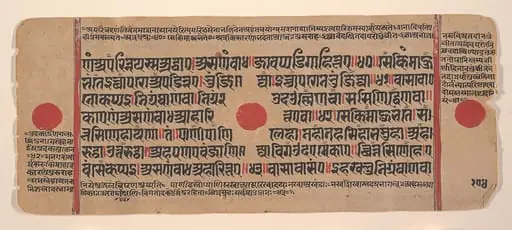
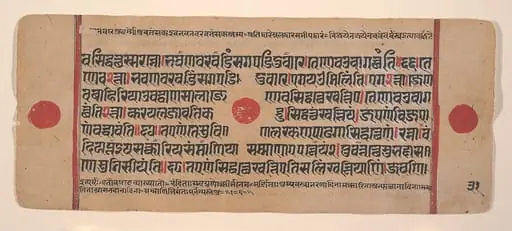
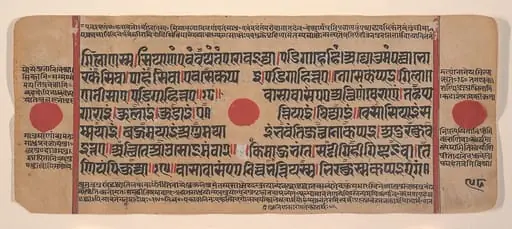
Created in 1449 in India, this anonymous work is a religious painting that depicts themes central to Jainism. Executed in ink, opaque watercolor, and gold on paper, the piece functions as a visual representation of Jain doctrine rather than a narrative scene of specific historical figures. The inclusion of gold leaf alongside the pigments underscores the spiritual significance and sacred nature of the subject matter within the Jain tradition.
As a religious artifact from the mid-15th century, the artwork serves to illustrate core iconographic elements of the faith, utilizing the medium to convey reverence and devotion. Its classification as religious art confirms that its primary purpose is symbolic and liturgical, reflecting the artistic conventions and theological priorities of Jain communities in India during this period.
Technique & Style
Created in 1449 in India, this religious painting depicting Jainism utilizes ink, opaque watercolor, and gold applied to a paper support. The work measures 11.1 cm in height by 27 cm in width. Attributed to an anonymous artist, the piece is classified as a painting within the collection of the Metropolitan Museum of Art.
The combination of gold with opaque pigments and ink on paper reflects specific material choices characteristic of the region and period, though detailed information regarding the object's current physical condition or specific handling history is not provided in the available records.
History & Provenance
Created in 1449 in India, this anonymous painting on paper was executed using ink, opaque watercolor, and gold. The work, classified as a religious genre piece depicting Jainism, measures 11.1 cm in height and 27 cm in width. No specific commission details or named artist are recorded in the available data, as the piece is attributed to an unknown painter.
The object eventually entered the collection of the Metropolitan Museum of Art, where it is currently held under the accession number MET 55.121.38.105. The creation history reflects the artistic traditions of mid-15th century India, though the specific circumstances of its initial acquisition or patronage remain undocumented in the provided sources.
The work is held in the collection of the Metropolitan Museum of Art in New York, where it is assigned the accession number 55.121.38.105. Created in 1449, this anonymous painting on paper depicts religious scenes related to Jainism and originates from India. While the provided records confirm its current institutional location and cataloging details, no specific exhibition history or past display dates are documented in the available sources.
Overview
This untitled painting, executed with ink, opaque watercolor, and gold on paper, originates from a Jain manuscript created in Gujarat, India. It depicts a central female figure, possibly a deity or revered teacher, seated on an ornate golden throne. The composition emphasizes a flat, gilded background, characteristic of manuscript illumination, with smaller figures kneeling respectfully at her feet.
Context
This painting is an integral component of a Jain manuscript, a type of illustrated religious text produced in Gujarat, India. Jainism, the belief system it illustrates, advocates for principles of non-violence and meticulous self-conduct. Such manuscripts served as important vehicles for disseminating religious teachings and stories, making art a vital part of spiritual practice and community life in the region.
Artist & collection