Artwork
Untitled
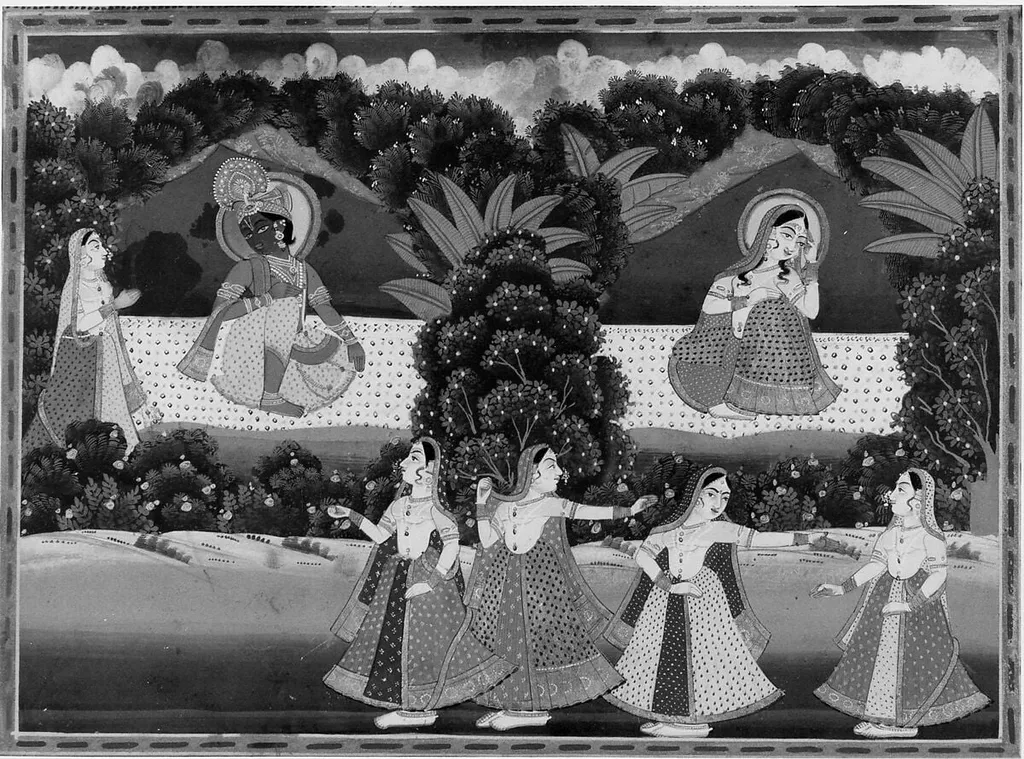
Untitled is a silver painting. It dates from 1900 and is held in the collection of the Metropolitan Museum of Art.
About this work
Subject & Meaning
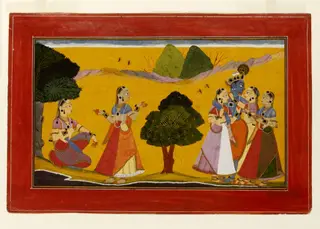
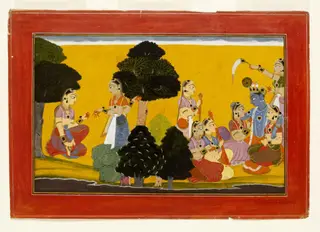
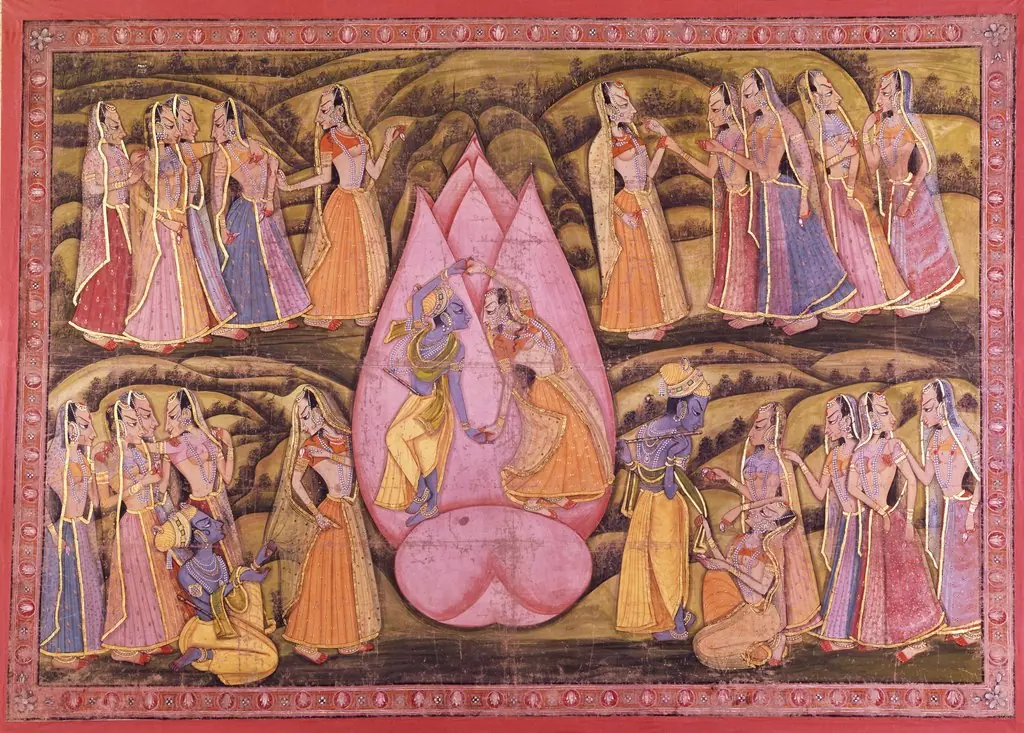
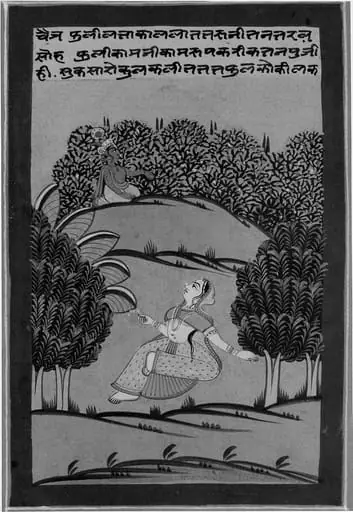
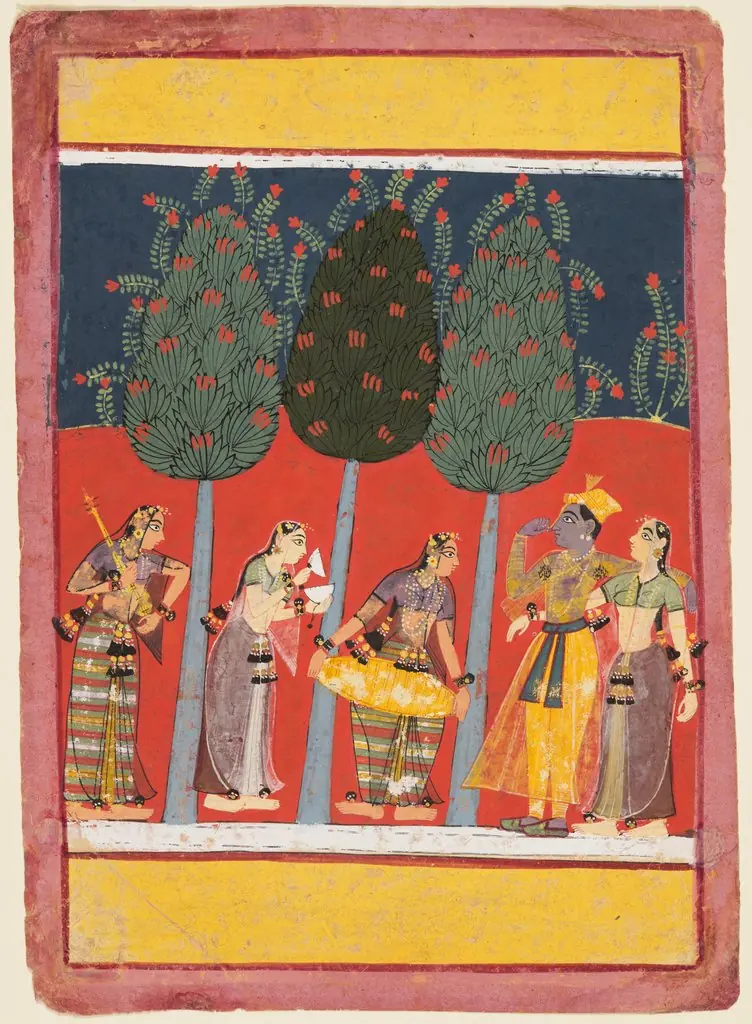
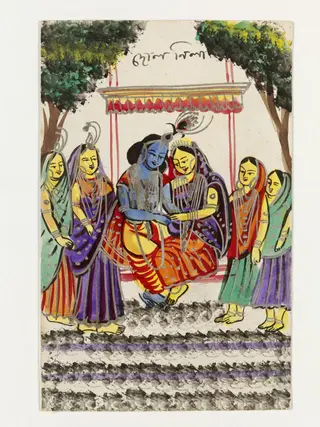
The untitled painting depicts the Hindu deities Krishna and Rādhā alongside a female figure, rendered in color with gold and silver on paper.
The untitled painting depicts the Hindu deities Krishna and Rādhā alongside a female figure, rendered in color with gold and silver on paper. Classified as a landscape genre work, the composition situates these divine and human subjects within a natural setting, a common convention in Indian devotional painting traditions where pastoral environments frame the sacred relationship between Krishna and his consort Rādhā. The use of gold and silver pigments on paper suggests the work belongs to the courtly or devotional manuscript and miniature tradition of India, where precious materials signaled both spiritual significance and artistic refinement.
The pairing of Krishna and Rādhā, central figures in Vaishnavite theology, typically represents divine love (bhakti) and the soul's longing for union with the divine, while the inclusion of a woman may indicate a broader narrative scene or attendant figure within the devotional landscape.
Technique & Style
Created in India around 1900, this anonymous landscape painting utilizes color pigments enhanced with gold and silver on a paper support. The work measures approximately 22.2 by 29.8 units. Stylistically, the composition functions as a narrative scene depicting the divine figures Krishna and Rādhā accompanied by an additional female figure.
The application of metallic elements alongside standard colors suggests a decorative approach typical of the region's artistic traditions during this period, integrating sacred iconography within a naturalistic setting.
History & Provenance
Created in 1900 in India, this landscape painting on paper utilizes color, gold, and silver to depict Krishna, Rādhā, and a female figure. The work was produced by an anonymous artist, with no specific commissioner identified in available records. Following its creation, the piece entered the collection of the Metropolitan Museum of Art, where it remains housed.
The museum lists the work's inception date as January 1, 1900, and records its dimensions as 22.2 by 29.8 units. While the exact chain of ownership prior to the museum's acquisition is not detailed in the provided sources, the work is currently classified within the museum's paintings department as a product of early twentieth-century Indian art.
The work is held in the collection of the Metropolitan Museum of Art, where it is catalogued as a landscape painting on paper. According to the Wikidata record, its inception is dated 1900-01-01 and it was made in India. The painting measures 22.2 cm in height by 29.8 cm in width and is executed in color with gold and silver on paper. No specific accession number, acquisition details, or prior exhibition history are documented in the available sources.
Overview
This untitled painting, rendered in color, gold, and silver on paper, depicts two figures under a tree. A woman in a red sari holds hands with a man in blue, their garments and the surrounding foliage adorned with metallic leaf. The artwork's creator and precise date of origin remain unknown, contributing to its enigmatic character. Despite its age, the piece retains a subtle luminosity, reflecting its original intent.
Context
Although the specific identities of the figures are not explicitly stated, the visual elements and symbolic use of materials align with themes prevalent in devotional art from the Indian subcontinent. The depiction of a divine couple in a natural setting, emphasized by precious metals, often illustrates stories from Hindu mythology, particularly those involving deities like Krishna and Radha. This artwork likely served as a visual aid for meditation or storytelling within a spiritual tradition.
Artist & collection