Artwork
Untitled
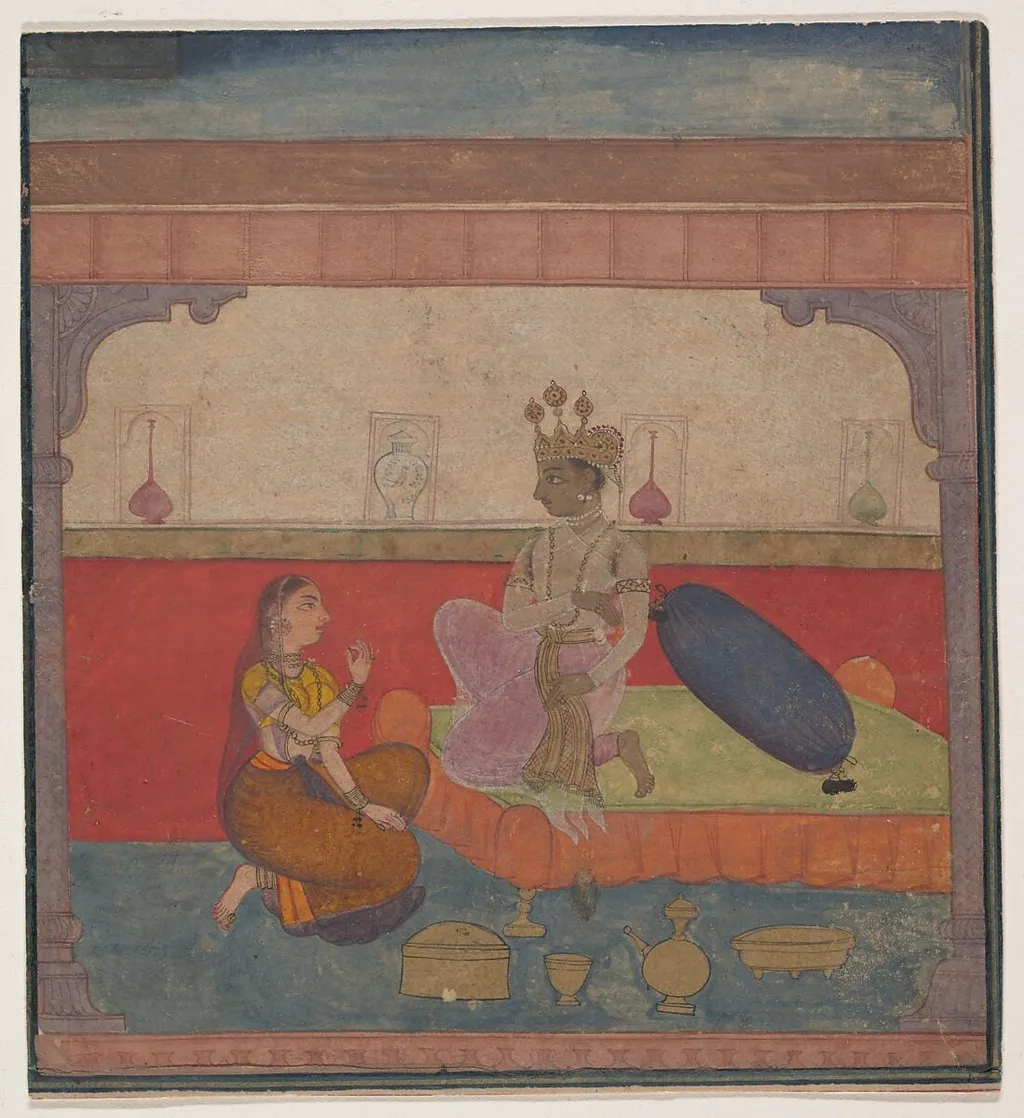
Untitled is a watercolor painting. It dates from 1610 and is held in the collection of the Metropolitan Museum of Art.
About this work
Subject & Meaning
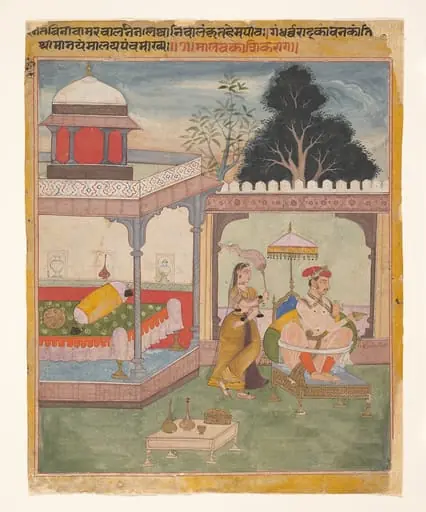
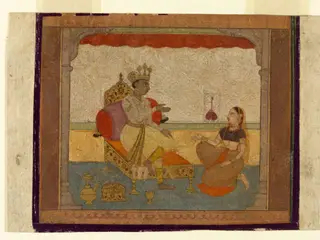
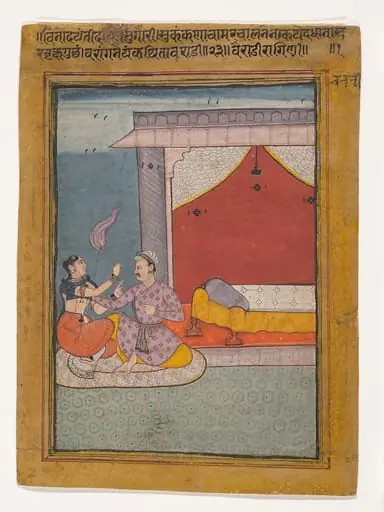
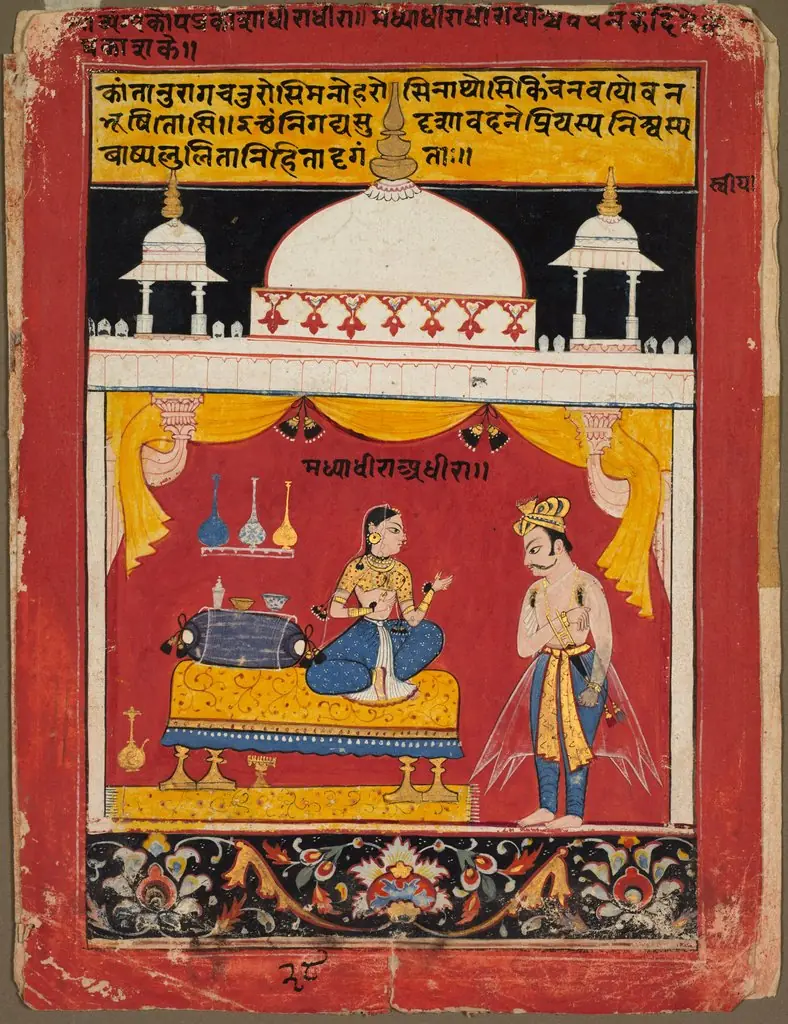
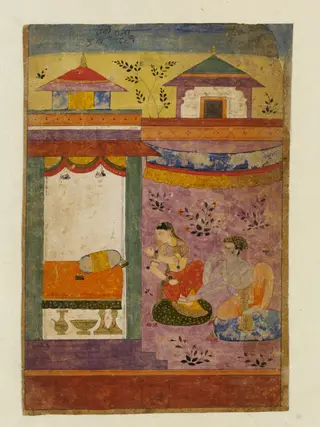
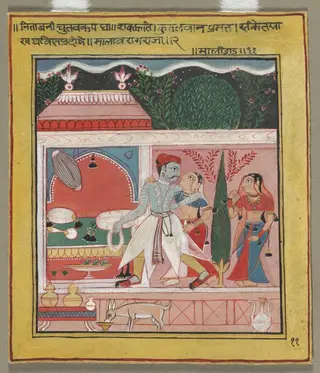
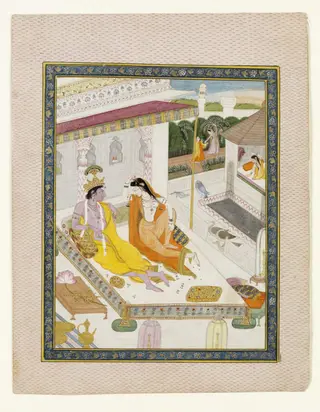
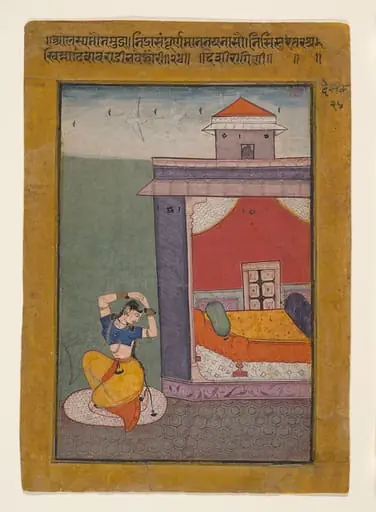
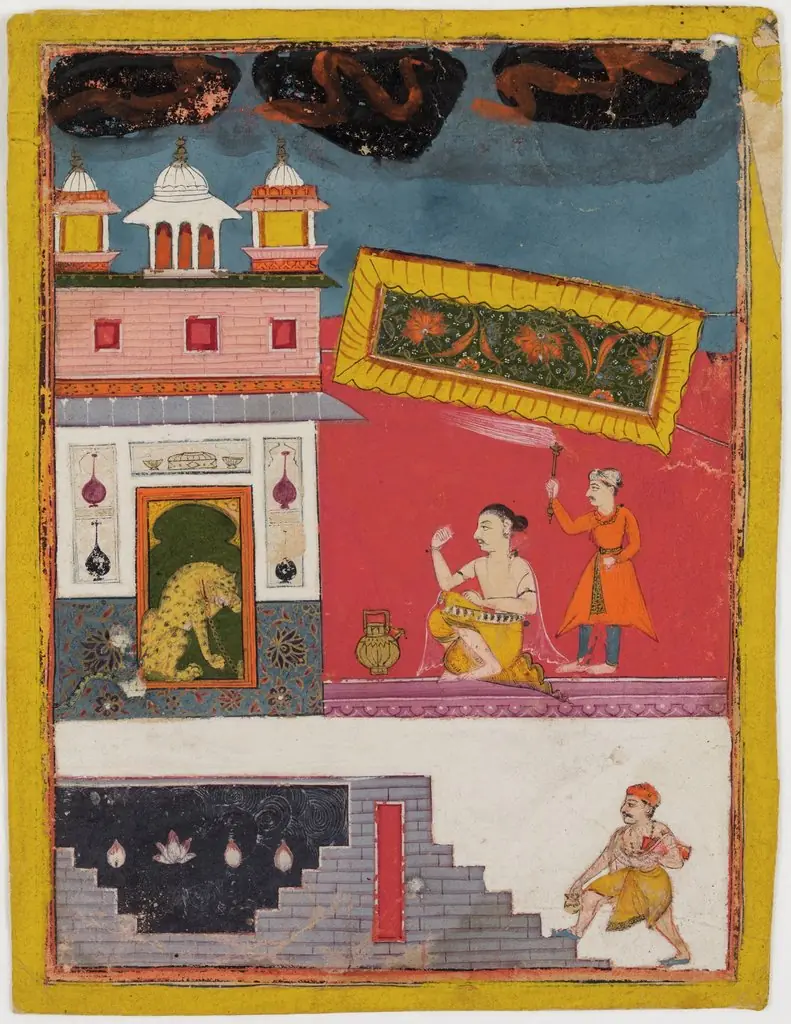
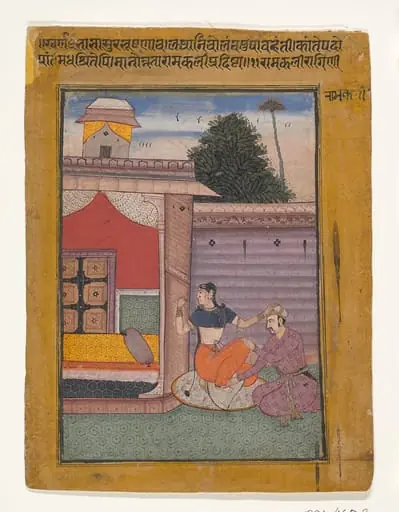
The work depicts the divine figures Krishna and Rādhā, central to Hindu religious iconography, situated within an intimate domestic setting that includes a bed.
The work depicts the divine figures Krishna and Rādhā, central to Hindu religious iconography, situated within an intimate domestic setting that includes a bed. Created in India around 1610, the painting utilizes ink, opaque watercolor, and gold on paper to illustrate this devotional scene. The presence of a woman alongside the primary deities suggests a narrative context often associated with the romantic and spiritual union of the divine couple.
As a religious genre piece, the imagery symbolizes the themes of divine love and devotion characteristic of the period's artistic output in India. The composition focuses on the interaction between these figures, emphasizing their spiritual significance through the medium's luminous qualities.
History & Provenance
The artwork titled Untitled is an anonymous Indian painting created in 1610. Executed in ink, opaque watercolor, and gold on paper, the religious piece depicts the figures of Krishna and Rādhā alongside a bed and another woman. While the specific commissioning patron and the detailed chain of ownership prior to its current location are not documented in the available records, the work is attributed to an unknown painter active in India during the early seventeenth century.
The piece is currently held within the collection of the Metropolitan Museum of Art, where it is recognized as a significant example of anonymous Indian religious art from the specified period.
The work is held in the collection of the Metropolitan Museum of Art, where it is located, as recorded in its institutional data. Created in India in 1610, the painting is catalogued within the museum's holdings of paintings, executed in ink, opaque watercolor, and gold on paper. Beyond its current placement at the Metropolitan Museum of Art, no specific accession number or exhibition history is documented in the available sources.
Overview
This small, untitled painting on paper utilizes ink, opaque watercolor, and gold to depict a nocturnal scene. It features a man and a woman reclining on a bed, enveloped by dark trees under a sky illuminated by gold leaf. The artwork's intimate scale and delicate execution contribute to its serene atmosphere, inviting close contemplation of the depicted narrative.
Technique & Style
The artist employed meticulous technique, evident in the tiny brushstrokes that render intricate details such as the jewels adorning the figures and the delicate folds of their garments. The application of gold leaf creates a luminous effect, suggesting a radiant night sky and imbuing the quiet scene with a subtle, otherworldly glow. This precision enhances the painting's refined aesthetic.
Context
This painting belongs to a tradition of art originating from India, specifically associated with the Rajasthan region. Such works often served as illustrations for devotional texts or as independent expressions of religious narratives and poetic themes. The style and subject matter are characteristic of the courtly painting traditions that flourished in various Rajput kingdoms, reflecting their cultural and spiritual values.
Artist & collection