Artwork
Untitled
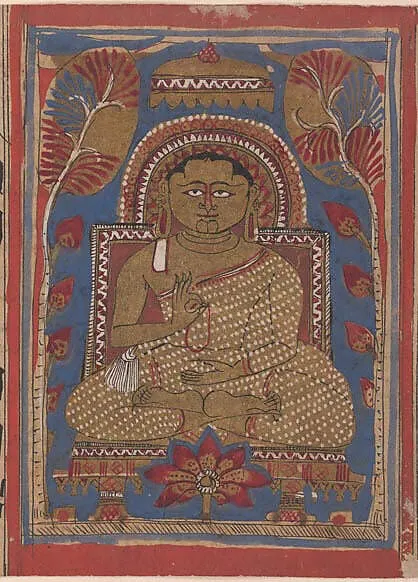
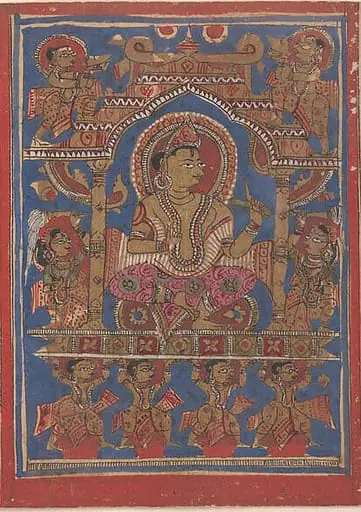
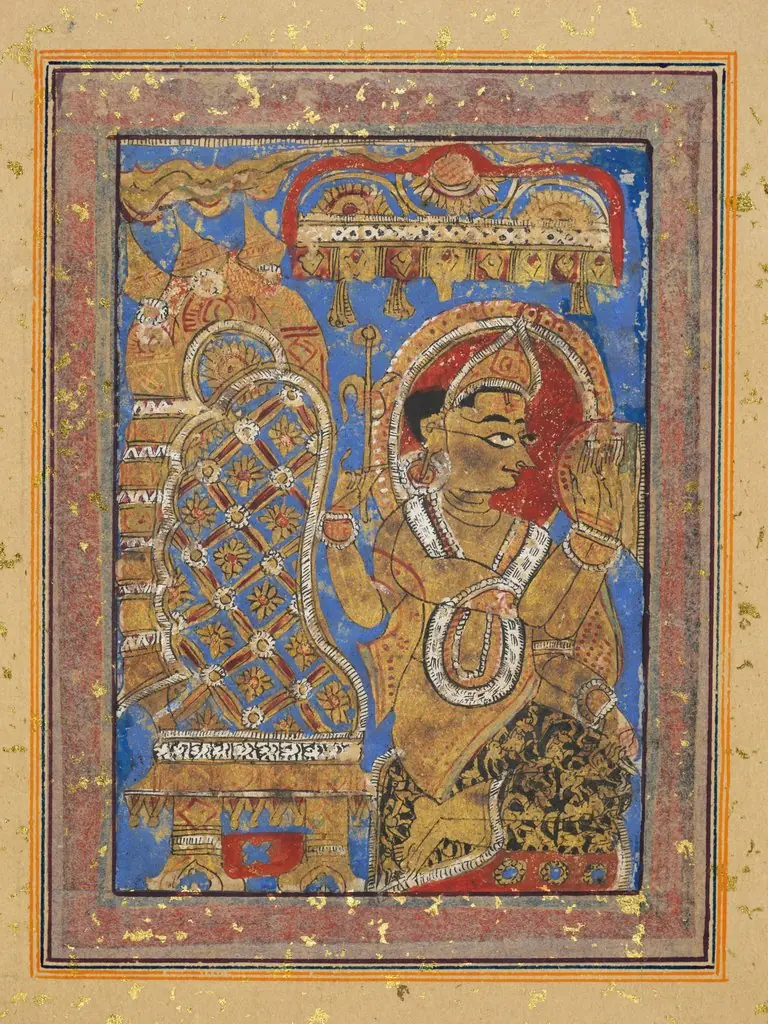
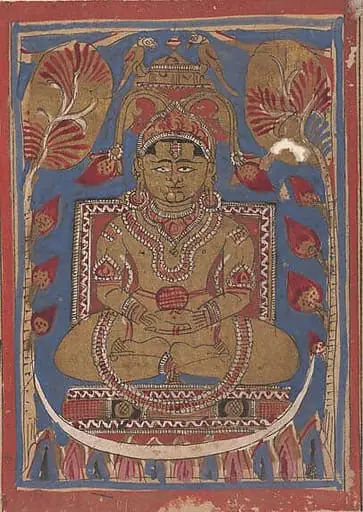
Untitled is a watercolor painting. It dates from 1449 and is held in the collection of the Metropolitan Museum of Art.
About this work
Subject & Meaning
The use of gold and opaque watercolor on paper is consistent with luxury manuscript and devotional production in the period.
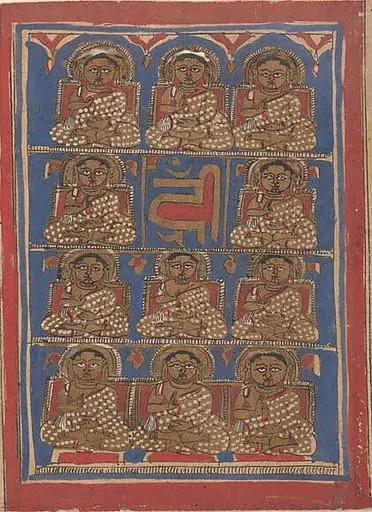
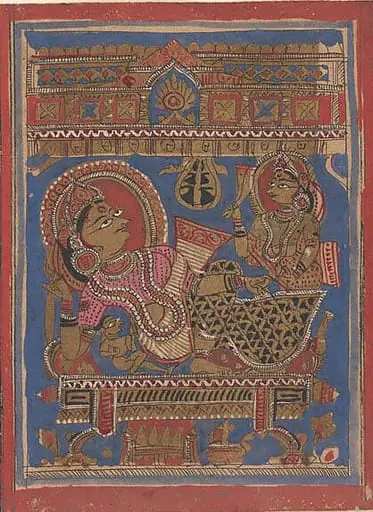
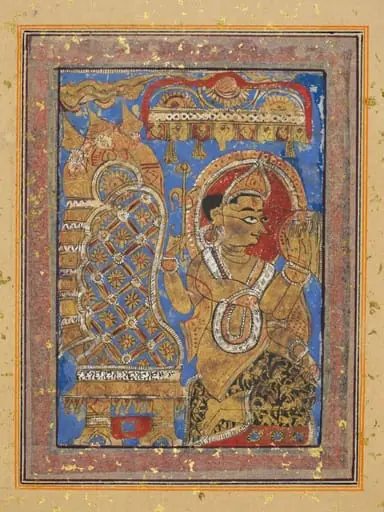
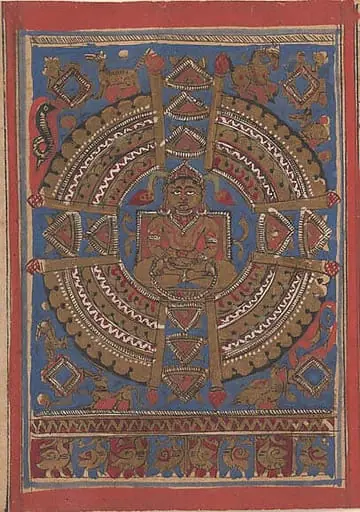
The painting depicts Jainism, situating it within the religious art tradition of 15th-century India. As a work of religious genre, it embodies the spiritual and doctrinal concerns of Jain practice, though the specific iconographic details, such as particular Tirthankaras, symbols, or narrative scenes, are not specified in the available sources. The use of gold and opaque watercolor on paper is consistent with luxury manuscript and devotional production in the period. Without further description of figures, emblems, or textual inscriptions, the precise symbolic program remains undefined.
Technique & Style
Created in 1449, this religious painting employs ink, opaque watercolor, and gold applied to a paper support. The work originates from India and measures 11.1 cm in height by 27 cm in width. As a Jainist manuscript illumination, the artist utilizes gold to highlight specific elements within the composition, a common practice in the region's devotional art of the period.
The medium of opaque watercolor allows for the creation of solid, vibrant forms typical of the genre, while the inclusion of gold suggests a level of luxury and reverence appropriate for the depicted subject matter.
History & Provenance
The work titled Untitled is dated to 1449, as recorded in the corpus entry and confirmed by its inception date in the Wikidata entry. It was produced in India by an anonymous painter using ink, opaque watercolor and gold on paper, a technique typical of Jain religious paintings of the period. The painting belongs to the religious art genre and portrays Jainism.
According to the Metropolitan Museum of Art records, the piece is part of the museum’s collection, indicating its transfer from its place of origin to institutional ownership. No documentation of a specific commission or subsequent owners is provided in the sources.
Overview
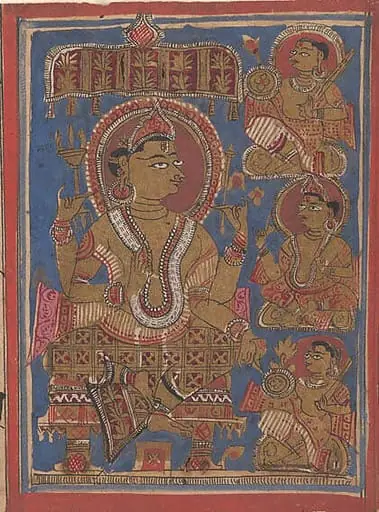
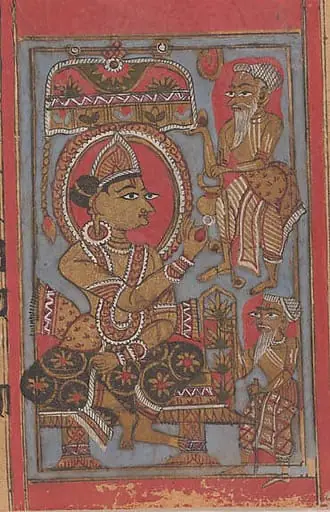
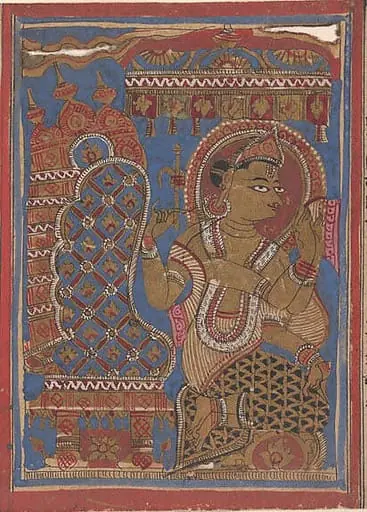
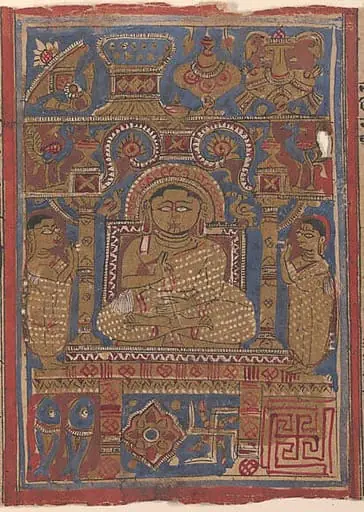
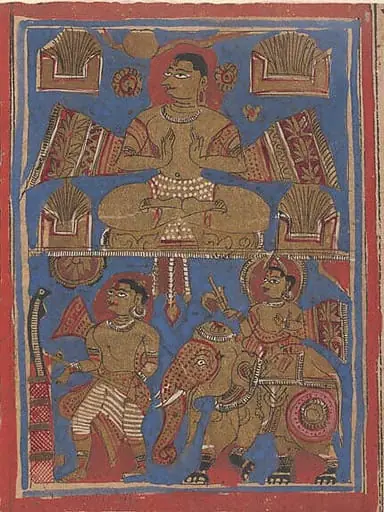
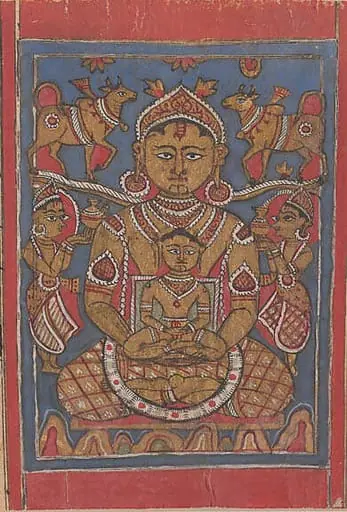
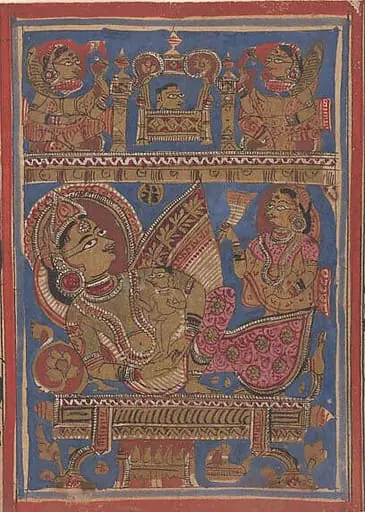
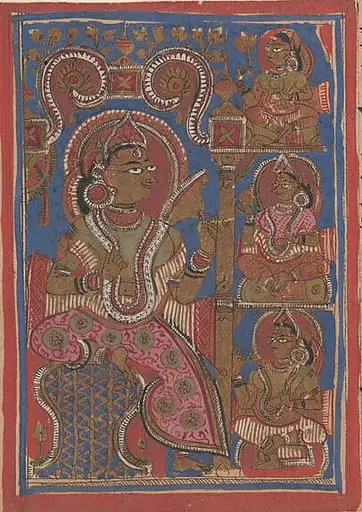
This untitled painting, rendered with ink, opaque watercolor, and gold on paper, originates from a Jain manuscript created in Gujarat, India. The small, vibrant composition depicts a woman in a red sari seated beneath a tree, cradling a baby. Two men are shown bowing before her, suggesting a moment of reverence or narrative significance within the Jain tradition.
Context
As a page from a Jain manuscript, this painting is part of a rich tradition of illustrated religious texts from Gujarat, India. Such manuscripts served to disseminate and preserve Jain teachings and stories through both text and visual art. The artwork provides insight into the visual culture associated with Jainism, a religion emphasizing non-violence and spiritual liberation.
Artist & collection