Artwork
Untitled
Untitled is a watercolor painting. It dates from 1449 and is held in the collection of the Metropolitan Museum of Art.
- Accession no.
- 55.121.38.9
- Credit line
- Rogers Fund, 1955
About this work
Subject & Meaning
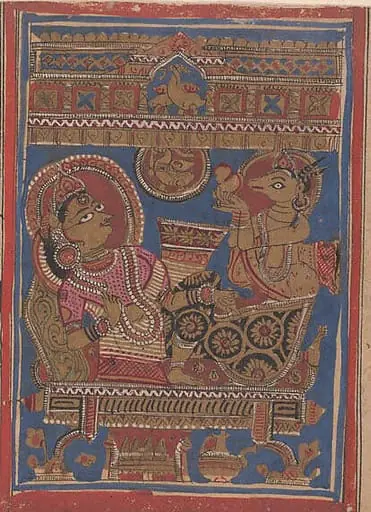
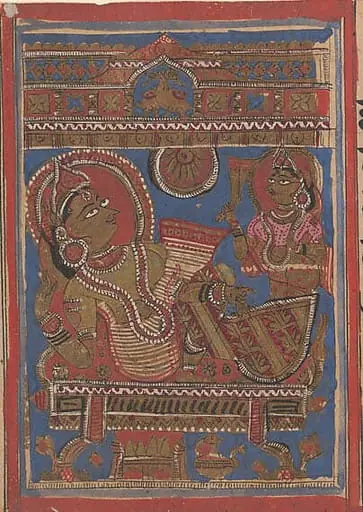
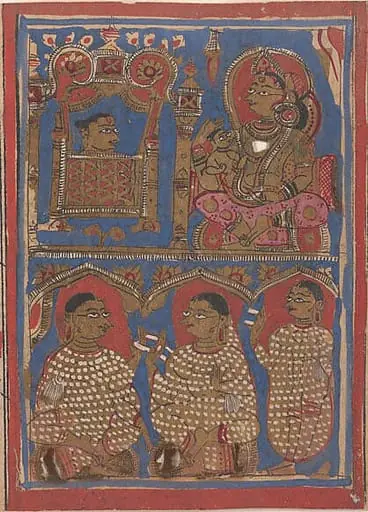
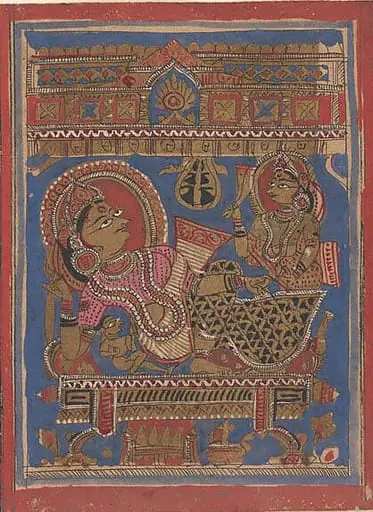
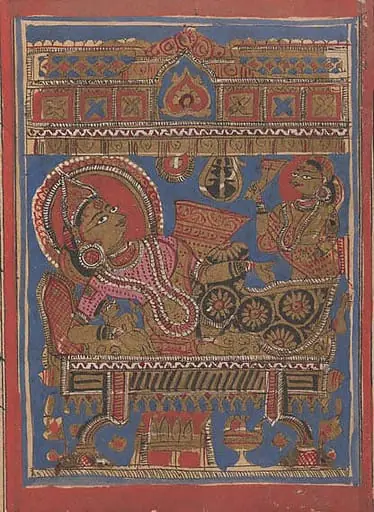
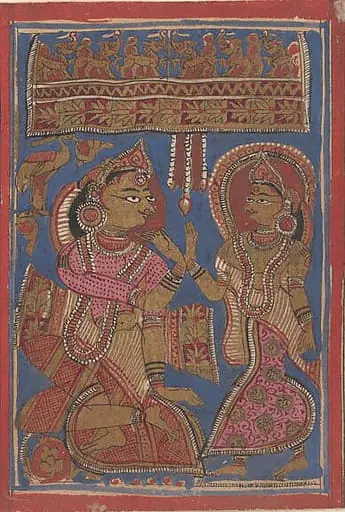
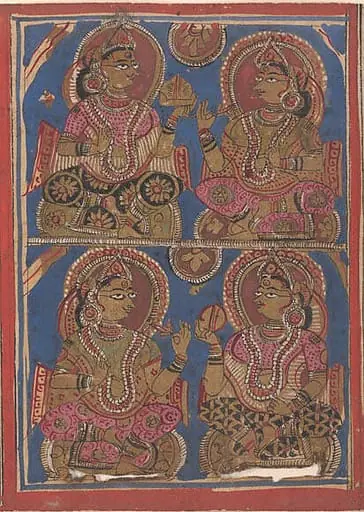
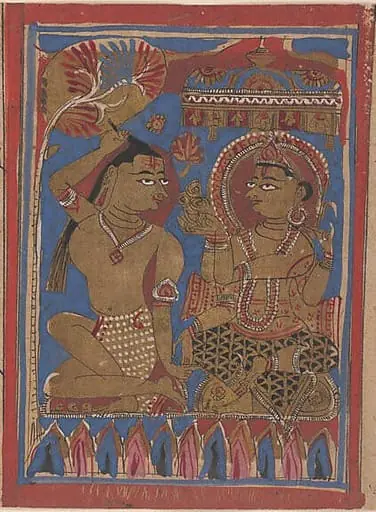
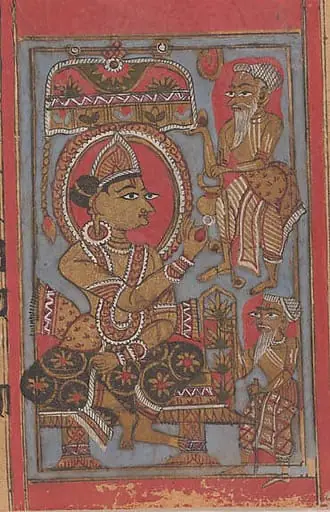
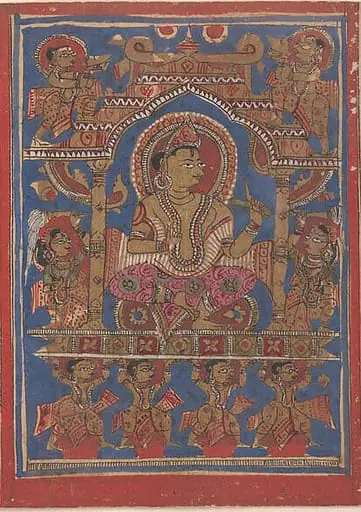
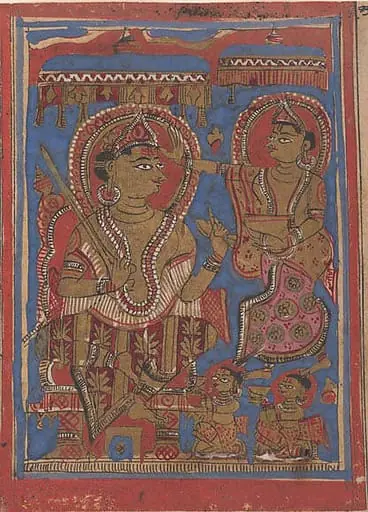
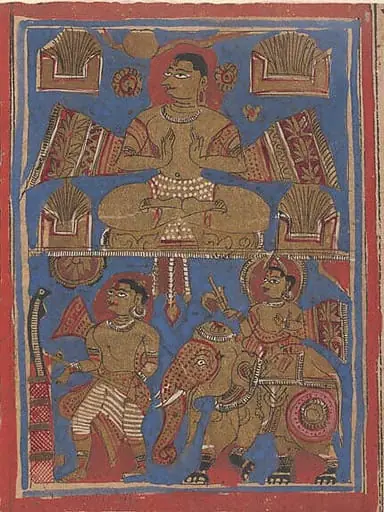
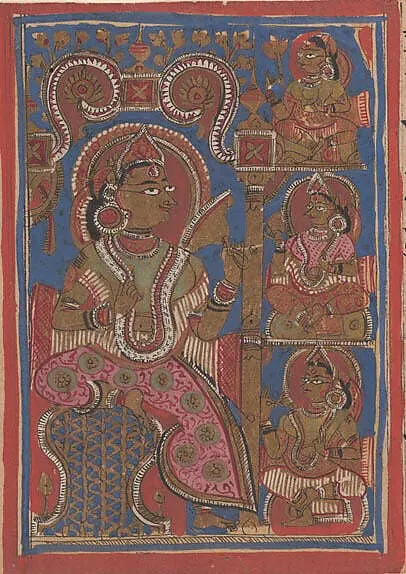
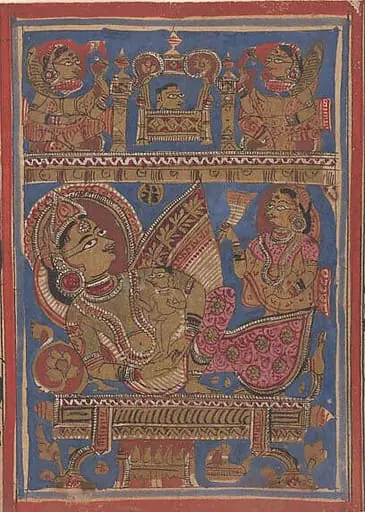
Created in 1449, this religious painting from India depicts a queen within the context of Jainism.
Created in 1449, this religious painting from India depicts a queen within the context of Jainism. The work utilizes ink, opaque watercolor, and gold on paper to render its subject matter. While the specific identity of the queen remains unrecorded in available documentation, her presence serves as the central iconographic element, firmly anchoring the piece in Jain religious tradition.
The combination of the royal figure with Jain themes suggests a representation of lay devotion or the patronage of the faith by ruling classes during this period. The artwork functions as a visual expression of Jain spirituality, using the depiction of the queen to convey specific religious narratives or ideals pertinent to the community in fifteenth-century India.
Technique & Style
Created in 1449 in India, this religious painting utilizes ink, opaque watercolor, and gold applied to a paper support. The work measures 11.1 cm in height by 27 cm in width. Stylistically, the piece functions as a depiction of Jain religious iconography, specifically featuring a queen as its central subject.
The combination of gold with opaque pigments on paper reflects material choices characteristic of the region and period. While the artist remains anonymous, the formal qualities emphasize religious iconography through these distinct mediums.
History & Provenance
Created in 1449 in India, this anonymous religious painting depicts a queen within the context of Jainism. Executed in ink, opaque watercolor, and gold on paper, the work's early ownership history and specific commission details remain unrecorded in available documentation. The artwork eventually entered the collection of the Metropolitan Museum of Art, where it is currently housed. The piece measures approximately 11.1 cm in height by 27 cm in width.
Context
The work is a 15th-century Jain religious painting executed in ink, opaque watercolor and gold on paper, depicting a queen within a Jain narrative. Attributed to an anonymous Indian painter, it exemplifies early Indian manuscript illumination and belongs to the corpus of devotional art produced in India during the mid-15th century. Scholars note its significance as an example of courtly patronage of Jain themes and as evidence of stylistic connections between Jain and broader Indian artistic traditions.
The painting is part of the Metropolitan Museum of Art collection, where its provenance and iconography have been studied as a key reference point for understanding religious imagery in pre-modern South Asian art.
Overview
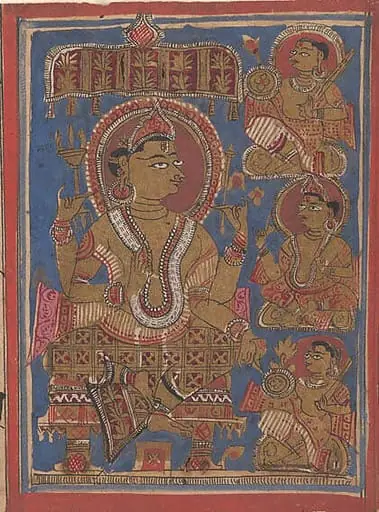
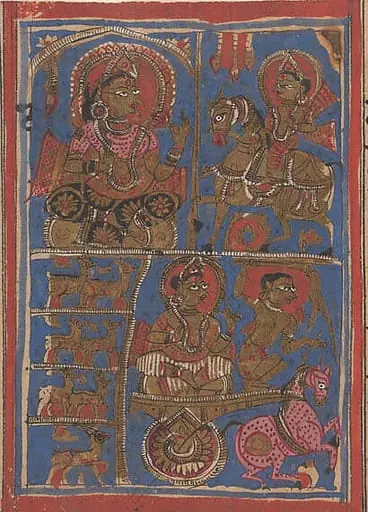
This untitled painting, created in Gujarat, India, during the 1400s, employs ink, opaque watercolor, and gold on paper. It depicts a regal figure seated on a throne amidst a vibrant garden, surrounded by attendants. The artwork was originally conceived as an illustration for a sacred Jain manuscript, reflecting a blend of spiritual purpose with intricate visual storytelling. Its composition presents a detailed scene, characterized by a rich palette and delicate embellishments.
Artist & collection