Artwork
Untitled
Untitled is a watercolor painting. It dates from 1449 and is held in the collection of the Metropolitan Museum of Art.
- Accession no.
- 55.121.38.29
- Credit line
- Rogers Fund, 1955
About this work
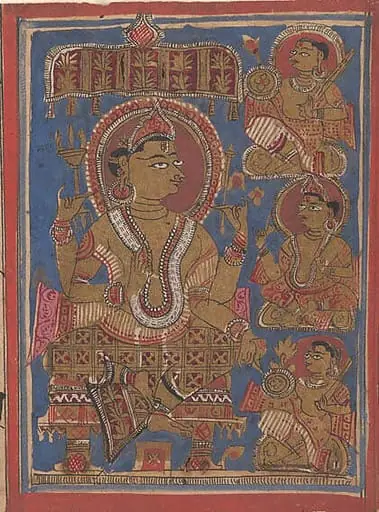
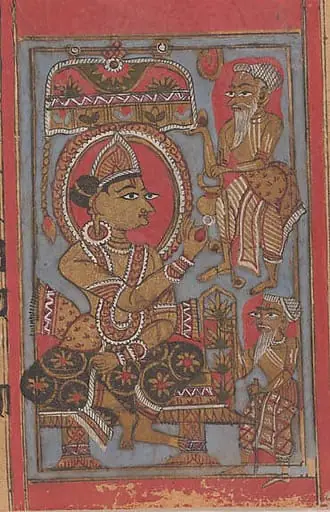
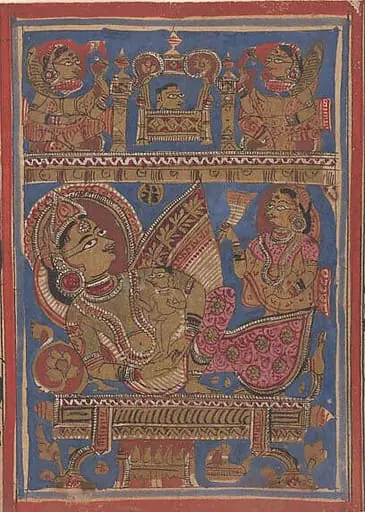
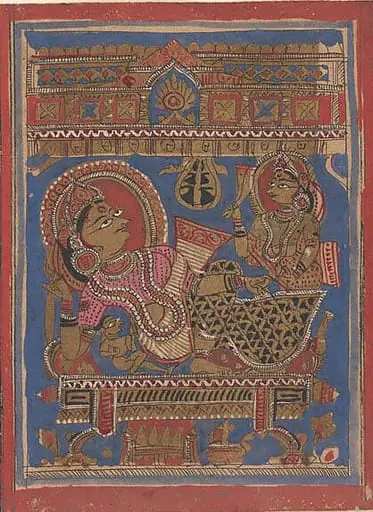
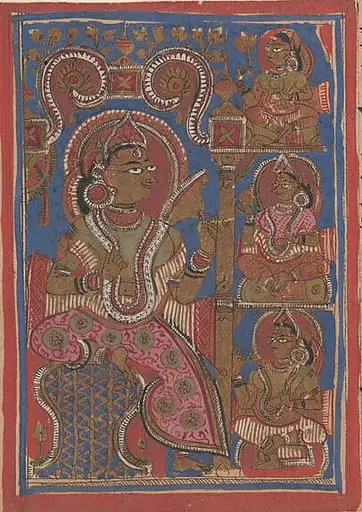
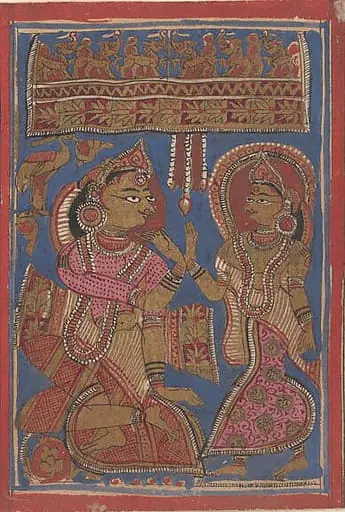
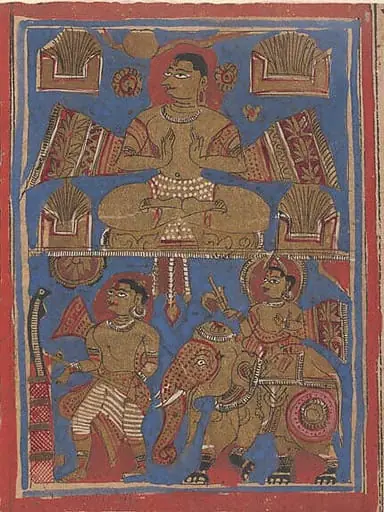
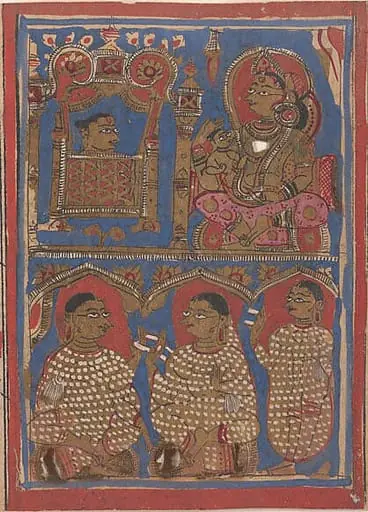
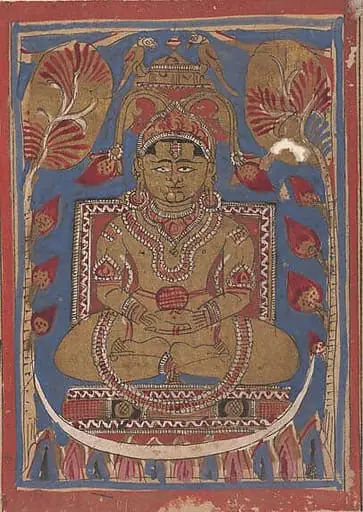
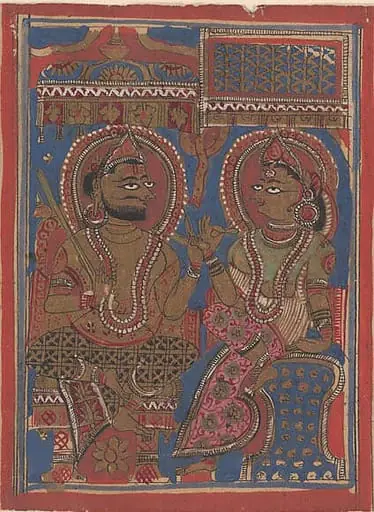
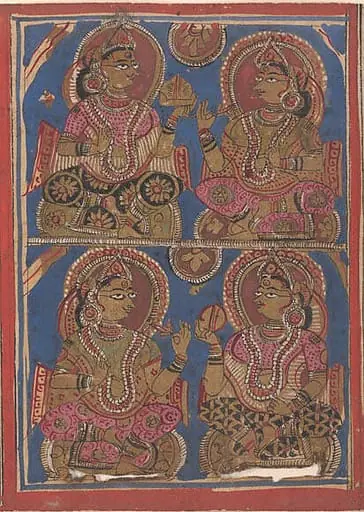
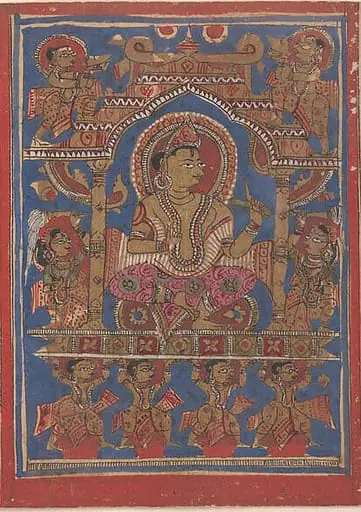
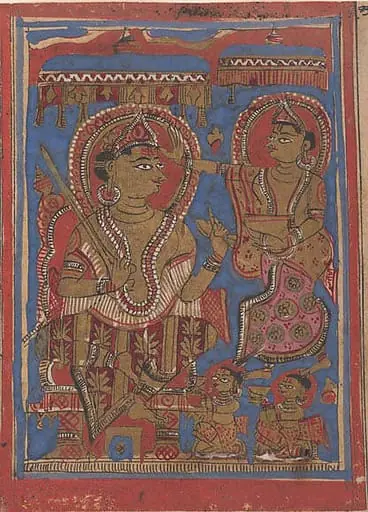
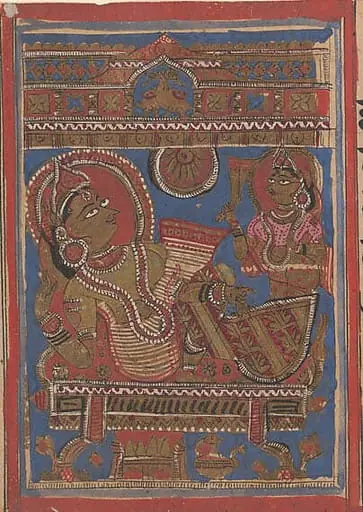
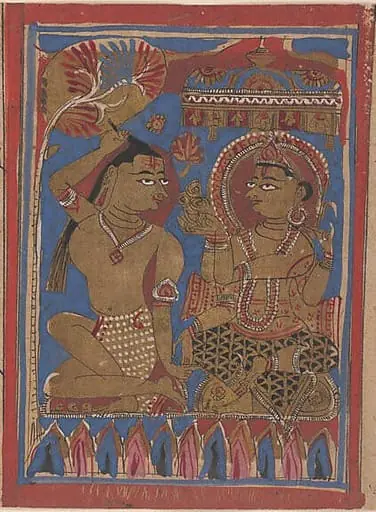
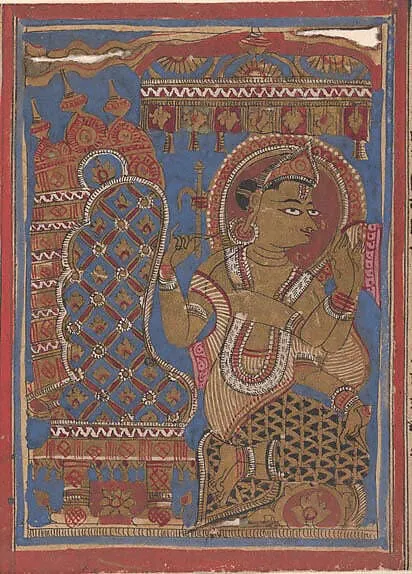
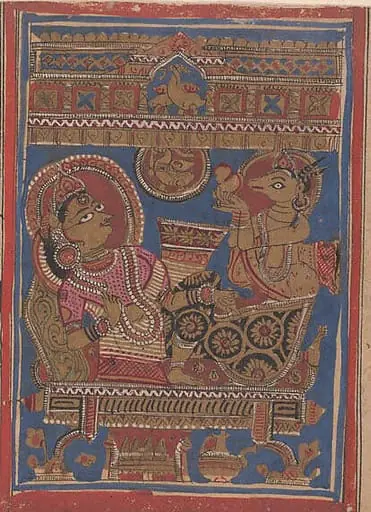
A god sits on a golden throne under a red arch, holding a flower and a disc, surrounded by tiny attendants and animals against a ground of gold leaf. Made in Gujarat, India, around 1450, it comes from a Jain manuscript, where religious books often held pictures like this. The gold marked the scene as sacred.
Subject & Meaning
As a work classified as religious painting, it functioned as a devotional image, inviting contemplation of the deity's transcendental qualities.
The painting shows a divine figure seated on an ornate throne, a standard iconographic device in Indian religious art of the fifteenth century that conveys the god's supreme authority and celestial power. The presence of a throne alongside the unnamed deity aligns with typical religious iconography where the seat symbolizes cosmic rulership, while the surrounding gold and delicate brushwork emphasize the sacred nature of the subject. As a work classified as religious painting, it functioned as a devotional image, inviting contemplation of the deity's transcendental qualities.
The piece, dated 1449 and attributed to an anonymous Indian painter, is part of the Metropolitan Museum of Art's collection.
Technique & Style
Created in 1449 in India, this anonymous religious painting is executed on a paper support using ink, opaque watercolor, and gold. The work measures 11.1 centimeters in height and 27 centimeters in width. The artist employed these traditional materials to depict a deity seated upon a throne, utilizing gold likely for decorative emphasis within the composition.
As a small-scale panel characteristic of its genre and region, the piece represents a specific approach to devotional imagery through the layering of pigments and metallic elements on paper.
History & Provenance
The work, titled Untitled, was created in 1449 by an anonymous artist in India. Executed in ink, opaque watercolor, and gold on paper, this religious painting depicts a deity seated on a throne. Its precise commission history and early ownership chain remain undocumented in the available records, with the creator identified only as an unknown painter.
The artwork eventually entered the collection of the Metropolitan Museum of Art, where it is currently held. While specific details regarding its acquisition date or previous private owners are not provided in the source material, the piece is firmly dated to the mid-fifteenth century based on its inception record. The work measures 11.1 cm in height and 27 cm in width, reflecting the scale typical of such devotional objects from the period.
The painting is held in the collection of the Metropolitan Museum of Art, where it remains on view or in storage as part of the museum's holdings of South Asian religious art. Its location is documented as the Metropolitan Museum of Art, with the work classified as a painting executed in ink, opaque watercolor, and gold on paper. No specific inventory or accession number is recorded in the available sources.
Likewise, no exhibition history is documented for this work; the available records do not list any past loans, displays, or temporary exhibitions in which the painting has been shown.
Legacy
The work Untitled, dated 1449 and attributed to an anonymous Indian painter, is housed in the Metropolitan Museum of Art, a placement that has positioned it as a key example in studies of 15th‑century devotional painting. Its representation of a deity on a throne, documented in the original catalog entry, illustrates a visual motif that recurs in later regional art, influencing scholarly interpretations of early Indian religious iconography. Consequently, the painting is frequently cited in art‑historical literature as a benchmark for understanding the development of sacred imagery in the Indian subcontinent, contributing to its enduring reputation within the field.
Overview
This untitled painting, created around 1450 in Gujarat, India, depicts a deity enthroned. Executed with ink, opaque watercolor, and gold on paper, it originally served as an illustration within a Jain religious manuscript. The artwork showcases a central divine figure surrounded by smaller attendants and animals, set against a luminous gold background, emphasizing the sacred nature of the depicted scene.
Context
This painting originates from Gujarat, India, dating to approximately 1450. It was originally an integral component of a Jain manuscript, a type of religious book that frequently incorporated such vibrant illustrations. These visual elements served to illuminate and enrich the sacred texts for devotees, making complex narratives more accessible and engaging through artistic representation.
Artist & collection