Artwork
Vangali Ragini
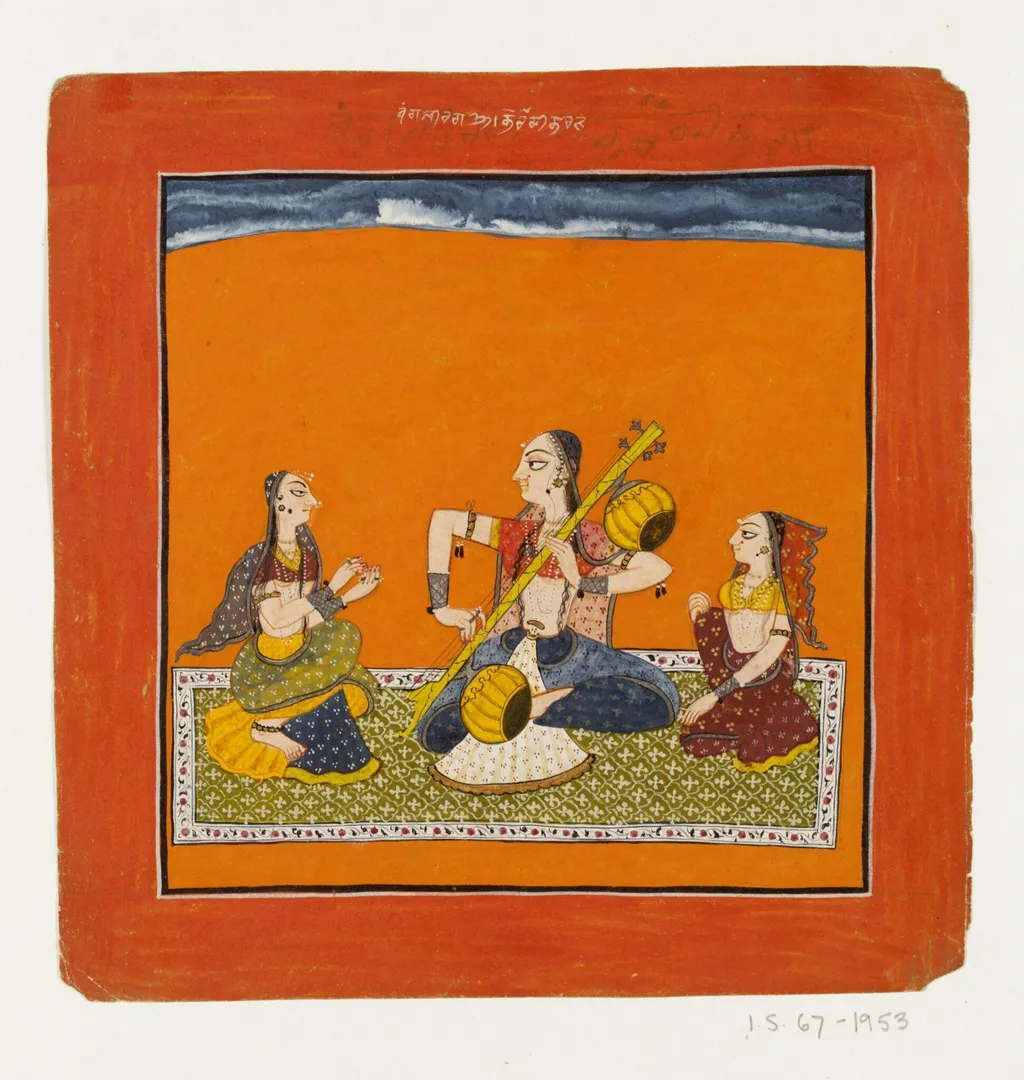
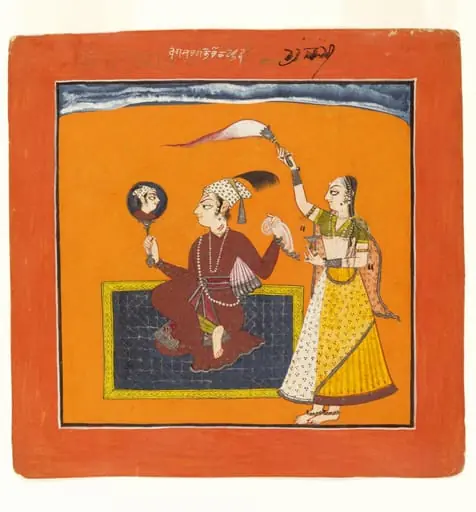
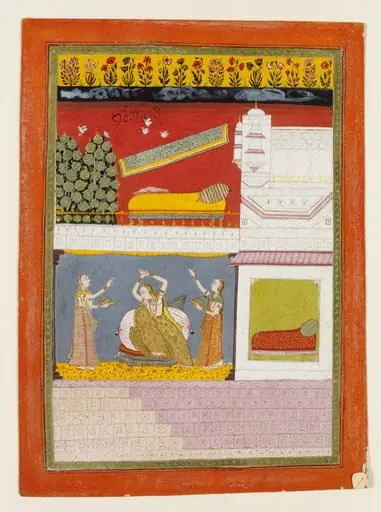
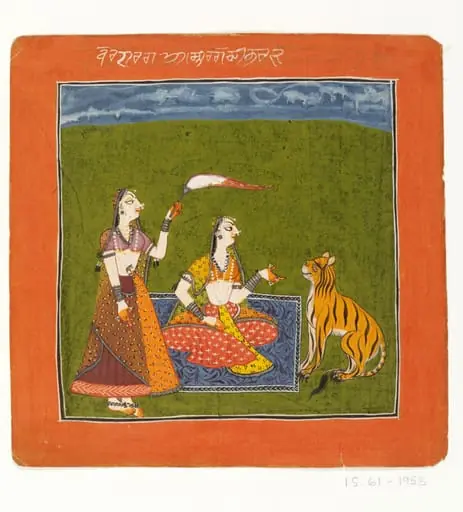
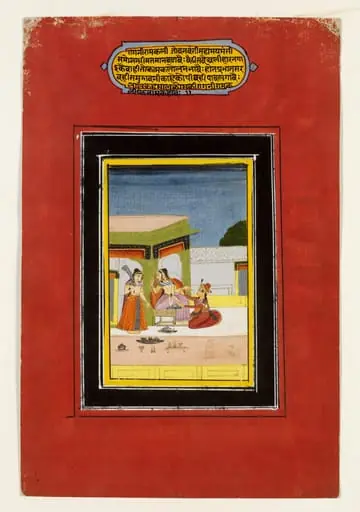
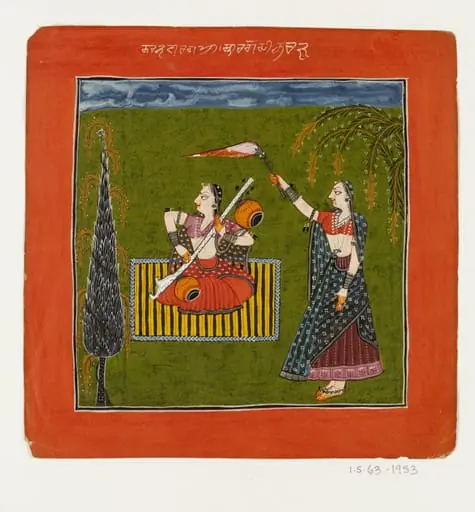
Vangali Ragini is a paint painting by the Baroque artist Unknown. It dates from 1700 and is held in the collection of the Victoria and Albert Museum. This work is an opaque watercolor on paper portraying the ragini Vangali, a melodic mode from Indian classical music.
About this work
Overview
Three women are seated on a patterned carpet; the central figure plays a long‑necked, round‑bodied string instrument while two companions observe.
This work is an opaque watercolor on paper portraying the ragini Vangali, a melodic mode from Indian classical music. Three women are seated on a patterned carpet; the central figure plays a long‑necked, round‑bodied string instrument while two companions observe. The composition is rendered in bold, flat areas of colour with minimal shading, set against an orange field and a dark blue upper background.
Subject & Meaning
The central figure embodies the Vangali ragini, a feminine counterpart to a raga, suggesting a visual representation of the mode’s character. The presence of two attendant women, dressed in vivid yellows, greens and reds, reinforces the communal and performative context of the musical tradition.
Technique & Style
Executed in opaque watercolor, the artist employs flat washes of saturated hue, avoiding chiaroscuro. Fine details appear in the gold‑striated strings of the instrument and the intricate jewelry worn by the figures, highlighting a decorative approach typical of regional Indian ragamala paintings.
History & Provenance
The painting formed part of a series illustrating various ragas and their associated raginis, likely produced within a specific Indian artistic tradition. It entered the collection of British artist Michael Rothenstein before being purchased by the present museum in 1953 for £300.
Artist & collection