Artwork
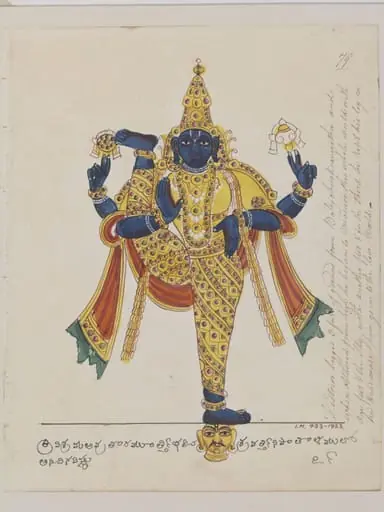
Vishnu in his form as Pandharinatha or Vithoba worshipped at Pandharpur (Maharashtra)
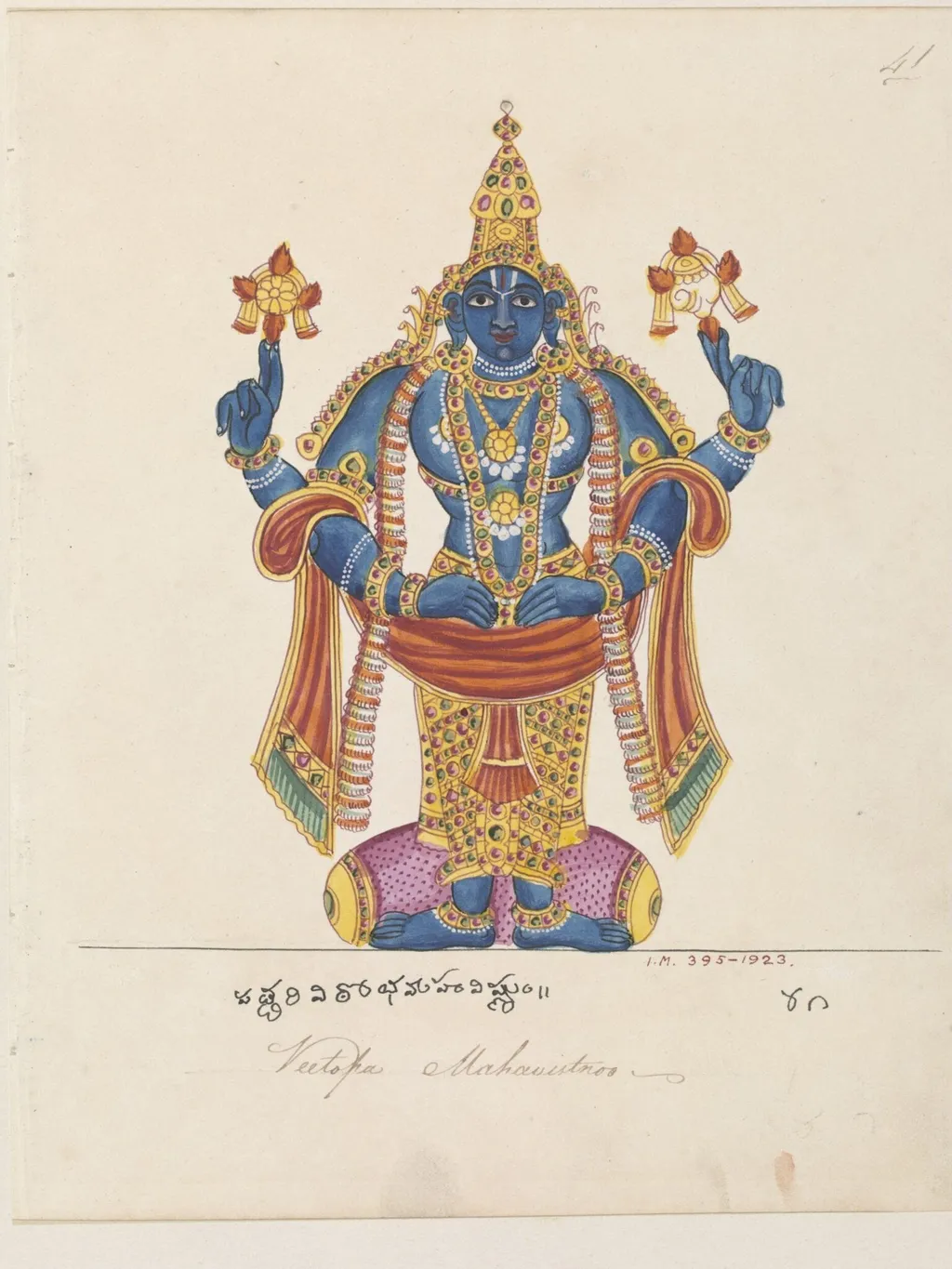
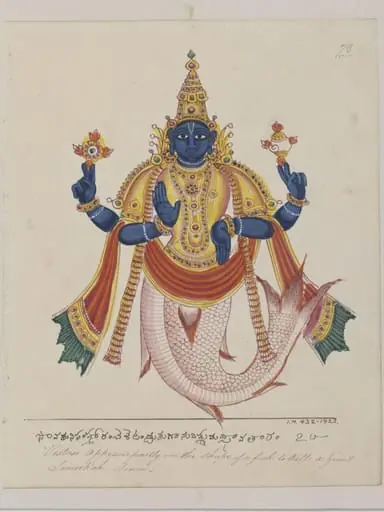
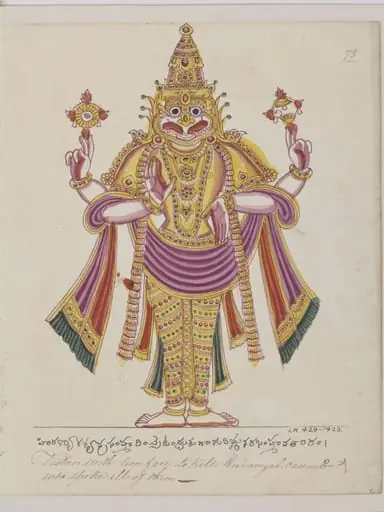
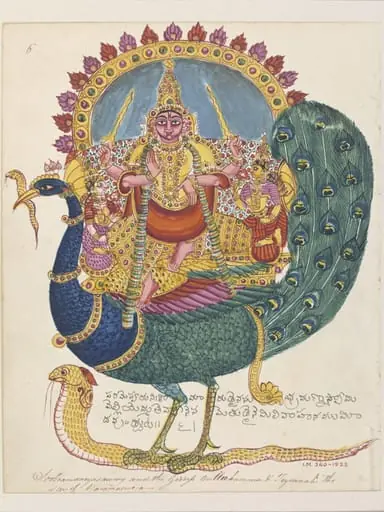
Vishnu in his form as Pandharinatha or Vithoba worshipped at Pandharpur (Maharashtra) is a paint painting by the Patna School of Painting artist Unknown. It dates from 1820 and is held in the collection of the Victoria and Albert Museum. This painting depicts a four-armed deity, identified as Vishnu in his form as Pandharinatha or Vithoba, a revered figure in Maharashtra.
About this work
Overview
This painting depicts a four-armed deity, identified as Vishnu in his form as Pandharinatha or Vithoba, a revered figure in Maharashtra.
Subject & Meaning
The deity is shown seated on a cushion, adorned with jewelry and traditional attributes, conveying a sense of serenity and spiritual significance.
Technique & Style
The painting features intricate details, including ornate jewelry and subtle facial expression, against a plain off-white background.
Context
The work is associated with Romanticism, a movement emphasizing emotional and expressive qualities.
Artist & collection