Artwork
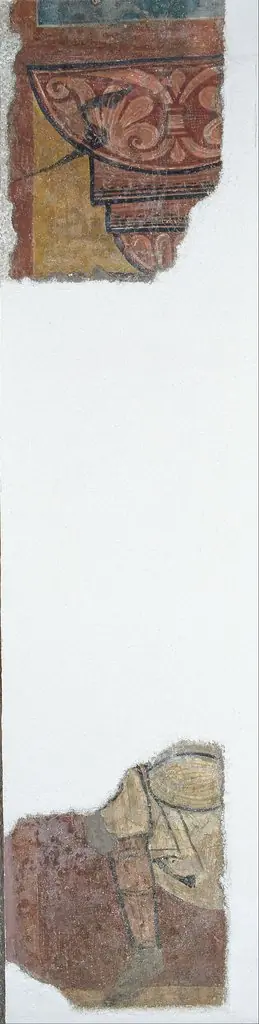
Wall painting: four Nubians armed with shields

Wall painting: four Nubians armed with shields is an unspecified painting by the Byzantine icon painting artist Unknown. It dates from -2118 and is held in the collection of the Museo Egizio. This artifact is a fragment of ancient Egyptian wall painting, originally depicting four Nubian figures holding shields.
About this work
Overview
This artifact is a fragment of ancient Egyptian wall painting, originally depicting four Nubian figures holding shields. The surface now appears largely blank, with only faint traces of black pigment and surface abrasions remaining. The white plaster background has deteriorated over time, obscuring the original imagery and leaving behind minimal visual evidence of its former content.
Subject & Meaning
The painting once illustrated Nubian individuals, likely representing foreign emissaries, soldiers, or tribute bearers in an Egyptian ceremonial or military context. Their depiction with shields suggests a symbolic role tied to warfare, diplomacy, or the presentation of conquered peoples. Such imagery reinforced Egyptian dominance and the ordered hierarchy of the known world.
Technique & Style
The work was executed using natural pigments applied to a plastered wall surface, with straw possibly used as a binding or textural additive in the paint mixture. The style followed conventional Egyptian conventions of profile representation and hierarchical scale, though the current state of preservation obscures details of form and composition.
History & Provenance
The fragment originates from a tomb or temple wall in Upper Egypt, dating to the New Kingdom period. Its survival is due to the dry climate and burial conditions, though centuries of exposure and later disturbance have eroded the painted surface. Its current condition reflects both natural decay and possible ancient or modern damage.
Context
Depictions of Nubians were common in Egyptian art, serving to document foreign peoples and affirm Egypt’s territorial and cultural authority. These images appeared in tombs and temples as part of broader iconographic programs that emphasized order, conquest, and divine favor. This fragment is one of many such records now partially lost to time.
Legacy
Though visually minimal today, the fragment remains a physical trace of ancient Egyptian visual culture and its engagement with neighboring regions. It contributes to scholarly understanding of how foreign identities were represented and how artistic materials degraded over millennia, offering insight into both intent and erosion.

Artist & collection