Artwork
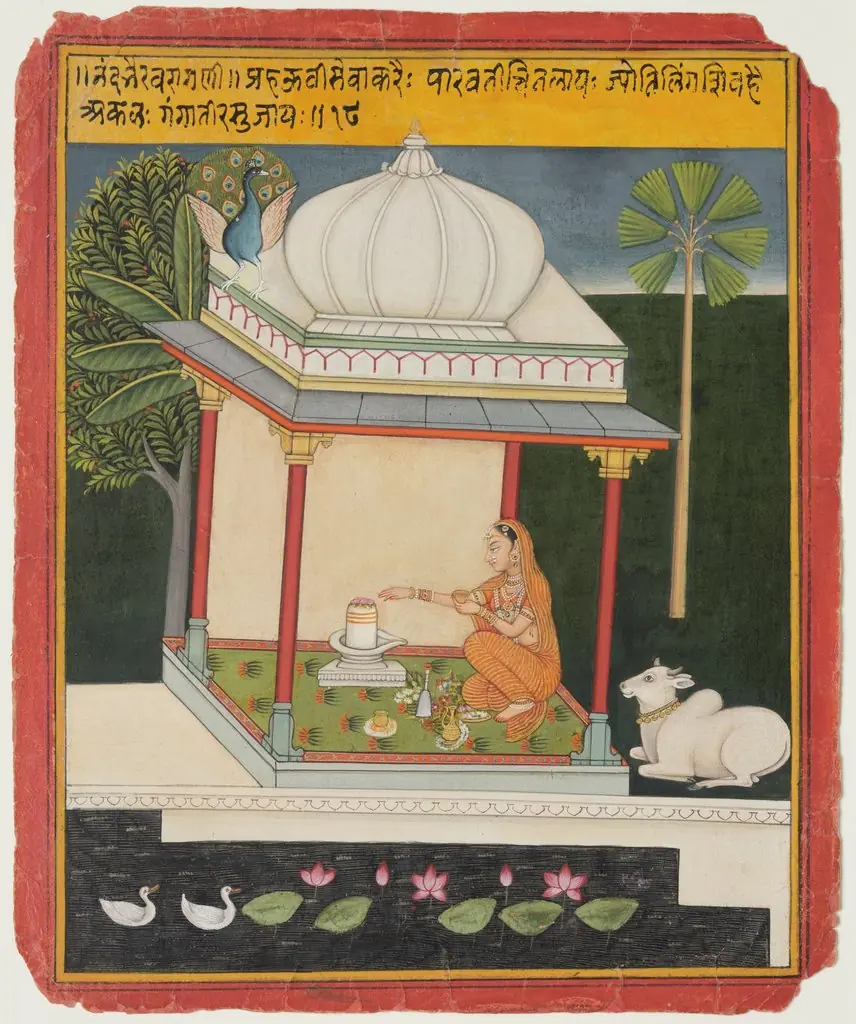
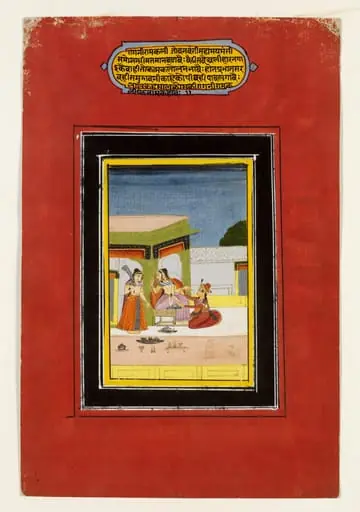
Women worshiping a Shiva linga: Devagandhari Ragini of Hindol Raga, from a Ragamala
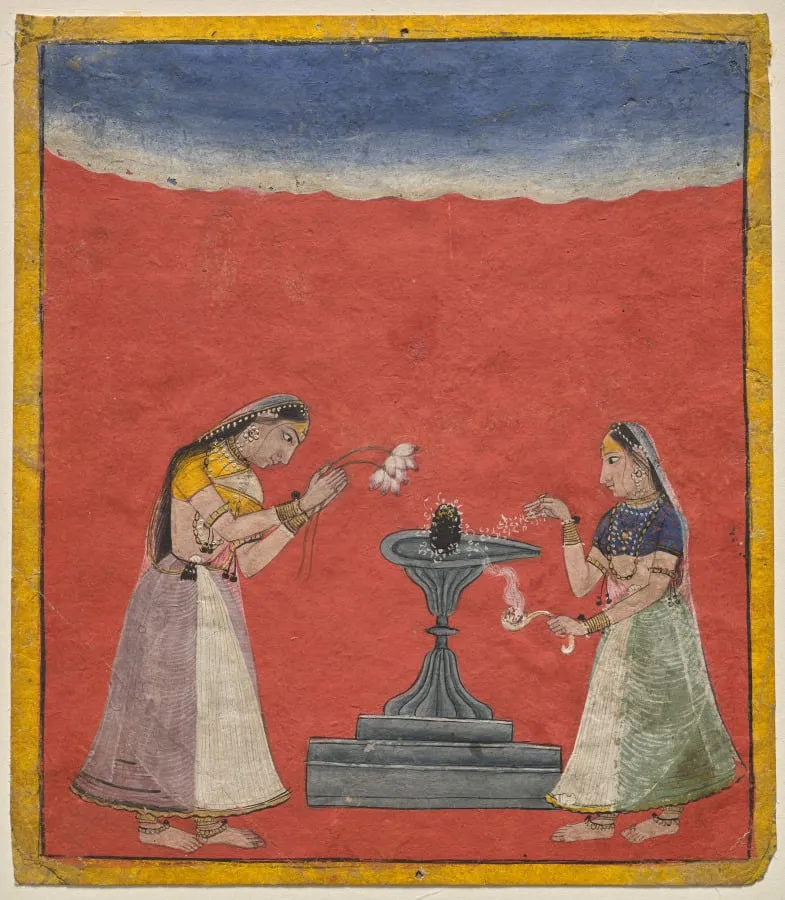
Women worshiping a Shiva linga: Devagandhari Ragini of Hindol Raga, from a Ragamala is an unspecified painting by the Baroque artist Unknown. It dates from 1700 and is held in the collection of the Cleveland Museum of Art. The miniature depicts two women kneeling before a smooth stone pillar, the Hindu linga, which is draped in red cloth.
- Accession no.
- 2018.87
- Credit line
- Purchase and partial gift from the Catherine and Ralph Benkaim Collection; Severance and Greta Millikin Purchase Fund
About this work
Overview
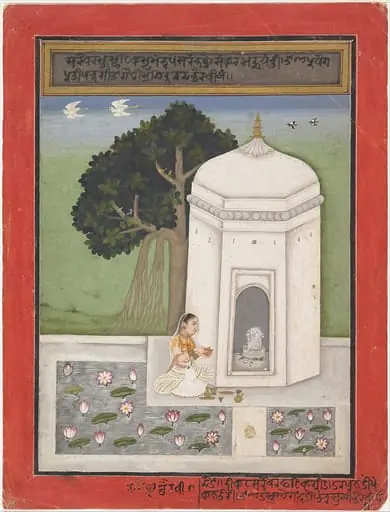
The miniature depicts two women kneeling before a smooth stone pillar, the Hindu linga, which is draped in red cloth. One woman scatters flower petals onto the linga while the other cradles lotus blossoms, both eyes closed in reverent concentration. The scene is rendered on a single page of a Ragamala, a series that visually interprets musical modes.
Subject & Meaning
The focus is the devotional act toward Shiva, represented in his aniconic form as the linga. The gestures, offering petals and incense, holding lotus flowers, symbolize purity and surrender, underscoring the intimate, personal worship that can occur outside formal temple precincts.
Technique & Style
Executed in the delicate brushwork typical of Pahari miniature painting, the composition balances fine line work with subtle washes of colour. The figures are rendered with elongated proportions and soft facial expressions, while the red cloth around the linga provides a vivid contrast to the muted palette of the women's garments.
History & Provenance
The work originates from a northern Indian Ragamala series, produced in the Pahari kingdoms during the 18th‑century flourishing of courtly art. Such manuscripts were often commissioned by regional patrons to accompany musical performances, linking visual and auditory aesthetics.
Context
Ragamala paintings pair each visual scene with a specific raga, a melodic framework in Indian classical music. This particular image corresponds to the Devagandhari ragini of the Hindol raga, suggesting a contemplative mood appropriate to the act of worship.
Legacy
The piece exemplifies the synthesis of music, poetry, and devotional imagery that characterises Pahari art. It continues to inform scholars of how visual culture mediated spiritual experience and the performance of ragas in pre‑colonial northern India.
Artist & collection