Artwork
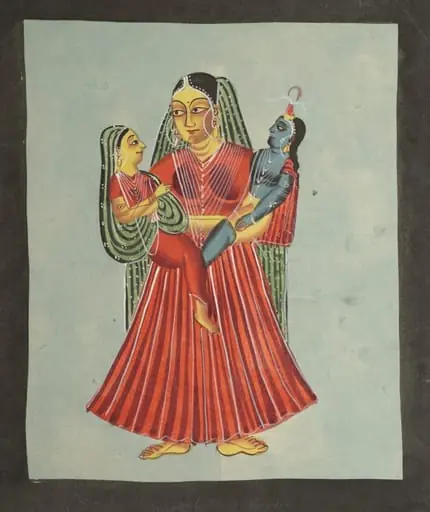
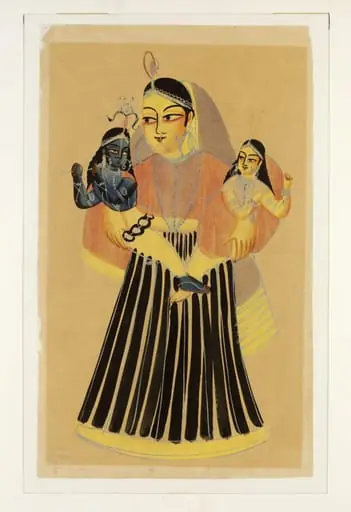
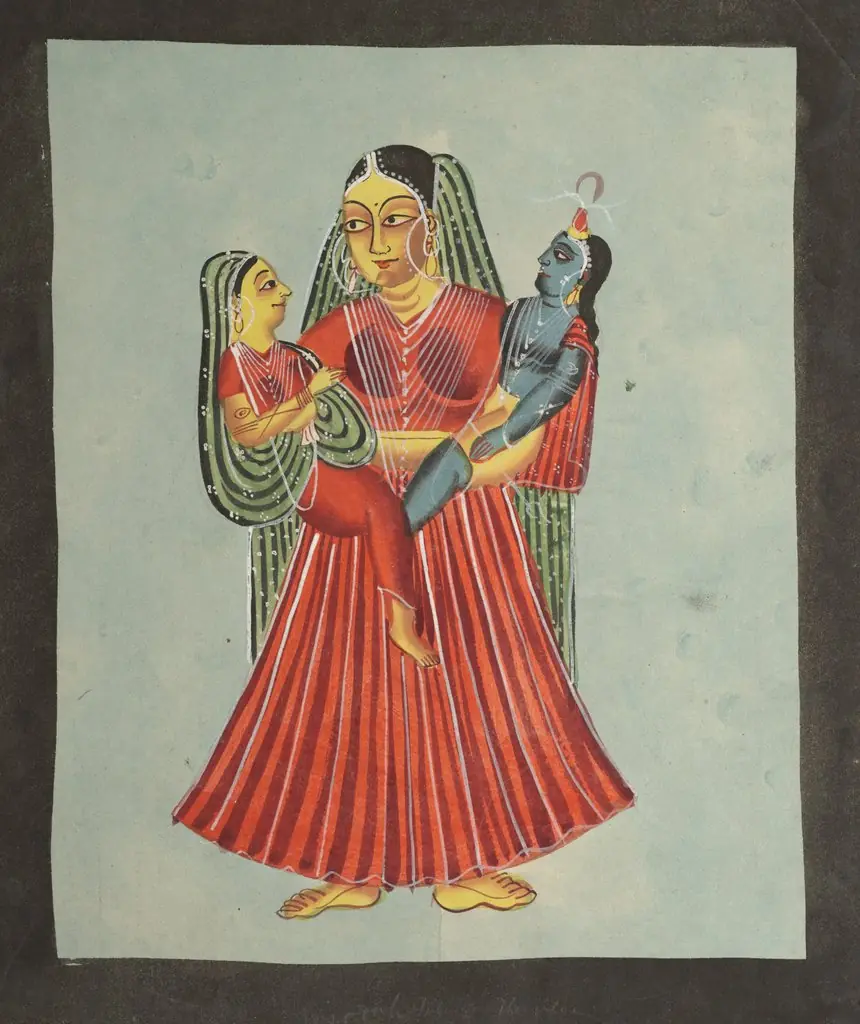
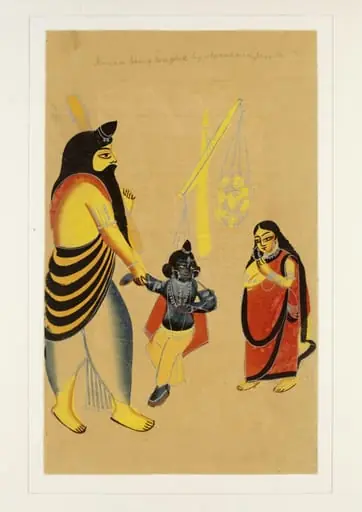
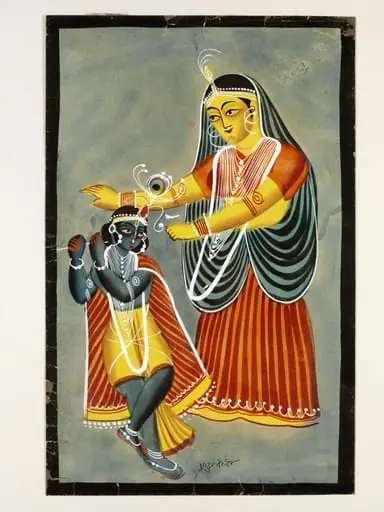
Yasoda Taking the Infant Krishna for a Walk
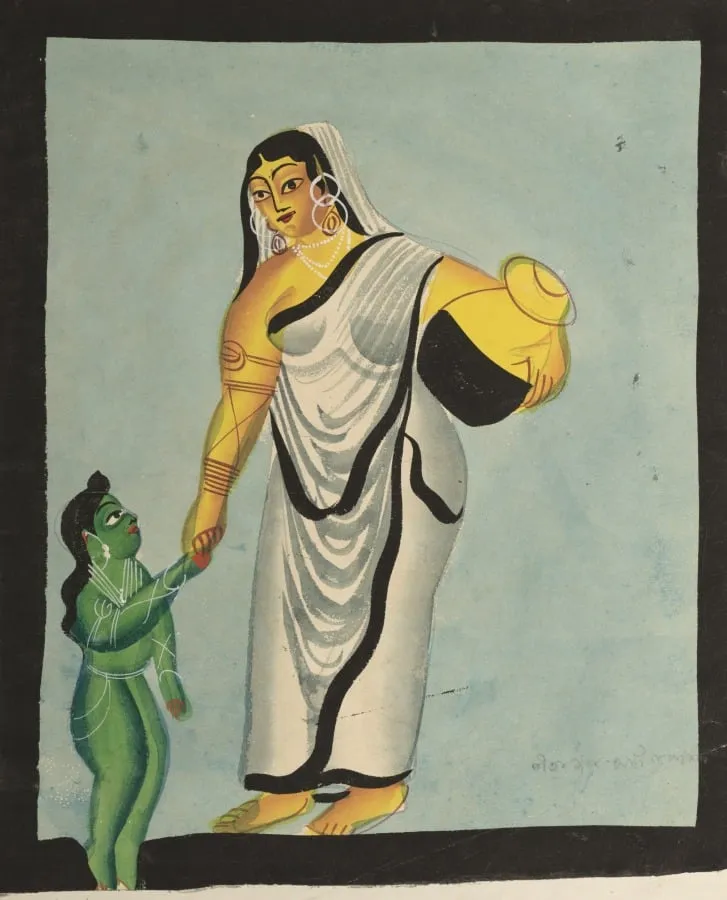
Yasoda Taking the Infant Krishna for a Walk is an unspecified painting by the Bengal School artist Unknown. It dates from 1890 and is held in the collection of the Cleveland Museum of Art.
- Accession no.
- 2003.126
About this work
Overview
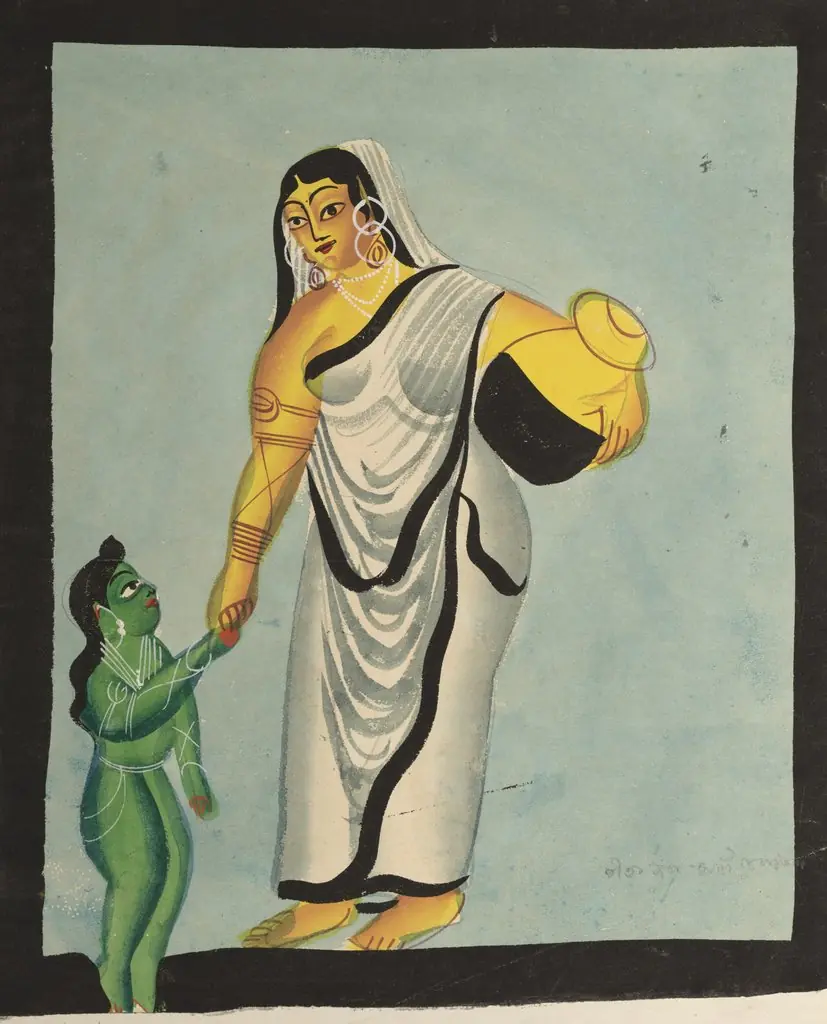
The work titled "Yasoda Taking the Infant Krishna for a Walk" portrays a woman in a white sari edged with black, wearing a veil and jewelry, holding a yellow vessel in her left hand. She gently clasps the hand of a small, green‑skinned child dressed in green, set against a pale blue background.
Subject & Meaning
The figures represent the Hindu mother Yasoda and the infant deity Krishna, a common theme in Indian devotional art. Yasoda’s protective gesture and the child’s tender grip emphasize maternal affection and the divine nature of Krishna, whose green complexion signifies his connection to nature and divinity.
Technique & Style
Executed with bold, clean lines and saturated hues, the painting reflects the characteristic aesthetic of the Kalighat school of Bengal. The artist employs a flat color field and minimal shading, allowing the vivid reds, greens, and blues to dominate the composition and convey a sense of immediacy.
Context
Kalighat paintings emerged in the 19th‑century environs of the Kalighat temple in Kolkata, where itinerant artists catered to pilgrims. Their work blended folk motifs with subtle social commentary, often depicting mythological narratives such as the exploits of Krishna in an accessible visual language.
Legacy
Works like this continue to inform understandings of Bengal’s popular visual culture, illustrating how religious stories were rendered for everyday viewers. The painting’s straightforward composition and vivid palette have influenced later Indian art movements that seek to bridge traditional iconography with modern sensibilities.
Artist & collection