Artwork
Su Shi (So Shoku)
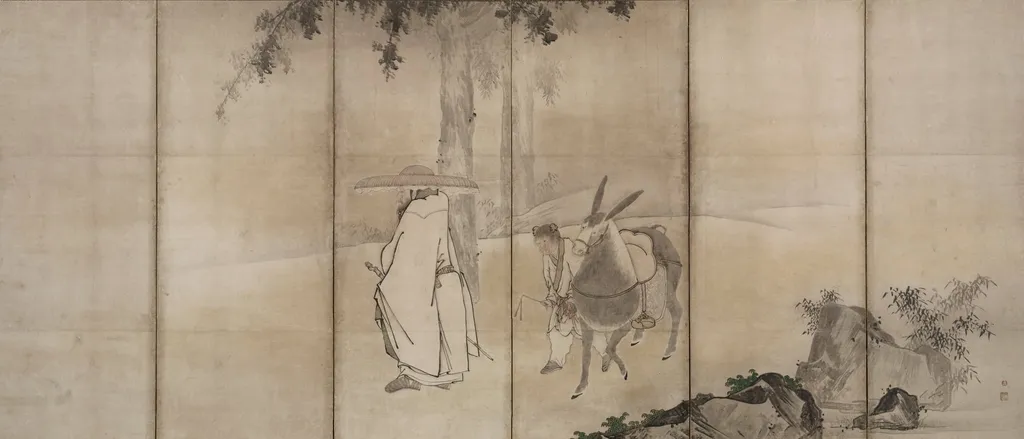
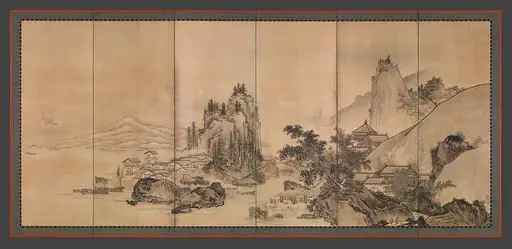
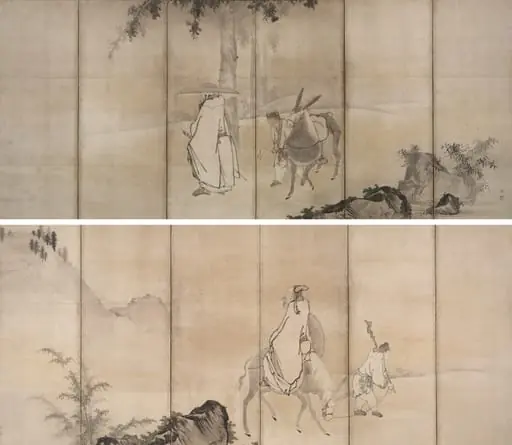
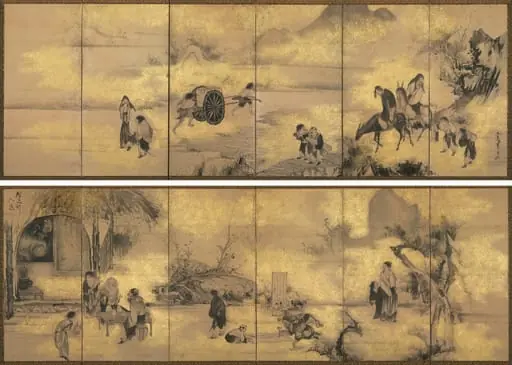
Su Shi (So Shoku) is an unspecified painting by the Baroque artist Unkoku Tōgan. It dates from 1604 and is held in the collection of the Cleveland Museum of Art. The two-panel screen set illustrates two historical episodes of forced exile involving Chinese literary figures.
- Accession no.
- 2006.135.1
- Credit line
- John L. Severance Fund
About this work
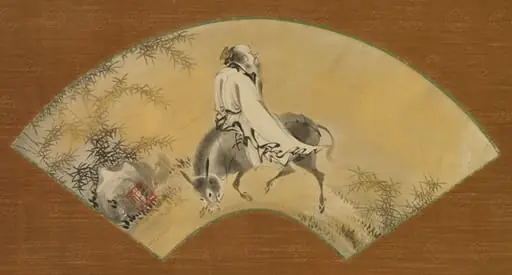
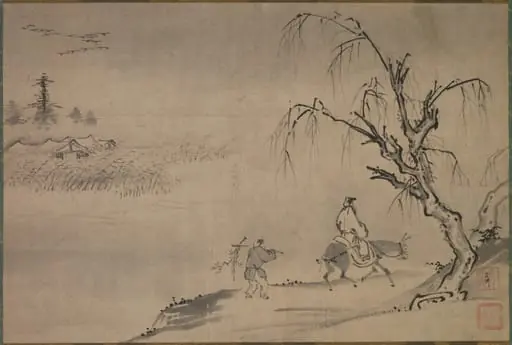
This painting shows a man riding a donkey backward. It's based on a story about a poet named Su Shi who was exiled. The story is from a long time ago, and it's interesting because it shows how even small actions can get you in trouble with those in power.
You can learn more about this style by looking at the work of artist: Unkoku Tōgan (Japanese, 1547–1618)
Overview
The left panel portrays Pan Lang, a Zhou‑dynasty official, riding his donkey backward to glimpse Mount Hua before departing his place of banishment.
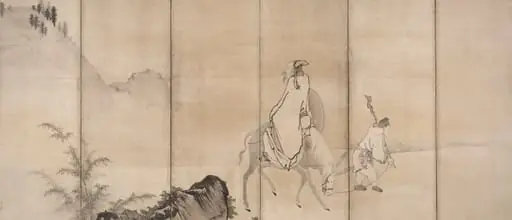
The two-panel screen set illustrates two historical episodes of forced exile involving Chinese literary figures. The left panel portrays Pan Lang, a Zhou‑dynasty official, riding his donkey backward to glimpse Mount Hua before departing his place of banishment. The right panel shows the Song‑dynasty poet Su Shi embarking on his own exile journey. Both scenes are rendered in ink by Japanese painter Unkoku Tōgan, founder of the Unkoku school.
Subject & Meaning
Pan Lang’s backward ride symbolizes a reluctant farewell, emphasizing his attachment to the landscape he is forced to leave. Su Shi’s depiction captures the moment of departure, reflecting the poet’s acceptance of exile imposed for his critical remarks on imperial economic reforms. Together the panels comment on the precarious relationship between intellectuals and authority.
Technique & Style
Executed in monochrome ink on silk, the screens follow the aesthetic of the Unkoku school, which modeled its brushwork on the celebrated Muromachi master Sesshū Tōyō. Tōgan employs bold, sweeping strokes to delineate figures and terrain, while retaining the subtle gradations characteristic of Chinese literati painting.
History & Provenance
Unkoku Tōgan (1547–1618) served as the official painter for the Mori clan of present‑day Yamaguchi Prefecture. The work was likely created for a private collection of the Mori family, reflecting their interest in Chinese literary themes and the importation of Chinese artistic conventions into early modern Japan.
Context
The narrative draws on two separate historical incidents: Pan Lang’s exile in the 10th century after composing a verse about a royal horse, and Su Shi’s 11th‑century banishment for criticizing fiscal policies. By juxtaposing these stories, the screens link Chinese cultural memory across centuries and illustrate the enduring motif of exile in East Asian literature.
Artist & collection
Artist
Unkoku Tōgan (雲谷 等顔, 1547–1618) was a Japanese painter. He was born into a privileged family in Nagasaki, the second son of Hara Naoie, lord of Nokomi Castle in Hizen province. Starting as an artist of the Kanō school,…