Artwork
Pan Lang (Han Rō)
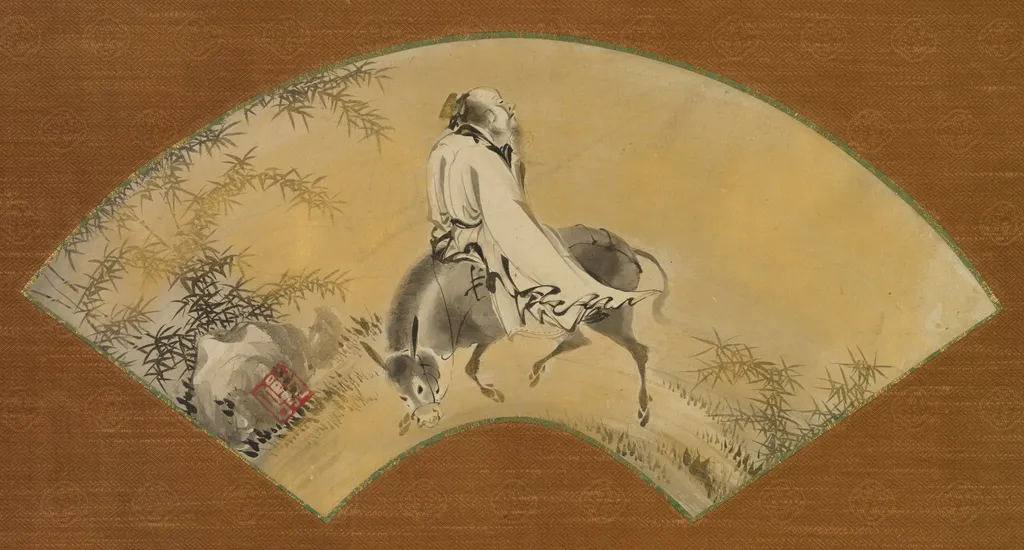
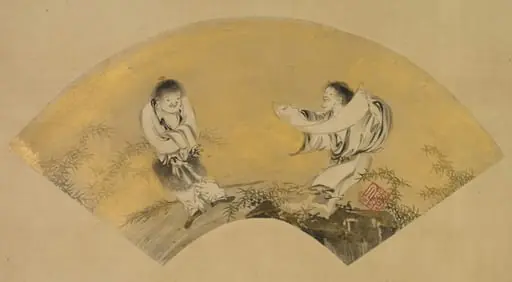
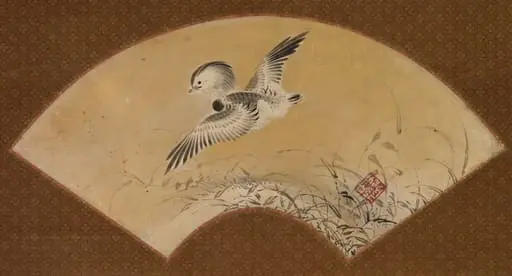
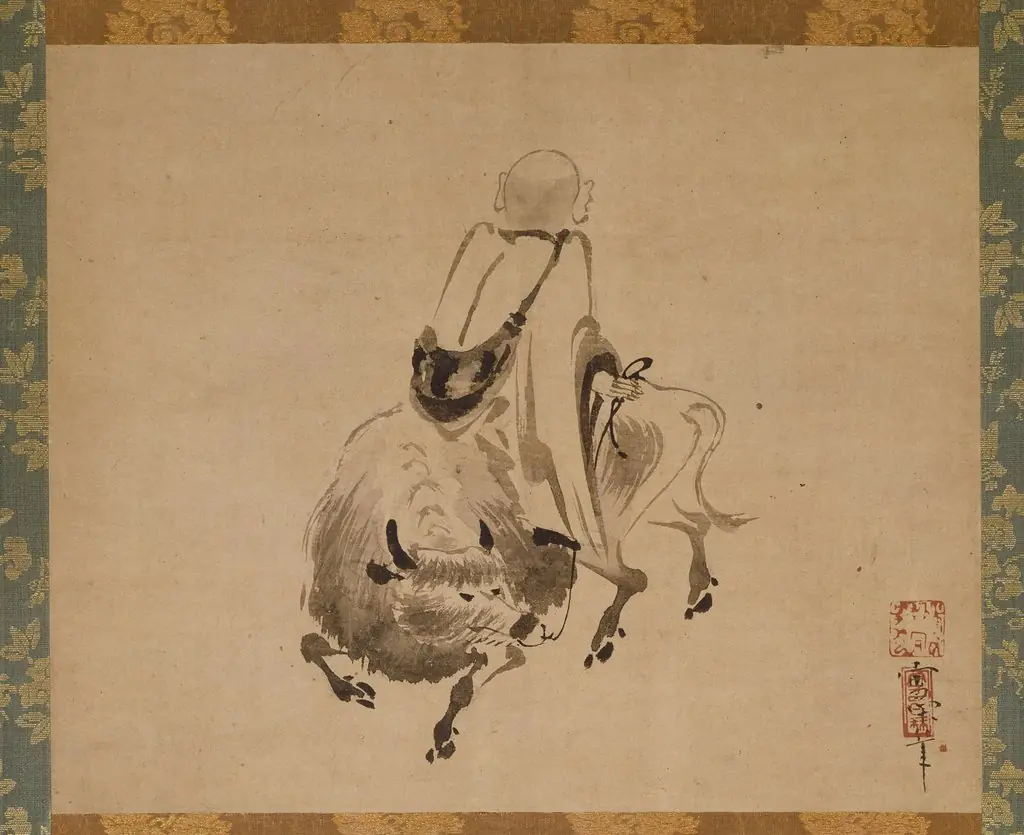
Pan Lang (Han Rō) is an unspecified painting by the Joseon dynasty painting artist Shikibu Terutada. It dates from 1504 and is held in the collection of the Cleveland Museum of Art. The work consists of three fan‑shaped paintings, each now displayed as a hanging scroll.
- Accession no.
- 2015.591
- Credit line
- Gift from the Collection of George Gund III
About this work
Overview
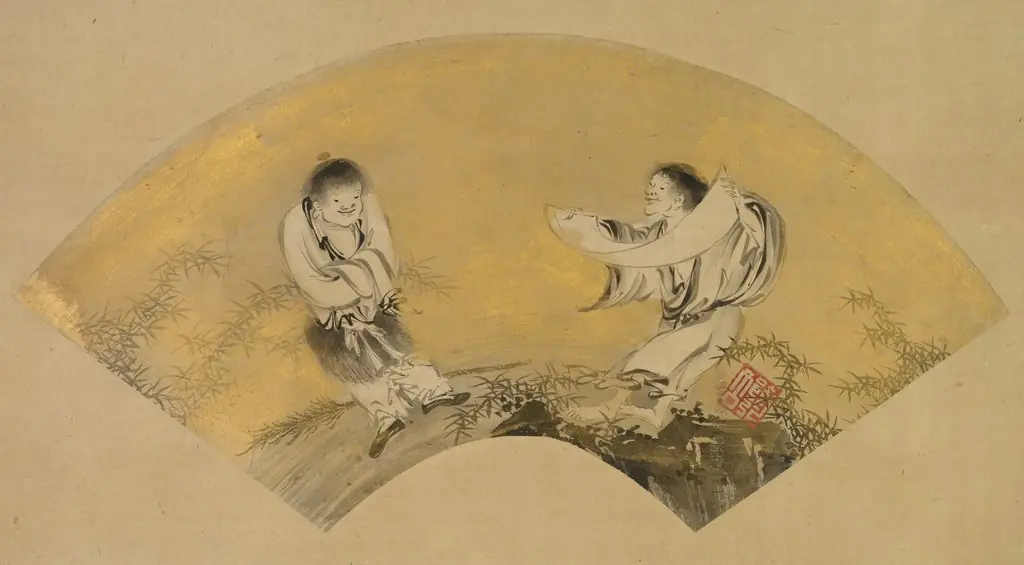
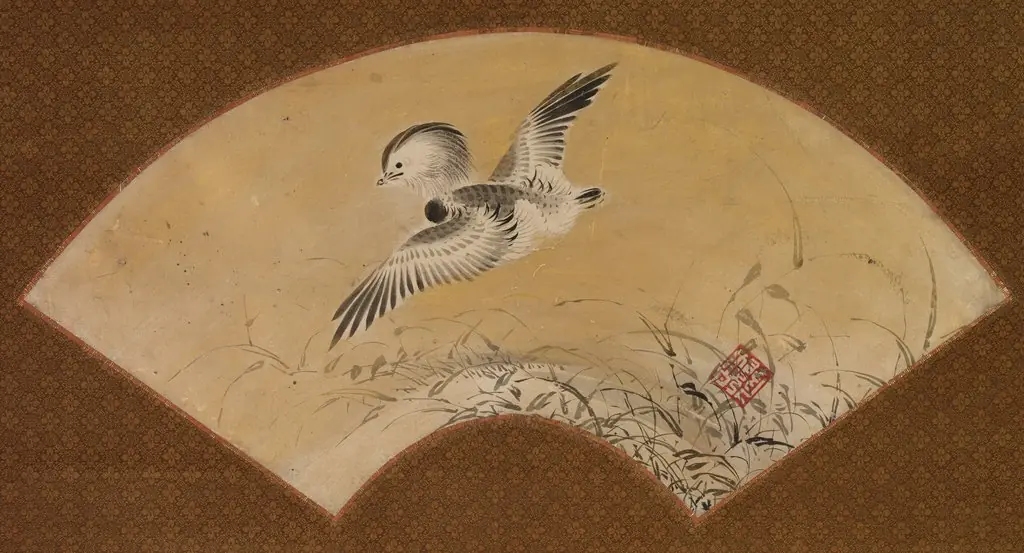
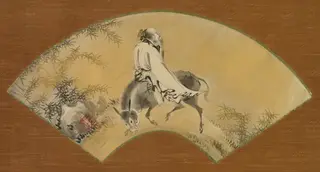
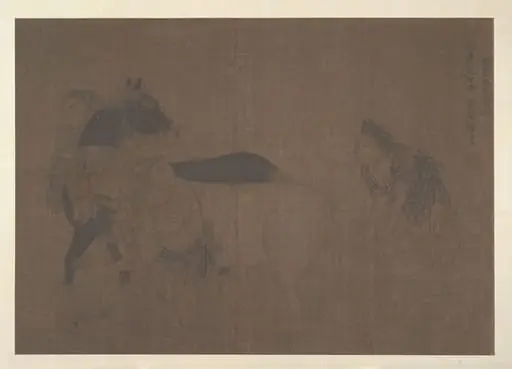
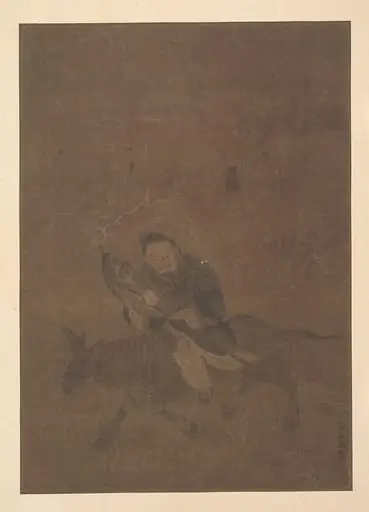
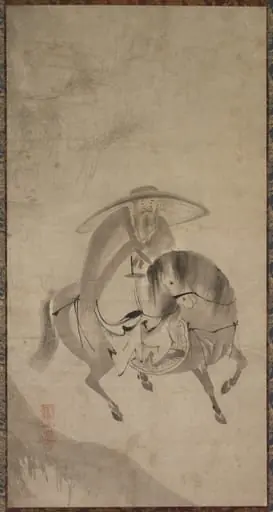
The work consists of three fan‑shaped paintings, each now displayed as a hanging scroll. Originally they formed part of a larger set of twenty panels that decorated a folding screen. The three surviving images depict, from left to right, the Chinese scholar‑official Pan Lang, the monk‑poet Hanshan reciting to Shide, and a duck in flight over reeds.
Subject & Meaning
The duck and reeds are conventional symbols linked to success in the Chinese civil‑service examinations.
Pan Lang is shown in a moment drawn from a legend in which, during his exile to a remote mountain, he grew attached to the landscape and, upon being recalled to the capital, rode his donkey backward so he could keep the view in sight. The second scene references the Zen figures Hanshan and Shide, traditionally identified as incarnations of the bodhisattvas Manjushri and Samantabhadra, who served in a monastery kitchen. The duck and reeds are conventional symbols linked to success in the Chinese civil‑service examinations.
Technique & Style
All three panels bear the seal of Shikibu Terutada, a Kantō‑based painter active in the early sixteenth century. Terutada’s brushwork reflects his training in the Kano school, yet his early pieces also echo the style of the prominent Kantō master Kenkō Shōkei (fl. 1470–after 1523), combining bold outlines with delicate ink washes typical of Japanese ink painting of the period.
History & Provenance
The paintings were originally mounted on a folding screen that comprised twenty fan‑shaped sections, a format popular for decorative screens in the Muromachi and early Edo periods. Over time the screen was dismantled, and the three panels survived as independent scrolls, eventually entering a museum collection where they are now displayed together.
Context
The subject matter draws from Chinese literary and religious traditions that were widely admired in Japanese court and monastic circles. Depicting a Chinese scholar‑official, Zen poets, and symbolic fauna, the work illustrates the cross‑cultural exchange that shaped Japanese painting, especially the adoption of Chinese motifs within native formats such as the fan‑shaped scroll.
Artist & collection