Artwork
Pan Lang (Han Rō)
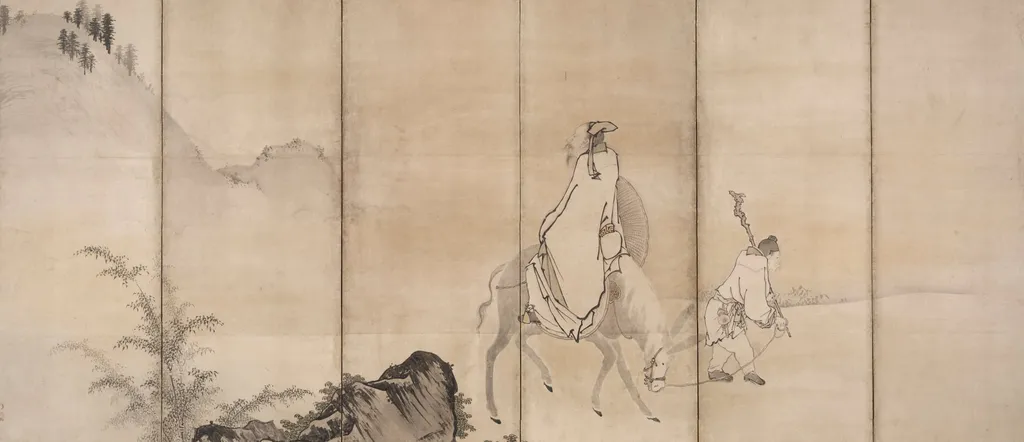
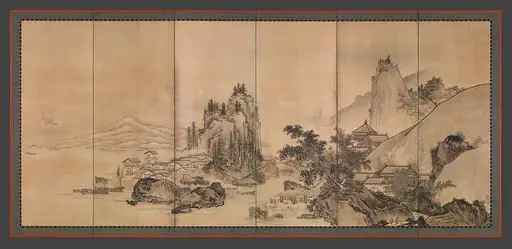
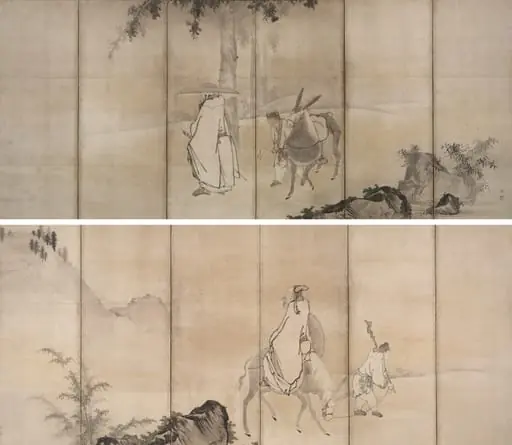
Pan Lang (Han Rō) is an unspecified painting by the Baroque artist Unkoku Tōgan. It dates from 1604 and is held in the collection of the Cleveland Museum of Art.
- Accession no.
- 2006.135.2
- Credit line
- John L. Severance Fund
About this work
Overview
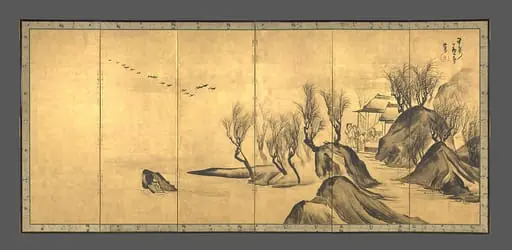
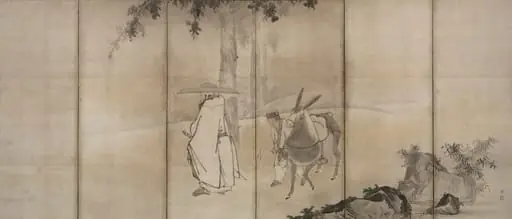
Pan Lang is a painting on a screen by Unkoku Tōgan, founder of the Unkoku school of painting, created during Japan's Momoyama period. It is one of a pair of screens depicting the exile of two historical figures.
Subject & Meaning
The painting illustrates the story of Pan Lang, a 10th-century Chinese official banished for composing an ill-advised poem. He is shown riding a donkey backwards, gazing back at Mount Hua, a place he has grown to love during his exile.
Technique & Style
The work is executed in the style of Sesshū Tōyō, a renowned ink painter. Careful attention is paid to detail, with the donkey and surrounding landscape rendered with precision, reflecting the artist's skill and the Unkoku school's emphasis on traditional techniques.
History & Provenance
Unkoku Tōgan was the official painter of the Mori family, who ruled over what is now Yamaguchi prefecture in southern Japan. The screens were likely created for this powerful family, showcasing the artist's ability to blend Chinese themes with Japanese artistic traditions.
Artist & collection
Artist
Unkoku Tōgan (雲谷 等顔, 1547–1618) was a Japanese painter. He was born into a privileged family in Nagasaki, the second son of Hara Naoie, lord of Nokomi Castle in Hizen province. Starting as an artist of the Kanō school,…