Artwork
Night Scene on the Sumida River
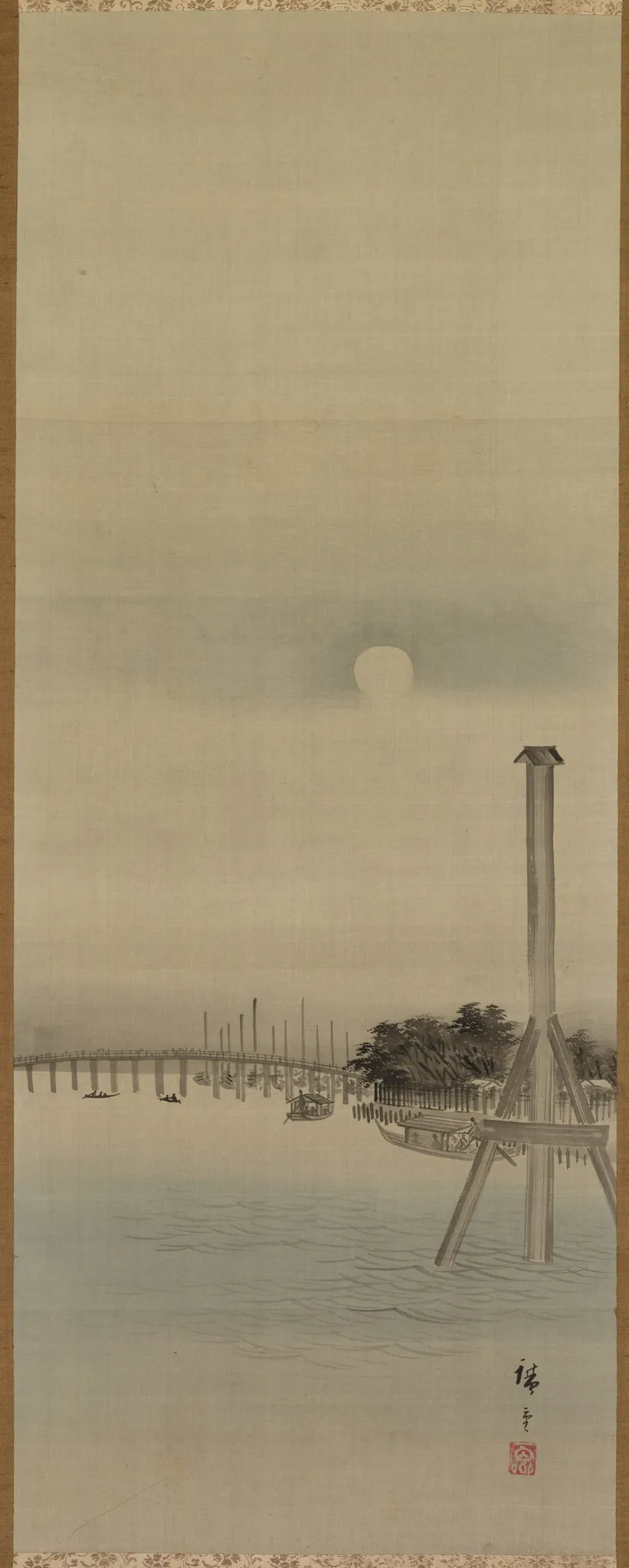
Night Scene on the Sumida River is an unspecified painting by the Ukiyo-e artist Utagawa Hiroshige. It dates from 1849 and is held in the collection of the Cleveland Museum of Art.
About this work
History & Provenance
It has been exhibited as part of the museum's holdings of ukiyo-e paintings, including displays highlighting Japanese art from the 19th century.
Utagawa Hiroshige created Night Scene on the Sumida River in 1849, as documented in its cataloging record. The work entered the Cleveland Museum of Art collection in 1920, listed under accession number 1920.274. It remains part of the museum's holdings in Cleveland, Ohio, having been acquired through a donation. The artwork was made in Japan and is classified as a painting from the Edo period.
Night Scene on the Sumida River is part of the Cleveland Museum of Art's collection, cataloged under accession number 1920.274. The work was created in 1849 in Japan and is classified as a painting. It has been exhibited as part of the museum's holdings of ukiyo-e paintings, including displays highlighting Japanese art from the 19th century.
Overview
Created in 1849 by the Edo‑period ukiyo‑e artist Utagawa Hiroshige, this work depicts a tranquil nocturnal view of the Sumida River. A low bridge spans the dark water, small boats drift nearby, and a slender wooden tower rises on the riverbank under a pale moon. The composition is rendered in muted tones that suggest moonlight reflected on calm waves.
Subject & Meaning
The scene captures a quiet moment of everyday life along the river, emphasizing the interplay of light and shadow rather than bustling urban activity. By focusing on the serene atmosphere, Hiroshige invites contemplation of the river’s rhythm and the subtle presence of human structures within a natural setting.
Technique & Style
Executed in the ukiyo‑e woodblock tradition, the image employs soft, washed‑out pigments that blend the boats, trees, and mist into a cohesive, dreamlike haze. Delicate line work outlines the bridge and tower, while the limited color palette reinforces the nocturnal mood and the faint glow of moonlight.
Context
The work reflects a shift in ukiyo‑e toward atmospheric landscapes, a trend that Hiroshige helped popularize. By portraying a calm river night, the print aligns with contemporary Japanese aesthetic ideals that valued simplicity, transience, and the subtle beauty of everyday scenes.
Artist & collection
Artist
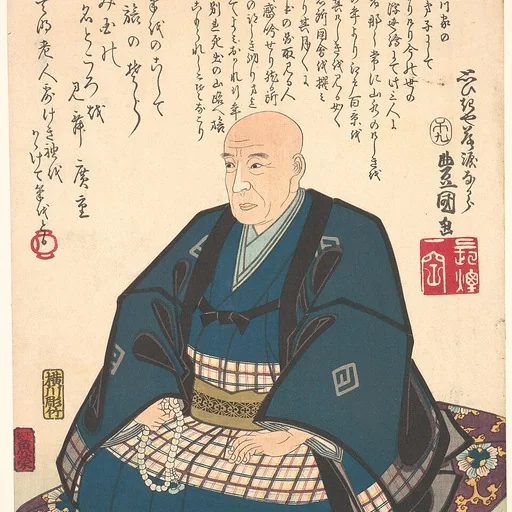
Utagawa Hiroshige (歌川 広重) or Andō Hiroshige (安藤 広重), born Andō Tokutarō (安藤 徳太郎; 1797 – 12 October 1858), was a Japanese ukiyo-e artist, considered the last great master of that tradition.

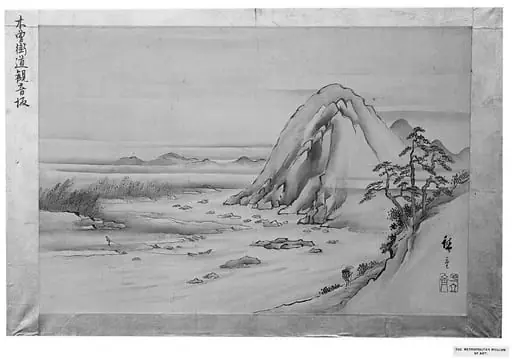
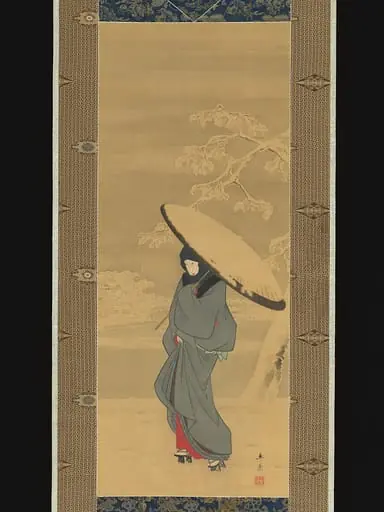
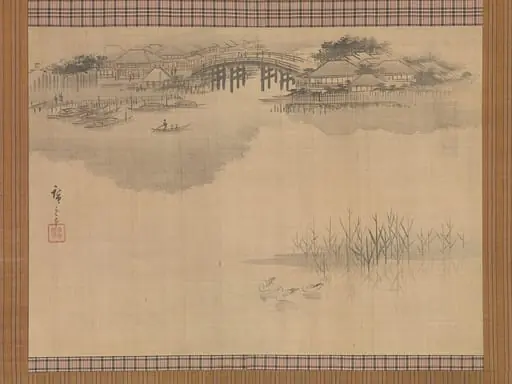
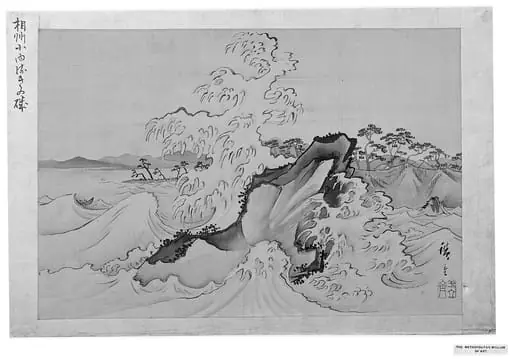
 Untitled
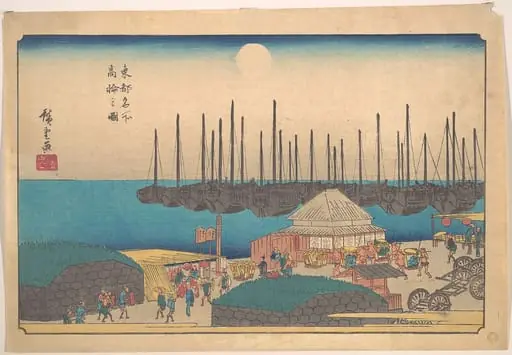 東都名所 高輪之図|Takanawa no Zu
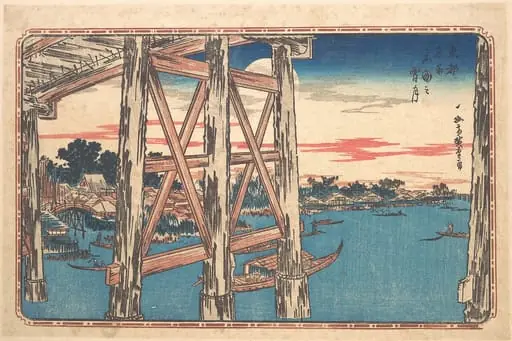 東都名所 両国之宵月|Twilight Moon at Ryōgoku Bridge
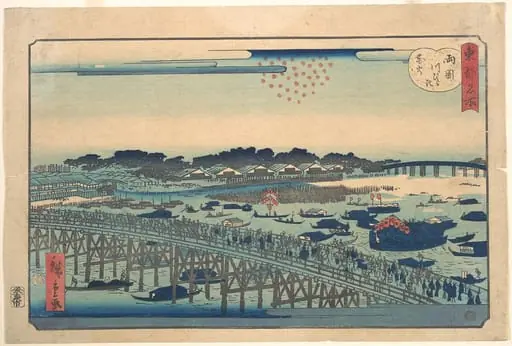 Untitled
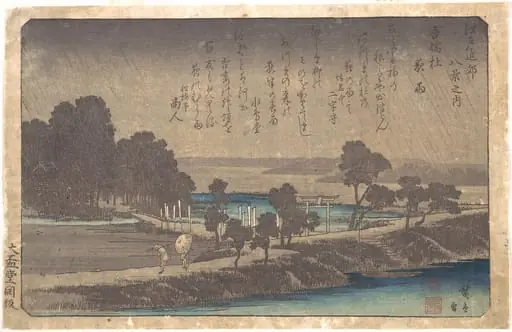 Azuma Mori Yau|江戸近郊八景之内 吾嬬杜夜雨|Evening Rain in Azuma Wood
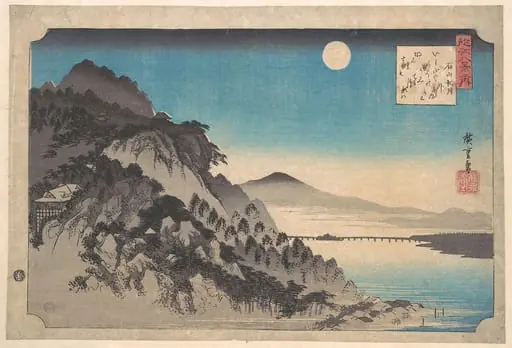 近江八景之内 石山秋月|The Autumn Moon at Ishiyama on Lake Biwa
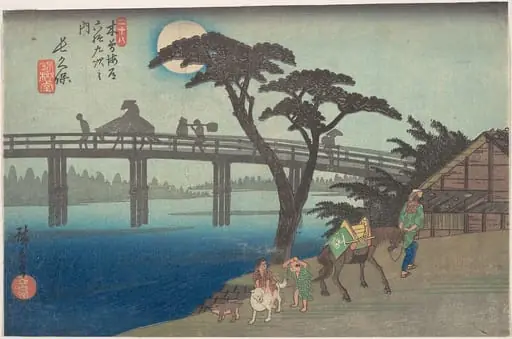 木曽海道六拾九次之内 長久保|Nagakubo, Station No. 28
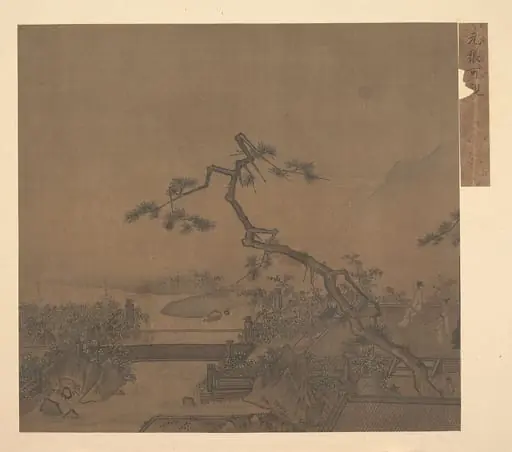 明/清 佚名 舊傳 元張可觀 月映松臺圖 冊頁|Moonlit terrace
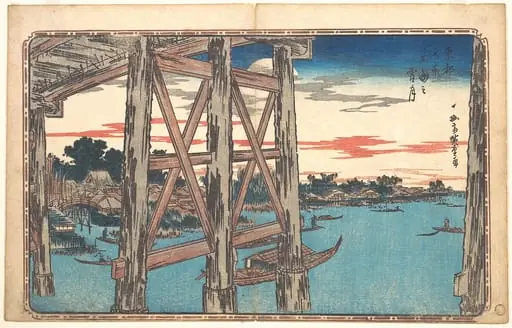 Ryogoku no yoizuki|東都名所 両国之宵月|Twilight Moon at Ryōgoku Bridge
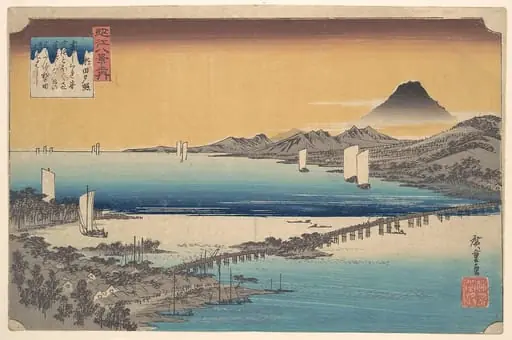 近江八景之内 瀬田夕照|Long Bridge of Seta
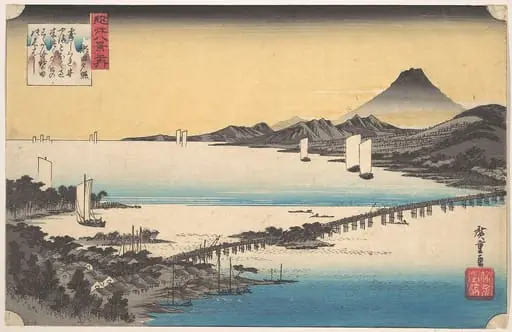 近江八景之内 瀬田夕照|Sunset at Seta
- Night Scene on the Sumida River
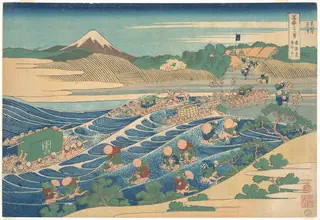 Studied in the Edo/Japonisme course