Edo/Japonisme
From the pleasure quarters of Edo to the studios of Paris, tracing the wave that reshaped modern art.
What you'll explore
- Place Paris
- Place Tokyo
- Subject Courtesan
- Movement Japonisme
- Artist Kitagawa Utamaro
- Movement Post-Impressionism
- Movement Ukiyo-e
- Artist Utagawa Hiroshige
- Artist Edgar Degas
- Movement Impressionism
- Artist Katsushika Hokusai
- Artist Mary Cassatt
- Group Utagawa School
- Artist Utagawa Toyokuni I
- Artist Vincent van Gogh
- Subject Wind Wave
The lessons
-
The Floating World Unveiled
From the in-app quiz
-
Look closely at the composition of this work. Which visual element signals the Western influence that would eventually circle back to Japan?
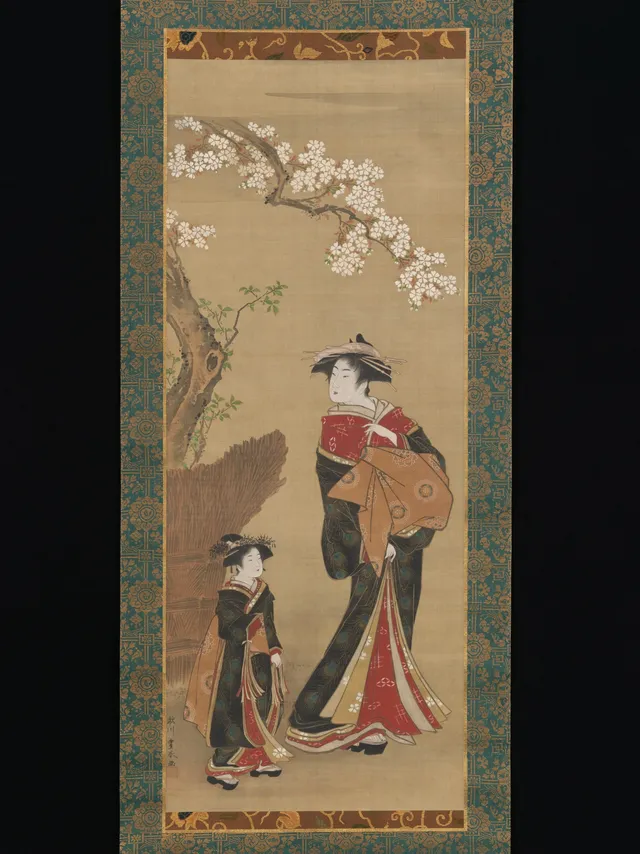
Courtesan and her Attendant under a Cherry Tree , Utagawa Toyoharu - The use of linear perspective in the receding path and tree Answer
- The bright, solid blocks of Prussian blue
- The asymmetrical cropping of the figures
You are right to notice the depth in the scene; Toyoharu used Western linear perspective to create a sense of space that was new to Japanese art.
-
What social class is the primary subject of this print's setting?
- A samurai warrior on patrol
- A courtesan and her attendant Answer
- A peasant family harvesting rice
- A Buddhist monk in meditation
Correct. The scene is set in the pleasure quarters, where the courtesan was a central figure of fashion and culture.
-
-
The Great Wave and the Mountain
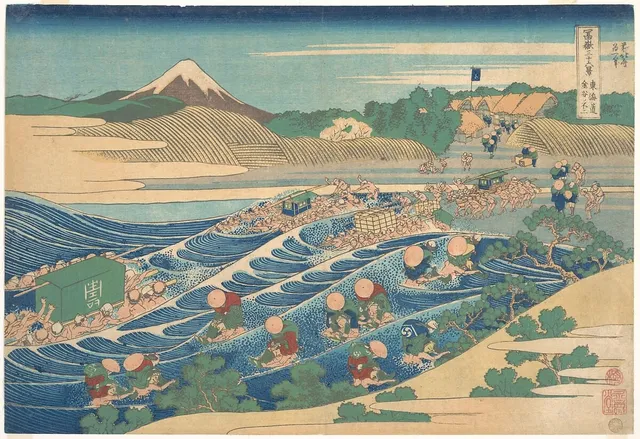
冨嶽三十六景 東海道金谷の不二|Fuji Seen from Kanaya on the Tōkaidō (Tōkaidō Kanaya no Fuji), from the series Thirty-six Views of Mount Fuji (Fugaku sanjūrokkei) Katsushika Hokusai 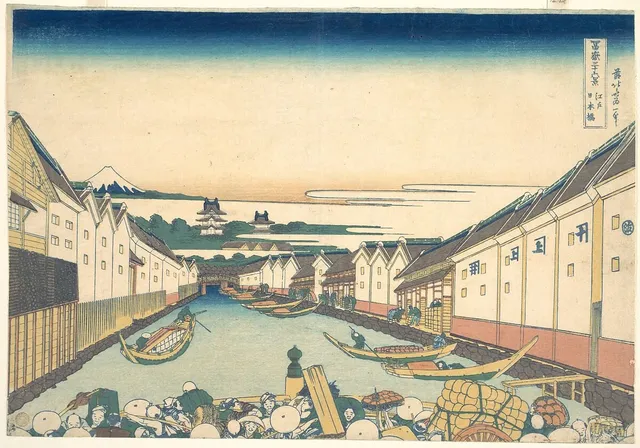 冨嶽三十六景 江戸日本橋|Nihonbashi in Edo (Edo Nihonbashi), from the series Thirty-six Views of Mount Fuji (Fugaku sanjūrokkei) Katsushika Hokusai
 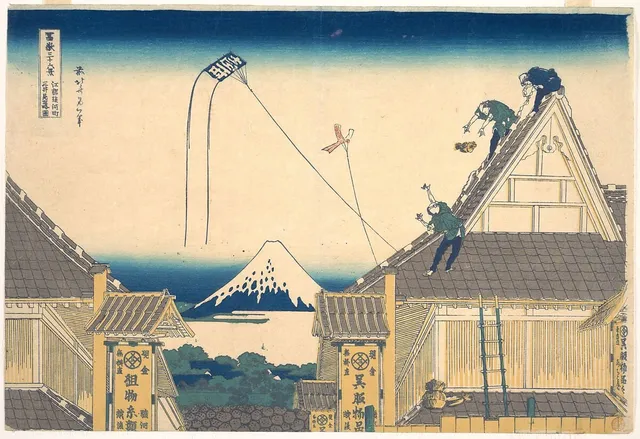 冨嶽三十六景 江都駿河町三井見世略図|Mitsui Shop at Surugachō in Edo (Edo Surugachō Mitsui mise ryaku zu), from the series Thirty-six Views of Mount Fuji (Fugaku sanjūrokkei) Katsushika Hokusai
 From the in-app quiz
-
Which artwork places the human figures in the foreground, making them the primary focus while the mountain recedes to the background?
In 'Nihonbashi in Edo', the crowd on the bridge and the boats in the river take center stage, pushing Mount Fuji to a small, distant triangle on the horizon.
-
In 'Mitsui Shop at Surugachō', what architectural feature creates the strong diagonal lines that anchor the perspective?
冨嶽三十六景 江都駿河町三井見世略図|Mitsui Shop at Surugachō in Edo (Edo Surugachō Mitsui mise ryaku zu), from the series Thirty-six Views of Mount Fuji (Fugaku sanjūrokkei) , Katsushika Hokusai - The curved roof of the temple
- The straight eaves and rooflines of the shop Answer
- The vertical trunks of the cherry trees
The sharp, geometric lines of the shop's roof and eaves create a strong diagonal structure that guides your eye through the scene from above.
-
-
Hiroshige's Journey
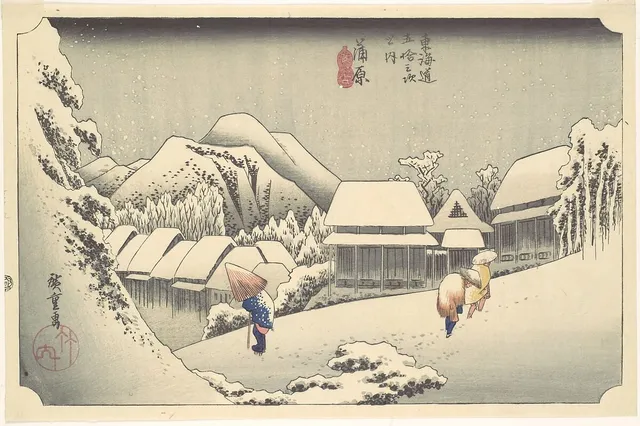 東海道五十三次之内 蒲原 夜の雪|Evening Snow at Kanbara, from the series "Fifty-three Stations of the Tōkaidō" Utagawa Hiroshige
 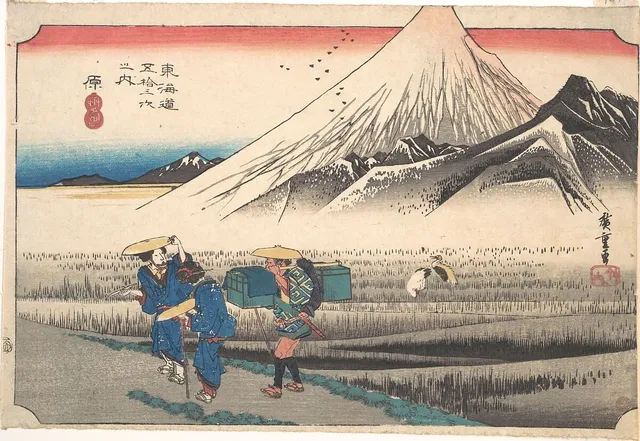 歌川広重画 東海道五十三次之内 原 朝の富士|Hara: Mount Fuji in the Morning (Hara, Asa no Fuji), from the series Fifty-Three Stations of the Tōkaidō Road (Tōkaidō gojūsan tsugi), also known as the First Tōkaidō or Great Tōkaidō Utagawa Hiroshige
 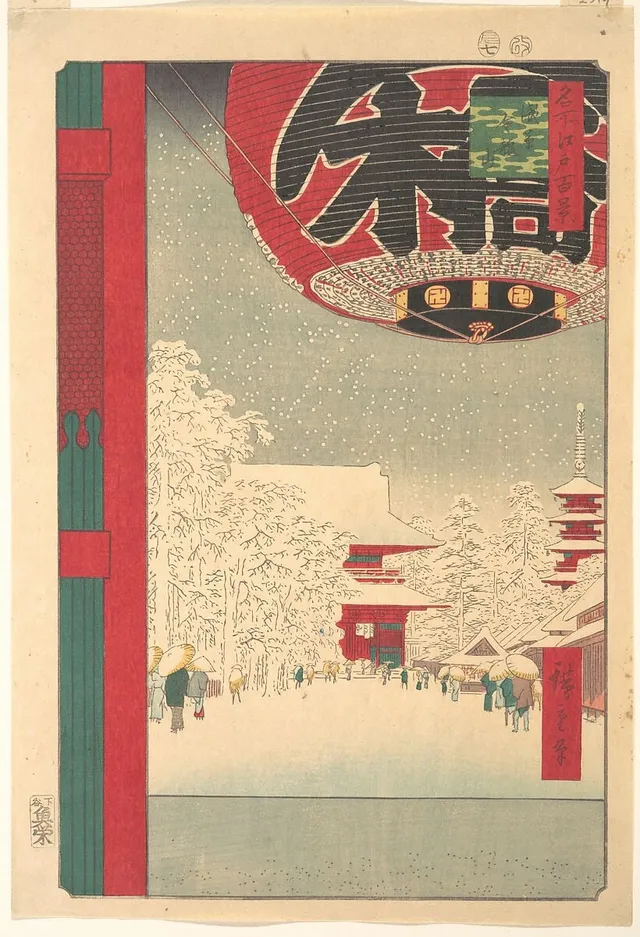 名所江戸百景 浅草金龍山|Kinryūsan Temple at Asakusa, from the series "One Hundred Famous Views of Edo" Utagawa Hiroshige
 From the in-app quiz
-
Which print captures the specific atmospheric effect of snow falling at night?
You found 'Evening Snow at Kanbara', where Hiroshige masterfully depicts the quiet weight of a snowstorm on the Tokaido road. The other options feature different artists or subjects that do not share this specific nocturnal, snowy atmosphere.
-
In 'Hara: Mount Fuji in the Morning', what time of day is suggested by the soft, pale light?
- Midnight
- High Noon
- Morning Answer
- Dusk
The title 'Hara: Mount Fuji in the Morning' and the gentle, rising light across the landscape clearly indicate the early hours of the day. Hiroshige often played with these specific times to evoke different moods in his travel series.
-
-
Intimacy and the Private Sphere
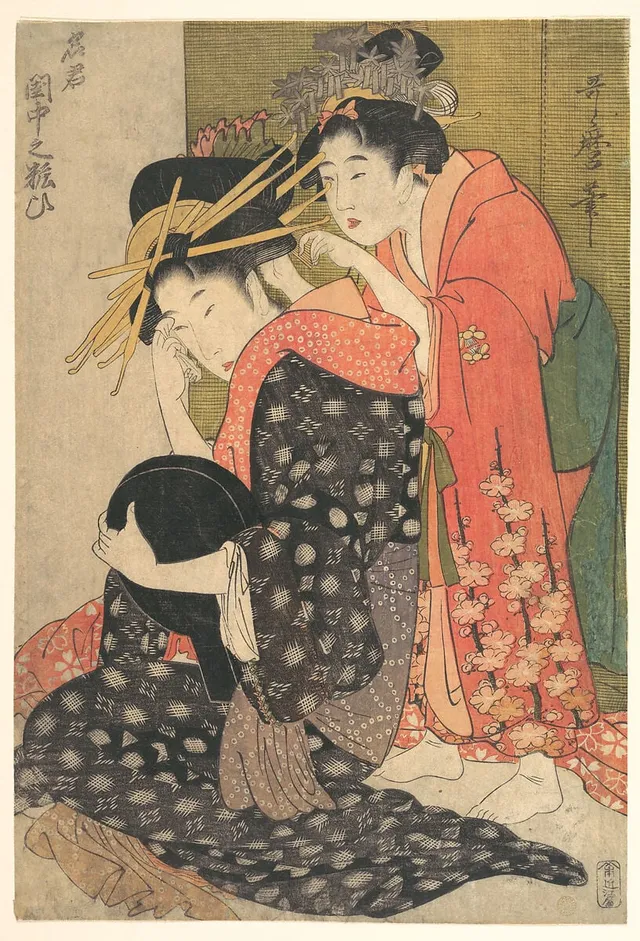 名君 閨中の粧ひ|The Oiran Yoso-oi Seated at Her Toilet Kitagawa Utamaro
 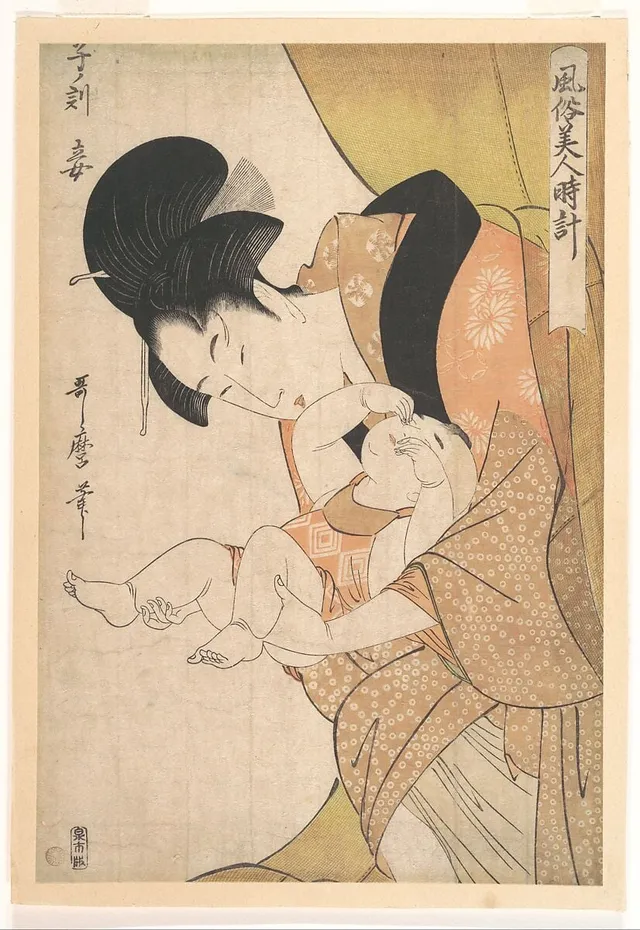 風俗美人時計 子ノ刻 妾|Midnight: Mother and Sleepy Child Kitagawa Utamaro
 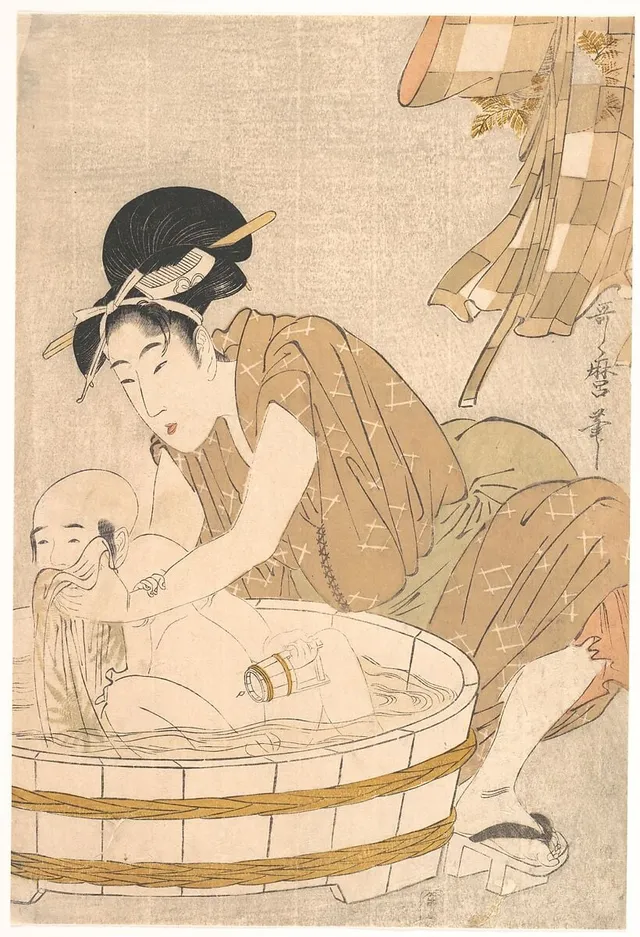 行水|Bathtime (Gyōzui) Kitagawa Utamaro
 From the in-app quiz
-
Which of these works by Kitagawa Utamaro captures the tender silence of a mother and her sleepy child at midnight?
You found the right moment. In "Midnight: Mother and Sleepy Child," Utamaro masterfully conveys the weight of sleep and the closeness of the bond between mother and child.
-
Look at the composition of "Bathtime". How does the artist frame the figure to emphasize the privacy of the scene?
行水|Bathtime (Gyōzui) , Kitagawa Utamaro - By placing the figure in a wide, open landscape with distant mountains.
- By cropping the image tightly around the body, cutting off the edges of the room. Answer
- By showing the figure in a crowded public bath with many other people.
Exactly. Utamaro crops the composition tightly, removing the context of the room to focus entirely on the figure and the intimate act of bathing.
-
-
The Night Scene
From the in-app quiz
-
What specific time of day is depicted in this unique nocturnal view?
- High noon with bright sunlight
- Nightfall with lantern light Answer
- Early morning mist
- Late afternoon sunset
Correct. The deep blues and the glowing lanterns indicate that this scene takes place at night, a rare subject for such atmospheric depth in Ukiyo-e.
-
Which river serves as the setting for this atmospheric scene?
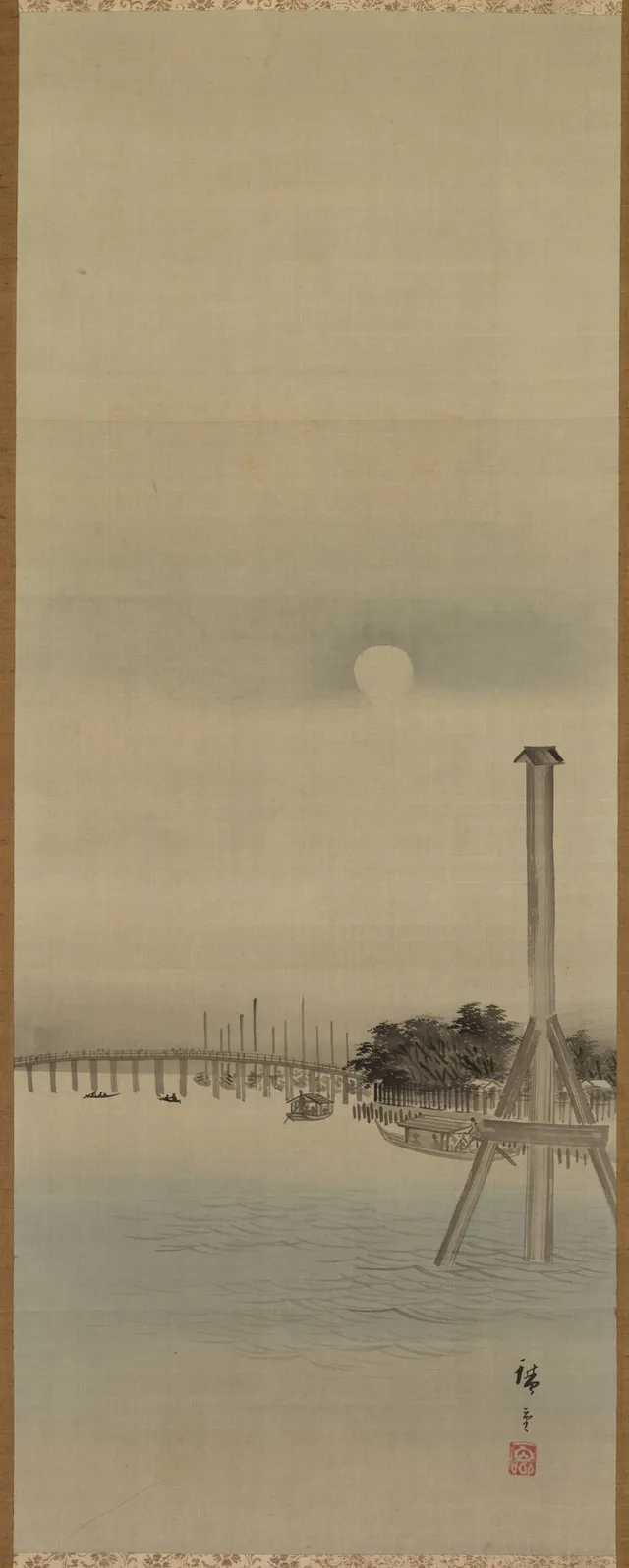
Night Scene on the Sumida River , Utagawa Hiroshige - The Kamo River
- The Sumida River Answer
- The Tone River
- The Arakawa River
Correct. This work captures the quiet beauty of the Sumida River in Edo, a favorite subject for Hiroshige's views of the city.
-
-
Japonisme Arrives in Paris
From the in-app quiz
-
When these Japanese prints first arrived in Paris, what was their original, utilitarian purpose?
- They were used as packing paper for ceramic goods. Answer
- They served as posters for theater performances.
- They were sold directly as high-end art pieces.
- They functioned as religious offerings in temples.
Correct! These prints often arrived wrapped around fragile ceramics, serving as protective packing material before artists discovered their artistic value.
-
Which artistic movement was born from the European fascination with Japanese prints?
That is right. The movement is Japonisme, which emerged as European artists embraced the aesthetics of these Japanese works, starting with pieces like Hiroshige's 'Hara: Mount Fuji in the Morning.'
-
-
Cropping and the Modern Gaze
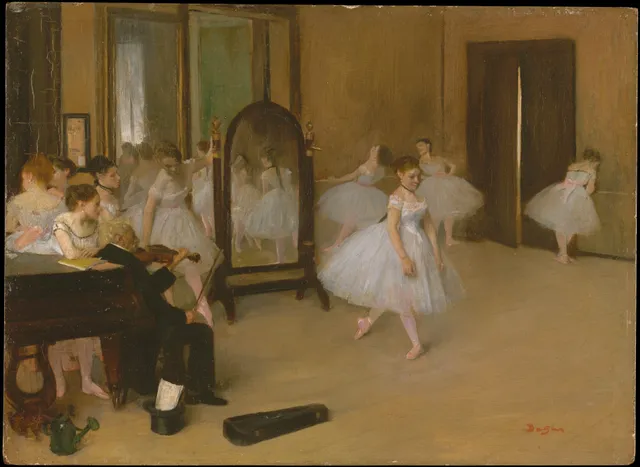 The Dancing Class Edgar Degas
 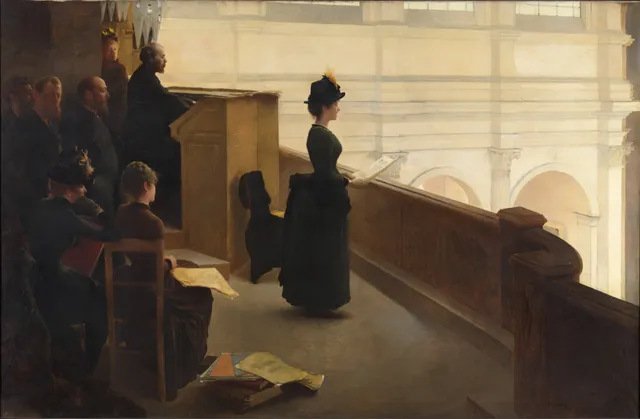 The Organ Rehearsal Henry Lerolle
 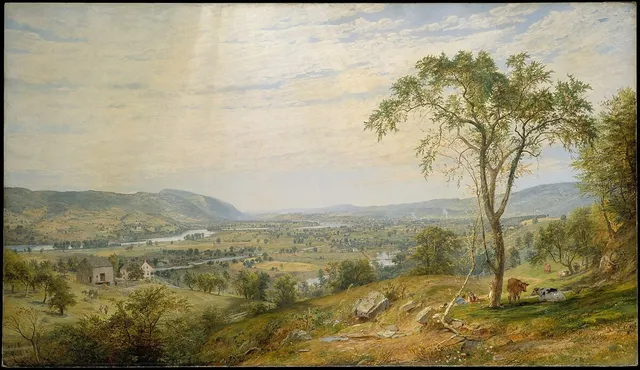 The Valley of Wyoming Jasper Francis Cropsey
 From the in-app quiz
-
Which painting demonstrates the influence of Japanese cropping by cutting off figures at the edge of the frame?
Correct. Degas's 'The Dancing Class' famously cuts figures off at the edges, mimicking the spontaneous framing found in Japanese prints.
-
In which painting does the composition reflect the Japanese aesthetic of asymmetry, with figures clustered on one side?
The Organ Rehearsal , Henry Lerolle - The Organ Rehearsal Answer
- The Dancing Class
- The Valley of Wyoming
That is right. Lerolle's 'The Organ Rehearsal' places the subjects on the right, leaving the left side open, a deliberate use of asymmetry inspired by Japanese art.
-
-
Color and Line: Van Gogh's Embrace
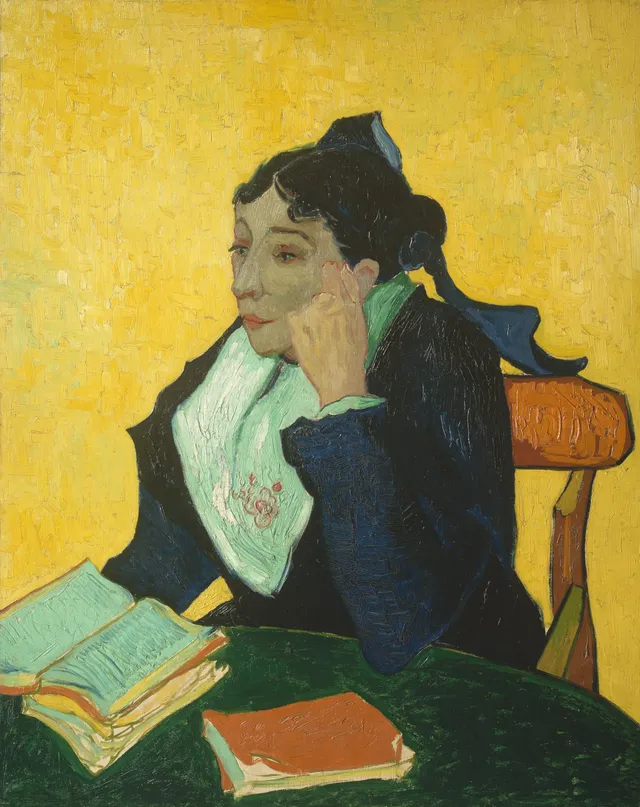 L'Arlésienne Vincent van Gogh Night Scene on the Sumida River Utagawa Hiroshige 冨嶽三十六景 江都駿河町三井見世略図|Mitsui Shop at Surugachō in Edo (Edo Surugachō Mitsui mise ryaku zu), from the series Thirty-six Views of Mount Fuji (Fugaku sanjūrokkei) Katsushika Hokusai
 From the in-app quiz
-
Which Van Gogh work in our collection best demonstrates his adoption of the Japanese aesthetic of flat, unmodulated color?
You have found the correct work, where Van Gogh uses bold outlines and flat color blocks, directly inspired by the Japanese prints he admired.
-
Look at the detail from "Night Scene on the Sumida River." How does the use of line here differ from traditional Western modeling of form?
Night Scene on the Sumida River , Utagawa Hiroshige - It uses soft, blended shadows to create a sense of three-dimensional depth.
- It relies on dark, continuous outlines to define shapes against flat areas of color. Answer
- It employs rapid, broken brushstrokes to capture the fleeting effects of light.
Correct. Hiroshige uses clear, dark outlines to separate forms, a technique that Van Gogh later adopted to replace traditional shading with vibrant, flat color.
-
-
The Posters of Toulouse-Lautrec
From the in-app quiz
-
Examine the bold, dark outline defining the dancer's form. Which element of this work is directly indebted to Japanese printmaking?
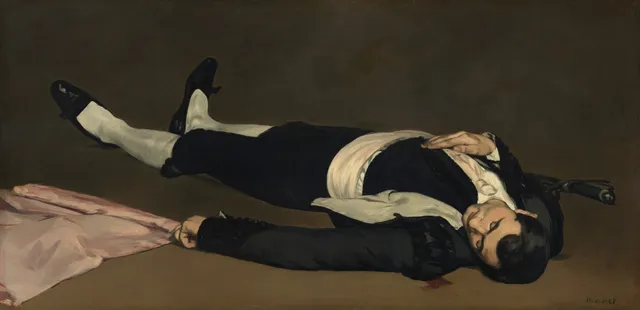
The Dead Toreador , Édouard Manet - The use of atmospheric perspective to create deep space
- The sharp, flat silhouette defining the figure Answer
- The realistic texture of the oil paint
Exactly. The sharp, flat silhouette is a hallmark of Japanese woodblock prints, which Lautrec adopted to define his modern subjects with graphic clarity.
-
Toulouse-Lautrec elevated the daily lives of performers in Paris to the status of high art. Which subject matter mirrors the Ukiyo-e focus on the pleasure quarters?
- Theater performers and nightlife Answer
- Ancient mythological battles
- Idealized landscapes of the countryside
Correct. Just as Ukiyo-e artists depicted the actors and courtesans of Edo, Lautrec celebrated the dancers and musicians of Parisian cabarets.
-
-
Where to Meet the Wave
From the in-app quiz
-
Why is it important to acknowledge that our current view of Ukiyo-e is often filtered through Western museum collections?
- Because it reminds us that these works originated in the daily life of Edo, not in Western galleries. Answer
- Because Western museums are the only places where these prints can be seen today.
- Because the Western perspective changed the original meaning of the ink and paper.
Acknowledging the Western filter helps us remember that these works were once part of a living culture in Edo, now Tokyo, before they traveled to Paris and beyond.
-
Which city is the primary setting for the 'Floating World' that inspired the West?
The correct answer is the painting depicting the city of Edo, which is the historical setting for the Floating World, now known as Tokyo.
-