Artwork
歌川国芳画 「高祖御一代略図 小室山法論石」|Concise Illustrated Biography of Monk Nichiren: Rock Suspended by the Power of Prayer on Komuro Mountain
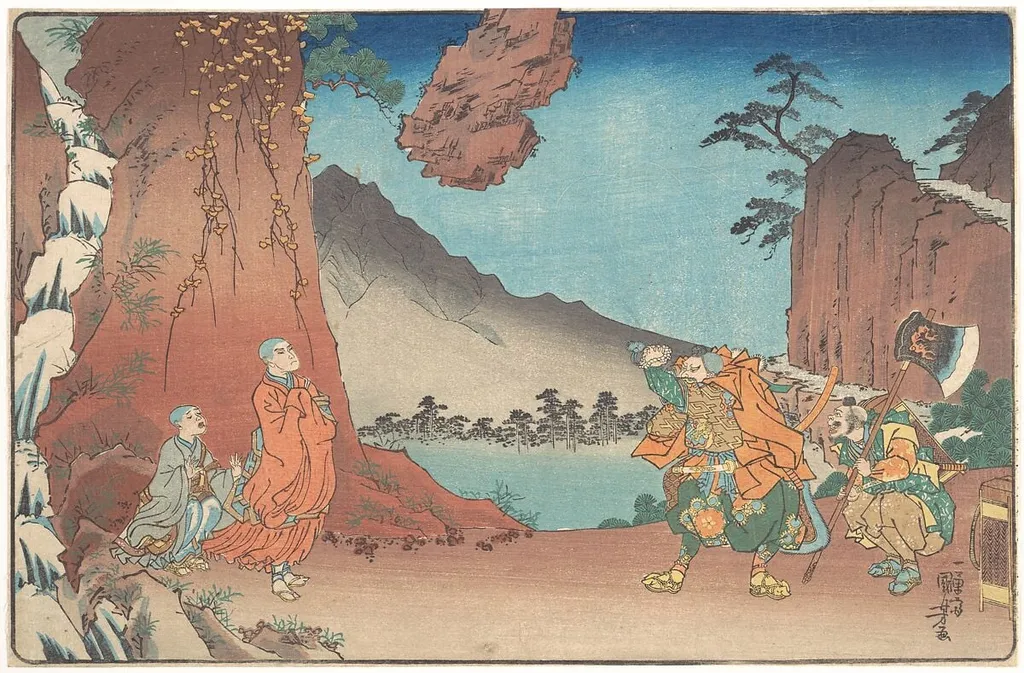
歌川国芳画 「高祖御一代略図 小室山法論石」|Concise Illustrated Biography of Monk Nichiren: Rock Suspended by the Power of Prayer on Komuro Mountain is an ink print by the Romanticist artist Utagawa Kuniyoshi. It dates from 1836 and is held in the collection of the Metropolitan Museum of Art.
About this work
Overview
Created in 1836 by the Japanese ukiyo‑e master Utagawa Kuniyoshi, this woodblock print depicts a narrative episode from the life of the Buddhist reformer Nichiren. Executed with ink and color on paper, the work measures roughly a single sheet and is part of the Metropolitan Museum of Art’s collection.
Subject & Meaning
The composition juxtaposes two tranquil monks seated beneath a leafless tree with a dynamic procession of riders traversing a snow‑covered mountain. Central to the story is a levitating stone on Komuro Mountain, presented as a miraculous object held aloft by the power of Nichiren’s prayer, symbolising spiritual authority over natural forces.
Technique & Style
Kuniyoshi employs the bold line work and flat, saturated pigments characteristic of mid‑nineteenth‑century ukiyo‑e. The print’s palette, bright reds, blues, and golds against a stark white snowfield, enhances the dramatic contrast between the serene left side and the vigorous right side. The floating rock is rendered with a delicate gradation that suggests weightlessness.
History & Provenance
The print was produced in Edo during the late Edo period, a time when illustrated biographies of religious figures were popular. It entered the Metropolitan Museum of Art’s holdings through a 20th‑century acquisition, where it remains catalogued as a representative example of Kuniyoshi’s narrative prints.
Context
Within the broader tradition of Japanese devotional art, the image reflects the 19th‑century fascination with hagiographic storytelling. Kuniyoshi, known for his dynamic warrior scenes, applied his compositional vigor to a Buddhist subject, merging popular visual culture with religious didacticism.
Artist & collection
Artist
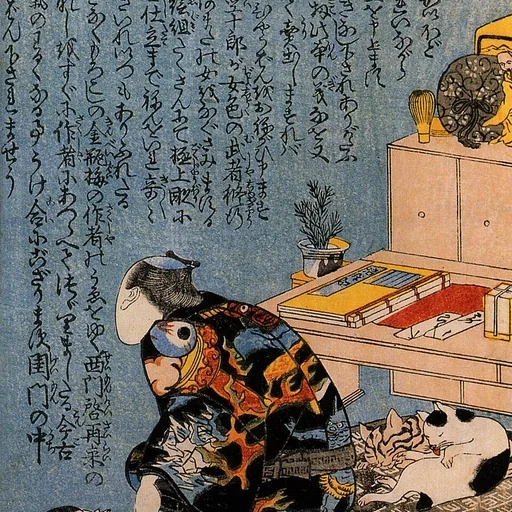
Kuniyoshi grew up in old Tokyo when the city was still called Edo. His dad ran a silk shop, but Kuniyoshi loved anything with pictures, scrolls, screens, comic books. He talked his way into the Utagawa school, a kind of…

 Untitled
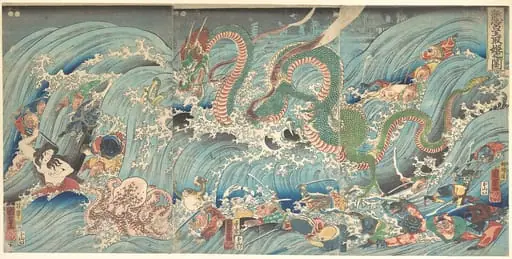 Ryugu Tamatori Hime no su|Recovering the Stolen Jewel from the Palace of the Dragon King
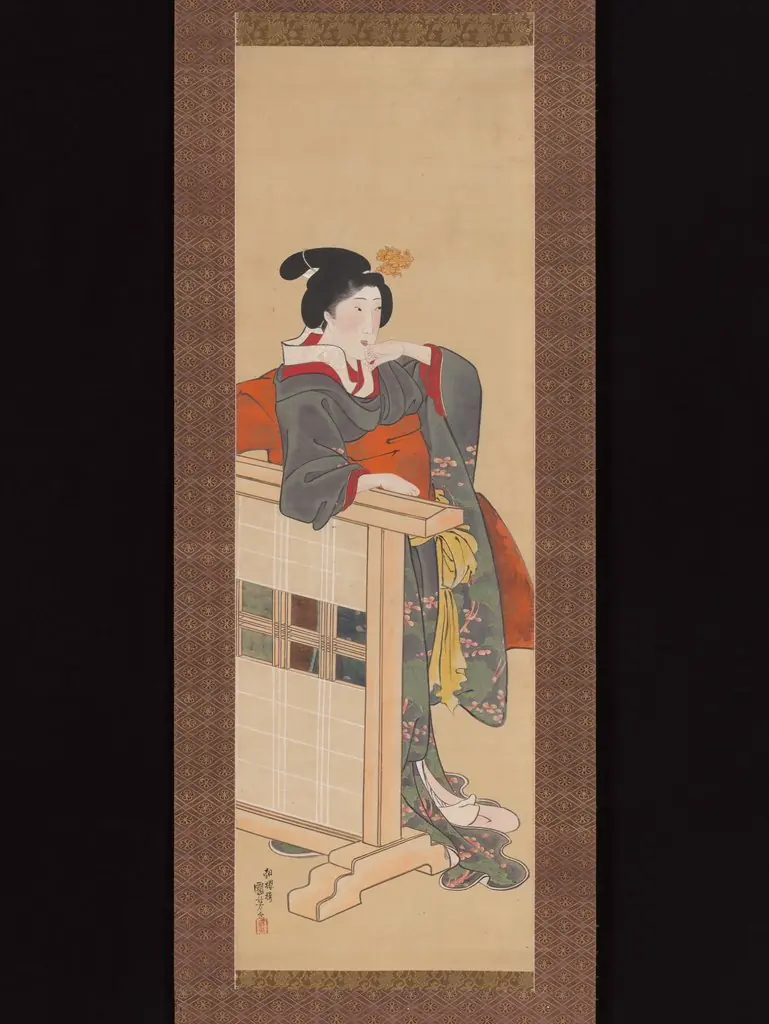 Lady-in-Waiting at Edo Castle
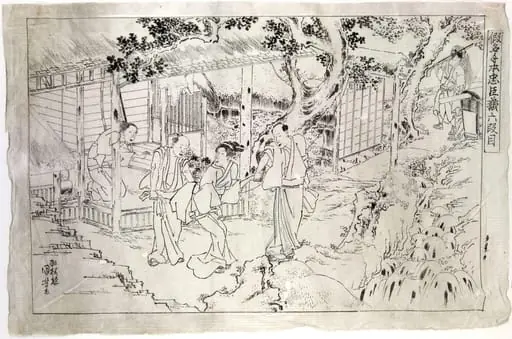 Treasury of the Forty-seven Loyal Retainers
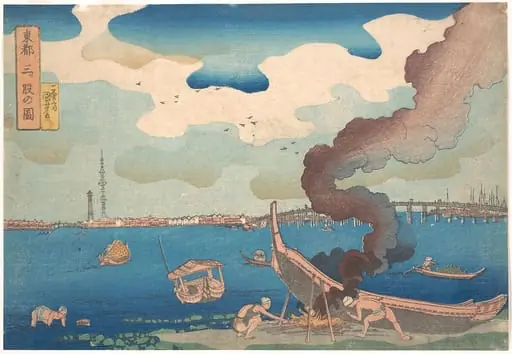 Toto Mitsumata no zu|Picture of Mitsumata
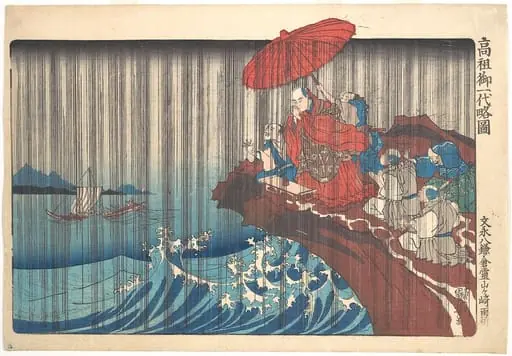 歌川国芳画 「高祖御一代略図 鎌倉霊山ヶ崎雨祈」|Concise Illustrated Biography of Monk Nichiren: Prayer for Rain Answered at Ryōzengasaki in Kamakura
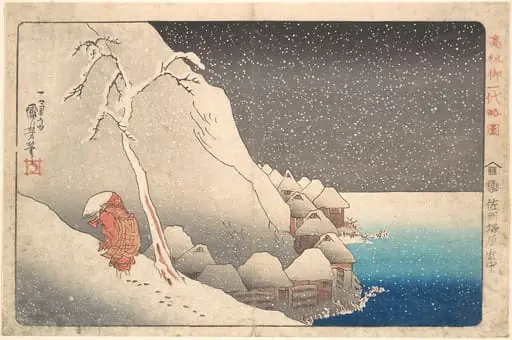 歌川国芳画 「高祖御一代略図 佐州塚原雪中」|Concise Illustrated Biography of Monk Nichiren: In Snow at Tsukahara on Sado Island
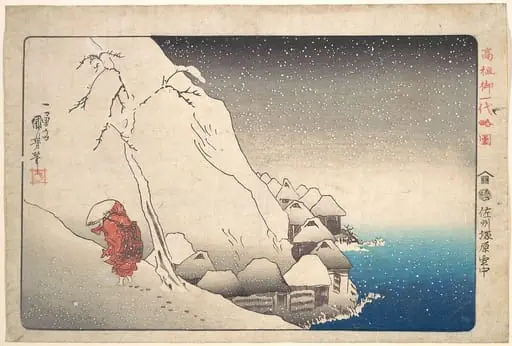 Sashu Tsukahara setchu|Nichiren in Snow at Tsukahara, Sodo Province
- 冨嶽三十六景 東海道品川御殿山の不二|Fuji from Gotenyama at Shinagawa on the Tōkaidō (Tōkaidō Shinagawa Gotenyama no Fuji), from the series Thirty-six Views of Mount Fuji (Fugaku sanjūrokkei)
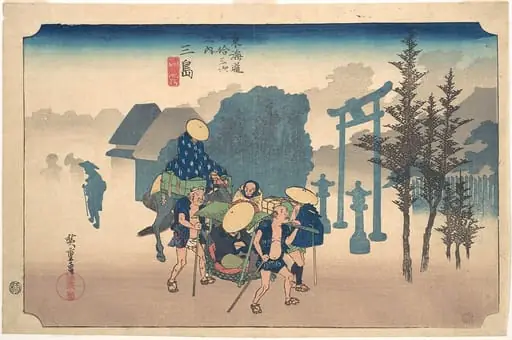 東海道五十三次 三島 朝霧|Morning Mist at Mishima
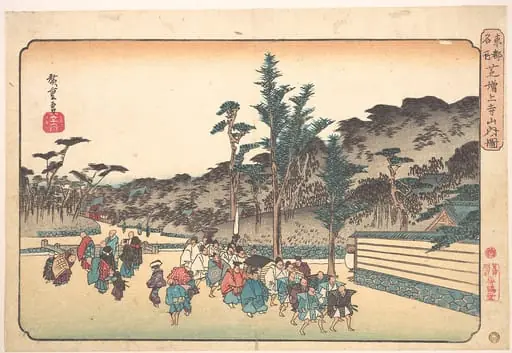 東都名所 芝増上寺山内の図|Shiba Zōjōji Sannai no Zu
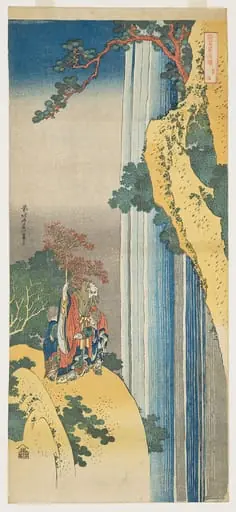 詩歌写真鏡 李白|Ri Haku from the series Mirrors of Japanese and Chinese Poems (Shiika shashin kyō)
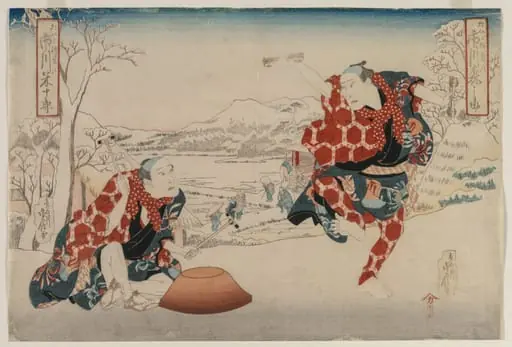 Ichikawa Norinosuke and Ichikawa Yonejuro as Morihachi and Yonehachi, Two Comedians
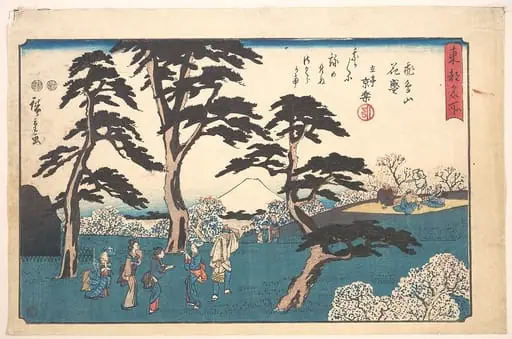 東都名所 飛鳥山花盛|Asukayama Hana Zakari
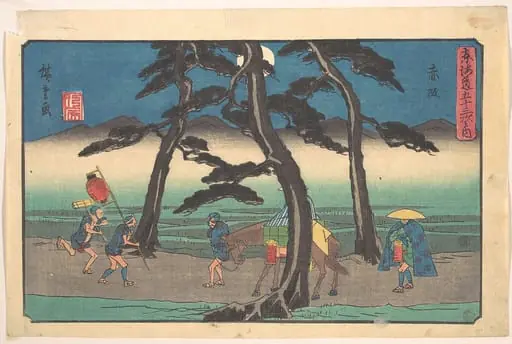 東海道五十三次之内 赤阪|Akasaka Station
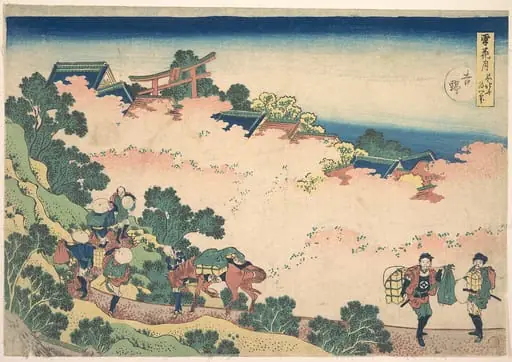 雪月花 吉野|Cherry Blossoms at Yoshino (Yoshino), from the series Snow, Moon, and Flowers (Setsugekka)
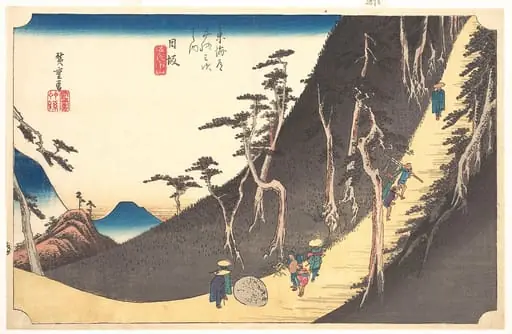 Nissaka-sayo no Naka Yama|東海道五十三次之内 日坂 佐夜の中山|Station Twenty-six: Nissaka, Sayo no Nakayama, from the Fifty-three Stations of the Tokaido
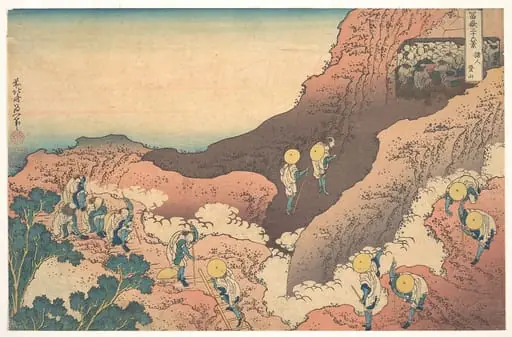 冨嶽三十六景 諸人登山|Groups of Mountain Climbers (Shojin tozan), from the series Thirty-six Views of Mount Fuji (Fugaku sanjūrokkei)
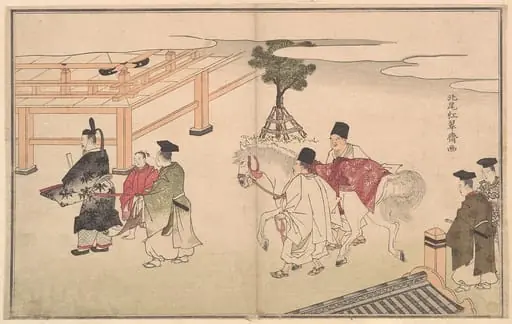 Untitled
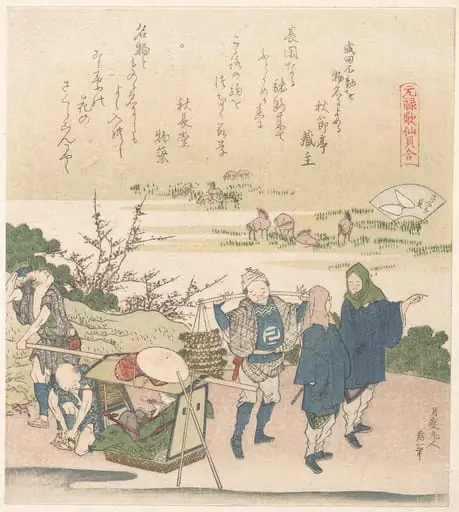 Sakura-gai|元禄歌仙貝合|Cherry Shell, from the series Genroku Poetry Shell Games