Artwork
Splendid View at Futamigaura Bay
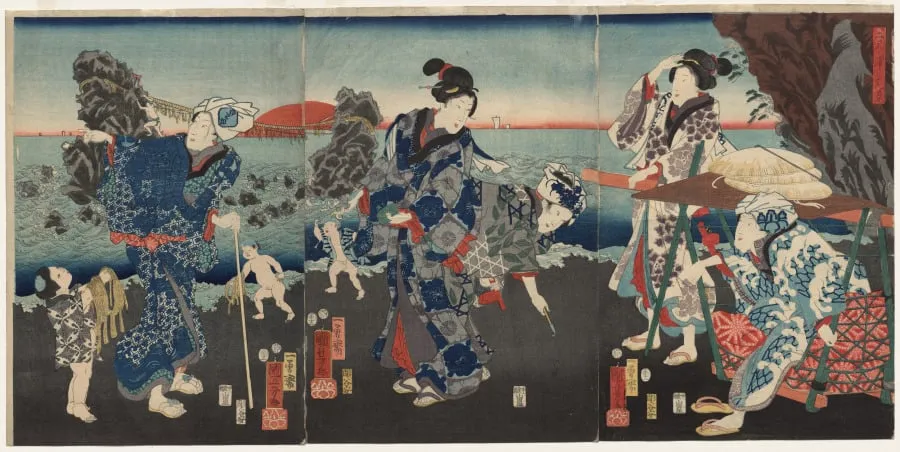
Splendid View at Futamigaura Bay is a print by the Impressionist artist Utagawa Kuniyoshi. It dates from 1854 and is held in the collection of the Cleveland Museum of Art.
- Accession no.
- 1943.10
- Credit line
- Gift of Mrs. Ralph King
About this work
You see three joined prints of a busy bay at dawn. Tiny pilgrims walk along the shore, and two giant rocks tied with a thick rope rise from the water.
The rope is a shimenawa, a sacred marker in Shinto. It turns ordinary rocks into gods. This spot was where people washed away bad luck before visiting a holy shrine.
To see more prints like this, look up Japan, Edo period (1615–1868).
Overview
The work consists of three adjoining woodblock prints that together depict a sunrise over Futamigaura Bay, a coastal site associated with the Ise Grand Shrine. The scene shows a bustling shoreline at dawn, where numerous figures move along the beach beneath two prominent rocks bound by a thick rope.
Subject & Meaning
The two massive rocks, linked by a shimenawa, a rope used in Shinto to demarcate sacred space, represent the mythic deities Izanagi and Izanami, creators of Japan according to legend. The prints illustrate pilgrims performing ritual purification at this locale before proceeding to the nearby Ise shrine, reflecting the site's religious significance.
Technique & Style
Executed in the traditional ukiyo-e woodblock method, the triptych employs fine line work and subtle gradations of color to convey the early morning light and the movement of crowds. The composition balances detailed human activity with the imposing natural forms of the rocks and sea.
History & Provenance
Created during Japan’s Edo period (1615–1868), the prints were likely produced for a market of travelers and devotees seeking visual records of holy destinations. The work has been preserved in several museum collections that focus on Japanese printmaking.
Context
Futamigaura Bay served as a customary stop for pilgrims en route to Ise Grand Shrine, where they would cleanse themselves of impurity. The site’s iconic “Wedded Rocks” and shimenawa have long symbolized marital unity and divine presence in Shinto belief.
Artist & collection
Artist
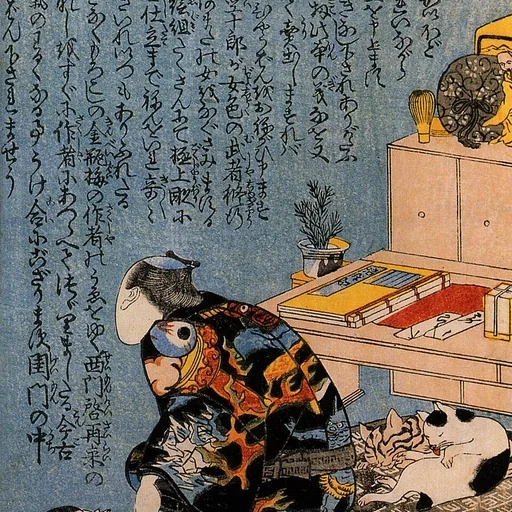
Kuniyoshi grew up in old Tokyo when the city was still called Edo. His dad ran a silk shop, but Kuniyoshi loved anything with pictures, scrolls, screens, comic books. He talked his way into the Utagawa school, a kind of…

 Untitled
 Ryugu Tamatori Hime no su|Recovering the Stolen Jewel from the Palace of the Dragon King
 Lady-in-Waiting at Edo Castle
 Treasury of the Forty-seven Loyal Retainers
 Toto Mitsumata no zu|Picture of Mitsumata
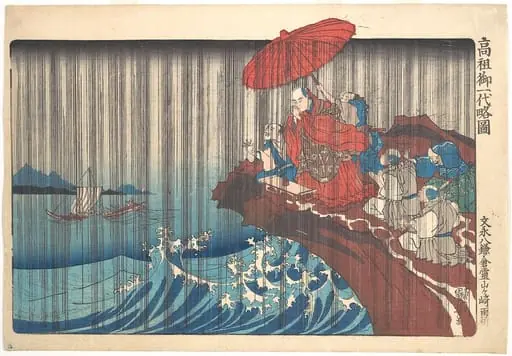 歌川国芳画 「高祖御一代略図 鎌倉霊山ヶ崎雨祈」|Concise Illustrated Biography of Monk Nichiren: Prayer for Rain Answered at Ryōzengasaki in Kamakura
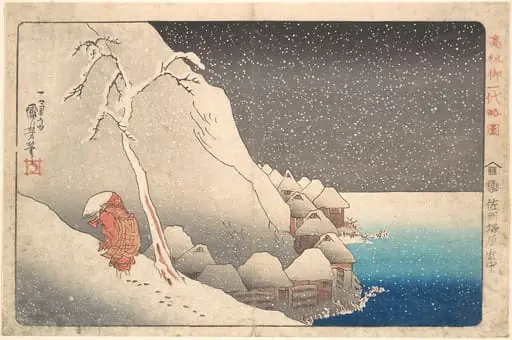 歌川国芳画 「高祖御一代略図 佐州塚原雪中」|Concise Illustrated Biography of Monk Nichiren: In Snow at Tsukahara on Sado Island
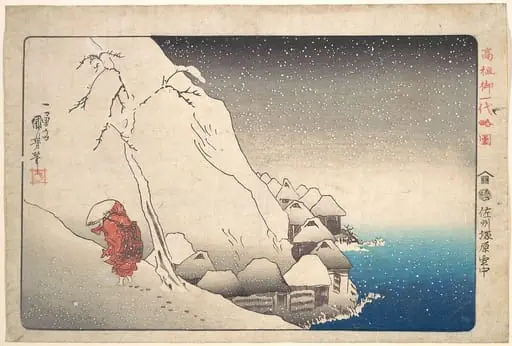 Sashu Tsukahara setchu|Nichiren in Snow at Tsukahara, Sodo Province
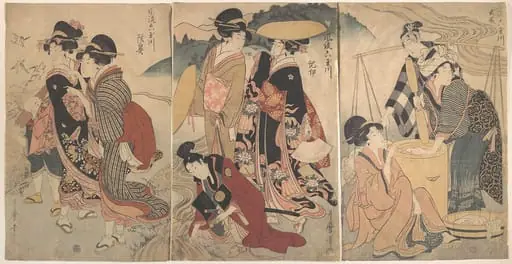 風流六玉川 武蔵 紀伊 陸奥|Women and a Man in the Country; Some pageant(?)
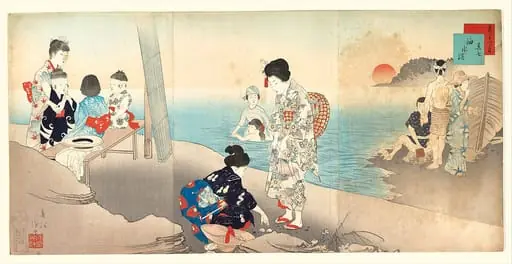 Untitled
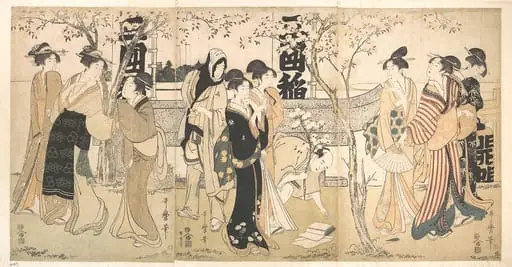 三囲神社の御開帳|Display of Treasures at Mimeguri Shrine (Mimeguri jinja no onkaichō)
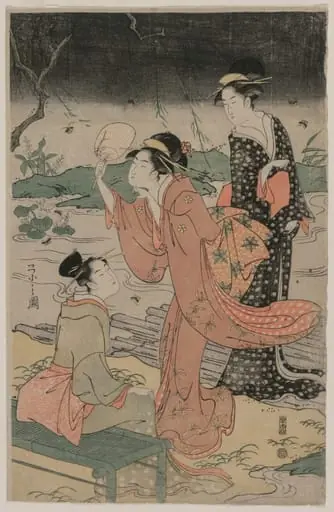 Women Beside a Stream Chasing Fireflies
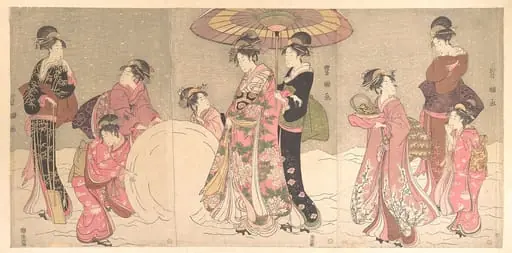 歌川豊国画 雪こかし|Courtesans and Attendants Making a Giant Snowball
 Untitled
 風流六玉川 山城 近江 摂津|Women and Children on the Banks of a Stream
 Untitled
 Untitled
 鳥文斎栄之画 和歌三神図|Honoring the Three Gods of Poetry: Women Composing Poems