Artwork
The Prima Macchina for the Chinea of 1773: The Temple of Peace
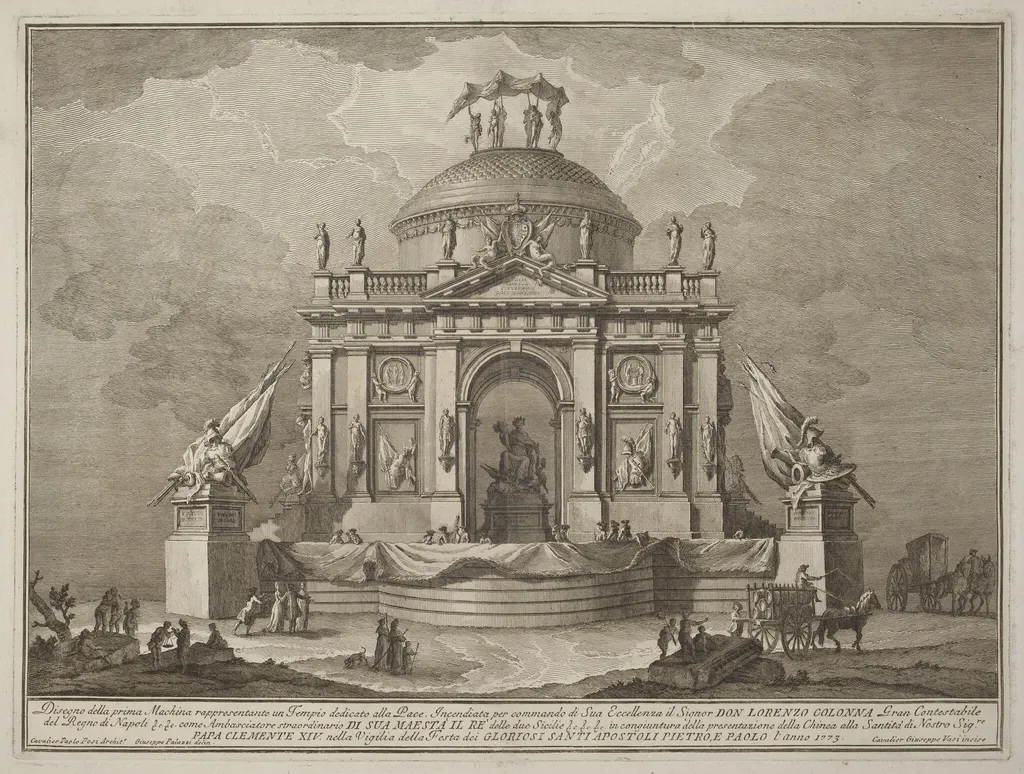
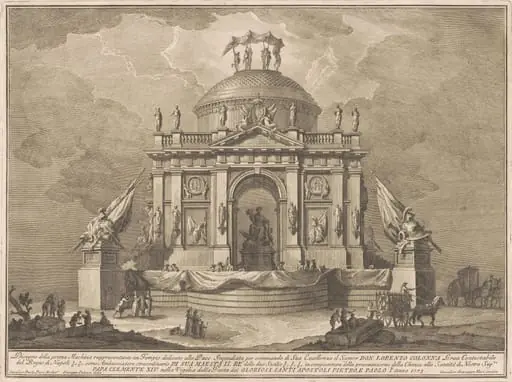
The Prima Macchina for the Chinea of 1773: The Temple of Peace is an ink print by the Romanticist artist Giuseppe Vasi. It dates from 1773 and is held in the collection of the National Gallery of Art.
- Inscription
- Inscribed:lower left in plate: Cavalier Paolo Posi Archit.o Giuseppe Palazzi delin.; lower right in plate: Cavalier Giuseppe Vasi incise; across bottom in plate: Disegno della prima Machina rappresentante un Tempio dedicato alla Pace. Incendiata per commando di Sua Eccellenza il Signor DON LORENZO COLONNA Gran Contestabile / del Regno di Napoli &c.&c. come Ambasciatore straordinario DI SUA MAESTA IL RE delle due Sicilie &c.&c.&c. in congiuntura della presentazione della Chinea alla Santità di Nostro Sig.re / PAPA CLEMENTE XIV. nella Vigilia della Festa dei GLORIOSI SANTI APOSTOLI PIETRO, E PAOLO l'anno 1773.; by later hand, upper right: 41; by later hand, lower right: 1773 / I; by later hand, lower center: 4271 / 7; by later hand, lower left: 51/276/8(7)
About this work
Statues stand on the roof, flags wave from poles, and a crowd gathers below, some carrying draped cloths.
This image shows a grand, temporary stage set up like a classical temple. Statues stand on the roof, flags wave from poles, and a crowd gathers below, some carrying draped cloths. The building has columns, arches, and sculpted figures in niches, all drawn in precise lines.
The scene looks like a celebration for a special event, possibly a religious or royal occasion. The text at the bottom hints it was made for a 1773 ceremony.
Next, check out the technique: etching.
Overview
The Prima Macchina for the Chinea of 1773: The Temple of Peace is an etching created by Giuseppe Vasi in 1773, depicting a grand, temporary classical temple structure.
Subject & Meaning
The etching illustrates a festive scene with a classical temple, statues, flags, and a gathered crowd, suggesting a significant ceremonial event, potentially of religious or royal nature, specifically for the 1773 Chinea ceremony.
Technique & Style
Executed in etching on laid paper, the work features precise lines, defined forms, and detailed architectural elements, characteristic of Vasi's meticulous style.
History & Provenance
Created in 1773 for the Chinea ceremony of that year, the etching's provenance details are not specified here, though its creation context is tied to this event.
Context
The Chinea ceremony, a traditional event, provided the context for this work, reflecting 18th-century Roman ceremonial culture and Vasi's role in documenting such events.
Legacy
As a documentary piece of a specific 1773 event, its legacy lies in preserving the visual and cultural essence of temporary architectural constructions for ceremonial purposes in 18th-century Rome.
Own this work as a print
Artist & collection

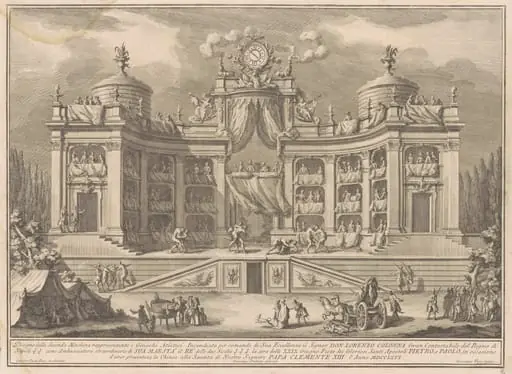 The Seconda Macchina for the Chinea of 1766: A Theater for Athletic Games
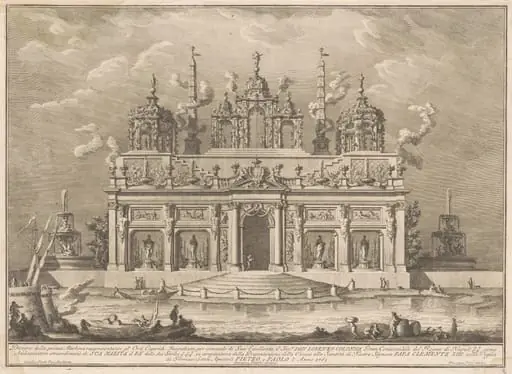 The Prima Macchina for the Chinea of 1765: The Garden of the Hesperides
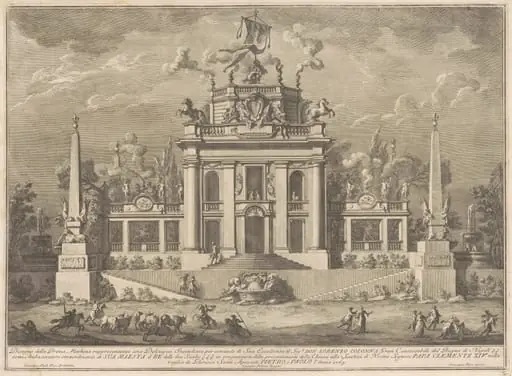 The Prima Macchina for the Chinea of 1769: A "Deliziosa"
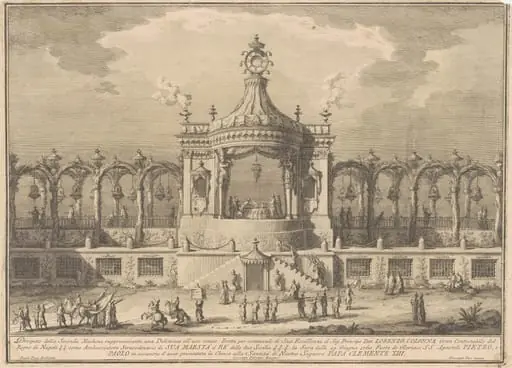 The Seconda Macchina for the Chinea of 1760: A Chinoiserie Pavilion
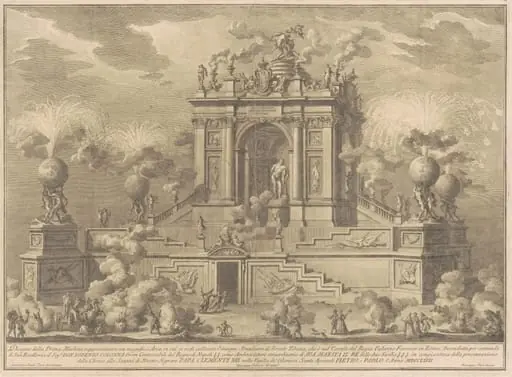 The Prima Macchina for the Chinea of 1767: A Triumphal Arch with the Farnese Hercules
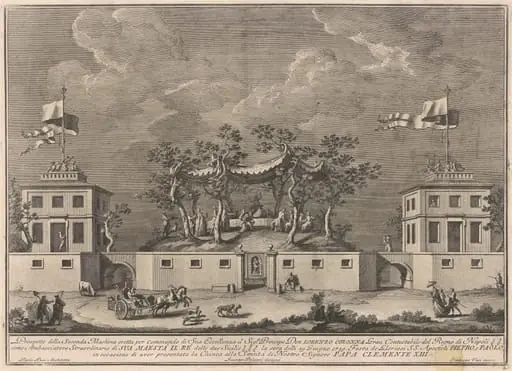 The Seconda Macchina for the Chinea of 1759: A "Deliziosa" with a Bacchanal
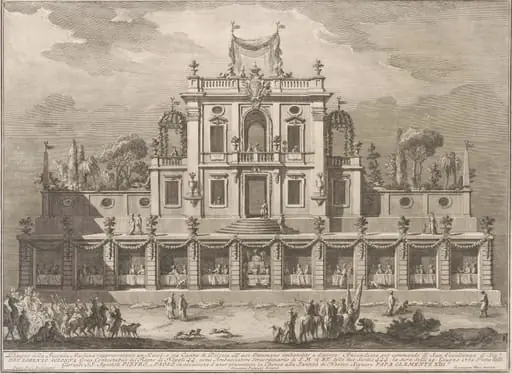 The Seconda Macchina for the Chinea of 1762: A Kiosk, or Pleasure-House in Ottoman Style
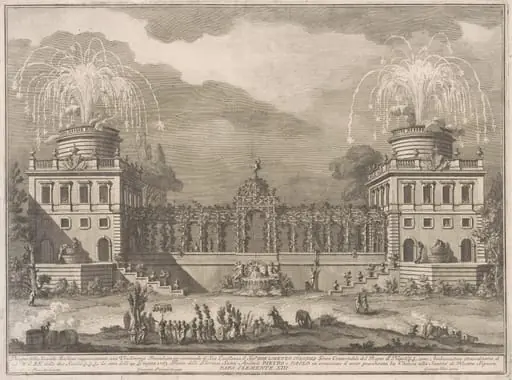 The Seconda Macchina for the Chinea of 1763: The Grape Harvest
 The Prima Macchina for the Chinea of 1773: The Temple of Peace
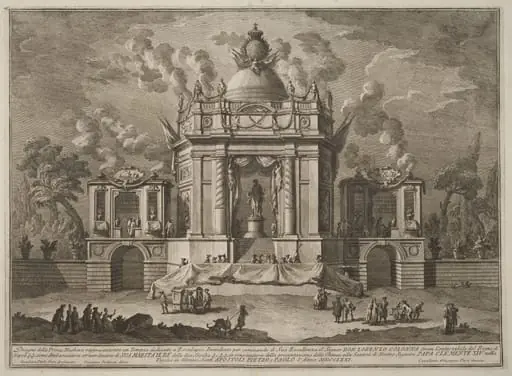 The Prima Macchina for the Chinea of 1771: The Temple of Asclepius
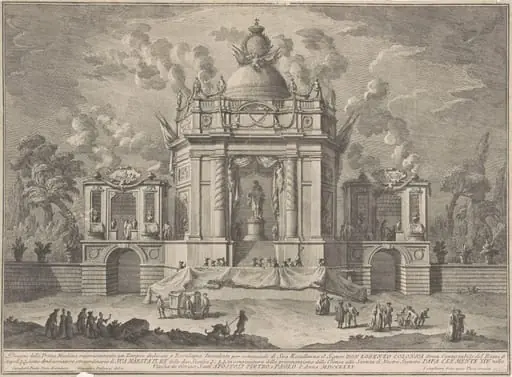 The Prima Macchina for the Chinea of 1771: The Temple of Asclepius
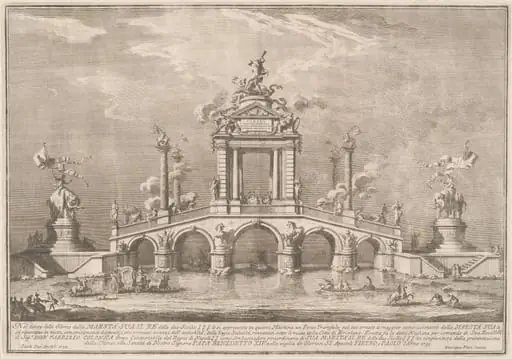 The Prima Macchina for the Chinea of 1755: A Triumphal Bridge with Antiquities from Herculaneum
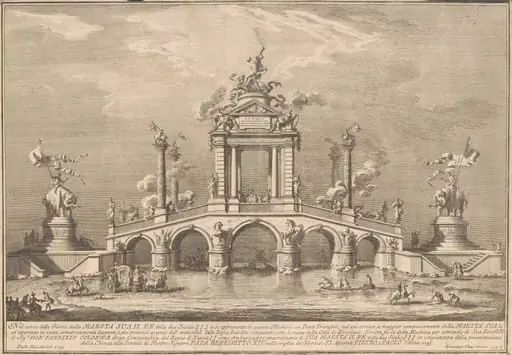 The Prima Macchina for the Chinea of 1755: A Triumphal Bridge with Antiquities from Herculaneum
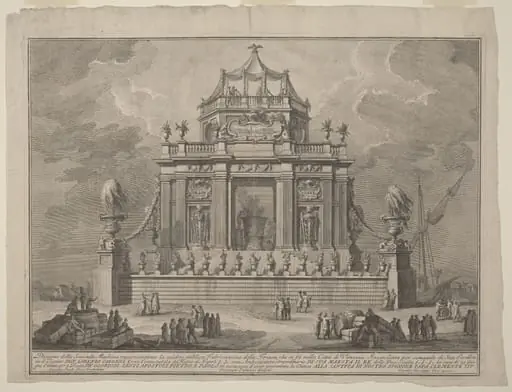 The Seconda Macchina for the Chinea of 1773: The Preparation of Theriac in Venice
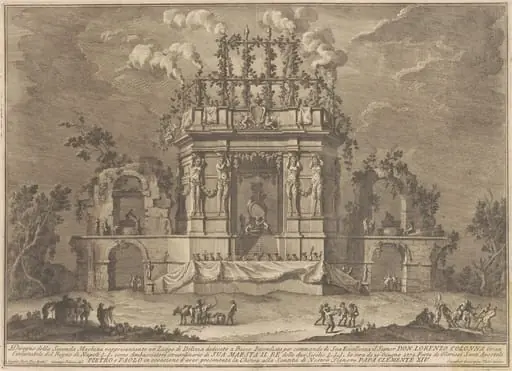 The Seconda Macchina for the Chinea of 1771: A Pleasure Palace Dedicated to Bacchus
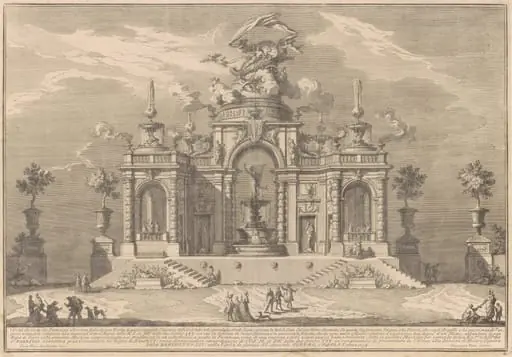 The Prima Macchina for the Chinea of 1754: The Palace of Venus in Cyprus
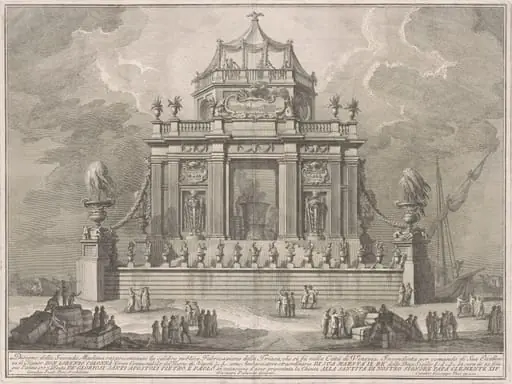 The Seconda Macchina for the Chinea of 1773: The Preparation of Theriac in Venice
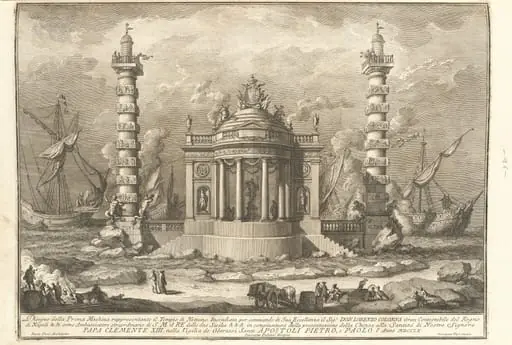 The Prima Macchina for the Chinea of 1760: The Temple of Neptune
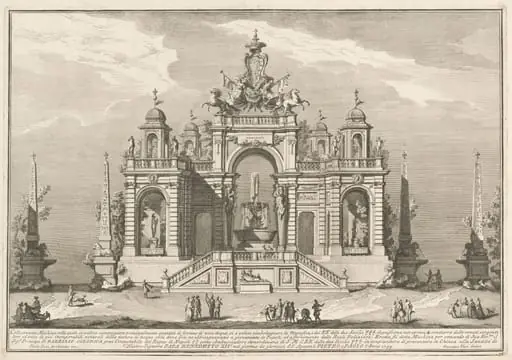 The Seconda Macchina for the Chinea of 1754: An Allegory of Waterworks