Artwork
The Prima Macchina for the Chinea of 1776: A Pleasure Palace
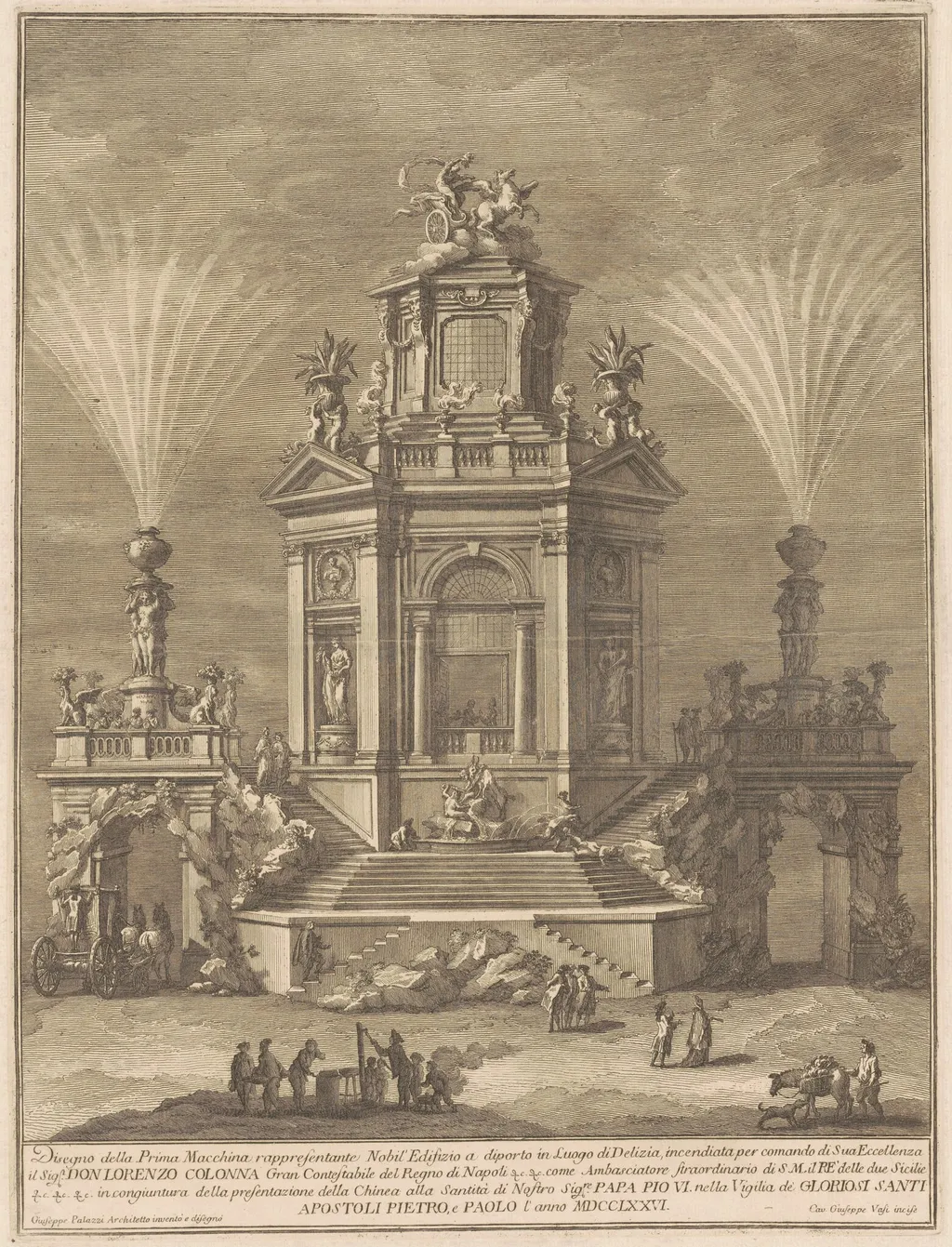
The Prima Macchina for the Chinea of 1776: A Pleasure Palace is an ink print by the Romanticist artist Giuseppe Vasi. It dates from 1776 and is held in the collection of the National Gallery of Art.
- Inscription
- Inscribed:Lettered LL: "Giuseppe Palazzi Architetto invento' e disegno'" and LR: "Cav. Giuseppe Vasi incise" Lettered LC, below image: "Disegno della Prima Machina rappresentante Nobil’Edifizio a diporto in Luogo di Delizia ... PAPA PIO VI ... l'anno MDCCLXXVI"
About this work
The text at the bottom explains this was built for a special event in 1776, likely for a parade or celebration.
This drawing shows a huge, fancy stage set built to look like a palace. It has tall columns, statues, and steps leading up to a central doorway. People in old-fashioned clothes are scattered around, some standing, some climbing, others carrying tools.
The whole thing looks like a mix of a temple and a garden, with fake rocks and plants.
The text at the bottom explains this was built for a special event in 1776, likely for a parade or celebration. The artist, Giuseppe Vasi, made it look almost real, with careful details.
Next, check out how etching works to see how artists like Vasi created these sharp lines.
Overview
The Prima Macchina for the Chinea of 1776: A Pleasure Palace is an etching by Giuseppe Vasi, created in 1776. It depicts a large, ornate structure.
Subject & Meaning
The etching shows a fantastical palace with columns, statues, and steps, blending temple and garden elements. Figures in period dress are shown interacting with the structure, suggesting a celebratory or ceremonial context.
Technique & Style
The work is characterized by precise details and sharp lines, typical of etching. Vasi's skillful rendering creates a convincing illusion of a three-dimensional scene.
Context
The structure was built for a special event, likely a parade or celebration, as indicated by the text at the bottom of the etching.
Own this work as a print
Artist & collection

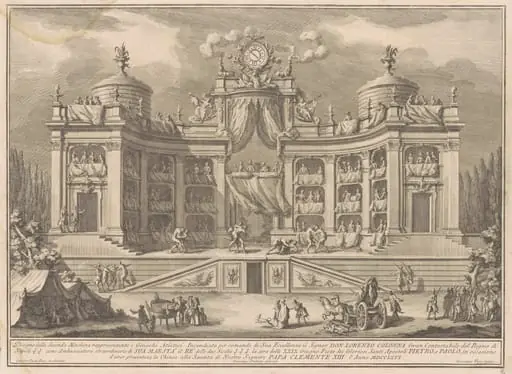 The Seconda Macchina for the Chinea of 1766: A Theater for Athletic Games
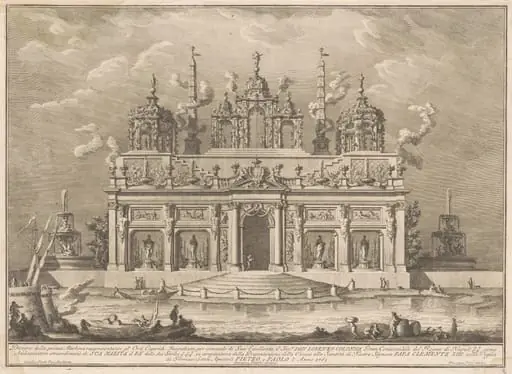 The Prima Macchina for the Chinea of 1765: The Garden of the Hesperides
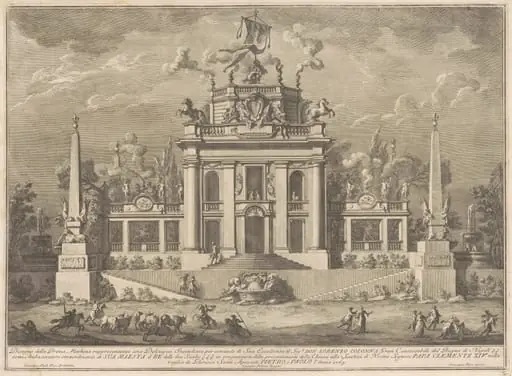 The Prima Macchina for the Chinea of 1769: A "Deliziosa"
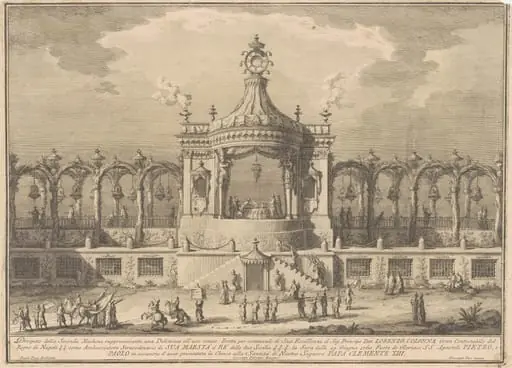 The Seconda Macchina for the Chinea of 1760: A Chinoiserie Pavilion
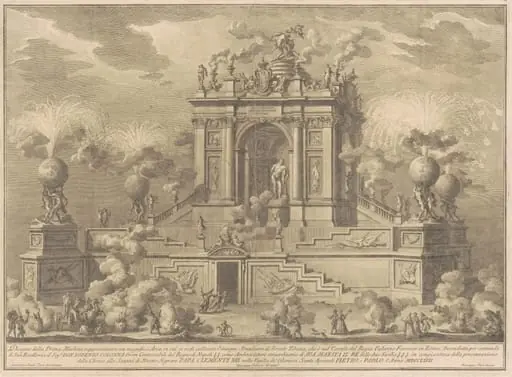 The Prima Macchina for the Chinea of 1767: A Triumphal Arch with the Farnese Hercules
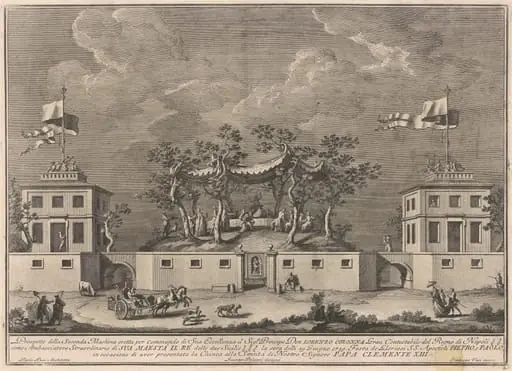 The Seconda Macchina for the Chinea of 1759: A "Deliziosa" with a Bacchanal
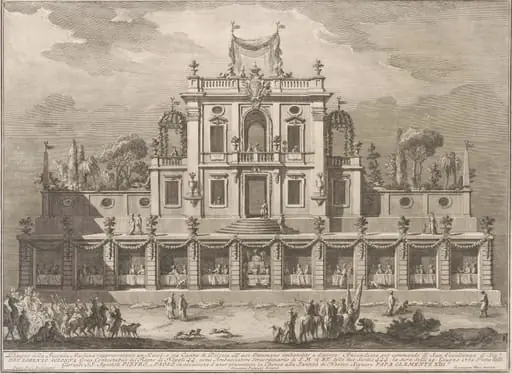 The Seconda Macchina for the Chinea of 1762: A Kiosk, or Pleasure-House in Ottoman Style
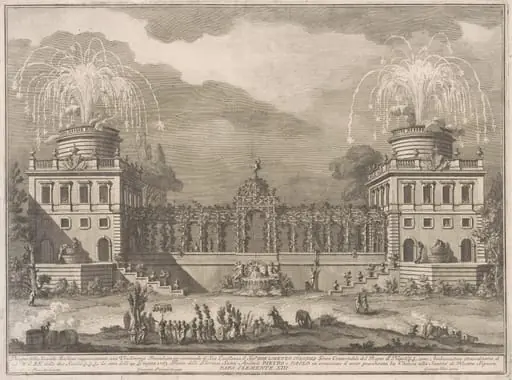 The Seconda Macchina for the Chinea of 1763: The Grape Harvest
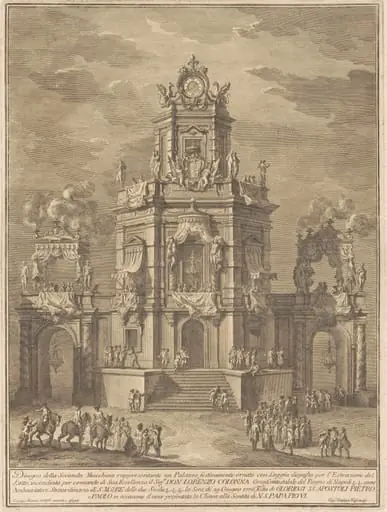 The Seconda Macchina for the Chinea of 1776: A Palace with a Loggia for the Lottery Draw
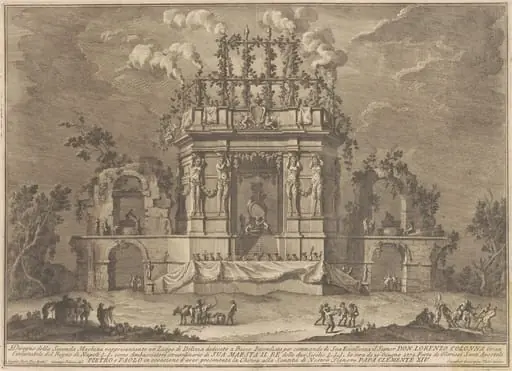 The Seconda Macchina for the Chinea of 1771: A Pleasure Palace Dedicated to Bacchus
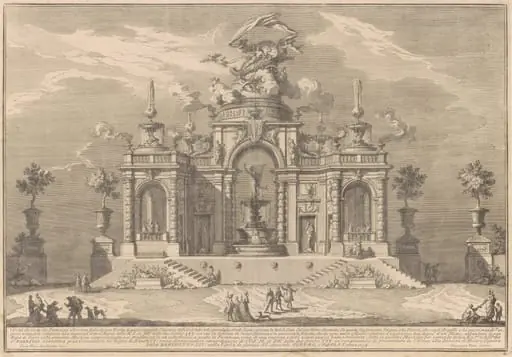 The Prima Macchina for the Chinea of 1754: The Palace of Venus in Cyprus
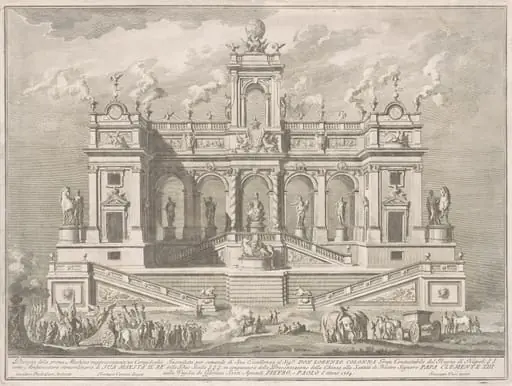 The Prima Macchina for the Chinea of 1764: A Capitol Building
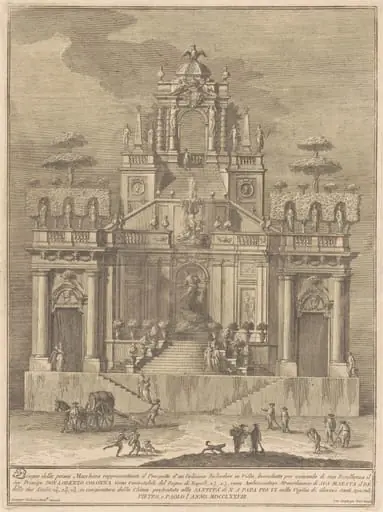 The Prima Macchina for the Chinea of 1778: A Countryside Belevedere with Hercules and Antaeus
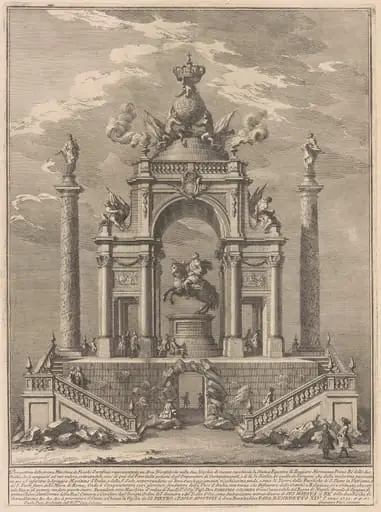 The Prima Macchina for the Chinea of 1751: Triumphal Arch for Roger I of Sicily
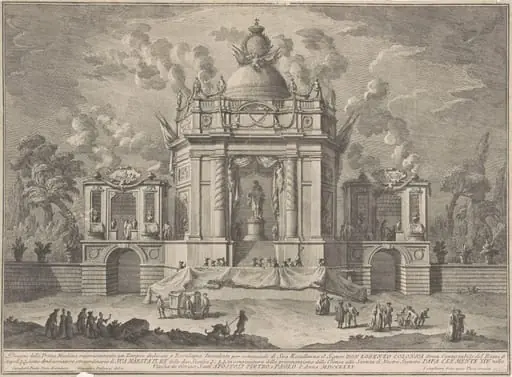 The Prima Macchina for the Chinea of 1771: The Temple of Asclepius
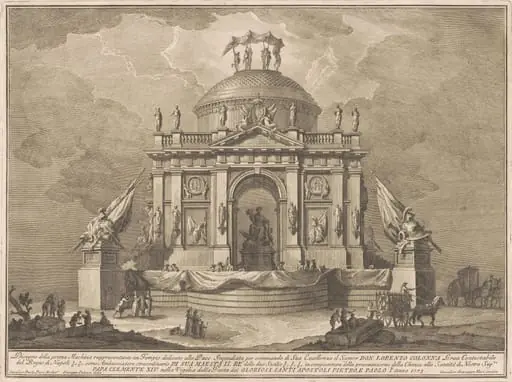 The Prima Macchina for the Chinea of 1773: The Temple of Peace
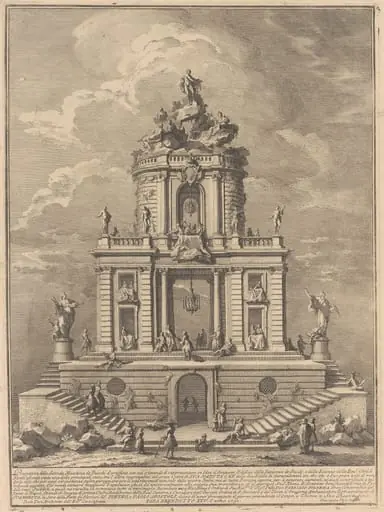 The Seconda Macchina for the Chinea of 1751: The Palace of Wisdom, Studies, and the Sciences
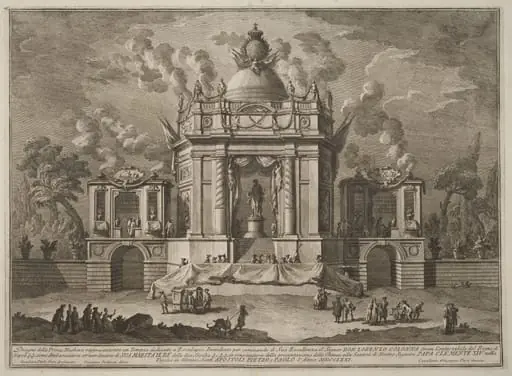 The Prima Macchina for the Chinea of 1771: The Temple of Asclepius