Artwork
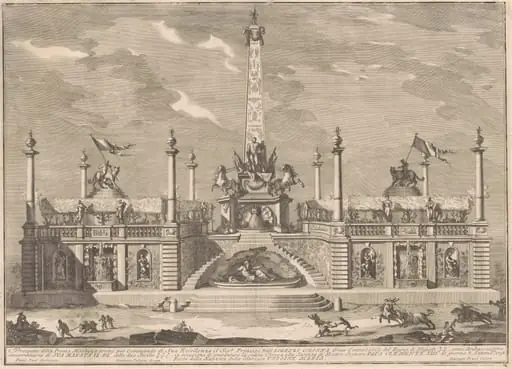
The Prima Macchina for the Chinea of 1778: A Countryside Belevedere with Hercules and Antaeus
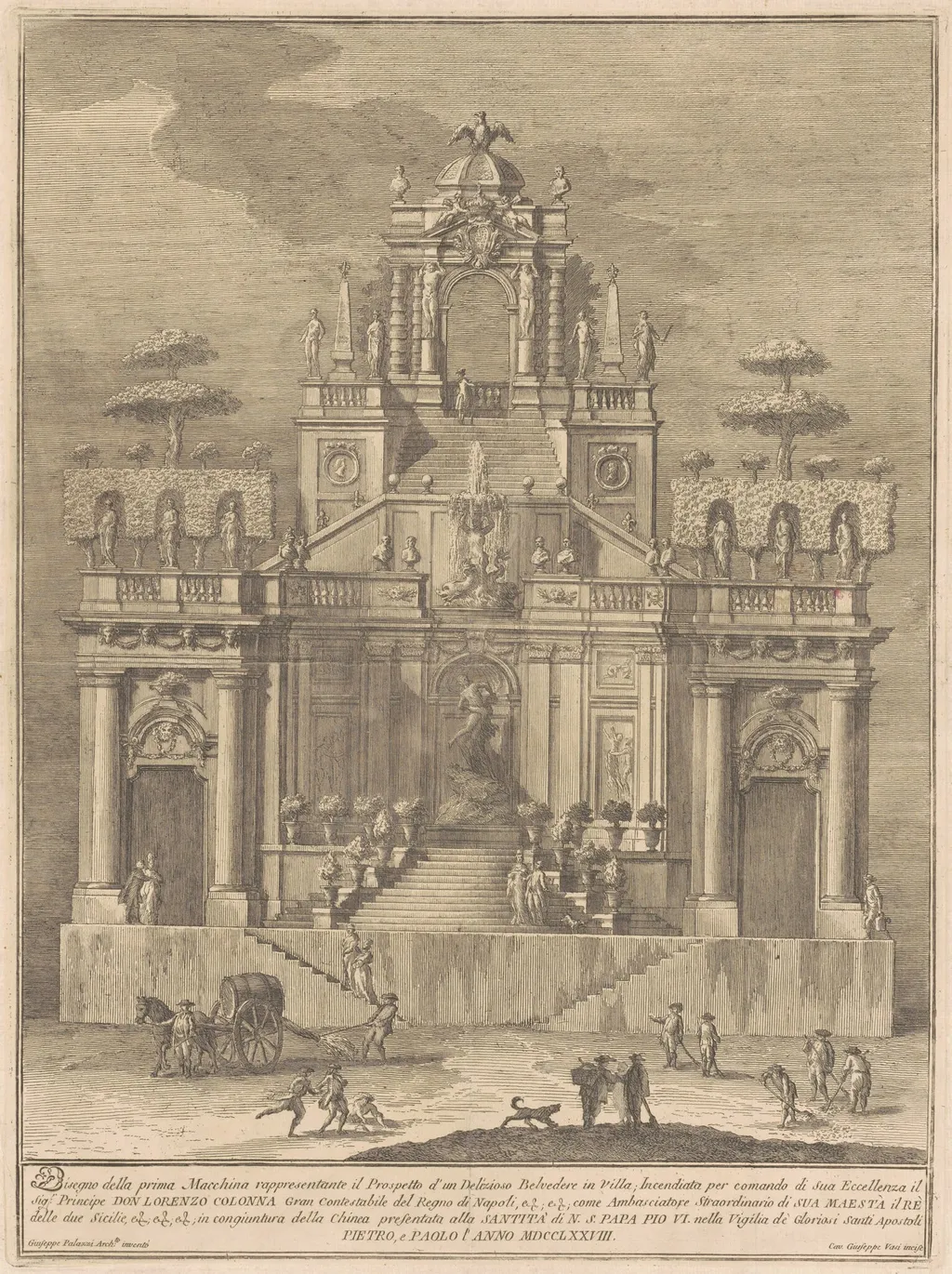
The Prima Macchina for the Chinea of 1778: A Countryside Belevedere with Hercules and Antaeus is an ink print by the Romanticist artist Giuseppe Vasi. It dates from 1778 and is held in the collection of the National Gallery of Art.
- Inscription
- Inscribed:Lettered LL: "Giuseppe Palazzi Arch.to invento' " and LR: "Cav. Giuseppe Vasi incise" Lettered LC, below image: "Disegno della Prima Machina rappresentante il Prospetto d’un Delizioso Belvedere in Villa [...] l'ANNO MDCCLXXVIII"
About this work
Overview
Giuseppe Vasi’s 1778 etching, titled The Prima Macchina for the Chinea of 1778: A Countryside Belvedere with Hercules and Antaeus, records a temporary theatrical set erected for the annual Chinea ceremony. Rendered in fine line work, the print captures a staged landscape that blends architectural elements with mythological statuary, presenting a constructed vista rather than an actual garden.
Subject & Meaning
By juxtaposing heroic myth with contemporary ceremony, Vasi underscores the pageantry and political symbolism of the Chinea celebration.
The composition centers on a monumental, imagined belvedere where statues of Hercules and the defeated Antaeus dominate the foreground. Surrounding the central figures are figures in period dress, pedestrians, riders, and a cart‑puller, suggesting a festive procession. By juxtaposing heroic myth with contemporary ceremony, Vasi underscores the pageantry and political symbolism of the Chinea celebration.
Technique & Style
Executed as an etching, Vasi employed copper plates incised with fine lines to achieve intricate architectural detail and delicate foliage. The medium allows for precise rendering of the imagined columns, vases, and staircases, while the tonal gradations convey depth within the artificial outdoor setting. The style reflects the late‑Baroque interest in theatrical illusion and elaborate scenography.
History & Provenance
Created as a prima macchina, a temporary stage built for the 1778 Chinea, a diplomatic tribute from the Kingdom of Naples to the Pope, the print served both as a record of the event and as a promotional image. The work remains in the collection of a European print cabinet, having passed through several private and institutional hands since its 18th‑century origin.
Own this work as a print
Artist & collection

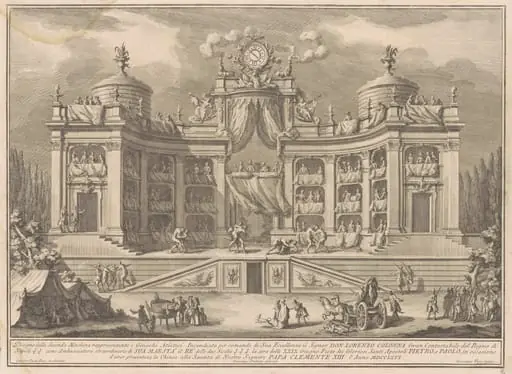 The Seconda Macchina for the Chinea of 1766: A Theater for Athletic Games
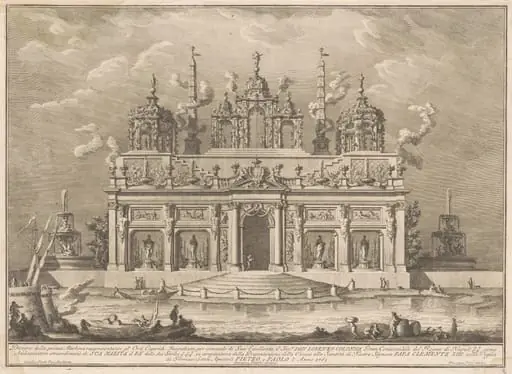 The Prima Macchina for the Chinea of 1765: The Garden of the Hesperides
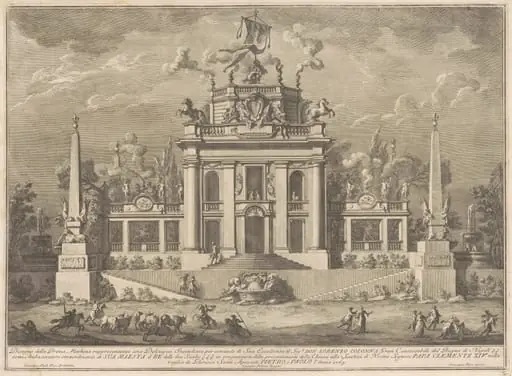 The Prima Macchina for the Chinea of 1769: A "Deliziosa"
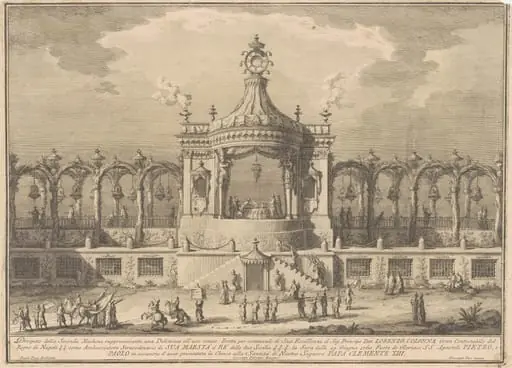 The Seconda Macchina for the Chinea of 1760: A Chinoiserie Pavilion
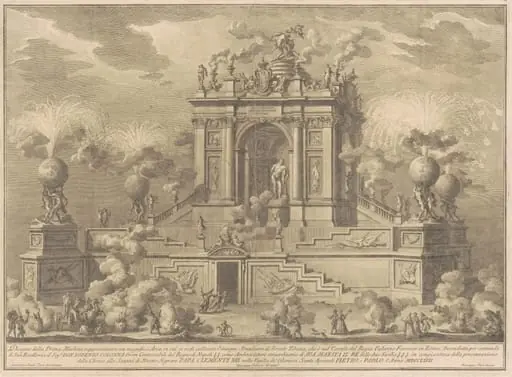 The Prima Macchina for the Chinea of 1767: A Triumphal Arch with the Farnese Hercules
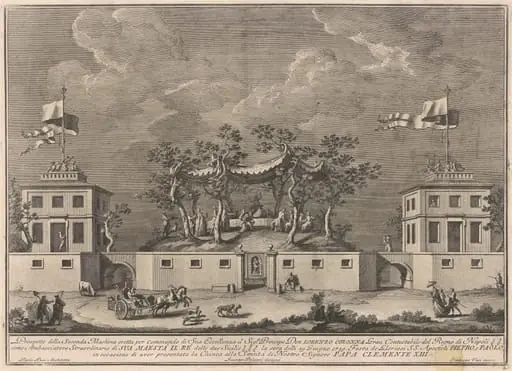 The Seconda Macchina for the Chinea of 1759: A "Deliziosa" with a Bacchanal
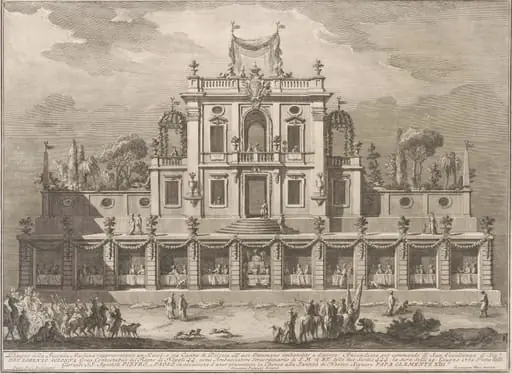 The Seconda Macchina for the Chinea of 1762: A Kiosk, or Pleasure-House in Ottoman Style
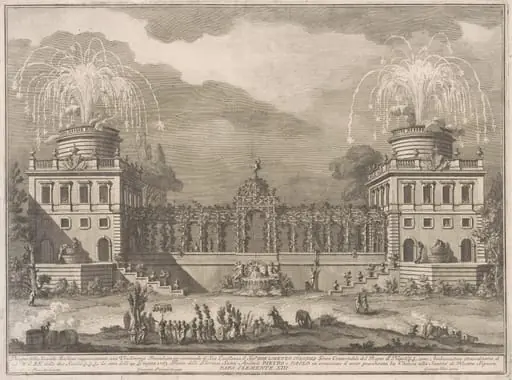 The Seconda Macchina for the Chinea of 1763: The Grape Harvest
- The Prima Macchina for the Chinea of 1771: The Temple of Asclepius
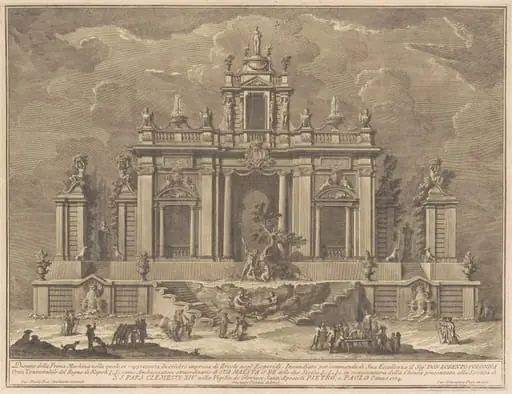 The Prima Macchina for the Chinea of 1774: Hercules and the Dragon in the Garden of the Hesperides
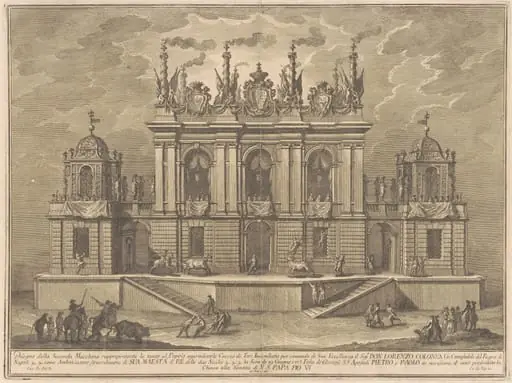 The Seconda Macchina for the Chinea of 1775: A Bull-fight
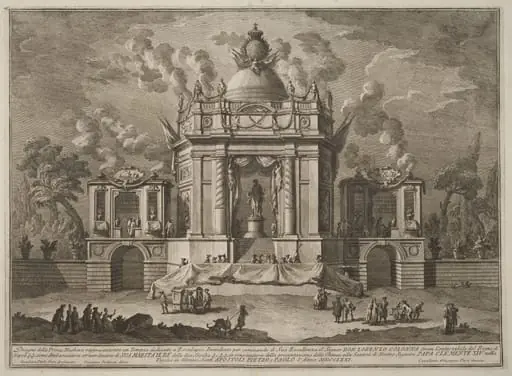 The Prima Macchina for the Chinea of 1771: The Temple of Asclepius
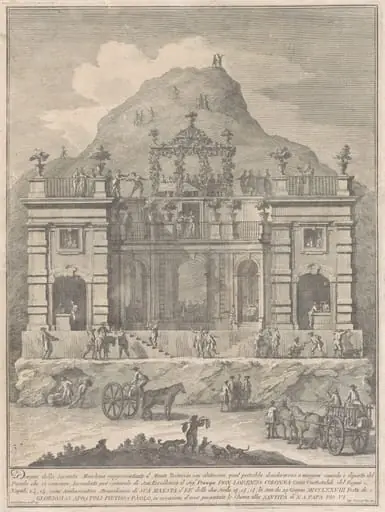 The Seconda Macchina for the Chinea of 1778: A Dwelling near Monte Testaccio
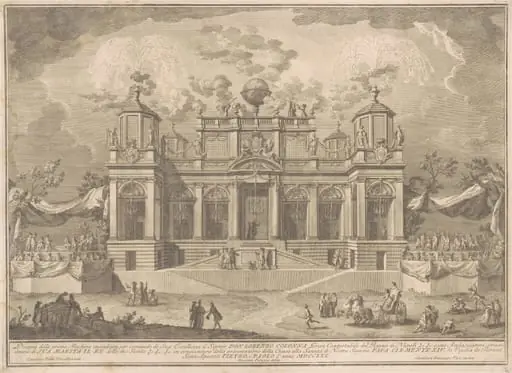 The Prima Macchina for the Chinea of 1770: An Roman Building for Commerce
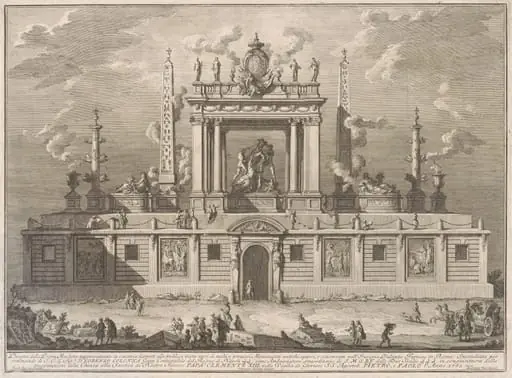 The Prima Macchina for the Chinea of 1762: The Farnese Bull and Other Antiquities from Palazzo Farnese
 The Prima Macchina for the Chinea of 1758: A "Deliziosa" with Hanging Gardens
 The Prima Macchina for the Chinea of 1776: A Pleasure Palace