Artwork
Hamlet and Horatio in the Churchyard
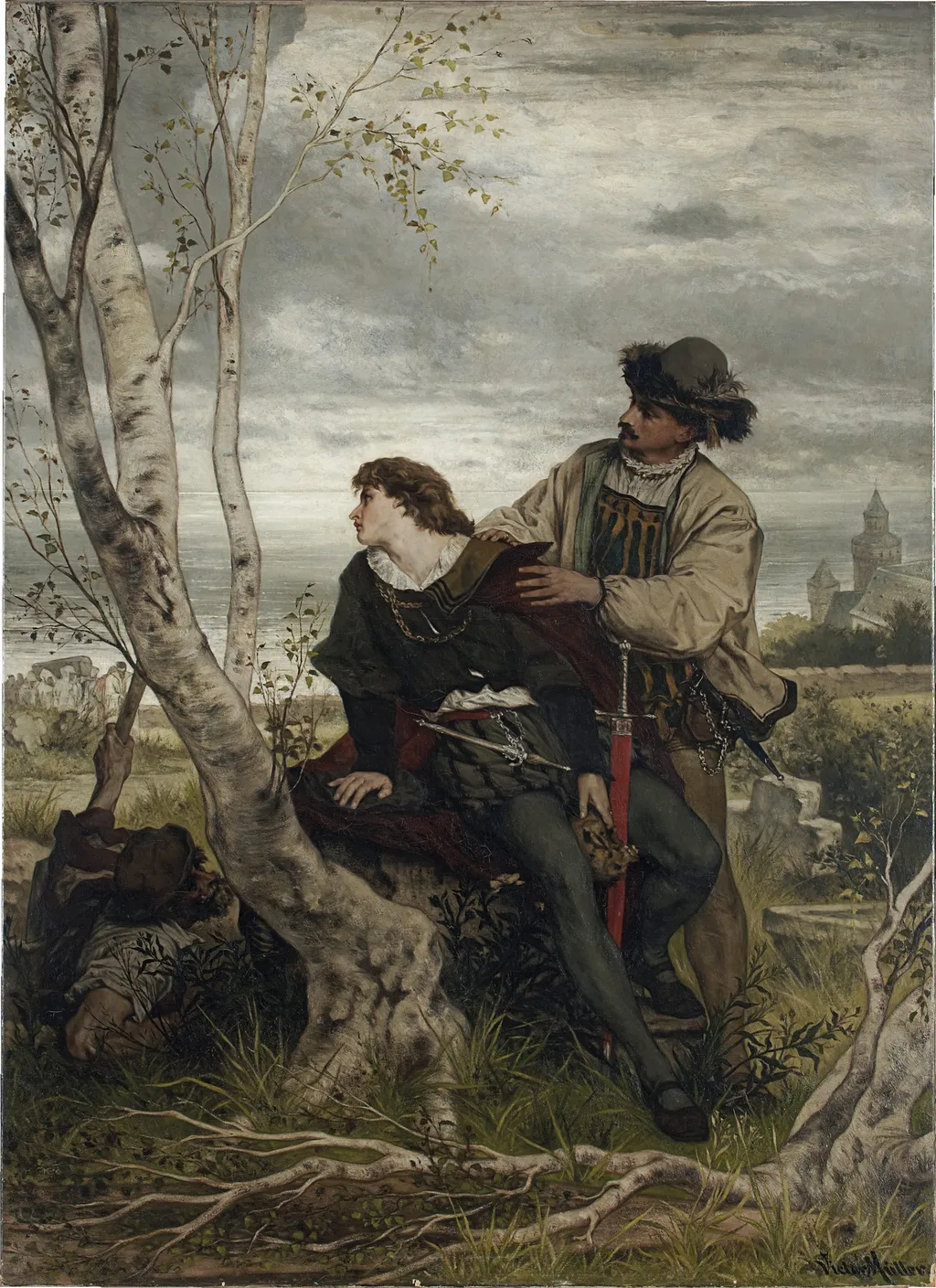
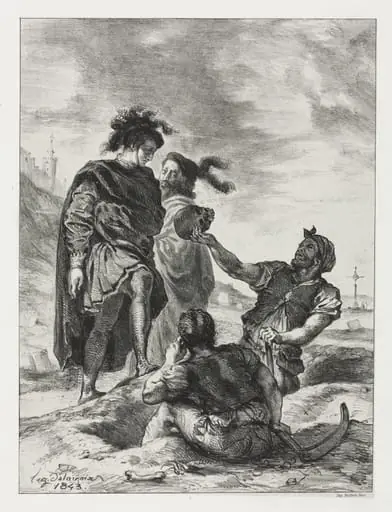
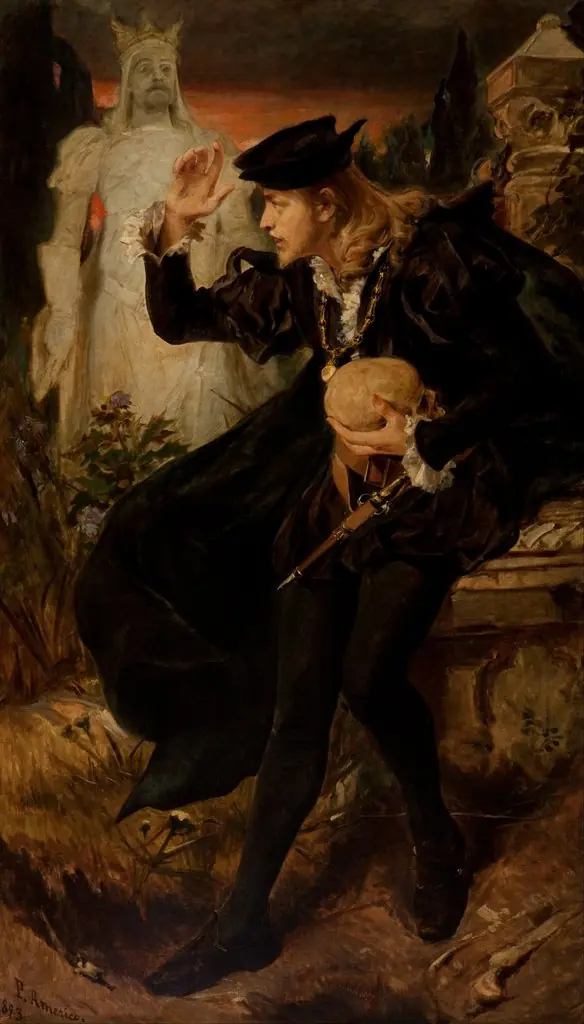
Hamlet and Horatio in the Churchyard is an oil painting by the German Romanticist artist Victor Müller. It dates from 1868 and is held in the collection of the Städel Museum.
About this work
Overview
The composition balances figures, foliage, and distant architecture, creating a reflective mood that aligns with the play’s themes of mortality and doubt.
Victor Müller’s 1868 oil on canvas, titled Hamlet and Horatio in the Churchyard, is part of the Städel Museum’s collection. The work captures a moment from Shakespeare’s tragedy, placing the two protagonists amid a graveyard setting under a muted sky. The composition balances figures, foliage, and distant architecture, creating a reflective mood that aligns with the play’s themes of mortality and doubt.
Subject & Meaning
The painting portrays Hamlet and his confidant Horatio standing amid tombstones and grass, their contrasting garments, Hamlet in dark, Horatio in lighter attire, highlighting their differing emotional states. A lifeless body lies nearby, and a church looms in the background, reinforcing the contemplation of death that drives the narrative. The scene invites viewers to consider the characters’ introspection and the broader existential questions raised by the drama.
Technique & Style
Müller employs a restrained palette of grays, browns, and muted greens, allowing the figures to emerge against a cloudy sky. The brushwork is smooth in the rendering of clothing, while the foliage and distant church are suggested with looser strokes, creating depth. Light falls softly across the scene, emphasizing the somber atmosphere without dramatic chiaroscuro, reflecting a mid‑19th‑century realist approach to literary subjects.
History & Provenance
Executed in 1868, the canvas entered the holdings of Frankfurt’s Städel Museum, where it remains on display. Its acquisition reflects the museum’s 19th‑century interest in works that interpret literary classics, and the painting has been referenced in catalogues of German Romantic‑realist art. No record of earlier private ownership has been documented.
Context
Müller’s choice to depict a Shakespearean moment aligns with a broader European fascination with the playwright during the 1800s, when visual artists frequently turned to literary sources for moral and dramatic content. The churchyard setting mirrors contemporary Romantic preoccupations with nature, ruin, and the transience of life, situating the work within the cultural currents of its time.
Own this work as a print
Artist & collection