Artwork
Amalienborg Square, Copenhagen
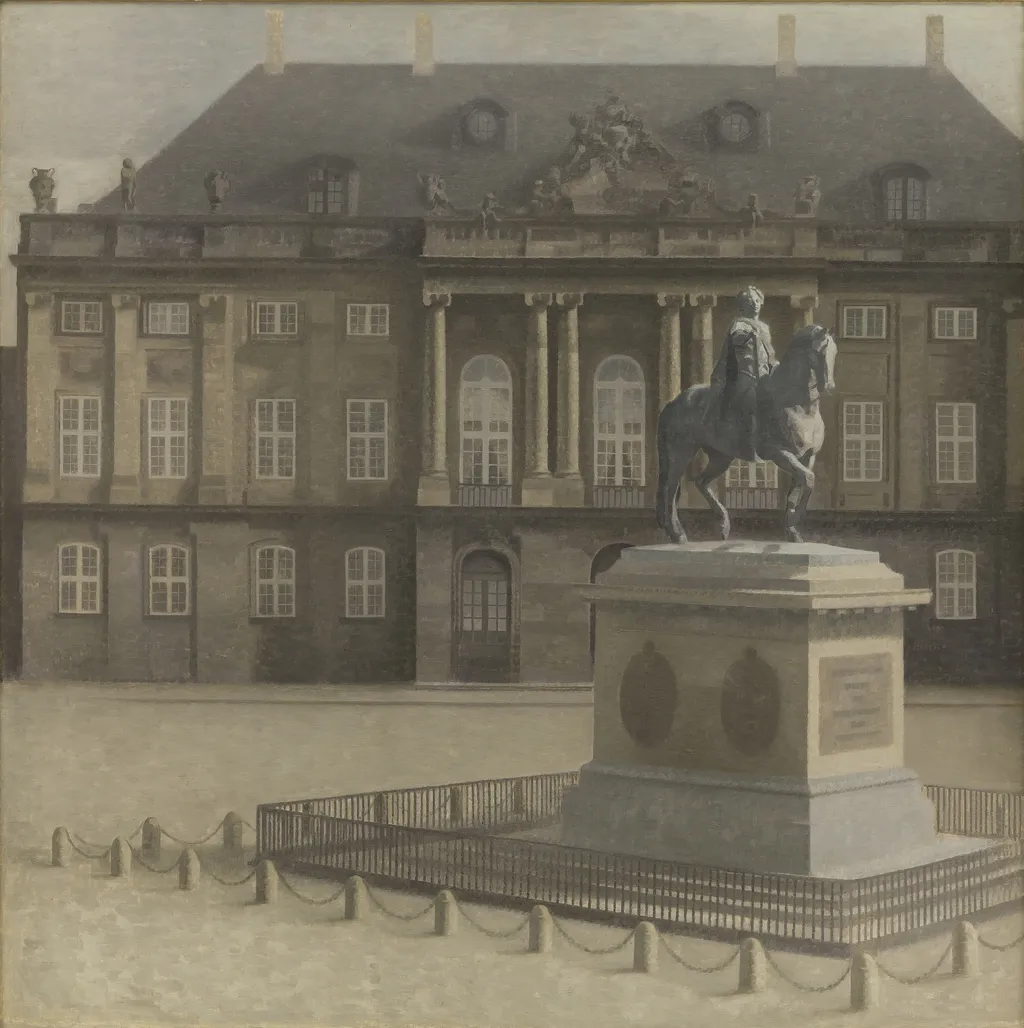
Amalienborg Square, Copenhagen is an oil painting by the Impressionist artist Vilhelm Hammershøi. It dates from 1898 and is held in the collection of the Statens Museum for Kunst.
About this work
Subject & Meaning
Hammershøi places the statue in full sunlight despite its high cost and lengthy fourteen-year creation, contrasting it with the surrounding palatial buildings.
The work depicts Amalienborg Square in Copenhagen, featuring the 1768 equestrian statue of Frederick V commissioned by the Asiatic Company and sculpted by Jacques Saly. Hammershøi places the statue in full sunlight despite its high cost and lengthy fourteen-year creation, contrasting it with the surrounding palatial buildings. The absence of human figures underscores the monumental, almost architectural quality of the scene, while the skewed architectural lines and trompe l'oeil effect create a sense of depth and space, making the square appear both expansive and precisely measured. The painting thus conveys themes of timeless grandeur and the interplay between light, architecture, and stillness.
Technique & Style
Amalienborg Square, Copenhagen is an oil-on-canvas painting executed in 1896 by Vilhelm Hammershøi, with a square format measuring 136.5 by 136.5 cm. The work is classified as an architectural painting, and its handling reflects Hammershøi's characteristic approach to the cityscape genre.
Stylistically, the painting is set in a hazy atmosphere in which full sunlight falls on the central Neoclassical equestrian statue of Frederik V, while the surrounding palaces recede into softer light. The complete absence of human figures emphasizes the monumental quality of the architecture and sculpture. Skewed architectural lines generate a pronounced sense of spatial depth, and the horseman appears to trot calmly outward, leaving the two-dimensional palace behind.
The skewed perspective also produces a trompe l'oeil effect that makes the canvas seem taller than it is, despite its strictly square dimensions.
History & Provenance
Vilhelm Hammershøi created the oil-on-canvas painting Amalienborg Square, Copenhagen in 1896. The work depicts the square's neoclassical architecture and the equestrian statue of Frederick V, rendered with the artist's characteristic absence of human figures.
The painting is currently held in the collection of the Statens Museum for Kunst (National Gallery of Denmark) in Copenhagen. In April 2016, the artwork was selected as one of Denmark's ten most significant artistic works for the Europeana 280 project.
The painting Amalienborg Square, Copenhagen is held in the collection of Statens Museum for Kunst, with the inventory or accession number recorded in the museum’s holdings and listed under Europeana 280 as part of its exhibition history. It was created in 1896 and has been featured in exhibitions related to European art, including the Europeana 280 initiative in April 2016. The work is an oil-on-canvas painting depicting Amalienborg Square in Copenhagen, showing the equestrian statue of Frederick V in full sunlight amid a hazy atmosphere, and it is part of the museum’s architectural painting genre.
Context
Critical reception of Amalienborg Square, Copenhagen emphasizes its atmospheric stillness and masterful handling of light, with scholars noting the painting’s deliberate absence of human figures to heighten the monumentality of the architecture. Hammershøi’s cityscapes are situated within the broader Symbolist movement in Scandinavia, reflecting a quiet introspection that contrasts with contemporary urban dynamism. The work’s square format and trompe l'oeil illusion of height underscore its formal experimentation, while its depiction of Frederick V’s equestrian statue, a monument funded by the Asiatic Company and sculpted by Jacques Saly, highlights the interplay of national history and artistic patronage.
The painting is held by Statens Museum for Kunst and was highlighted in Europeana’s 2016 list of Denmark’s ten most significant artworks, affirming its enduring cultural resonance.
Scholarly discourse situates this canvas within Hammershøi’s mature period, where architectural subjects become meditations on silence and spatial ambiguity. The artist’s technique of rendering sunlit façades without narrative detail aligns with Symbolist interests in evoking mood through visual restraint. This approach has influenced later Danish modernists who inherited his preoccupation with architectural geometry and emotional austerity.
The work’s inclusion in major European digital exhibitions, such as Europeana 280, further cements its role in transnational art historical narratives.
Legacy
Amalienborg Square, Copenhagen holds a significant position in Danish cultural heritage. In April 2016, the painting was selected as one of the ten most important artworks in Denmark by the Europeana project as part of the Europeana 280 campaign. This recognition underscores its enduring reputation and legacy as a monumental work within the nation's art history. The painting is held in the collection of the Statens Museum for Kunst (National Gallery of Denmark).
Overview
Vilhelm Hammershøi’s 1896 oil painting captures Copenhagen’s Amalienborg Square under bright, diffused light. The composition centers on the prominent equestrian statue of King Frederick V, set against the surrounding neoclassical palaces. Hammershøi renders the scene without any figures, emphasizing the architectural and sculptural forms within a tranquil, sun‑lit atmosphere.
Own this work as a print
Artist & collection
Artist
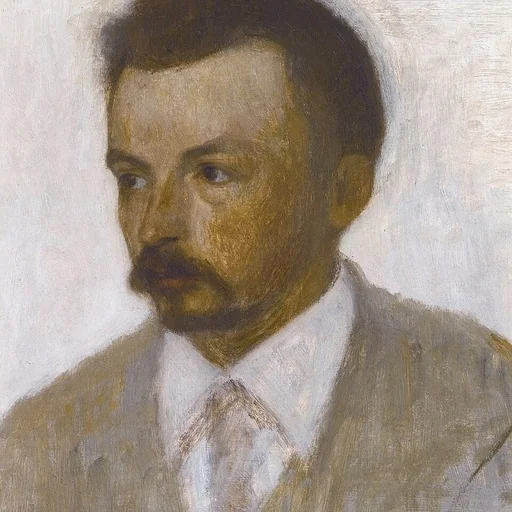
Vilhelm Hammershøi (), often anglicised as Vilhelm Hammershoi (15 May 1864 – 13 February 1916), was a Danish painter.

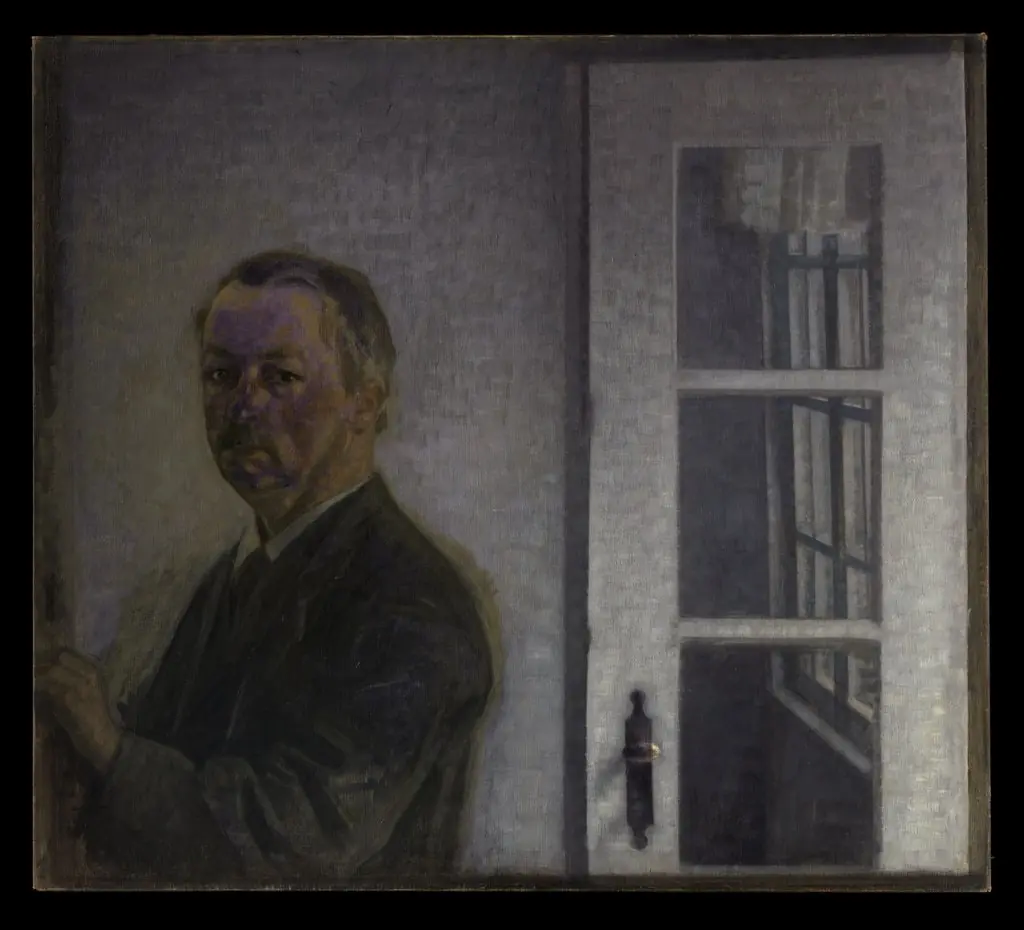

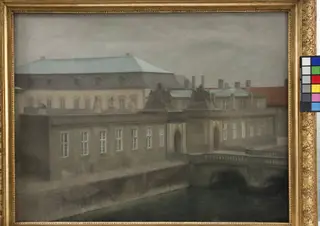 View of Christiansborg Palace. Late Autumn
 The Garden of the Prince's Palace, Copenhagen
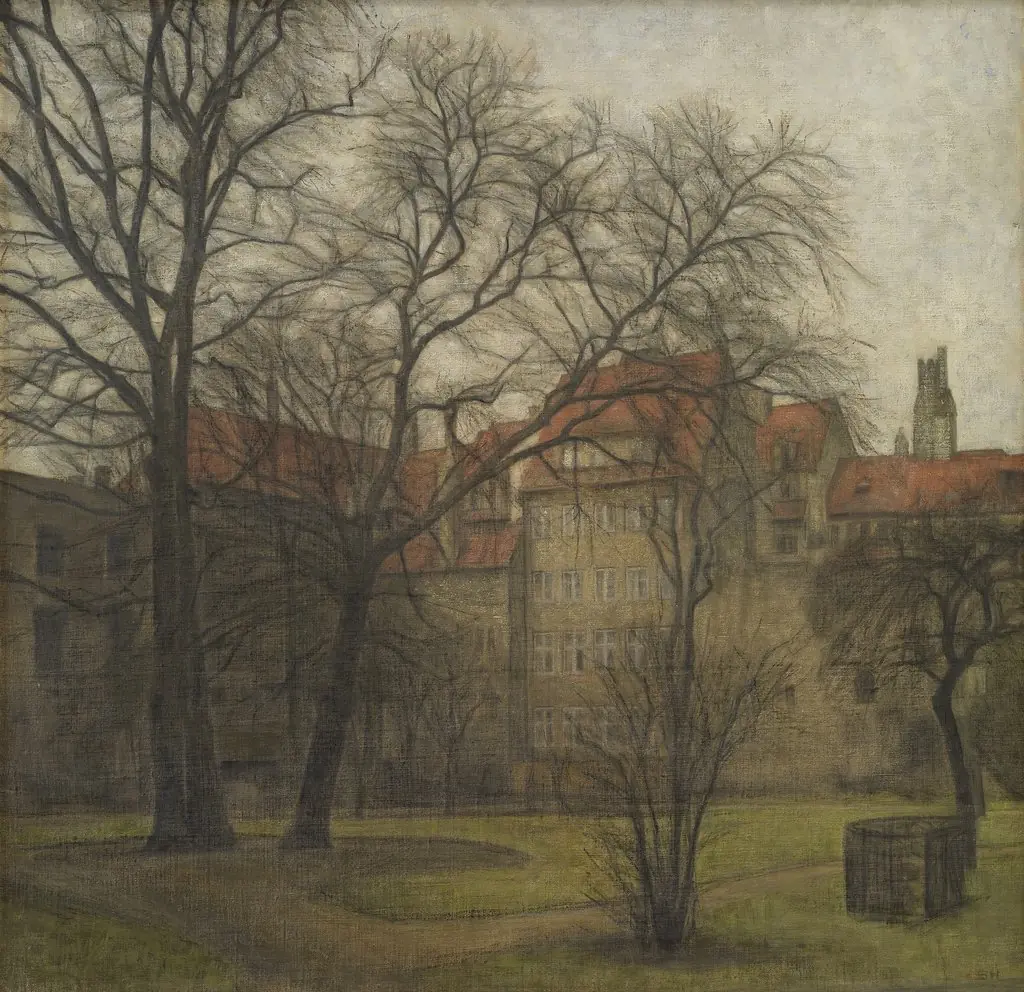 The Garden of the Prince's Palace, Copenhagen
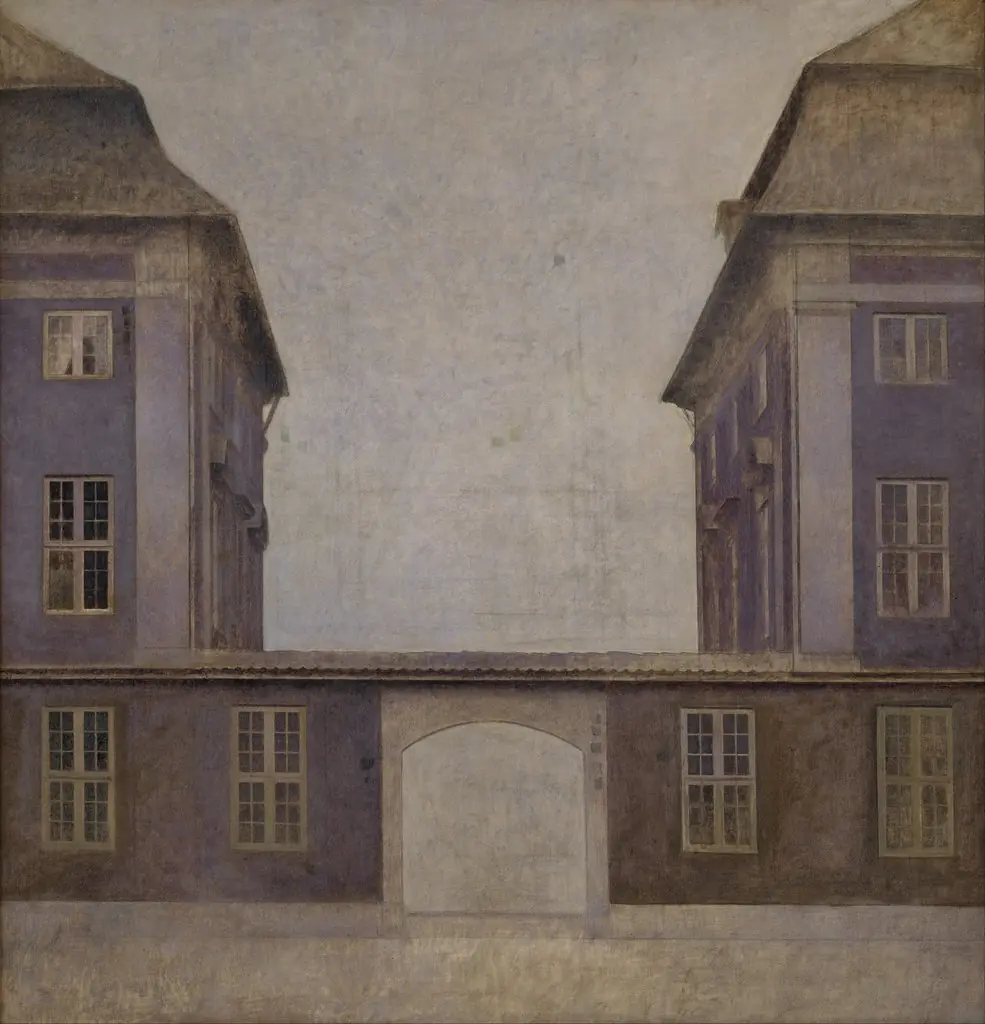 The Buildings of the Asiatic Company, seen from St. Annæ Street, Copenhagen
 The Buildings of the Asiatic Company, seen from St. Annæ Street, Copenhagen
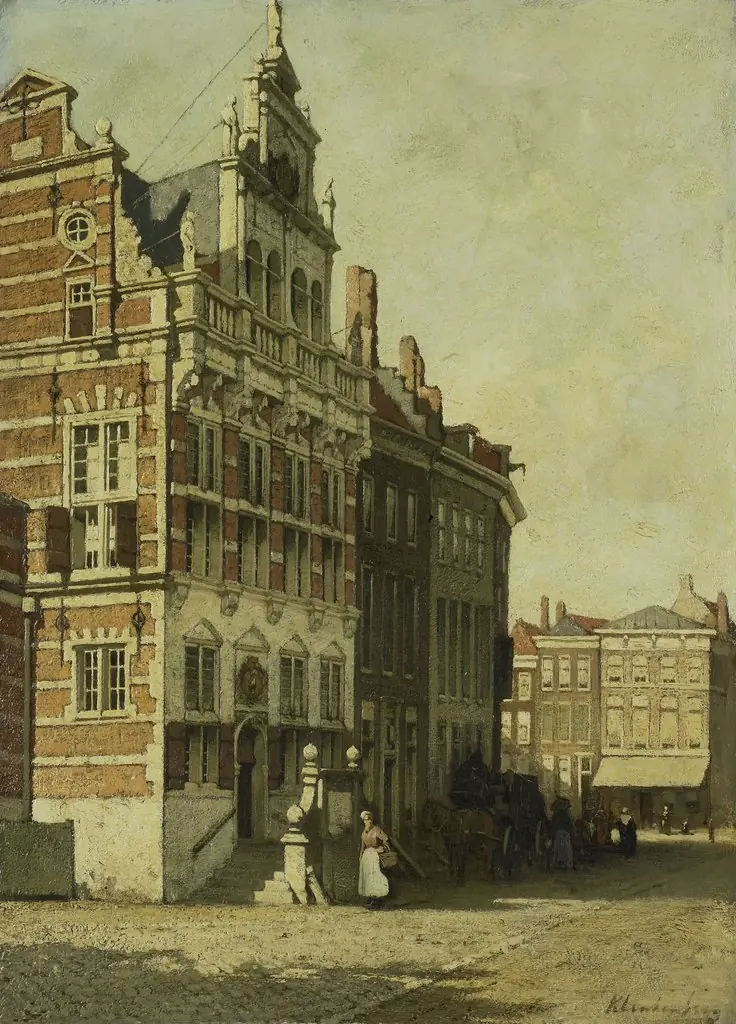 The Town Hall, The Hague
 Parti ved Holmens Kirke
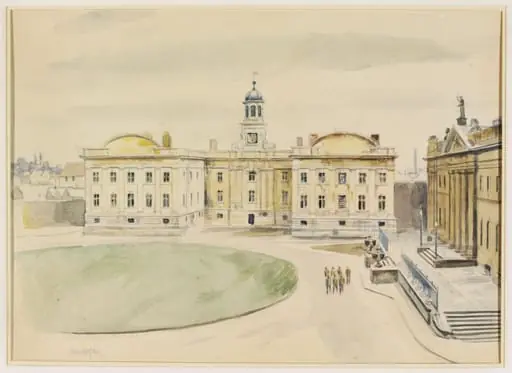 Old Prison, York
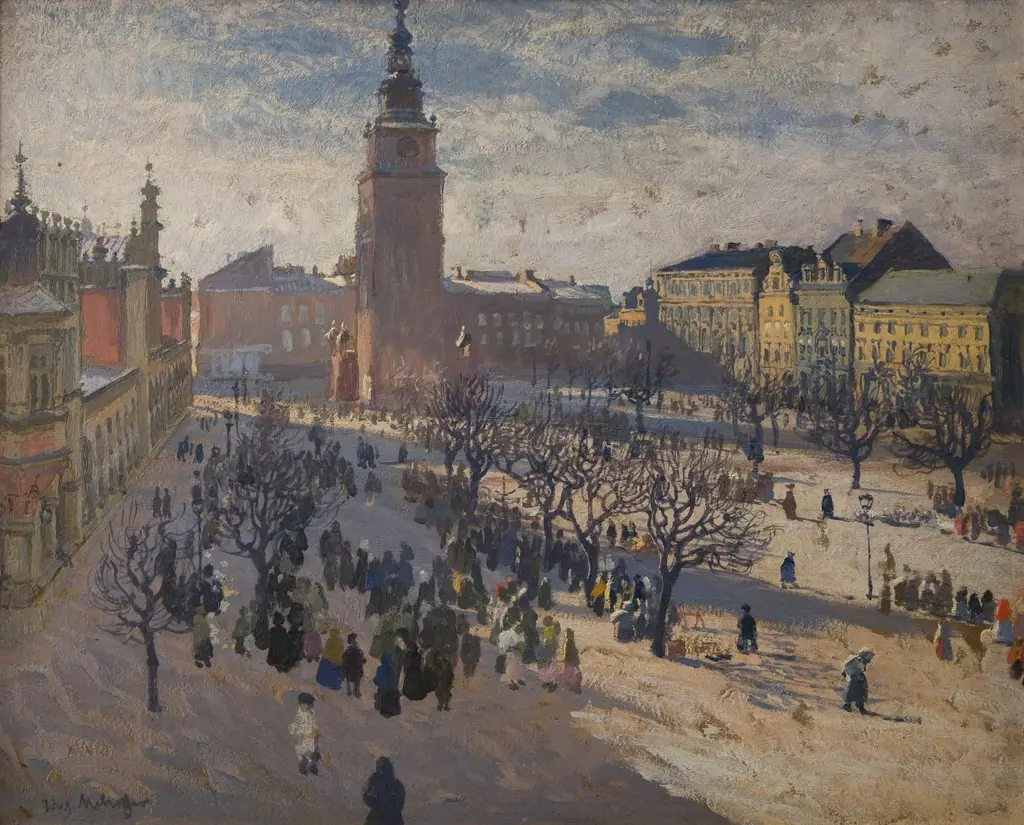 Main Market Square in Krakow