Artwork
Memory of the Garden at Etten
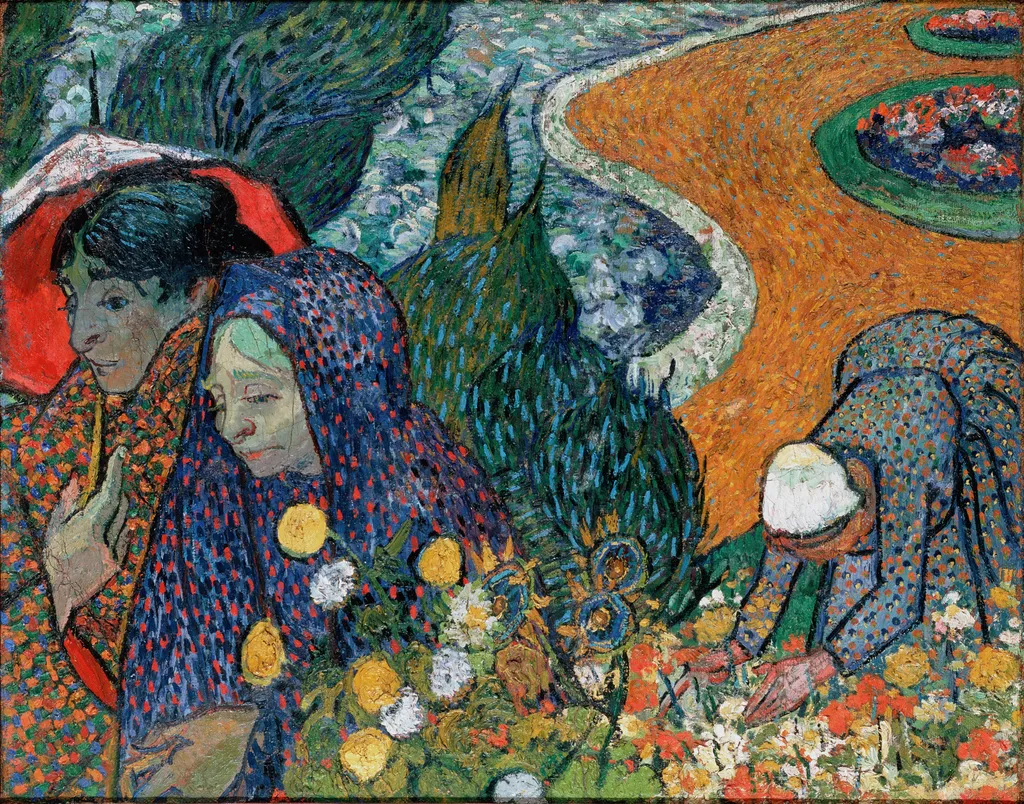
Memory of the Garden at Etten is an oil painting by the Post-Impressionist artist Vincent van Gogh. It dates from 1888 and is held in the collection of the Hermitage Museum.
About this work
Subject & Meaning
The work rejects strict realism in favor of a poetic, stylized vision where color conveys psychological meaning rather than physical resemblance.
The painting depicts a dreamlike memory of the parsonage garden at Etten, featuring two women walking on a path surrounded by vibrant flowers and cypress bushes. Van Gogh intended the figures to represent his mother and his sister Willemien, though some scholars suggest the younger woman may symbolize his rejected cousin Kee Vos-Stricker or the local café owner Madame Ginoux. The work rejects strict realism in favor of a poetic, stylized vision where color conveys psychological meaning rather than physical resemblance.
Van Gogh described the dark violet and lemon yellow dahlias as reflecting his mother's personality, while the younger woman's orange plaid and red parasol evoked a character from a Dickens novel for his sister. He explicitly stated the scene was not a literal reproduction but rather how the garden might appear in a dream, emphasizing emotional truth over visual accuracy.
Created under the influence of Paul Gauguin's suggestion to paint from memory and imagination, the piece serves as a symbolic reconstruction of a pivotal period in the artist's life. It represents his attempt to capture the "poetic character" of a place that marked the beginning of his artistic career, blending personal history with a surreal, colorful interpretation of the past.
Technique & Style
Executed in November 1888, this work is an oil painting on canvas measuring approximately 73 by 92 centimeters. The composition employs a style akin to Cloisonnism, characterized by bright color fields, asymmetrical arrangement, and a rejection of strict realism in favor of memory-based imagery. Van Gogh utilized exaggerated, snaking lines to render the garden not as it physically appeared, but as a dreamlike vision.
The artist applied specific color contrasts to evoke personality and atmosphere, such as dark violet shawls set against lemon-yellow dahlias and a Scottish plaid of green and orange checks highlighted by a red parasol. These deliberate chromatic choices and bizarre linear forms were intended to convey the poetic character of the scene rather than a literal resemblance.
History & Provenance
Painted in November 1888 in Arles while Vincent van Gogh was staying with Paul Gauguin, Memory of the Garden at Etten was intended as decorative panel for the bedroom of the Yellow House. The work entered the collection of Émile Schuffenecker in Clamart in 1908, later passed to the collection of Sergei Shchukin in Moscow, and was nationalised in 1918 before being transferred to the Hermitage Museum in 1948 under inventory number 9116. The painting was executed on canvas measuring 73.5 cm in height by 92.5 cm in width and reflects Van Gogh’s effort to convey a poetic memory of his father’s parsonage garden at Etten, using imagined figures that evoke his mother and cousin Kee Vos-Stricker.
Memory of the Garden at Etten is held in the Hermitage Museum in Saint Petersburg, where it is cataloged under inventory number 9116. The work entered the museum's collection in 1948 after being transferred from the Museum of Modern Western Art in Moscow. Prior to its arrival in Russia, the painting was part of the collection of Émile Schuffenecker in Clamart, where it was inventoried in 1908, and subsequently belonged to the extensive holdings of Sergei Shchukin in Moscow before being nationalized in 1918. The sources do not record specific exhibition dates or venues for this work.
Context
Painted in Arles in November 1888, Memory of the Garden at Etten stands as a pivotal example of Vincent van Gogh's brief but intense period of stylistic experimentation under the influence of Paul Gauguin. During their shared residency, Gauguin encouraged working from imagination rather than direct observation, prompting Van Gogh to create a dreamlike interpretation of his childhood home in Etten. This shift toward cloisonnism and symbolic color usage, where hues convey personality rather than visual reality, marks a significant departure from his earlier naturalism.
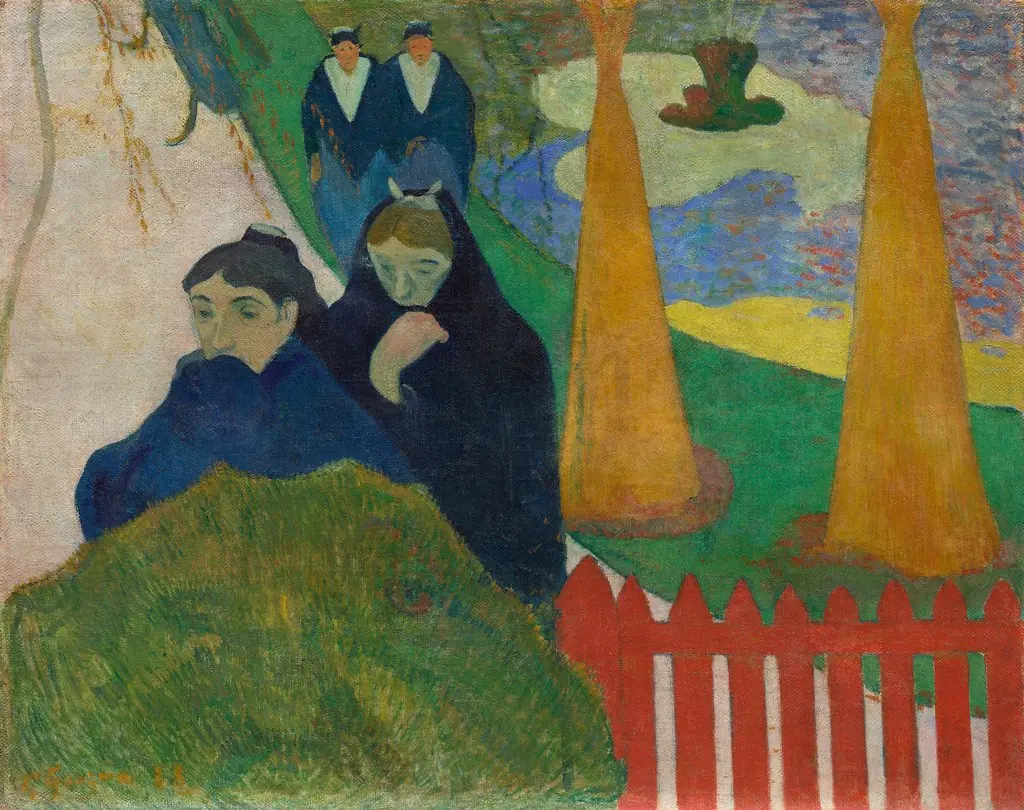
The work directly influenced Gauguin's subsequent painting Arlésiennes (Mistral), demonstrating a reciprocal artistic dialogue. Although Van Gogh later expressed dissatisfaction with the piece, labeling it spoiled, it remains a crucial document of his struggle with memory, symbolism, and the psychological weight of his past during a turbulent time in his career.
Legacy
The work's legacy centers on its symbolic role in van Gogh's artistic development and influence on contemporaries. It inspired Gauguin's Arlésiennes (Mistral) painted shortly afterward, with van Gogh explicitly referencing his use of imagination over literal representation in letters. The painting's composition, characterized by bold color contrasts and dreamlike distortion, exemplifies his shift toward symbolic expression during his Arles period.
Though van Gogh initially intended it as decorative art for his Yellow House bedroom, he later dismissed it as 'spoiled,' reflecting his complex relationship with the work. Its provenance includes ownership by Émile Schuffenecker, incorporation into Sergei Shchukin's collection, and eventual transfer to the Hermitage Museum in 1948, where it remains. The work's interpretation remains contested, with scholars linking its figures to van Gogh's mother, sister, or Kee Vos-Stricker, underscoring its enduring thematic resonance.
Overview
Vincent van Gogh painted Memory of the Garden at Etten in oil during his stay in Arles, likely in November 1888. The work now belongs to the Hermitage Museum in St. Petersburg and was originally meant to adorn the bedroom of his Yellow House, where he lived while working in the south of France.
Own this work as a print
Artist & collection
Artist
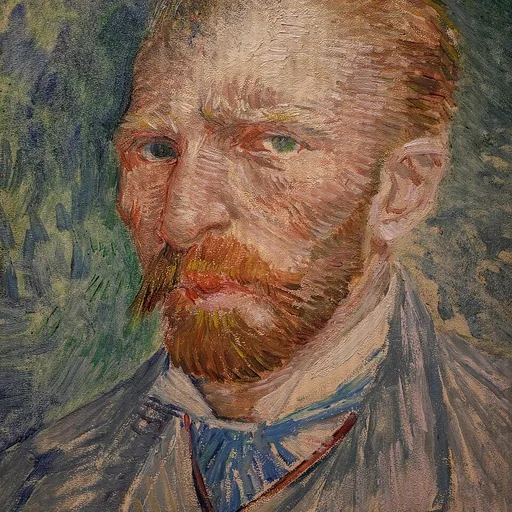
Vincent Willem van Gogh was a Dutch Post-Impressionist painter who is among the most famous and influential figures in the history of Western art.

- Arlésiennes (Mistral)
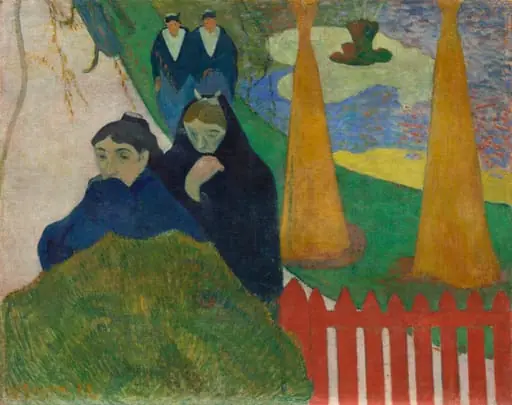 Arlésiennes (Mistral)
 The Large Plane Trees (Road Menders at Saint-Rémy)
 A Lane in the Public Garden at Arles
 Landscape with Couple Walking and Crescent Moon
 Road with Cypress and Star
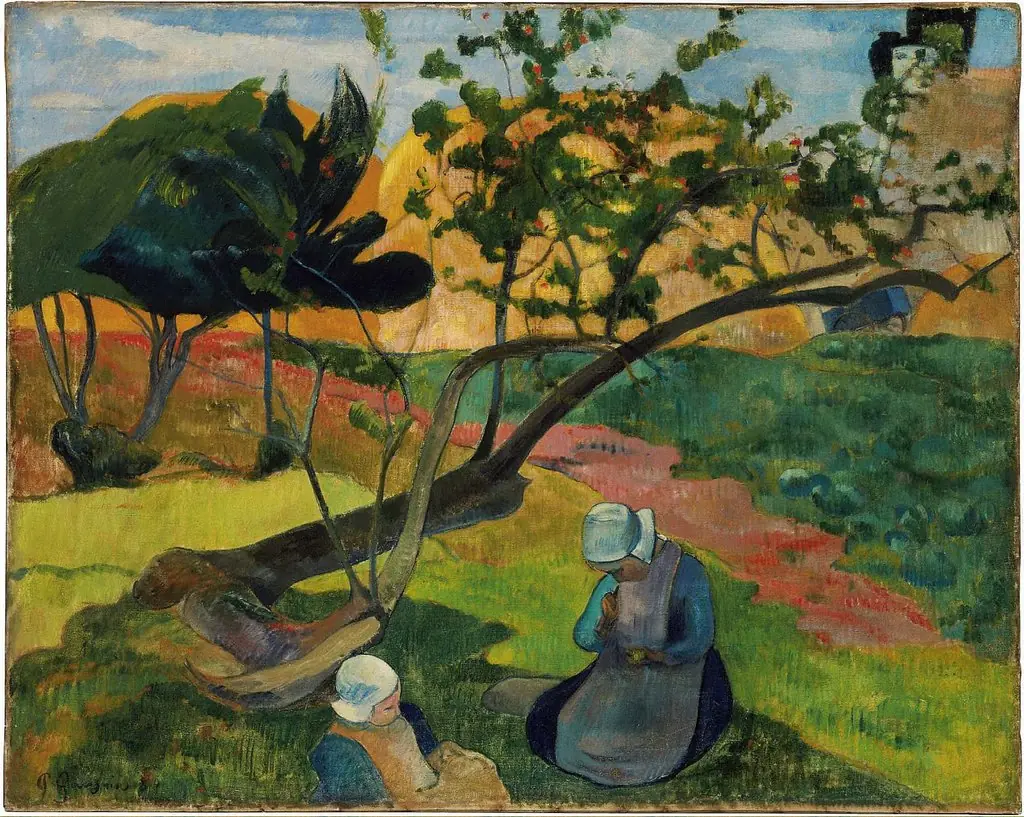 Landscape with Two Breton Women
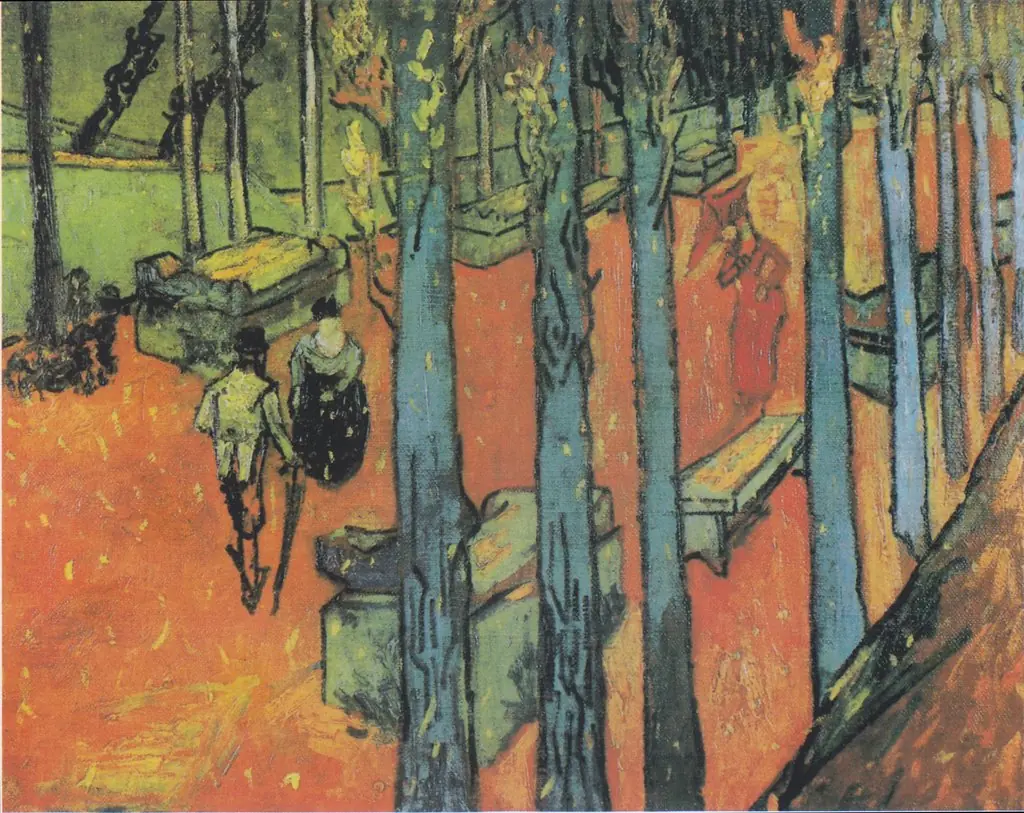 Les Alyscamps: Falling Autumn Leaves
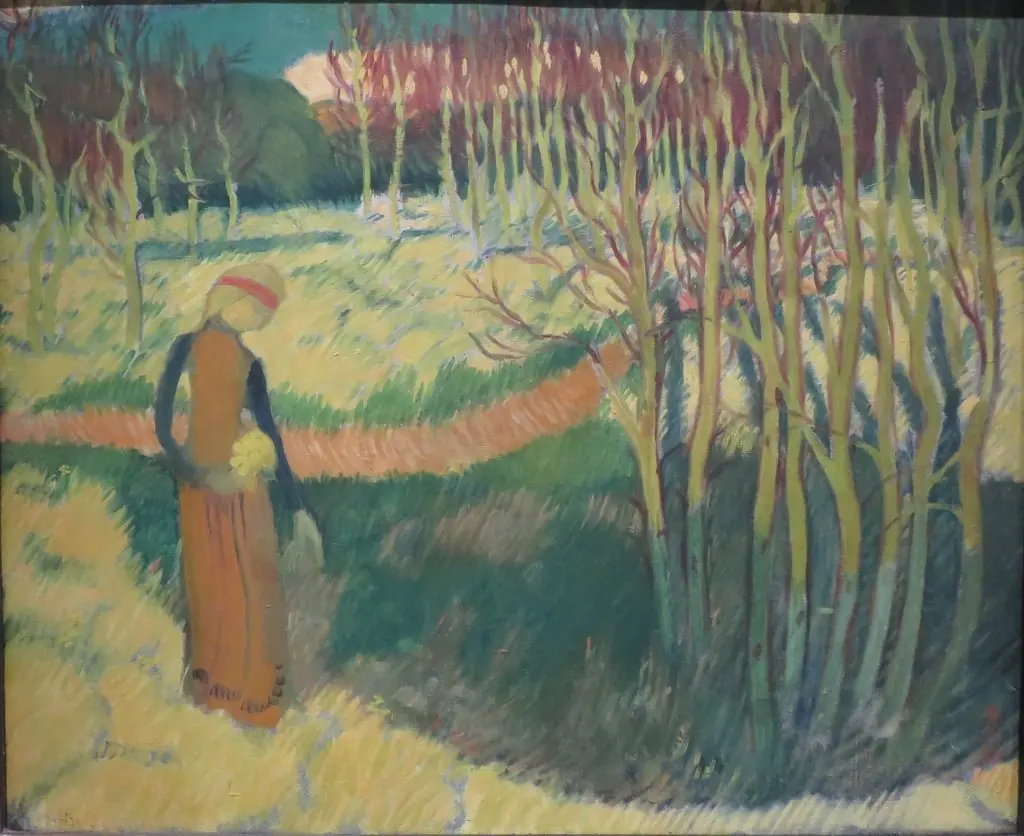 Motif Romanesque
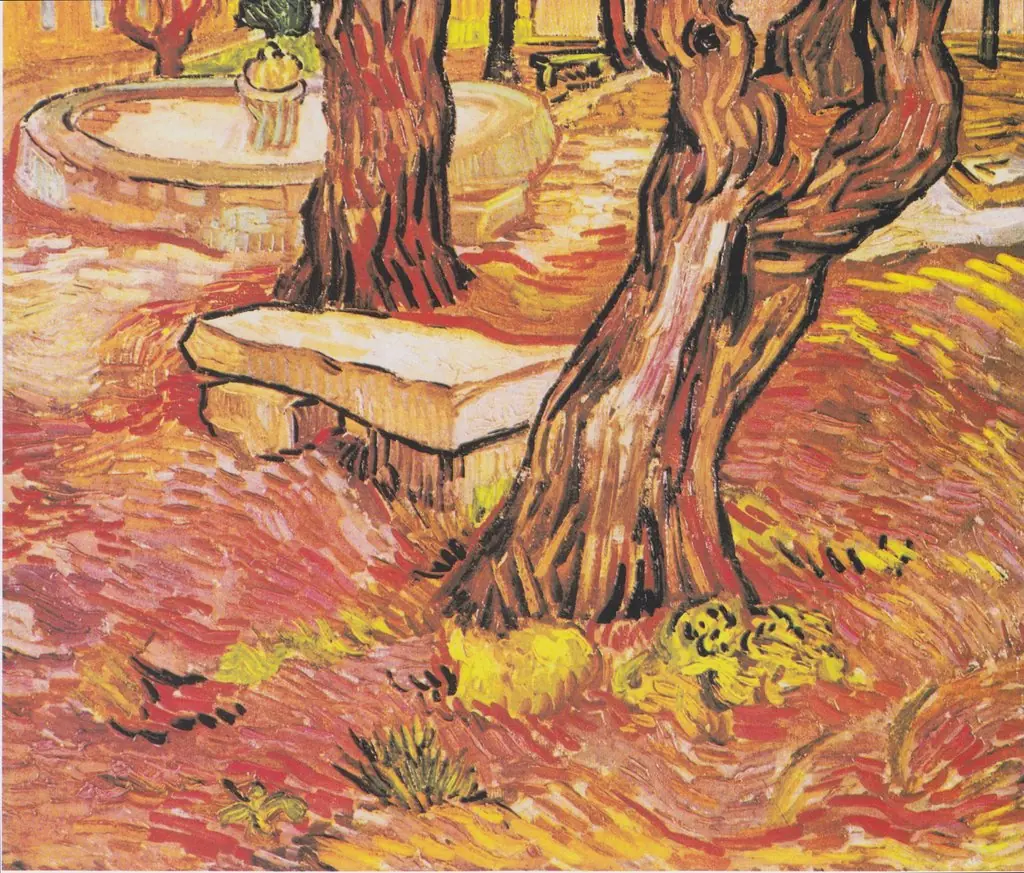 The Stone Bench in the Garden of Saint-Paul Hospital
 Olive Trees
 Mountainous Landscape Behind Saint-Paul Hospital