Artwork
Arlésiennes (Mistral)
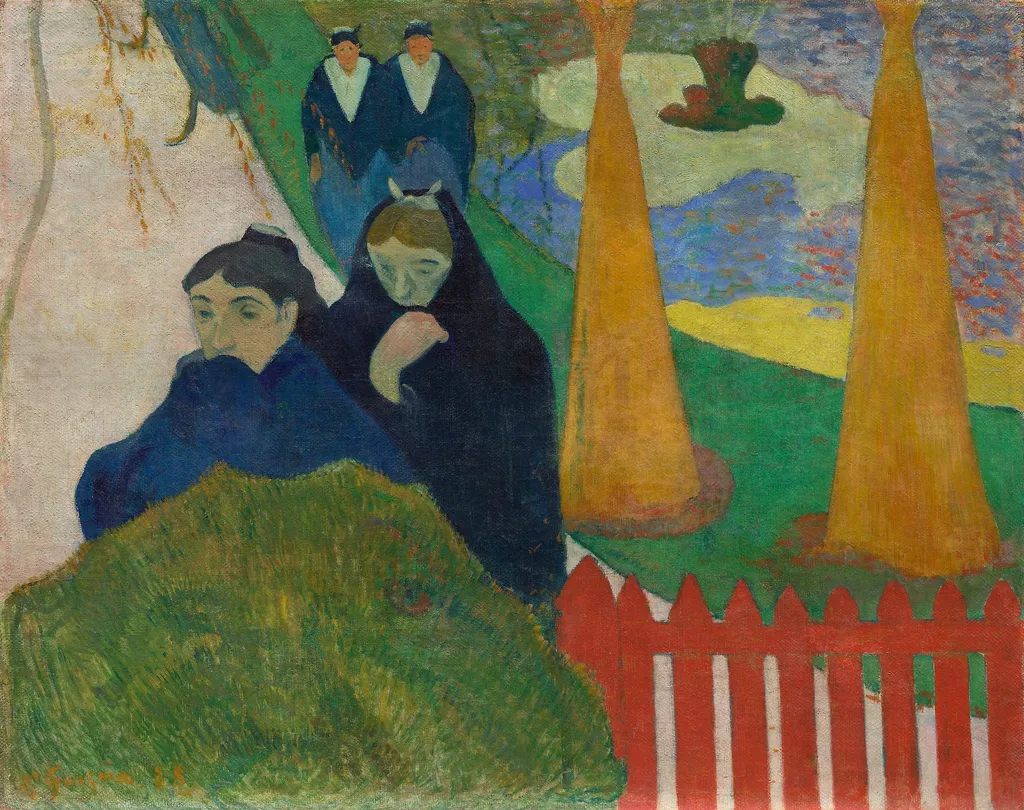
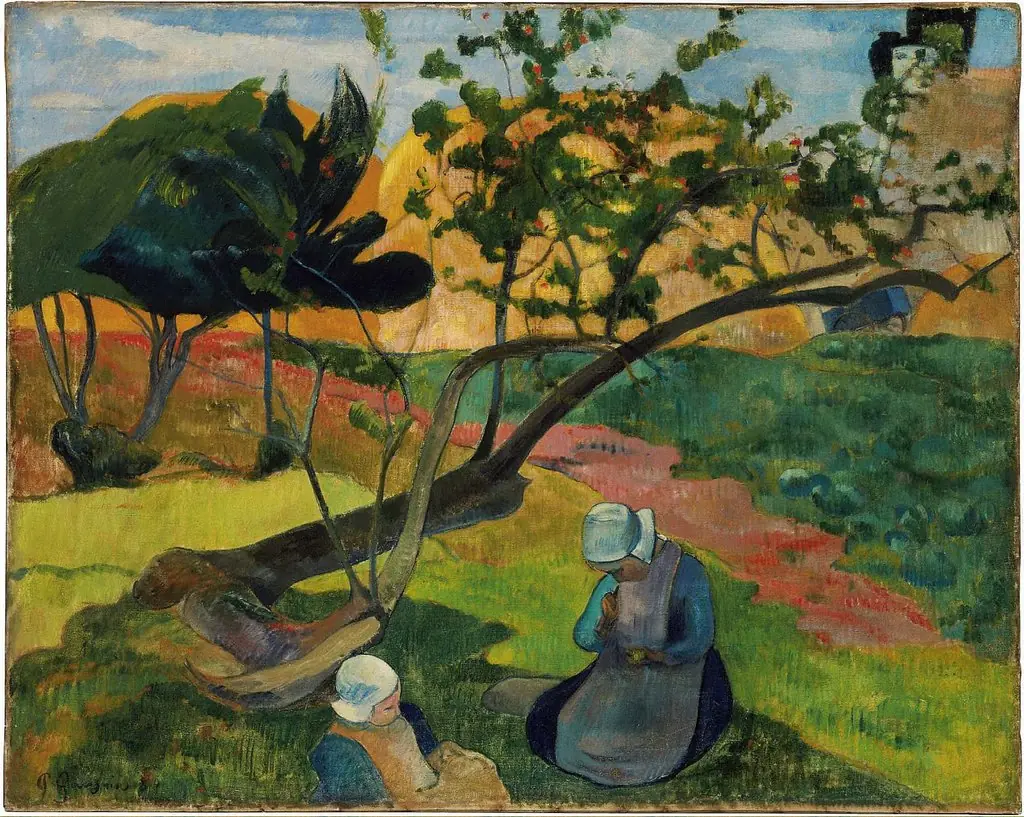
Arlésiennes (Mistral) is an oil painting by the Post-Impressionist artist Paul Gauguin. It dates from 1894 and is held in the collection of the Art Institute of Chicago.
About this work
Subject & Meaning
The painting shows a group of women from Arles posed before the Hôtel-Dieu during a mistral wind, symbolising the region’s hardy populace and the fleeting nature of Provençal life. Gauguin combines the figures with a decorative flatness and bold outlines to evoke the symbolic strength of the local community and its cultural endurance.
Technique & Style
The handling combines flat areas of saturated color with rhythmic, outlined forms, characteristic of the synthetist approach he was developing.
Executed in 1888, the work is painted in oil on a jute support, a coarse fabric chosen by Gauguin during his time in Arles. The handling combines flat areas of saturated color with rhythmic, outlined forms, characteristic of the synthetist approach he was developing. Stylistically, the composition emphasizes bold contours and simplified shapes to convey the effects of the mistral wind, while the figures are rendered with a hieratic presence that flattens spatial illusion.
The palette relies on earthy tones and muted greens, punctuated by small accents of red and blue, heightening the atmospheric mood.
History & Provenance
The work now known as Arlésiennes (Mistral) was painted by Paul Gauguin in 1888. It was executed on jute and measures 73.0 cm in height by 92.0 cm in width.
By the time of its inclusion in the Thannhauser Galleries' holdings, the painting had entered the art market under that dealer’s ownership. The Art Institute of Chicago later acquired it, and it remains in that institution’s collection.
Context
Painted in 1888, this work depicts figures associated with Arles and the mistral wind, reflecting Gauguin's engagement with southern French culture during his brief stay there. It was later held by Thannhauser Galleries before entering the collection of the Art Institute of Chicago, where it remains part of their holdings. Gauguin's production of this piece aligns with his broader experimentation with symbolist themes and regional subjects in the late 19th century.
Overview
Created in 1894, Arlésiennes (Mistral) is a work on jute by Paul Gauguin, positioned within the Post‑Impressionist period. The composition presents three women seated on a grassy slope, framed by a vivid red fence, yellowed poles, and a distant townscape that includes a church tower and a windmill.
Own this work as a print
Artist & collection
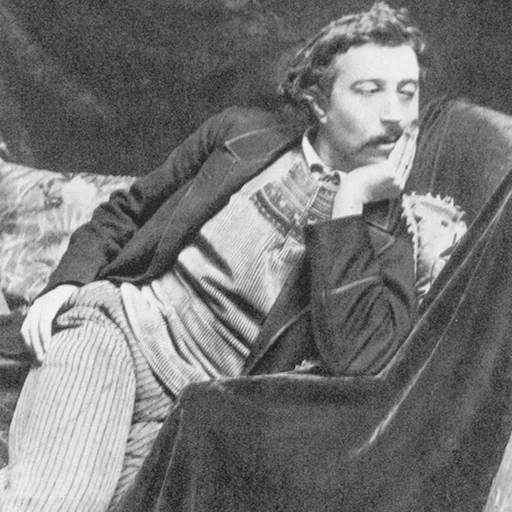
Artist
Eugène Henri Paul Gauguin (; French:; 7 June 1848 – 8 May 1903) was a French painter, sculptor, printmaker, ceramist, and writer, whose work has been primarily associated with the Post-Impressionist and Symbolist movements.