Artwork
Peasant Woman Digging Up Potatoes
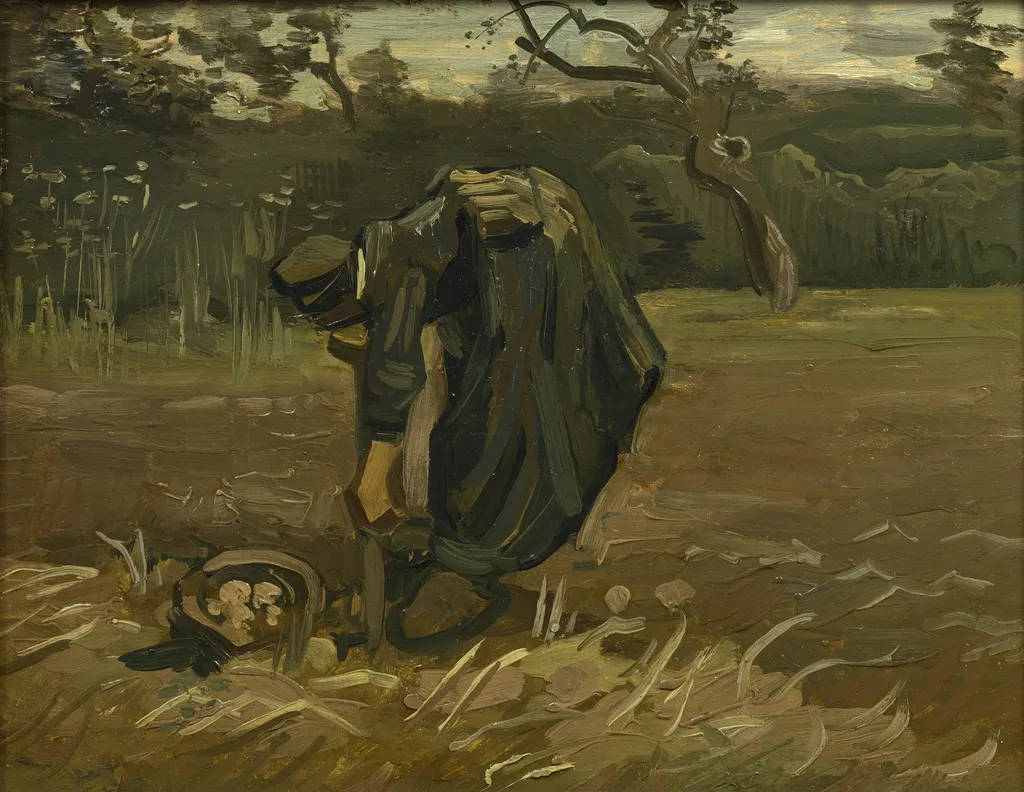
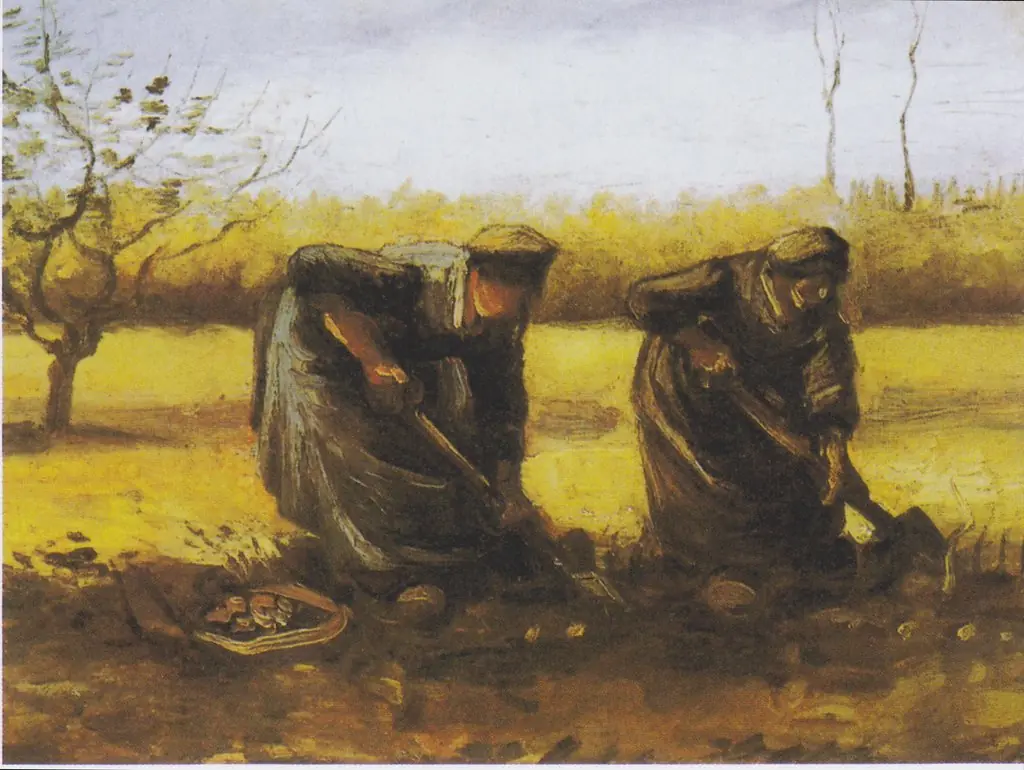
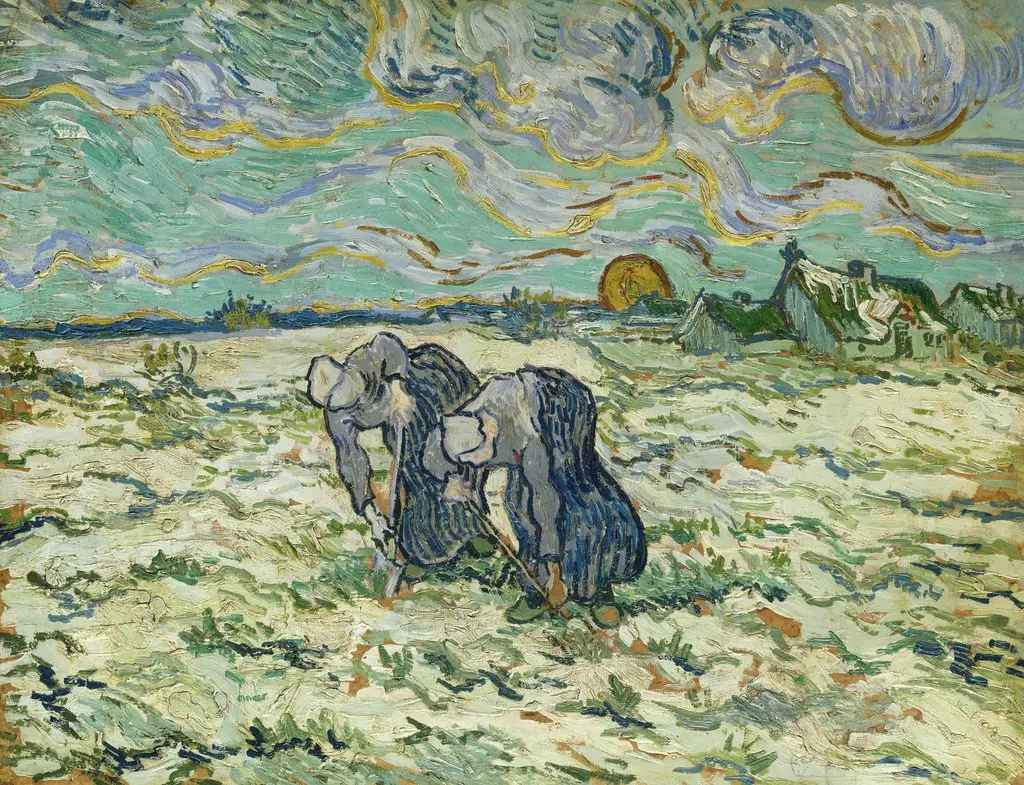
Peasant Woman Digging Up Potatoes is an oil painting by the Realist artist Vincent van Gogh. It is held in the collection of the Royal Museum of Fine Arts Antwerp.
About this work
Subject & Meaning
This aligns with his 'clog works' series, inspired by Jean-François Millet, and his focus on seasonal agricultural tasks during his Dutch period in Nuenen.
The painting depicts a peasant woman bent over a field, digging up potatoes, symbolizing the hardship and dignity of rural labor. Van Gogh portrays the act of labor itself as the central subject, reflecting his view of peasants as pious and ennobled by their work. This aligns with his 'clog works' series, inspired by Jean-François Millet, and his focus on seasonal agricultural tasks during his Dutch period in Nuenen.
The composition emphasizes the physical strain and weight of the labor, rendered through Van Gogh's characteristic thick, angular brushwork that conveys the harshness of the environment and the unglamorous reality of farm life.
Technique & Style
Executed in oil on canvas mounted on panel, the work measures 30 cm in height and 38 cm in width.
The handling is characterized by angular, heavy brushwork that aligns with the harshness of the depicted labor. Form and style emphasize the arduousness of the scene rather than idealizing the subject or setting. The composition flattens the figure, earth, and potatoes into a unified, coarse texture, avoiding naturalistic refinement.
This approach reflects Van Gogh’s stated aim to convey the nobility of peasant life through unflattering, almost grotesque simplification.
History & Provenance
Peasant Woman Digging Up Potatoes is an oil on canvas painting by Vincent van Gogh, created in 1885 during his Dutch period in Nuenen. It depicts a peasant woman engaged in potato harvesting, reflecting van Gogh's interest in agricultural labor and his admiration for Jean-François Millet's peasant genre. The work was initially owned by J. Willebeek le Mair and later sold at auction before being acquired by the Royal Museum of Fine Arts Antwerp through the intervention of the Palace of Fine Arts in Brussels.
The museum's chief curator Walther Vanbeselaere noted its significance as the only notable Van Gogh piece in Flemish hands from his darker period, purchased at a relatively low price of 300,000 francs. The painting was stolen in 1997 but later recovered by federal police through an undercover operation.
The work is held in the collection of the Royal Museum of Fine Arts Antwerp, where it has been accessioned under the museum's inventory system. It was first owned by J. Willebeek le Mair, then sold at auction and acquired by the museum through the mediation of the Palace of Fine Arts in Brussels, as noted by chief curator Walther Vanbeselaere. The painting was stolen in 1997 but later recovered.
Context
Created during Vincent van Gogh's residence in Nuenen between 1883 and 1885, this work exemplifies his 'dark period' focused on the harsh realities of agricultural labor. Influenced by Jean-François Millet, whom he revered as the master of peasant genre painting, van Gogh produced small figure studies like this one immediately after completing major compositions such as The Potato Eaters. Art historians note that the artist's rough, unrefined brushwork and lack of idealization were intentional choices to mirror the brutal physicality of the subject matter, refusing to distinguish between the worker, the soil, and the crop.
The painting holds specific significance within Belgian art history as the only van Gogh in the Royal Museum of Fine Arts Antwerp. Chief curator Walther Vanbeselaere characterized it as an excellent survivor from the artist's Dutch years, acquired at a notably low auction price of 300,000 francs through the mediation of the Palace of Fine Arts in Brussels.
Legacy
Peasant Woman Digging Up Potatoes has been recognized as a significant example of van Gogh's early exploration of peasant labor and his influence from Jean-François Millet. The work exemplifies his 'clog period' focus on rural toil, where he portrayed agricultural workers with dignity and emotional intensity, rejecting idealization. Its legacy lies in shaping early modernist approaches to genre painting and labor representation, particularly through its raw technique and thematic emphasis on the physicality of work.
The painting's provenance, including its acquisition by the Royal Museum of Fine Arts Antwerp at a low price, underscores its historical significance as a rare Van Gogh work in Flemish collections.
Overview
Vincent van Gogh created the oil painting Peasant Woman Digging Up Potatoes around 1885. Executed on canvas that has been mounted on a panel, the work measures modest dimensions typical of his figure studies from that period. It is presently displayed in the Royal Museum of Fine Arts in Antwerp.
Own this work as a print
Artist & collection
Artist
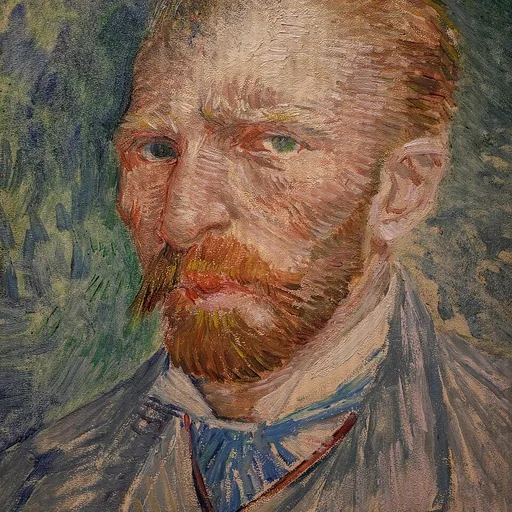
Vincent Willem van Gogh was a Dutch Post-Impressionist painter who is among the most famous and influential figures in the history of Western art.