Artwork
Still Life with Plaster Statuette, a Rose and Two Novels
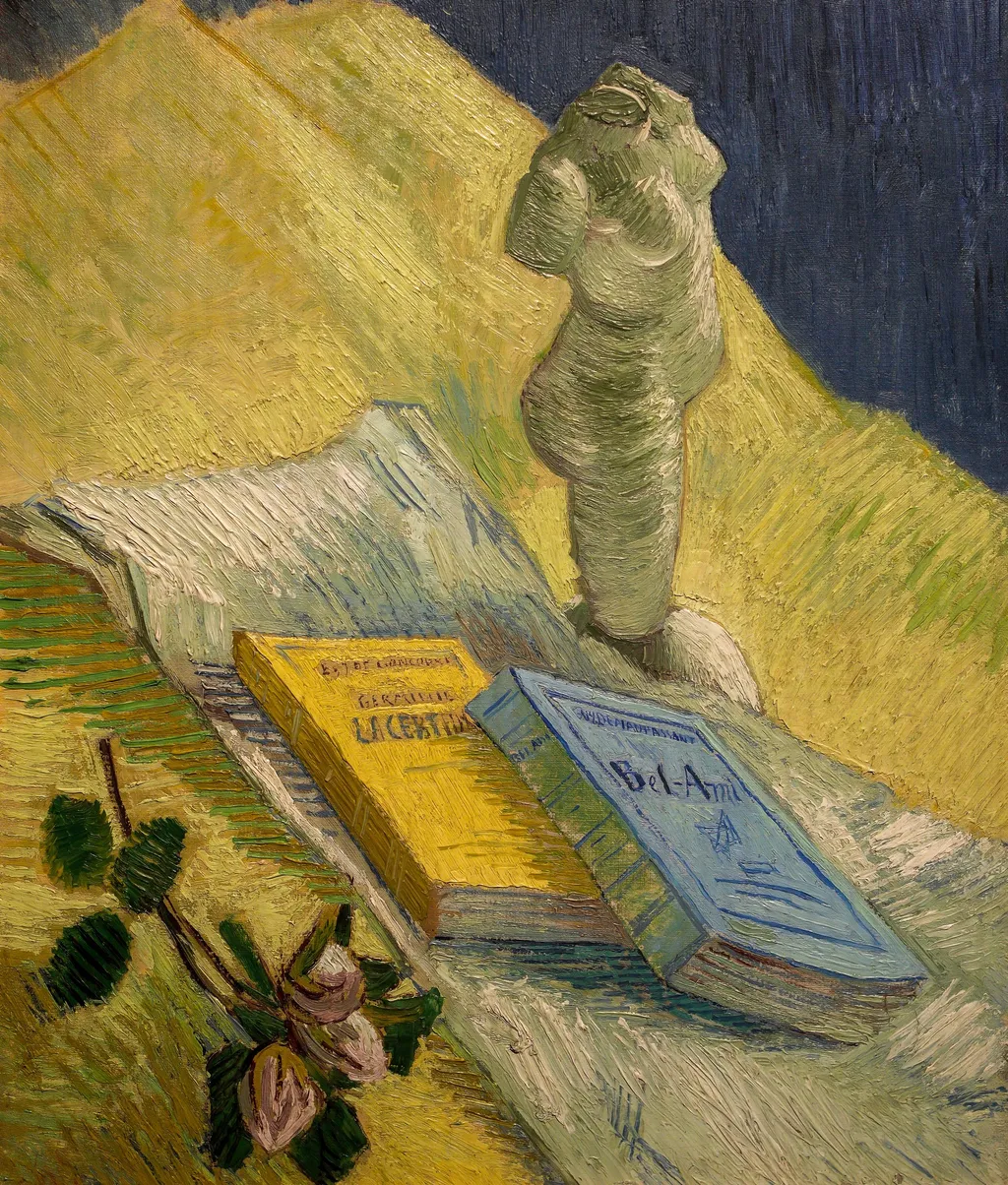
Still Life with Plaster Statuette, a Rose and Two Novels is an oil painting by the Post-Impressionist artist Vincent van Gogh. It dates from 1887 and is held in the collection of the Kröller-Müller Museum.
About this work
Overview
The inclusion of the statuette and books suggests a study of form and a contemplation of artistic and literary culture, themes prevalent in his Parisian period.
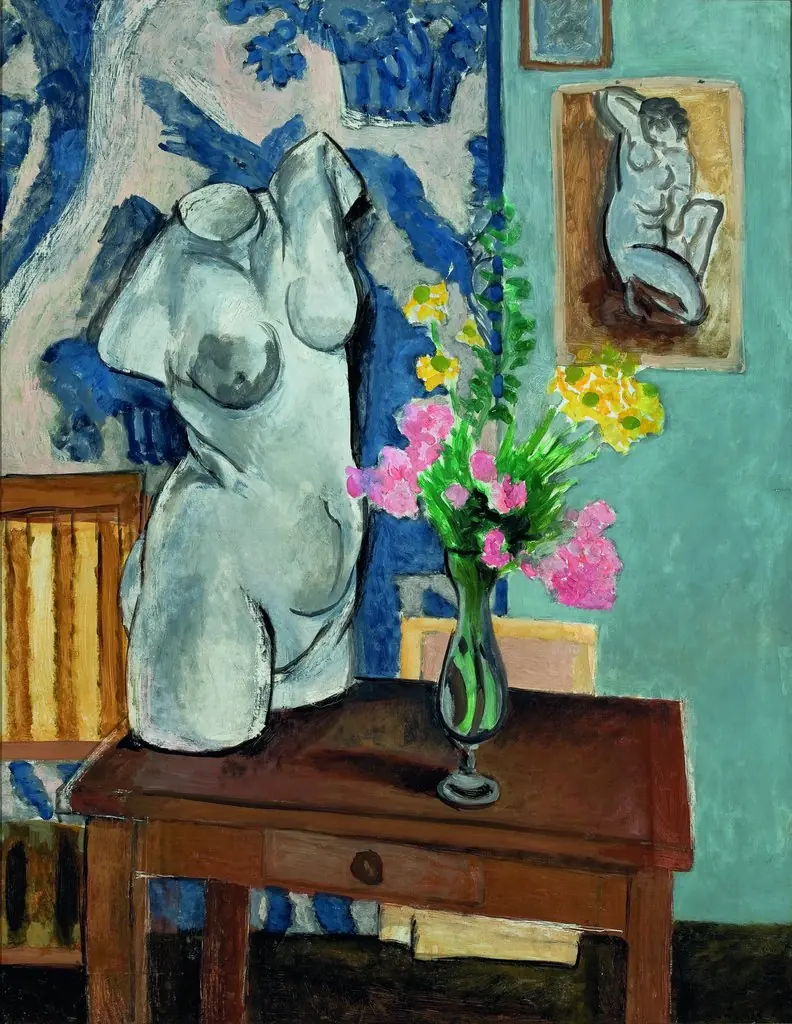
Still Life with Plaster Statuette, a Rose and Two Novels is an 1887 oil painting by Vincent van Gogh created during his residence in Paris. The composition features a small plaster statuette of a woman, likely a classical figure, standing on a wooden surface alongside a single red rose and two stacked novels. Van Gogh arranged these objects against a warm, yellow background, utilizing a palette that reflects his engagement with Impressionist color theory while retaining his distinctive brushwork.
The inclusion of the statuette and books suggests a study of form and a contemplation of artistic and literary culture, themes prevalent in his Parisian period. This work demonstrates the artist's transition from the somber tones of his Dutch era to the brighter, more vibrant colors he adopted after moving to France. The painting serves as an intimate exploration of everyday objects, elevating a simple arrangement into a complex study of light, texture, and color relationships.
It stands as a significant example of Van Gogh's still life experimentation before his move to Arles, where his style would further evolve.
Subject & Meaning
The still‑life gathers objects that suggest quiet intellectual and aesthetic pursuits: a classical plaster figure, a fresh flower, and two volumes of literature. By juxtaposing the timeless form of the statuette with the fleeting beauty of the rose and the permanence of printed text, the painting invites contemplation of art, nature, and knowledge within an intimate interior space.
Technique & Style
Van Gogh employs a dense impasto application, allowing the paint to stand out in palpable strokes that give the surface a tactile quality. The palette is restrained, dominated by muted yellows, soft greens, and subdued blues, which together create a subdued atmosphere. The visible brushwork and textured surface emphasize the materiality of the medium while reinforcing the work’s contemplative tone.
History & Provenance
Created during van Gogh’s Dutch period in 1887, the painting remained in private hands before being acquired by the Kröller‑Müller Museum, where it is displayed among the artist’s early works. Its presence in the museum’s collection highlights the development of van Gogh’s still‑life practice prior to his later, more celebrated periods.
Own this work as a print
Artist & collection
Artist
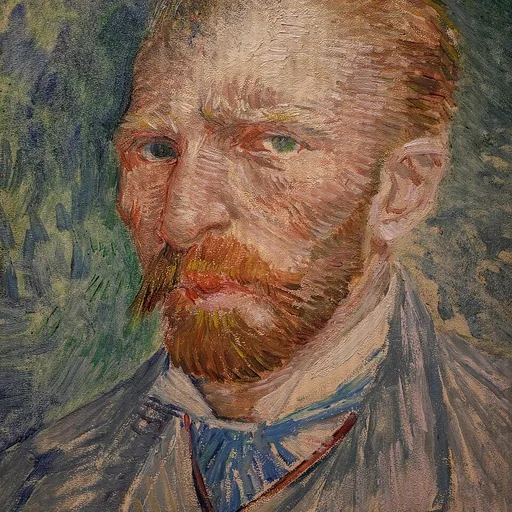
Vincent Willem van Gogh was a Dutch Post-Impressionist painter who is among the most famous and influential figures in the history of Western art.