Artwork
The Virgin Mary and Saint Peter Appear to the First Carthusians
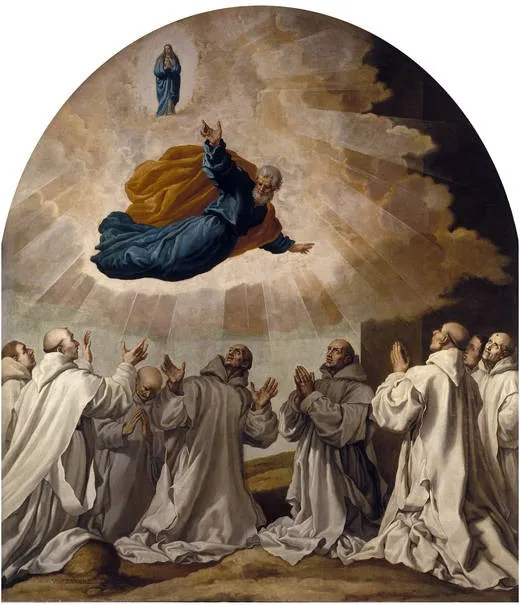
The Virgin Mary and Saint Peter Appear to the First Carthusians is an oil painting by the Early Baroque Italian artist Vincenzo Carducci. It dates from 1626 and is held in the collection of the Museo del Prado.
About this work
Subject & Meaning
The presence of Saint Peter emphasizes apostolic authority while the Carthusian figures represent the order’s early members receiving sacred revelation.
The painting shows the Virgin Mary and Saint Peter appearing to the first Carthusians, an event that symbolizes the divine endorsement of the Carthusian Order’s foundation. In the composition, Mary is depicted handing a rosary to Saint Peter, underscoring the theme of prayer and contemplative devotion central to Carthusian spirituality. The presence of Saint Peter emphasizes apostolic authority while the Carthusian figures represent the order’s early members receiving sacred revelation.
Technique & Style
The work is executed in oil paint on canvas, a standard support for large-scale religious commissions of the period. Its substantial dimensions, 338 cm in height and 298.5 cm in width, indicate a monumental format suited to its original setting at the Monasterio de El Paular. The painting is classified as a religious work, consistent with its Carthusian devotional subject matter.
The canvas is held in the collection of the Museo del Prado, with provenance also linked to the Museo de la Trinidad. No specific information regarding handling, condition, or stylistic qualities is documented in the available sources.
History & Provenance
Vincenzo Carducci executed The Virgin Mary and Saint Peter Appear to the First Carthusians in 1626. The oil on canvas work was specifically created for the Monasterio de El Paular. Following its completion, the painting entered the collection of the Museo de la Trinidad.
It is currently housed within the holdings of the Museo del Prado in Madrid, where it remains part of the institution's religious art assemblage.
The Virgin Mary and Saint Peter Appear to the First Carthusians is housed in the Museo del Prado, where it is recorded under the inventory number P00968. The work was created in 1626 at the Monasterio de El Paular and has remained in the museum's collection since its acquisition. It was included in the Prado's permanent exhibition of Spanish religious painting and later featured in the 1995 exhibition "Spanish Masters of the Golden Age" at the same institution.
Context
Created in 1626 by Vincenzo Carducci, also known as Vicente Carducho, this large-scale oil painting on canvas depicts the Virgin Mary and Saint Peter appearing to the first Carthusian monks. The work was executed at the Monasterio de El Paular, reflecting the artist's significant engagement with religious commissions for monastic orders in early 17th-century Spain. Measuring 338 cm in height and 298.5 cm in width, the painting is a substantial example of Carducci's religious output during this period.
It is currently held in the collection of the Museo del Prado, having been transferred from the Museo de la Trinidad, underscoring its recognized importance within the canon of Spanish Baroque religious art.
Overview
Completed in 1626, this oil painting by Vincenzo Carducci portrays a visionary episode in which the Virgin Mary and Saint Peter appear before the original members of the Carthusian order. The composition centers on a celestial figure in blue and orange robes, arms outstretched, beneath a luminous sky, while a group of bald, white‑robed monks kneel in reverent awe.
Artist & collection
Artist
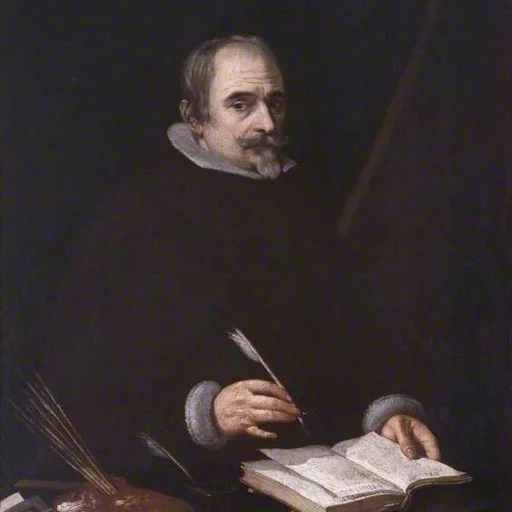
Vincenzio Carduccio (in Spanish, sometimes Vicencio or Vicente Carducho; 1576 or 1578–1638) was an Italian painter who spent his career in Spain.

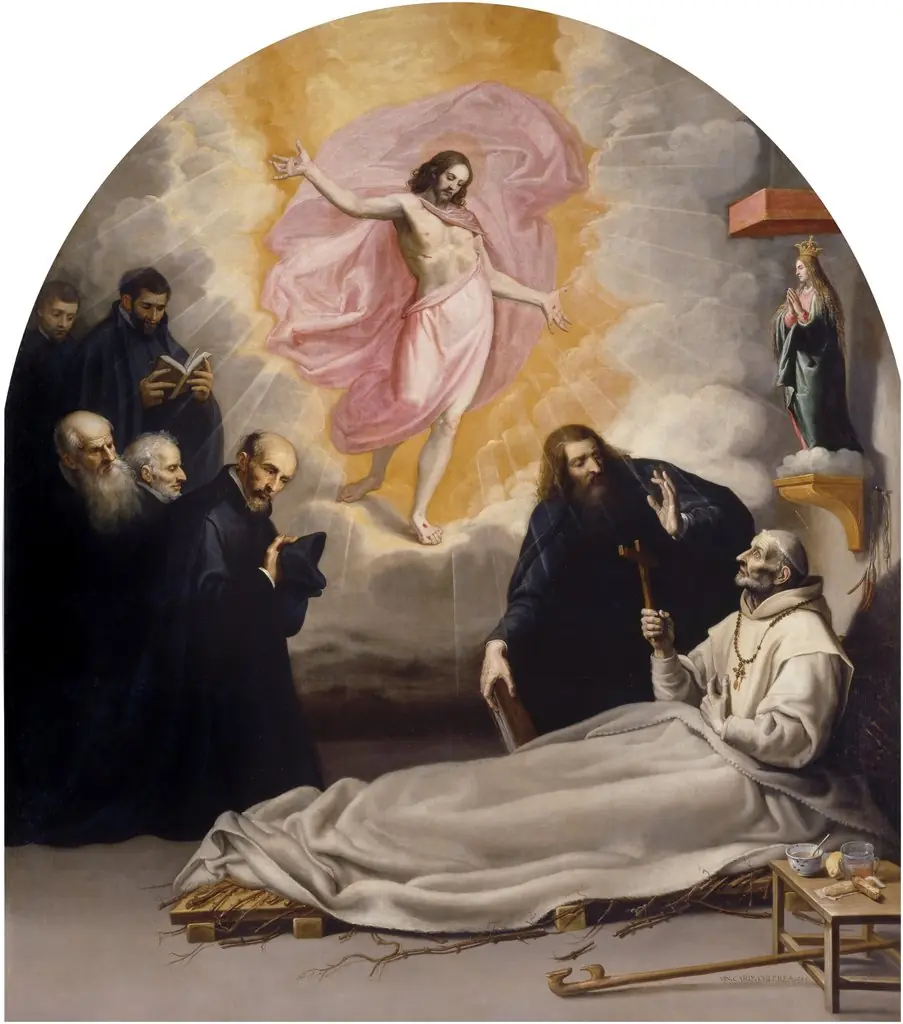
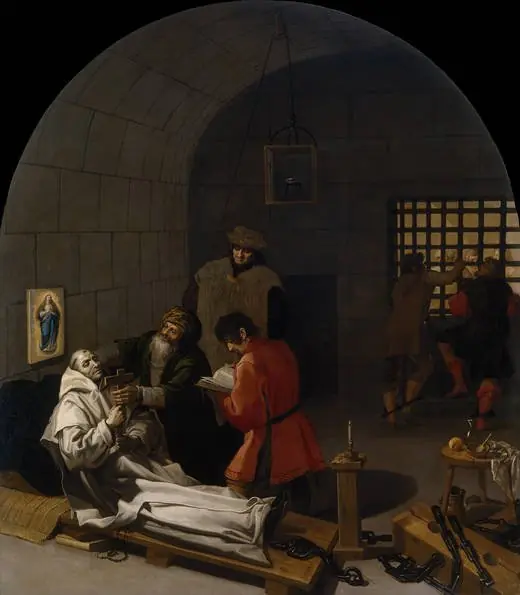
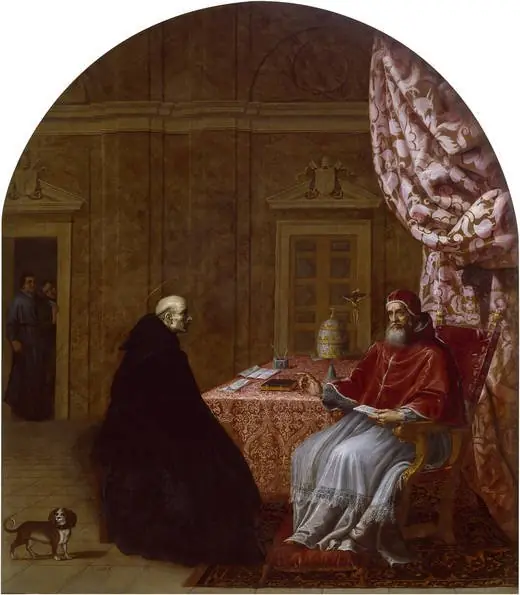
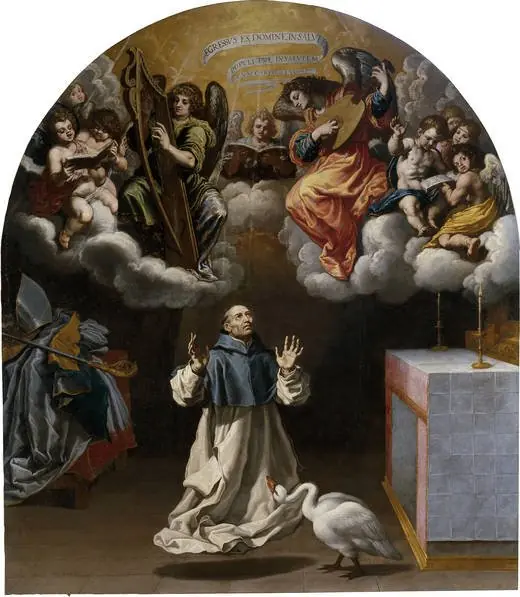
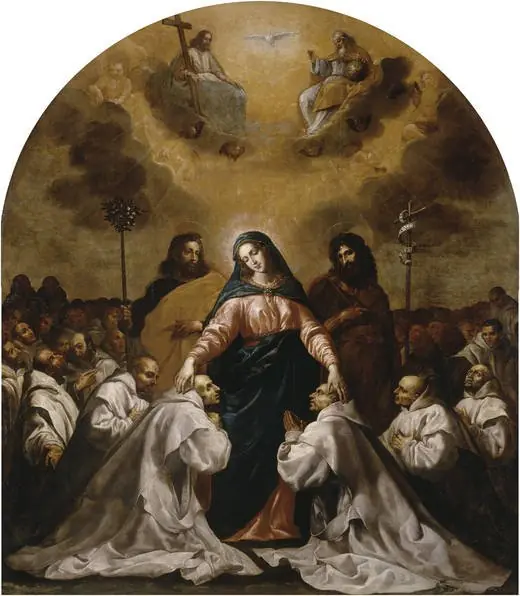
- The Virgin Accompanied by Saint Joseph and Saint John the Baptist Shelters the Carthusian Order Beneath her Robes
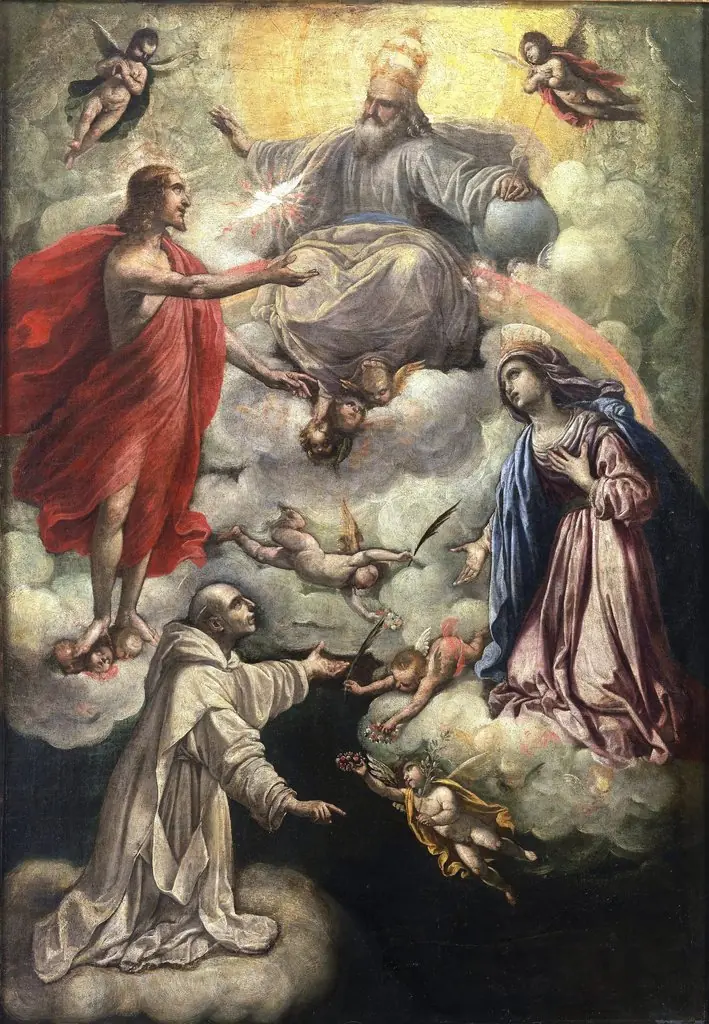 Visión de San Bruno
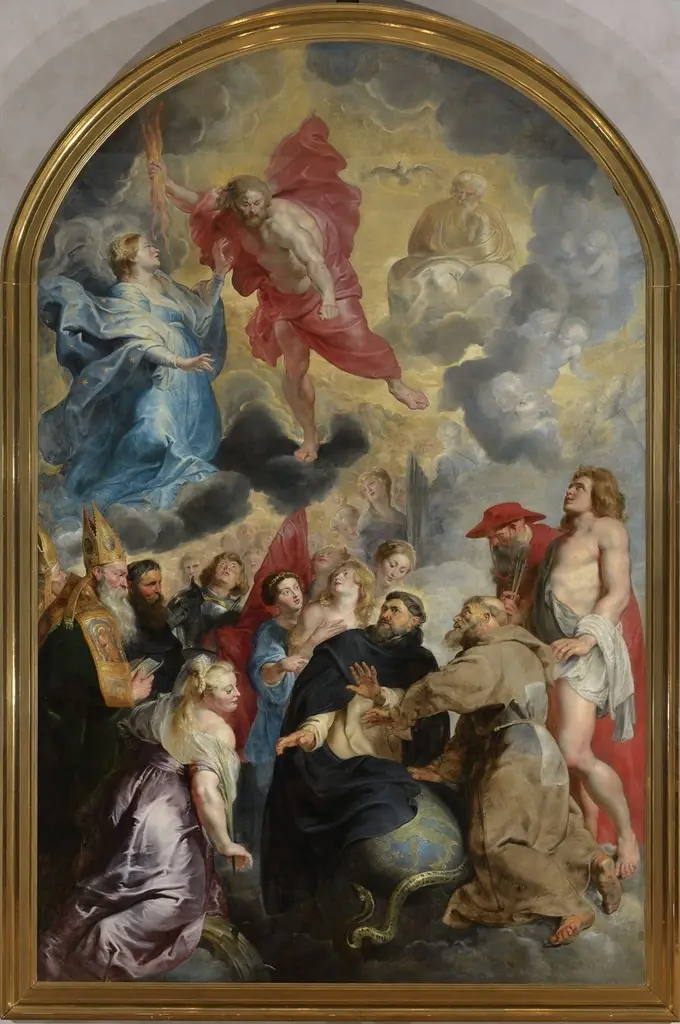 Saint Dominic and Saint Francis Protecting the World from the Wrath of Christ
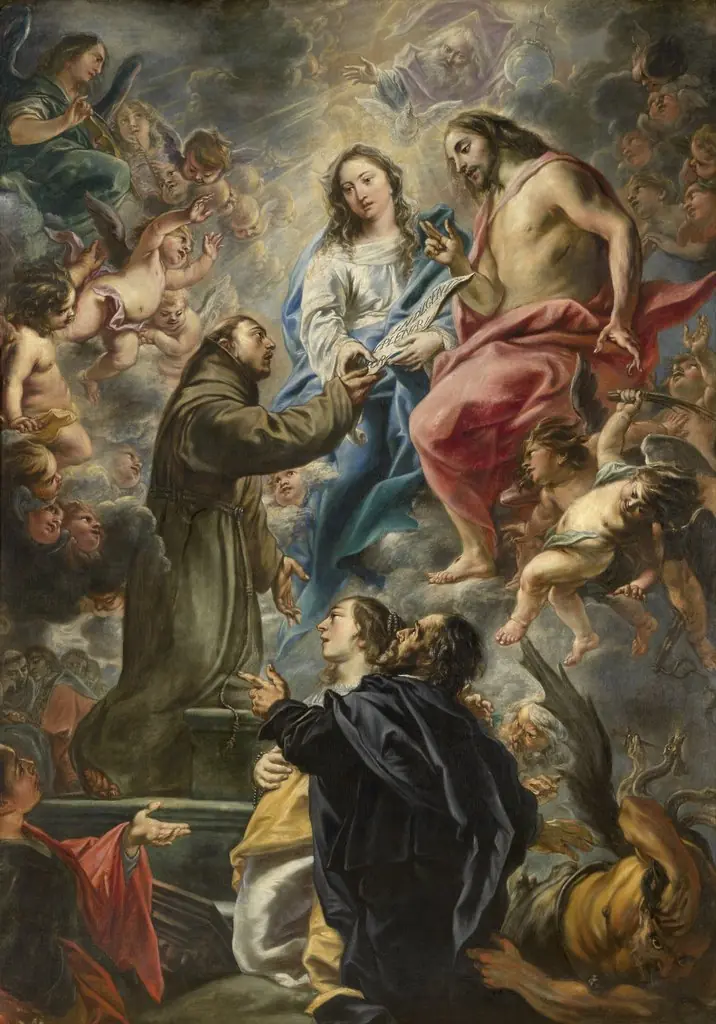 Portiuncula
 Maria på himmeltronen omgivet af engle
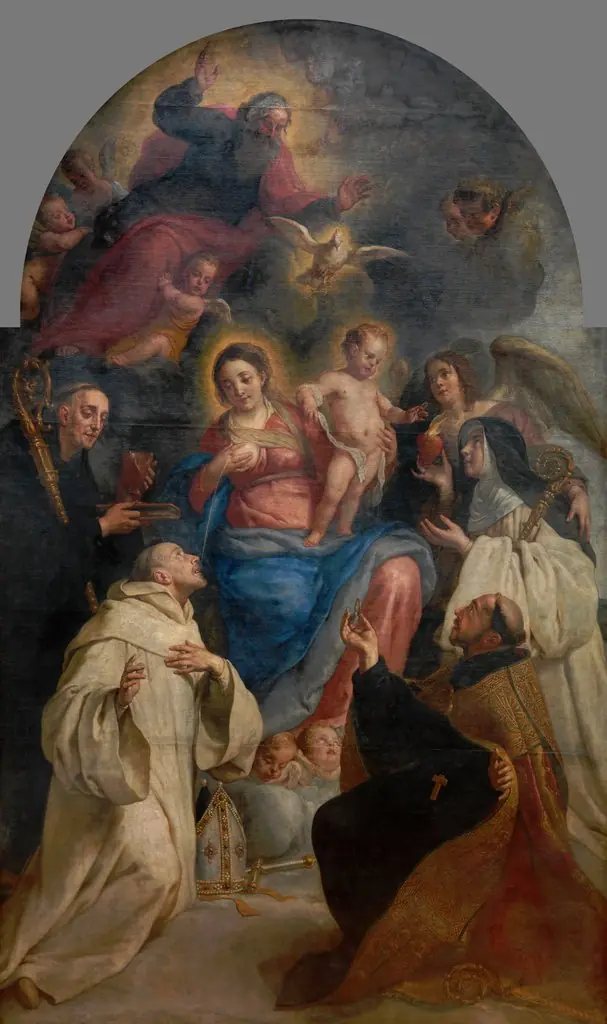 Lactatio of Saint Bernard of Clairvaux
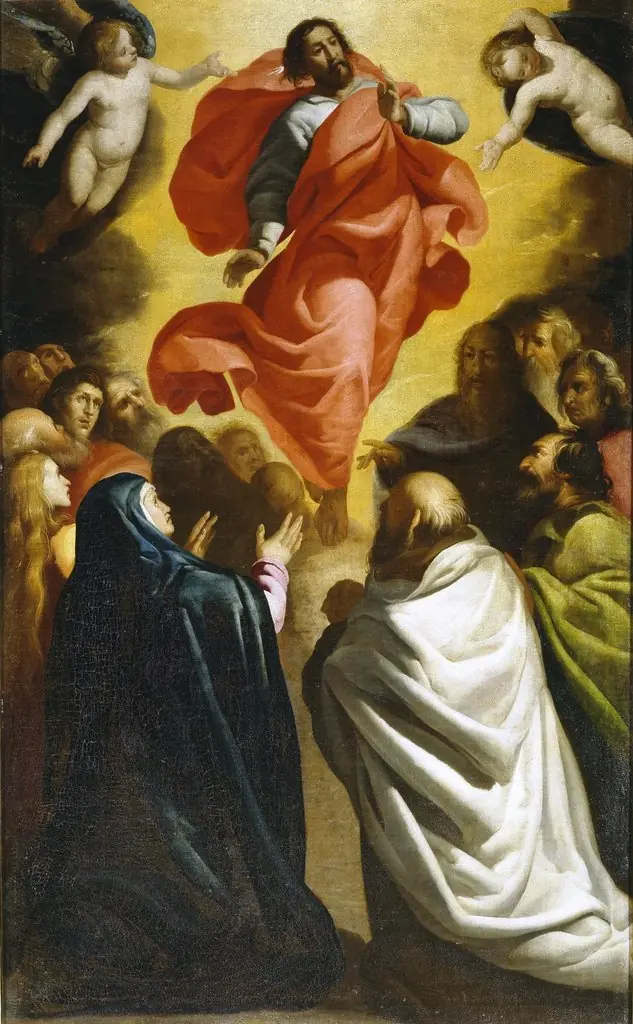 Ascensión del Señor
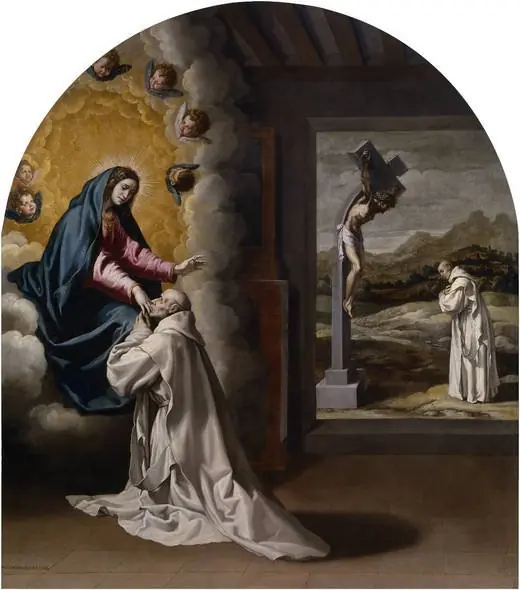 The Virgin Appears to Juan Fort
 Maria på himmeltronen omgivet af engle
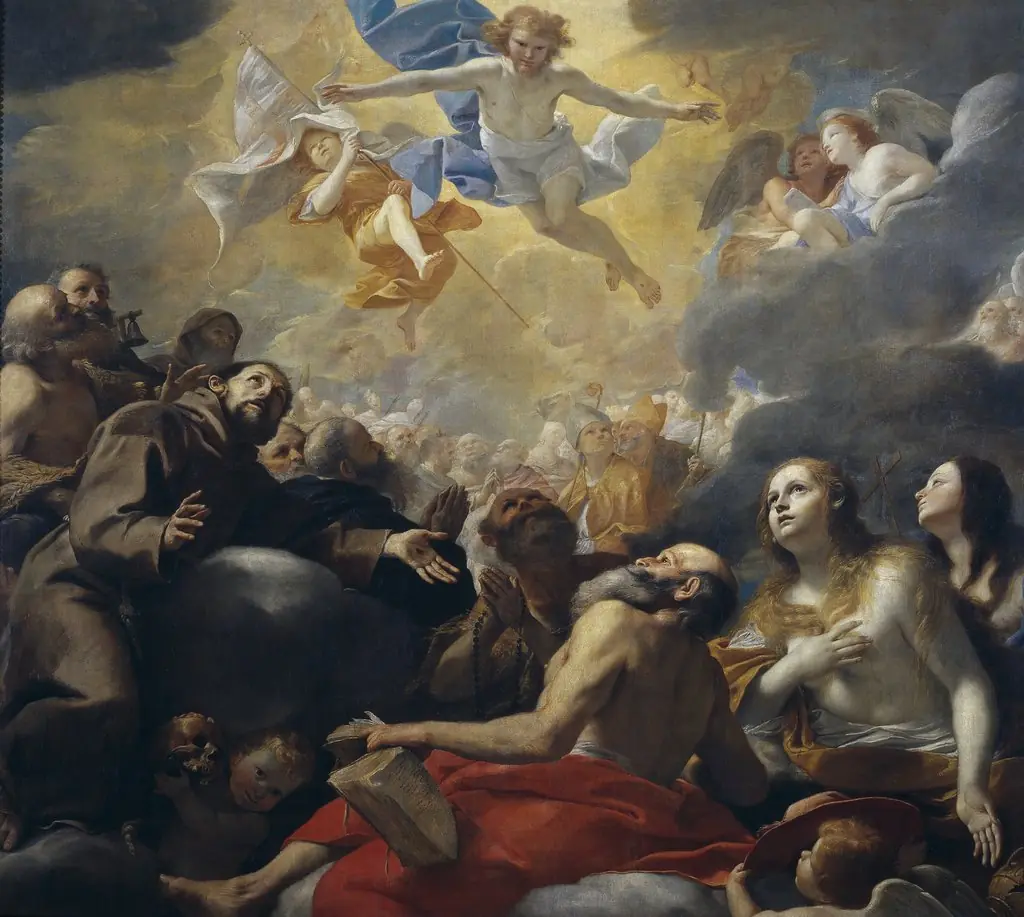 Christ in Glory with Saints
 Visione di San Romualdo
 Madonna and Child in Glory appearing to St Stephen and three other Saints