Artwork
The Virgin Appears to Juan Fort
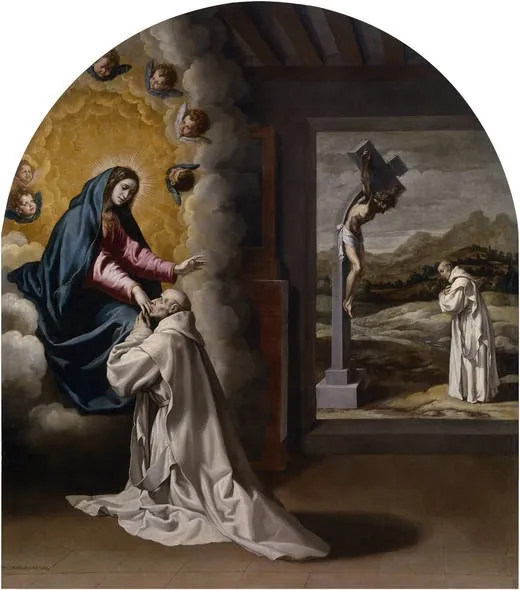
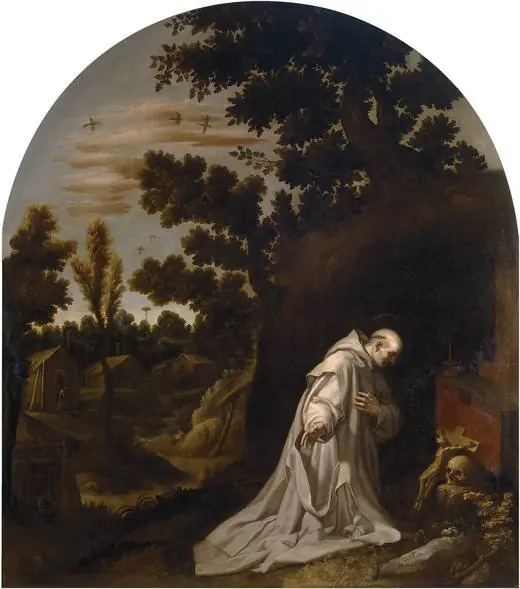
The Virgin Appears to Juan Fort is an oil painting by the Early Baroque Italian artist Vincenzo Carducci. It dates from 1629 and is held in the collection of the Museo del Prado.
About this work
Technique & Style
Executed in 1629, this religious painting by Vincenzo Carducci utilizes oil paint applied to a canvas support.
Executed in 1629, this religious painting by Vincenzo Carducci utilizes oil paint applied to a canvas support. The work is characterized by its monumental scale, measuring 336 cm in height and 297 cm in width. While specific details regarding the artist's brushwork, current condition, or conservation history are not provided in the available records, the piece is formally classified as a large-format oil painting depicting a sculptural subject within a religious narrative.
History & Provenance
The work titled The Virgin Appears to Juan Fort was painted by Vincenzo Carducci in 1629 as an oil painting on canvas. It entered the collection of the Museo del Prado and later the Museo de la Trinidad, both institutions in Spain, where it remains on display in the Museo del Prado. The painting was created during the early phase of Carducci’s career, with its execution dated between 1629 and 1632 according to archival records.
Its dimensions are 336 cm by 297 cm, and it is classified as a religious work depicting a sculptural subject within the broader tradition of Spanish religious art.
The painting is held by the Museo del Prado, which also lists the Museo de la Trinidad as part of its collection history. The work is executed on canvas and measures 336 by 297 cm. The provided sources do not record a specific inventory or accession number, nor do they document any exhibition history for the artwork.
Overview
The Virgin Appears to Juan Fort is a 1629 oil painting by Vincenzo Carducci, an Italian artist active in Spain. This early Baroque work is part of the Museo del Prado's collection.
Subject & Meaning
The painting depicts a religious scene where the Virgin Mary, dressed in dark blue with a pink undershirt, gently touches the head of kneeling Juan Fort, who is in prayer. A subtle, distant crucifixion scene within a doorway adds depth to the narrative.
Context
As an early Baroque piece, the work reflects the period's emphasis on emotional intensity and dramatic lighting, though here applied with restraint to convey serenity. The inclusion of a sculptural element (implied by the description of a 'sculpture' in the original, though the visual note clarifies it as a painted scene) or a secondary narrative (the crucifixion) was common in Baroque art to add layers of meaning.
Legacy
While specific influences or direct artistic legacies of The Virgin Appears to Juan Fort are not highlighted, it contributes to the broader understanding of early Baroque artistic practices in 17th-century Spain and the adaptation of Italian artistic trends in the region.
Artist & collection
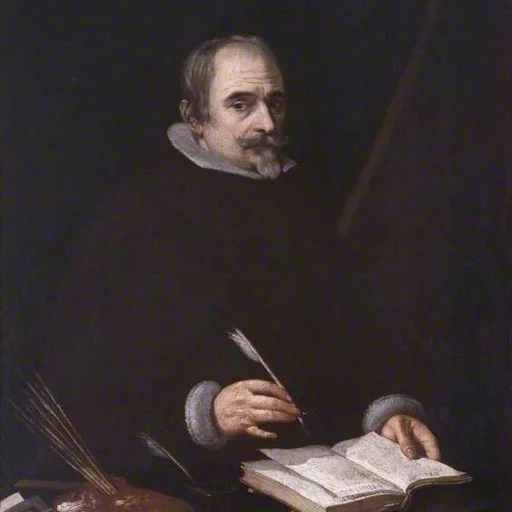
Artist
Vincenzio Carduccio (in Spanish, sometimes Vicencio or Vicente Carducho; 1576 or 1578–1638) was an Italian painter who spent his career in Spain.

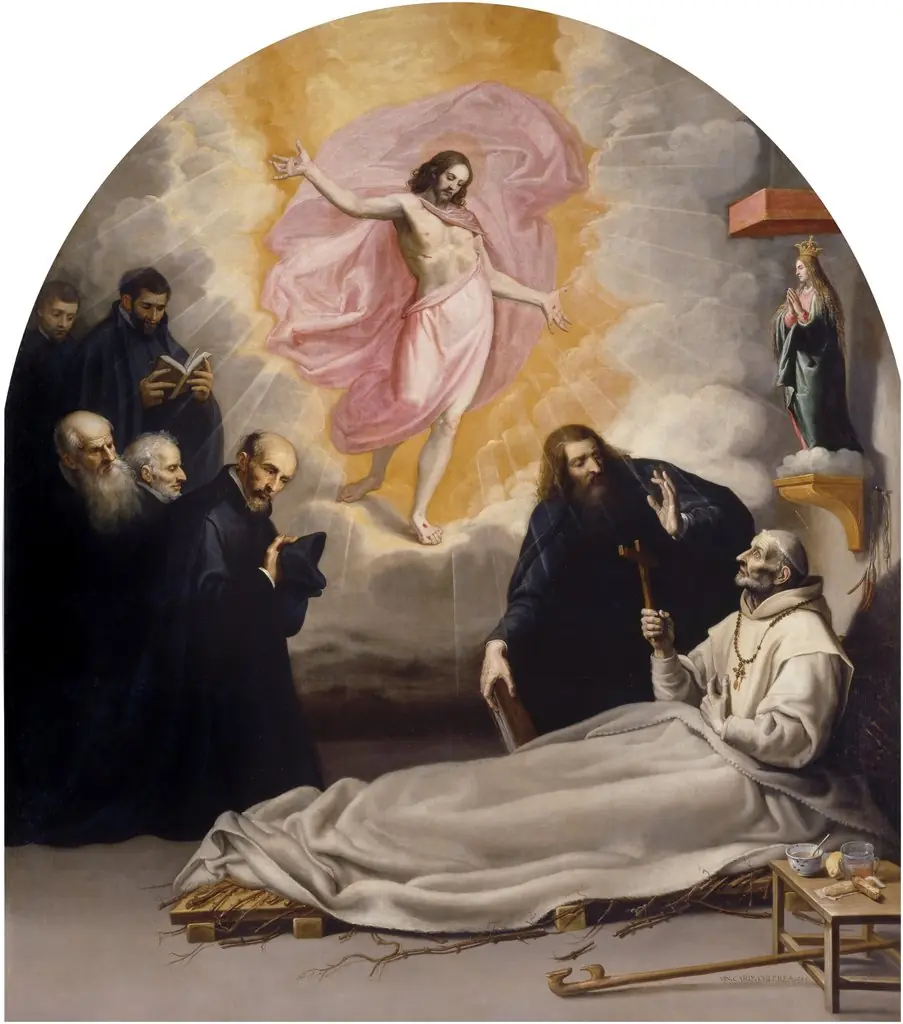
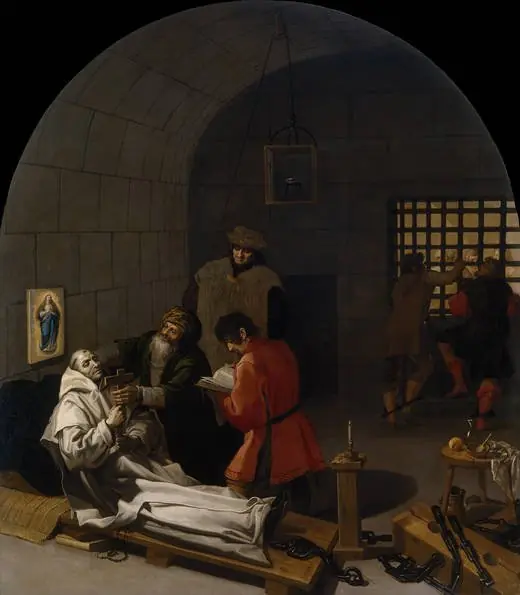
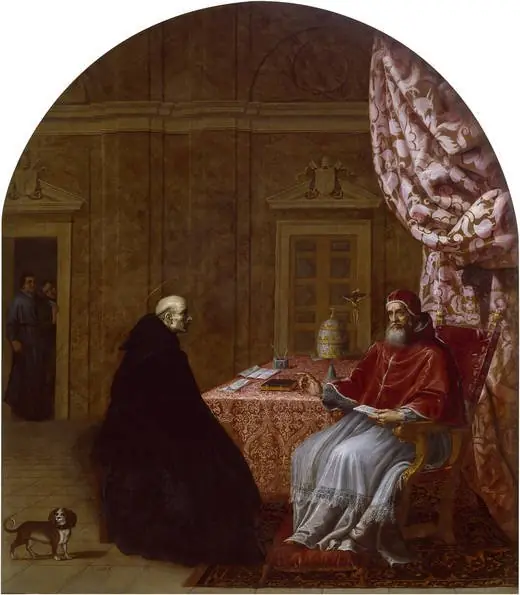
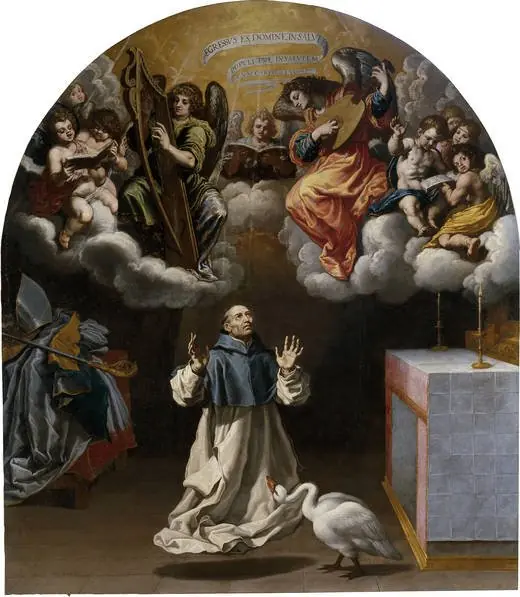
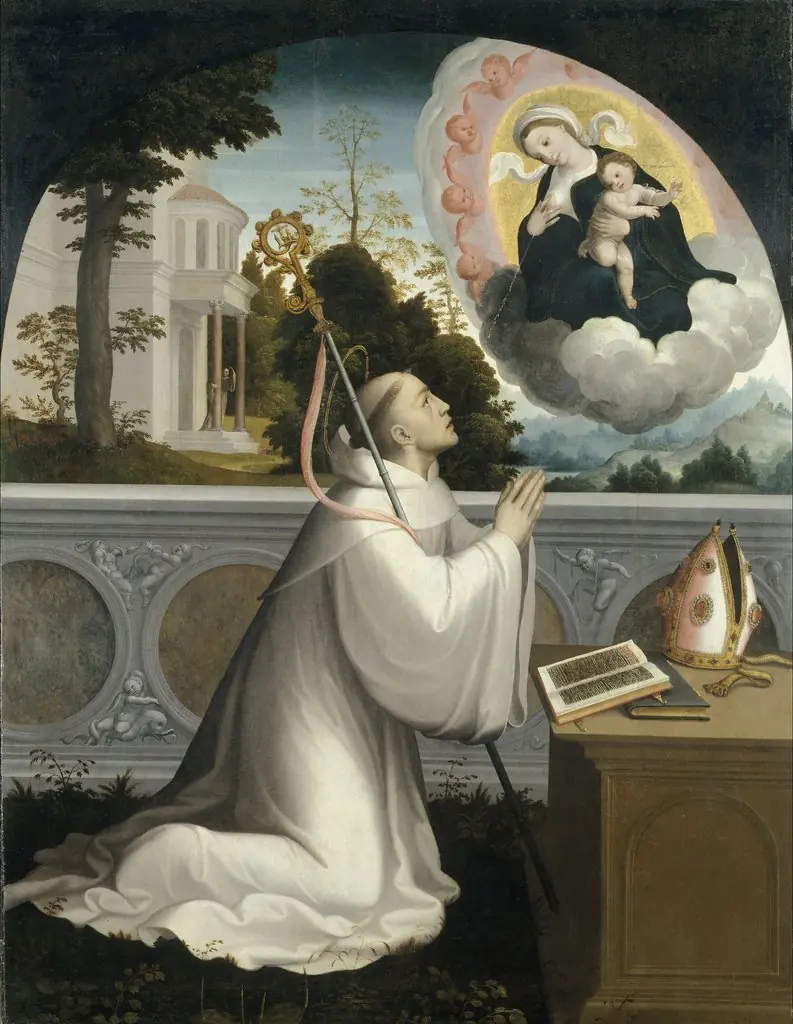
- The Virgin Appears to Saint Bernard
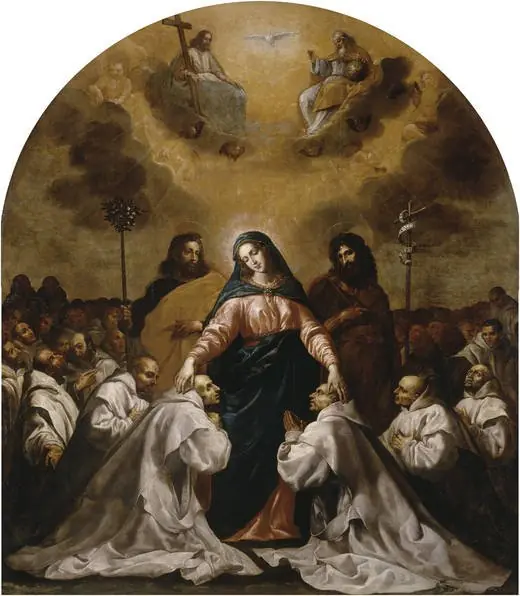 The Virgin Accompanied by Saint Joseph and Saint John the Baptist Shelters the Carthusian Order Beneath her Robes
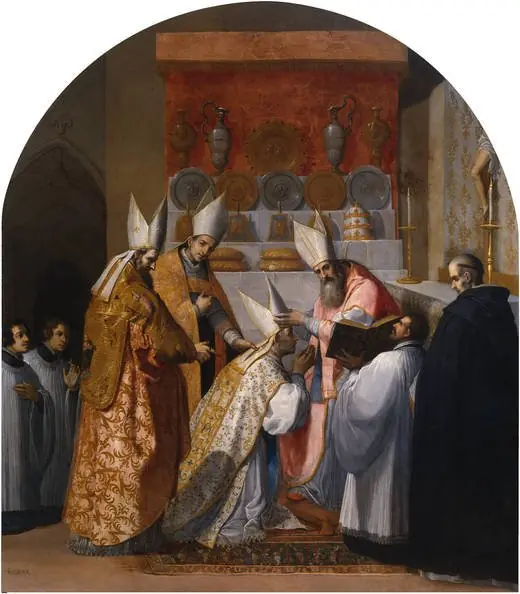
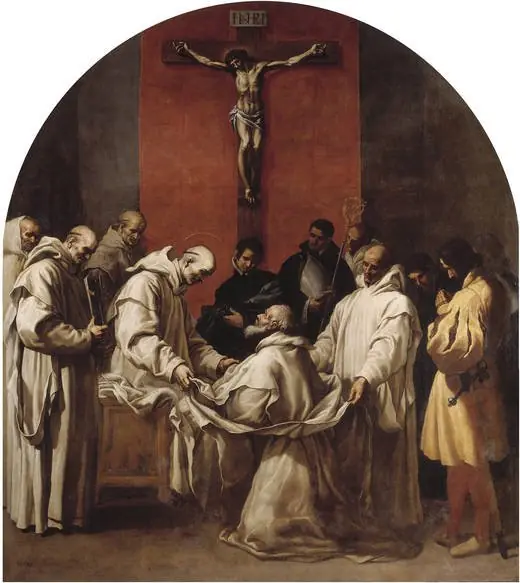 Bishop Hugo wears the Carthusian Habit
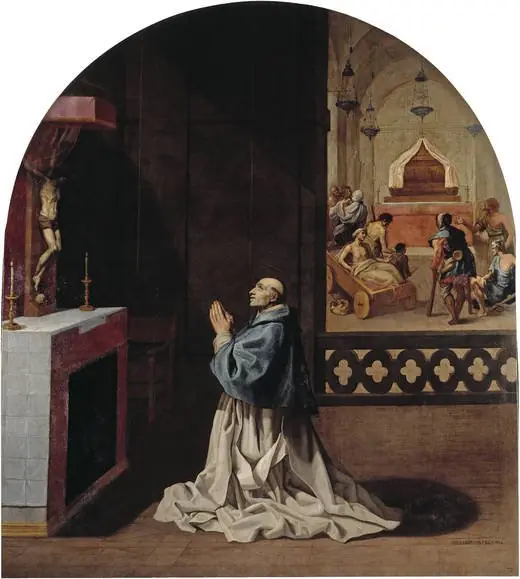 Father Bernard Praying in the Portes Charterhouse
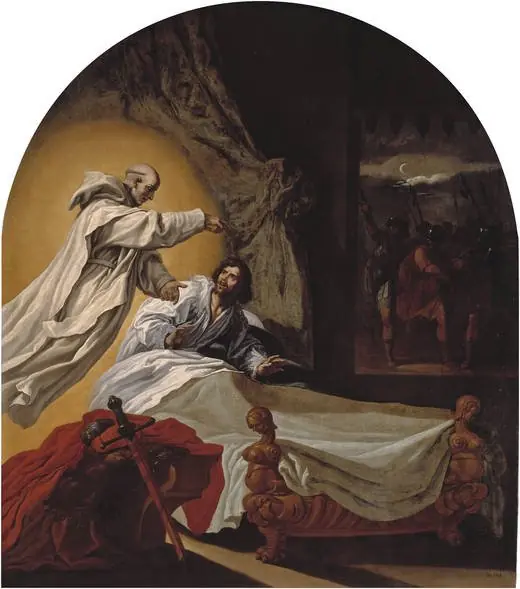 Saint Bruno Appears to Rogerio Guiscardo Count of Apulia and Calabria
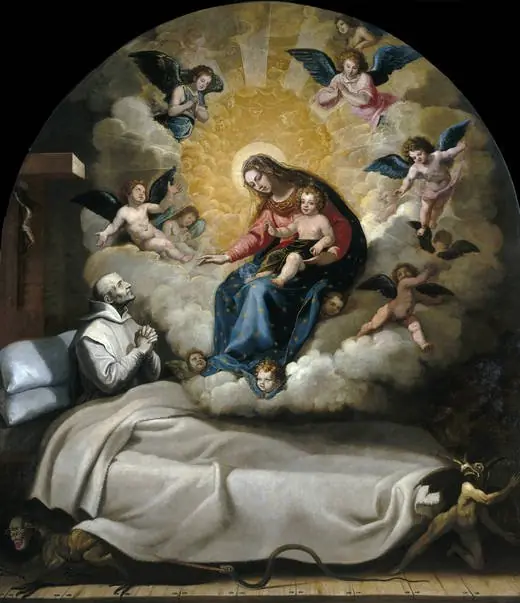 The Madonna and Child Appear to Pedro Faverio
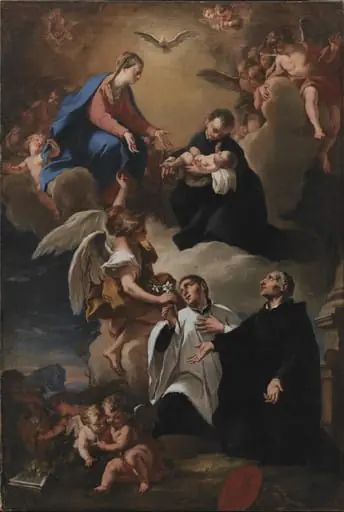 The Holy Ghost, Angels and the Virgin with Saints Mark, Stanislau Kostka (Holding the Child), Aloysius Gonzaga and Francesco Borgia
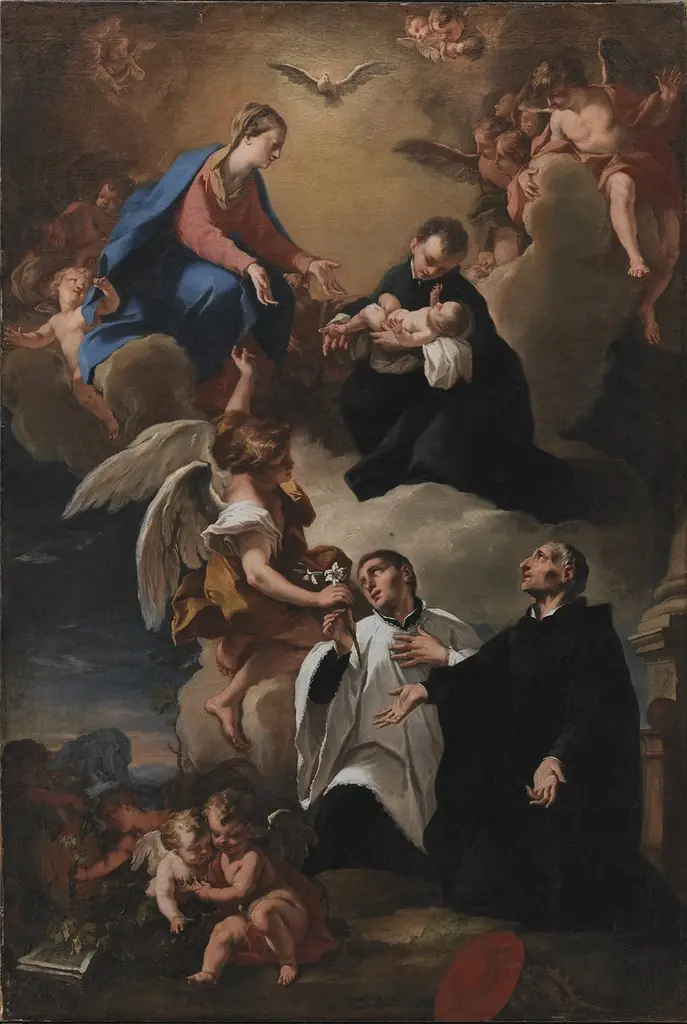 The Holy Ghost, Angels and the Virgin with Saints Mark, Stanislau Kostka (Holding the Child), Aloysius Gonzaga and Francesco Borgia
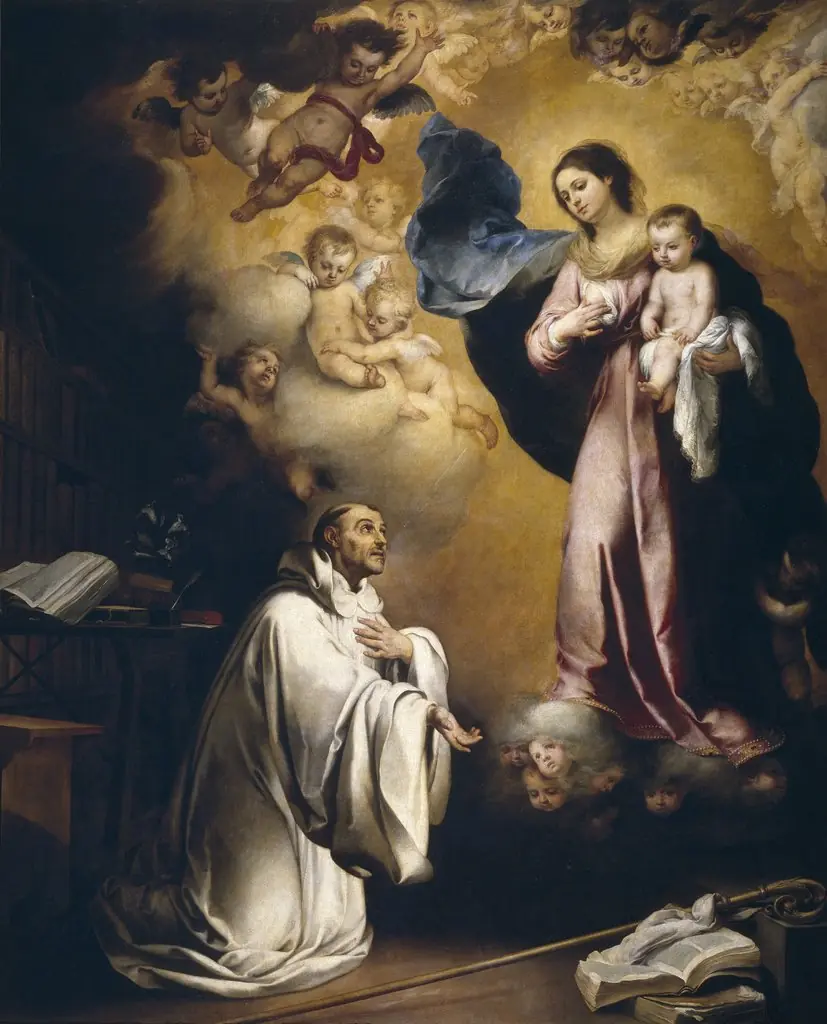 The Apparition of the Virgin to Saint Bernard
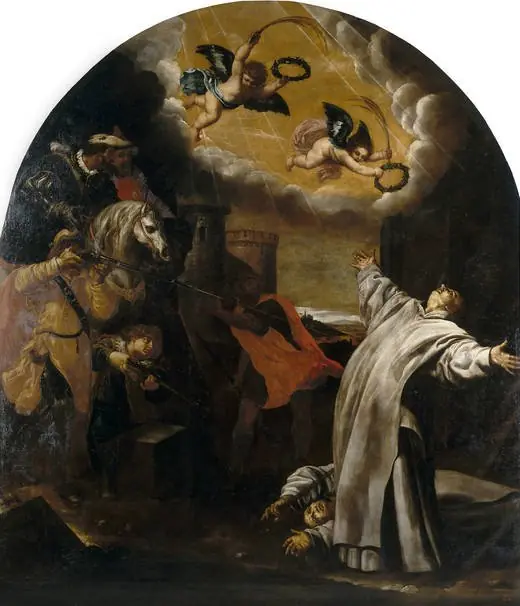 The Martyrdom at Roermond of Vinzenz Herck and Jan Van Loewen
 Saint Bruno Prays in La Torre Calabria