Artwork
Hartoch Christian of Brunswick
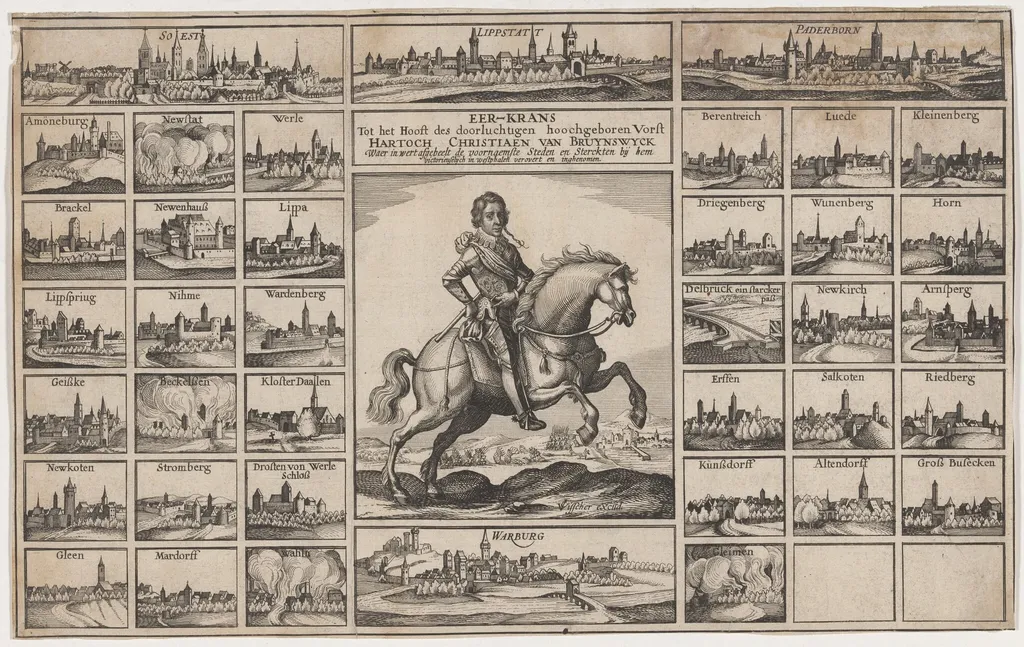
Hartoch Christian of Brunswick is an ink print by the Renaissance artist Claes Jansz Visscher. It dates from 1619 and is held in the collection of the National Gallery of Art. This 1619 engraving by Claes Janszoon Visscher portrays Christian of Brunswick, a German military leader, on horseback.
About this work
Overview
Created in Amsterdam during the height of Dutch print production, the work combines portraiture with cartographic detail.
This 1619 engraving by Claes Janszoon Visscher portrays Christian of Brunswick, a German military leader, on horseback. Created in Amsterdam during the height of Dutch print production, the work combines portraiture with cartographic detail. Visscher, known for his mapmaking and publishing enterprise, used fine-line engraving to render both the central figure and surrounding topographical scenes with precision, reflecting the era’s fusion of art, politics, and information dissemination.
Subject & Meaning
The central figure is Christian of Brunswick, a Protestant commander active in the early Thirty Years’ War. The image presents him as a conquering leader, flanked by 36 small depictions of towns he captured, including Soest, Paderborn, and Warburg. Each town is labeled and shown with signs of conflict, burning buildings, smoke, emphasizing his military campaigns.
The inscription explicitly credits him with their subjugation, framing the print as both a portrait and a propagandistic record of his campaigns.
Technique & Style
Visscher employed the intaglio engraving technique, incising fine lines into a copper plate to create detailed tonal contrasts. The central equestrian portrait is rendered with crisp armor textures and a solemn facial expression, while the surrounding towns are miniature landscapes, each defined by simplified architecture and symbolic smoke. The monochrome palette and meticulous line work reflect the conventions of Northern European printmaking, prioritizing clarity and narrative detail over color or ornamentation.
History & Provenance
Produced in Amsterdam in 1619, the print emerged from Visscher’s family publishing house, which specialized in maps and illustrated prints for a commercial market. It was likely distributed to audiences interested in contemporary military events, particularly Protestant supporters of the Palatinate cause. The print’s survival in multiple institutional collections suggests it was widely circulated, serving both as news and as a commemorative object during a turbulent period in European politics.
Context
The engraving was made during the early phase of the Thirty Years’ War, when religious and territorial conflicts dominated Central Europe. Protestant leaders like Christian of Brunswick were celebrated in Northern European print culture as defenders of their faith. Visscher’s work aligns with a broader trend of using prints to shape public perception of military figures, blending factual geography with political messaging to inform and influence a literate, urban audience.
Legacy
Visscher’s engraving remains a documented example of how print media functioned as a tool of political communication in the 17th century. While not artistically revolutionary, its combination of portraiture, cartography, and narrative detail exemplifies the practical role of engraving in disseminating information. The work is preserved in major print rooms, valued for its historical testimony rather than aesthetic innovation.
Own this work as a print
Artist & collection

Artist
Claes Janszoon Visscher (1587 – 19 June 1652) was a Dutch Golden Age draughtsman, engraver, mapmaker, and publisher.

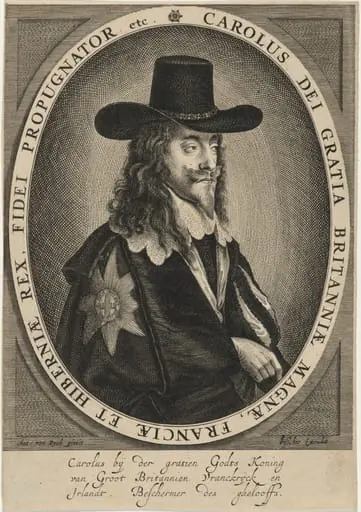
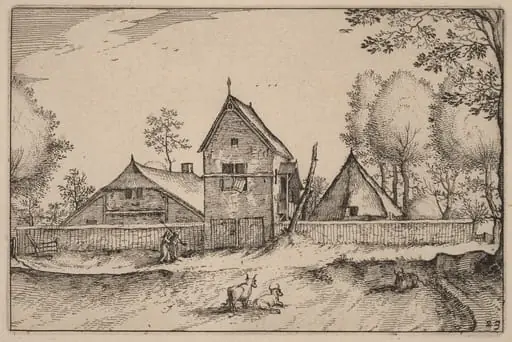
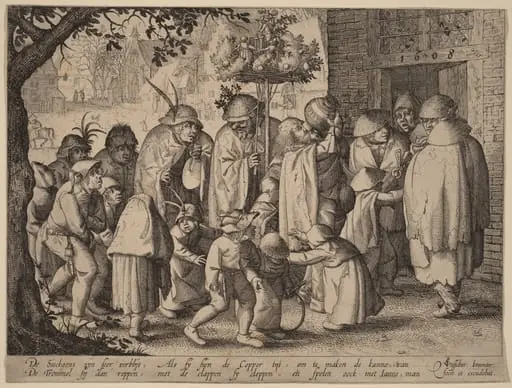
- Charles I
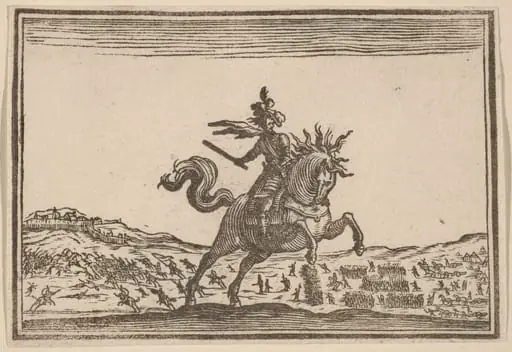 Military Commander on Horseback
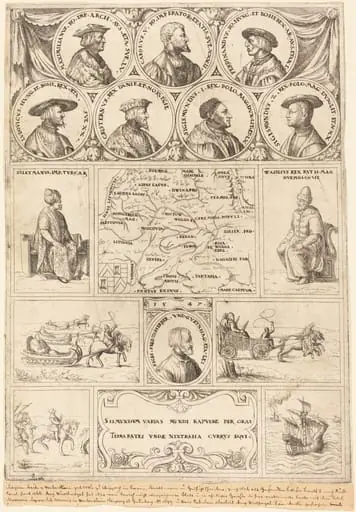 Map of Eastern Europe with portraits of Sigismund von Herberstein, Emperor Charles V, Emperor Maximilian I, Ferdinand of Hungary, Ludwig II of Hungary, Sigismund I of Poland, Sigismund II of Poland, Christian II of Denmark, Suleiman the Magnificent and Vasili III, Grand Prince of Moscow, and vignettes showing four journeys made by Herberstein
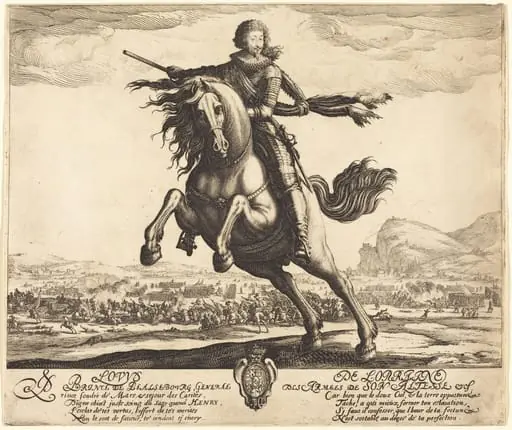 Louis de Lorraine, Prince of Phalsbourg
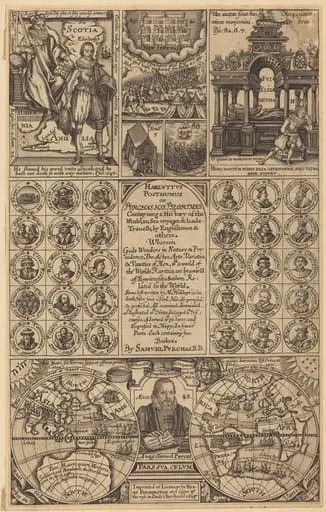 Frontispiece
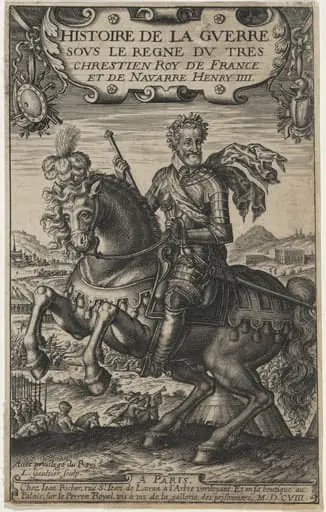 Henry IV
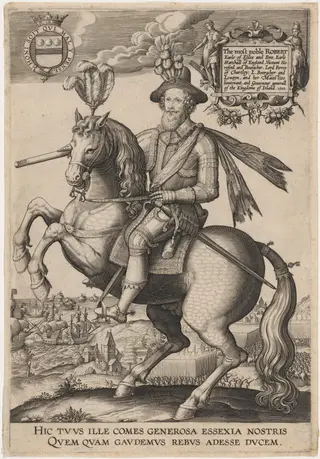 Robert Devereux, Second Earl of Essex
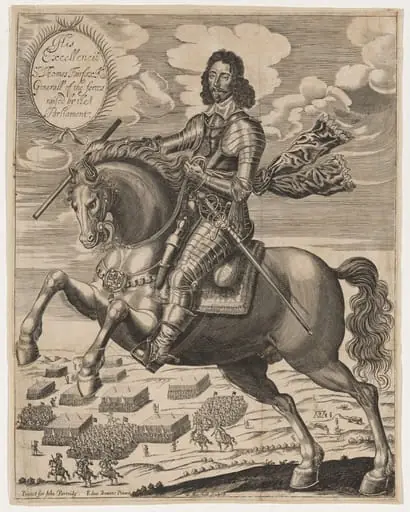 Sir Thomas Fairfax, General of the Forces Raised by Parliament
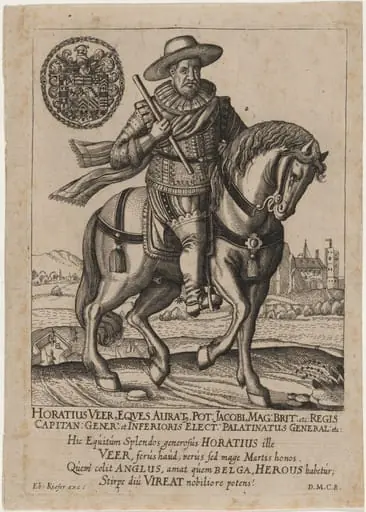 Horace Vere, Baron Vere of Tilbury
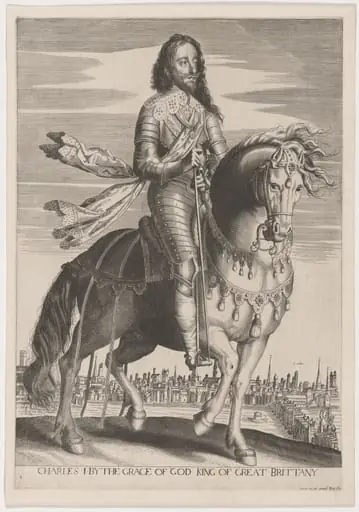 Charles I on Horseback
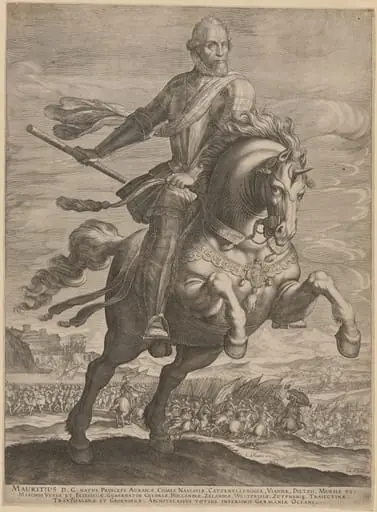 Maurice, Prince of Orange on Horseback
 James I on Horseback