Artwork
Lucas van Uden
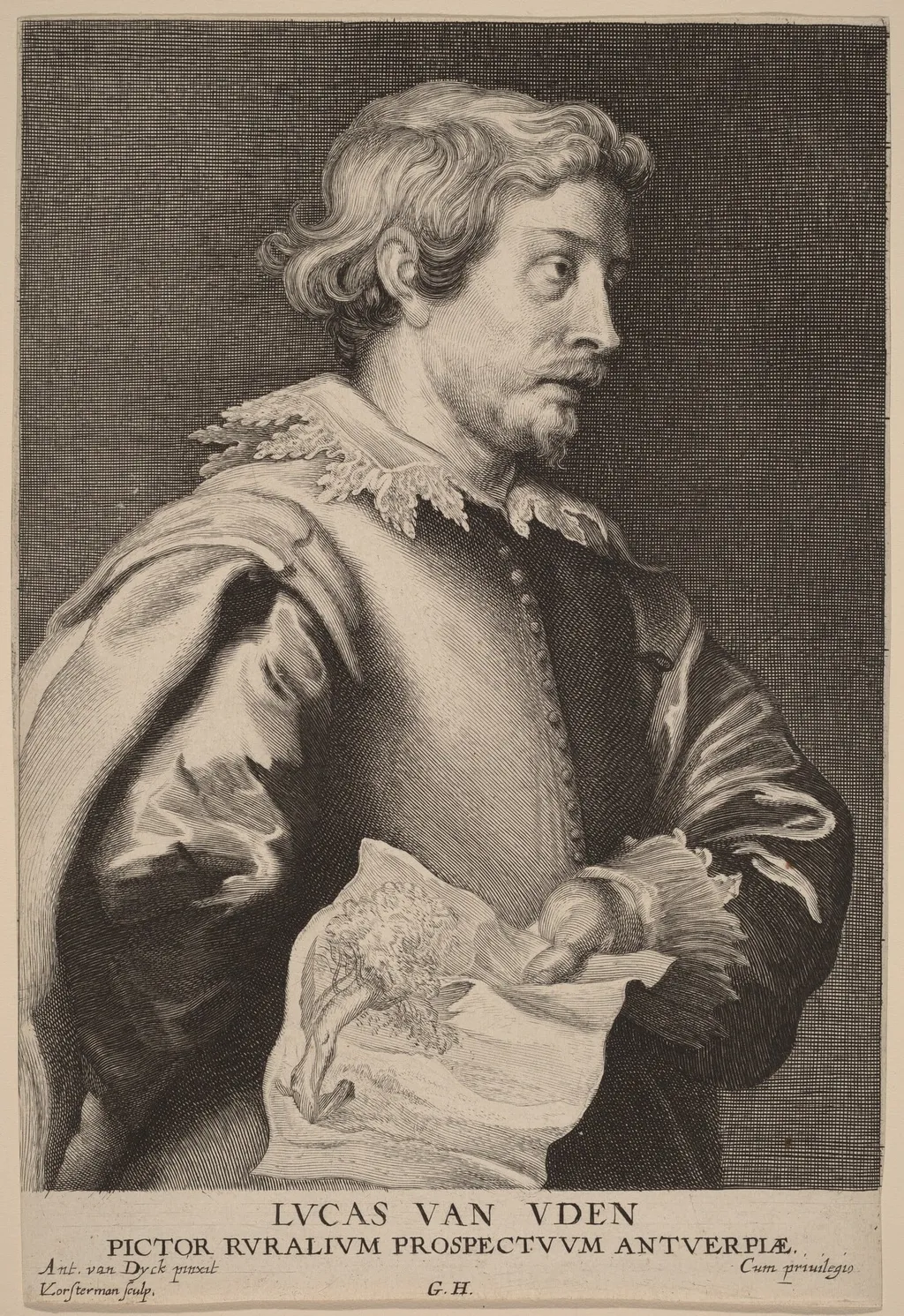
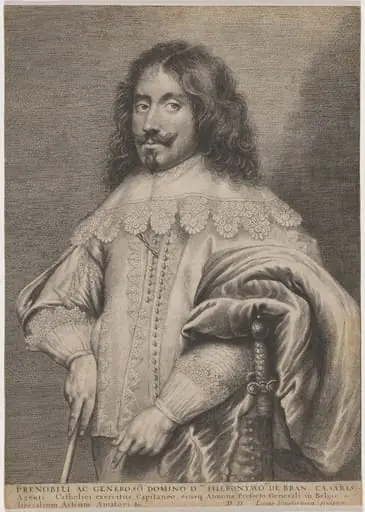
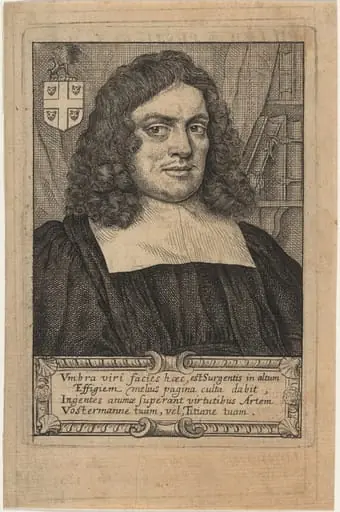
Lucas van Uden is an ink print by the Baroque artist Lucas Emil Vorsterman. It dates from 1634 and is held in the collection of the National Gallery of Art.
About this work
Overview
This engraving serves as a significant documentary record of Van Uden's appearance during his active years in Antwerp.
Created in 1634 by the Flemish engraver Lucas Emil Vorsterman, this work is a portrait print depicting Lucas van Uden, a noted landscape painter and draftsman of the period. The composition presents the sitter in strict profile facing left, rendered with the precise line work characteristic of Vorsterman's reproductive and portrait engraving style. Van Uden is shown with curly hair and a full beard, wearing a high, ruffled collar detailed with lace trim.
His right hand rests against his chest, while his left hand holds a folded cloth or glove, a conventional gesture of status and refinement in 17th-century portraiture. The inscription 'Lucas van Uden' appears at the bottom, identifying the subject rather than the artist. This engraving serves as a significant documentary record of Van Uden's appearance during his active years in Antwerp.
Vorsterman, known for his collaborations with Peter Paul Rubens, applied his technical mastery to this independent portrait, capturing the intellectual demeanor of his contemporary. The work exemplifies the Flemish tradition of using printmaking to disseminate the likenesses of prominent artists and scholars, preserving the visual identity of Van Uden for posterity.
Subject & Meaning
The work serves as a visual commemoration of van Uden, identifying him by name beneath the image. The inclusion of a hand placed on the chest and a folded cloth or glove may allude to the sitter’s status or profession, while the careful rendering of facial features underscores a desire for likeness within the limits of the engraving medium.
Technique & Style
Vorsterman employed fine line work and cross‑hatching to achieve tonal variation, a hallmark of 17th‑century Dutch engraving. The crisp delineation of hair and lace demonstrates the artist’s skill in translating texture onto metal, while the overall composition adheres to the profile format popular in portrait prints of the period.
History & Provenance
Created in the early 1630s, the print was likely circulated among collectors and fellow artists as a means of disseminating van Uden’s image. The signature of Vorsterman and the Latin term Pictor affirm the work’s attribution and its function as a printed portrait rather than a painted likeness.
Context
During the Dutch Golden Age, portrait engravings functioned as both documentary records and promotional tools for artists. Vorsterman, a noted engraver of the time, frequently produced such images, contributing to the visual culture that celebrated individual creators within the broader artistic community.
Own this work as a print
Artist & collection
Artist
etching and engraving by Lucas Vorsterman II, NGA 10762), B1977.14.10539 - Yale etc