Artwork
The Virgin and Child with Saint Elizabeth, Saint John the Baptist and Saint Catherine
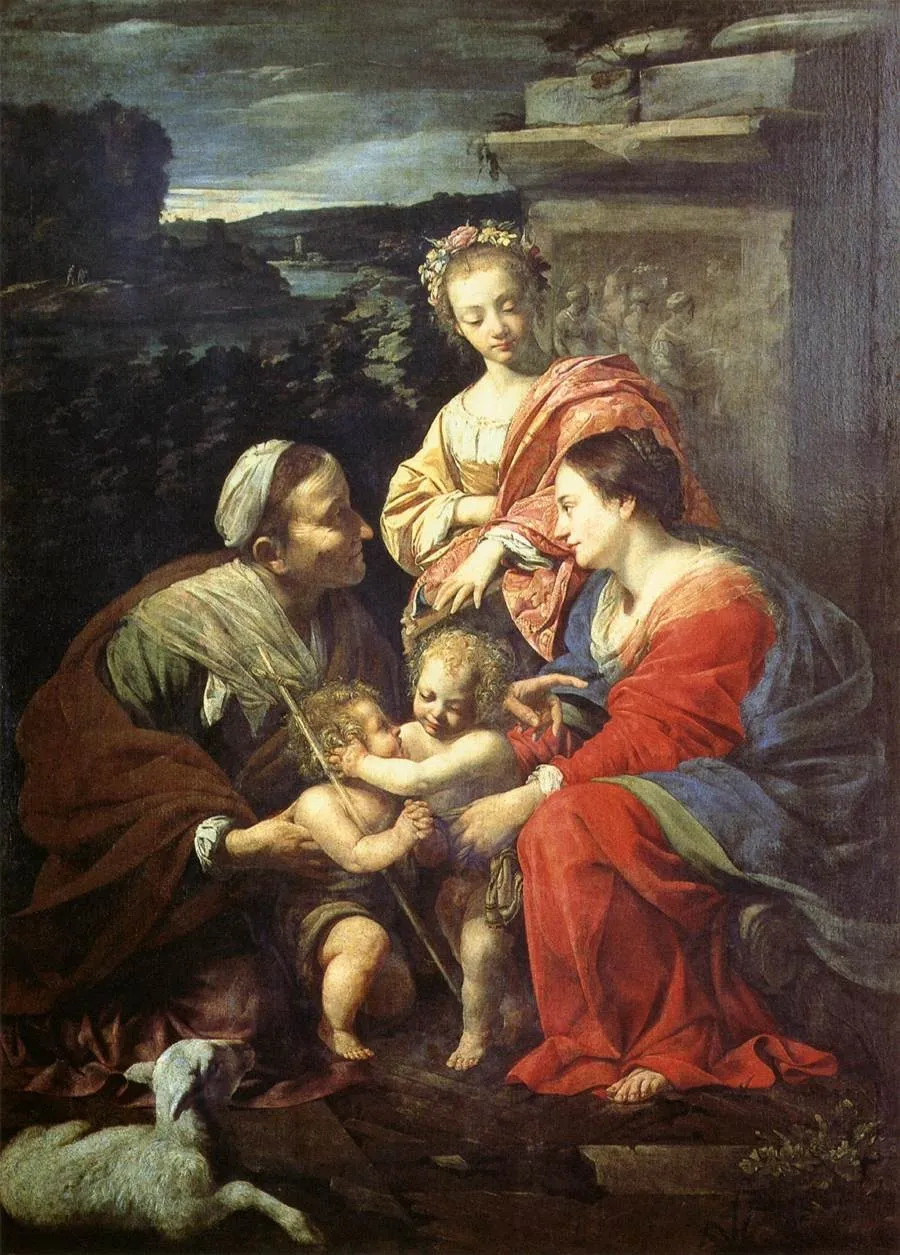
The Virgin and Child with Saint Elizabeth, Saint John the Baptist and Saint Catherine is an oil painting by the Early Baroque Italian artist Simon Vouet. It dates from 1614 and is held in the collection of the Museo del Prado.
About this work
Subject & Meaning
Together, the figures embody themes of divine incarnation, prophetic recognition, and spiritual devotion central to Counter-Reformation religious imagery.
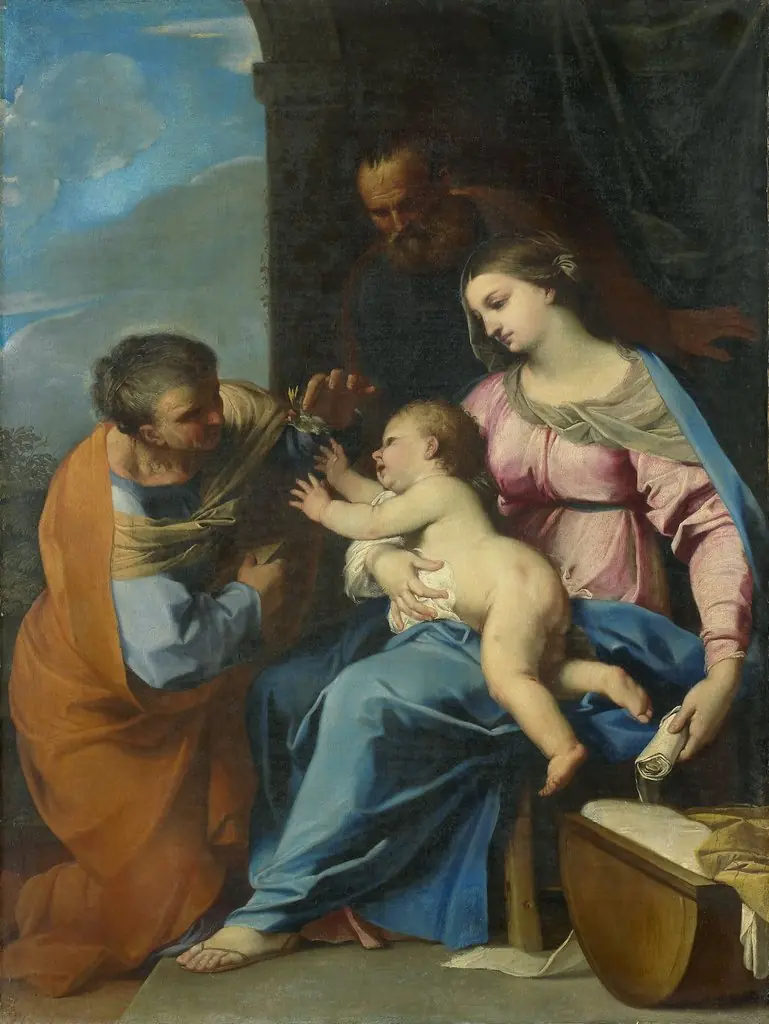
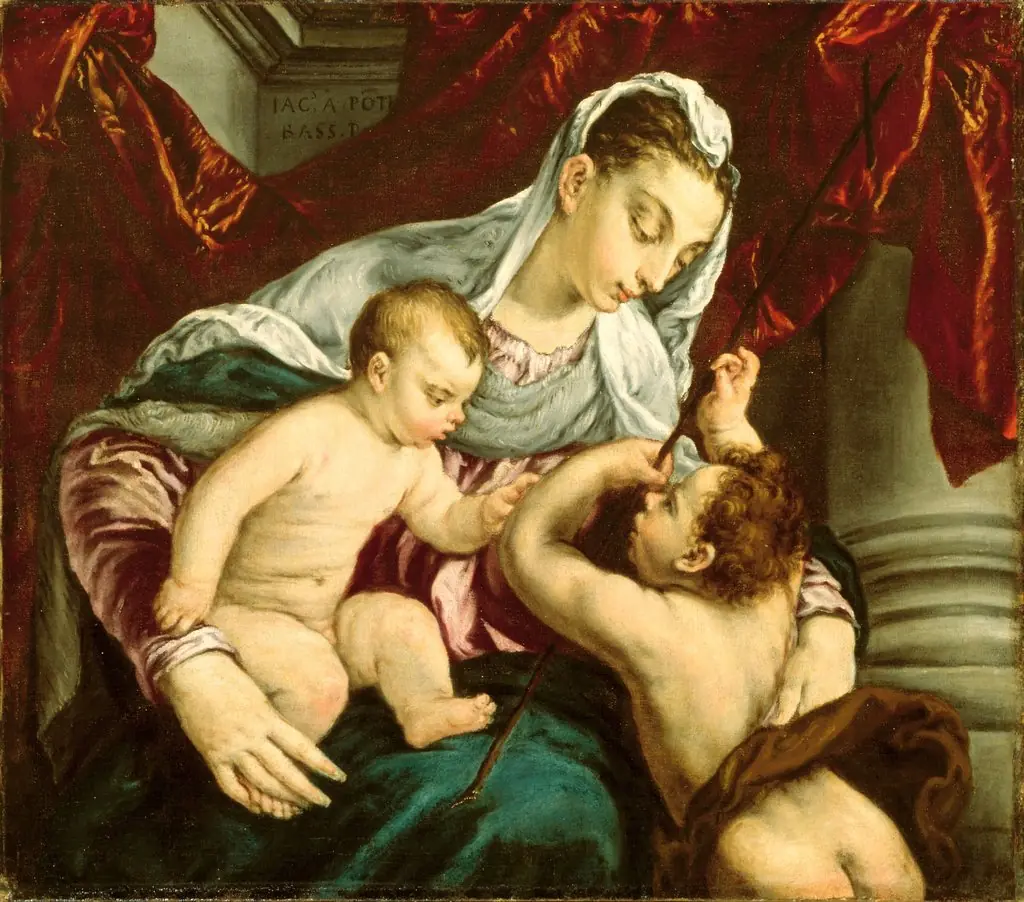
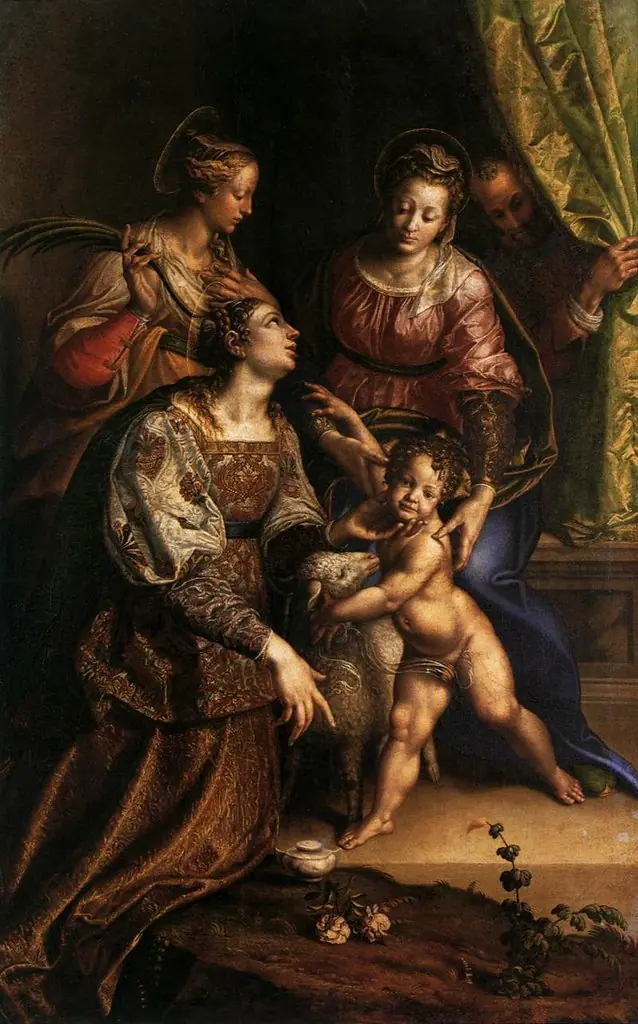
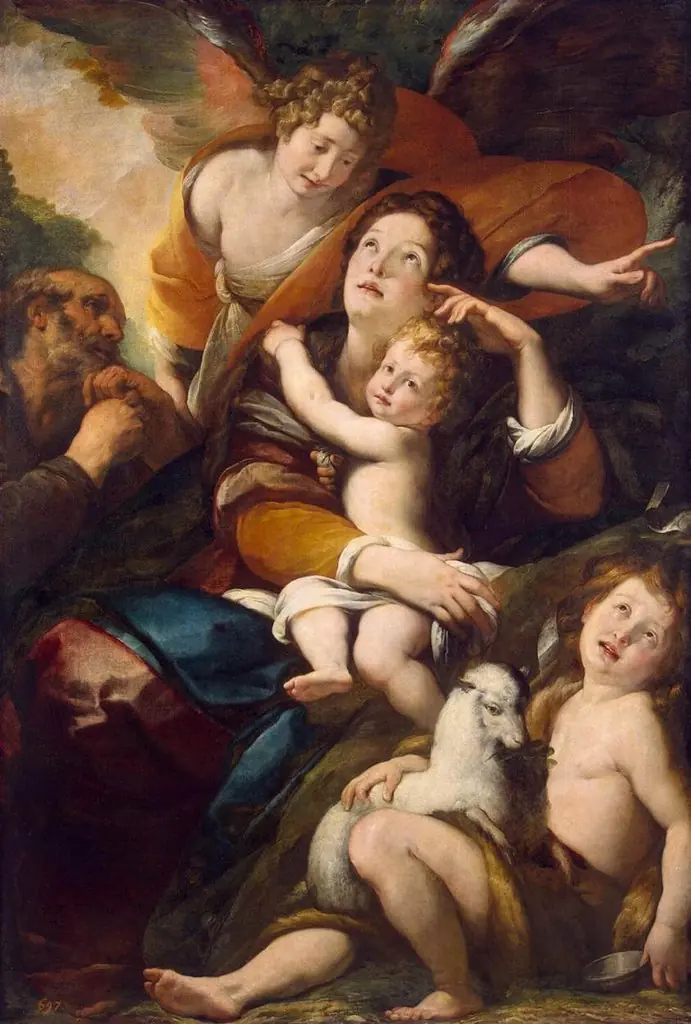
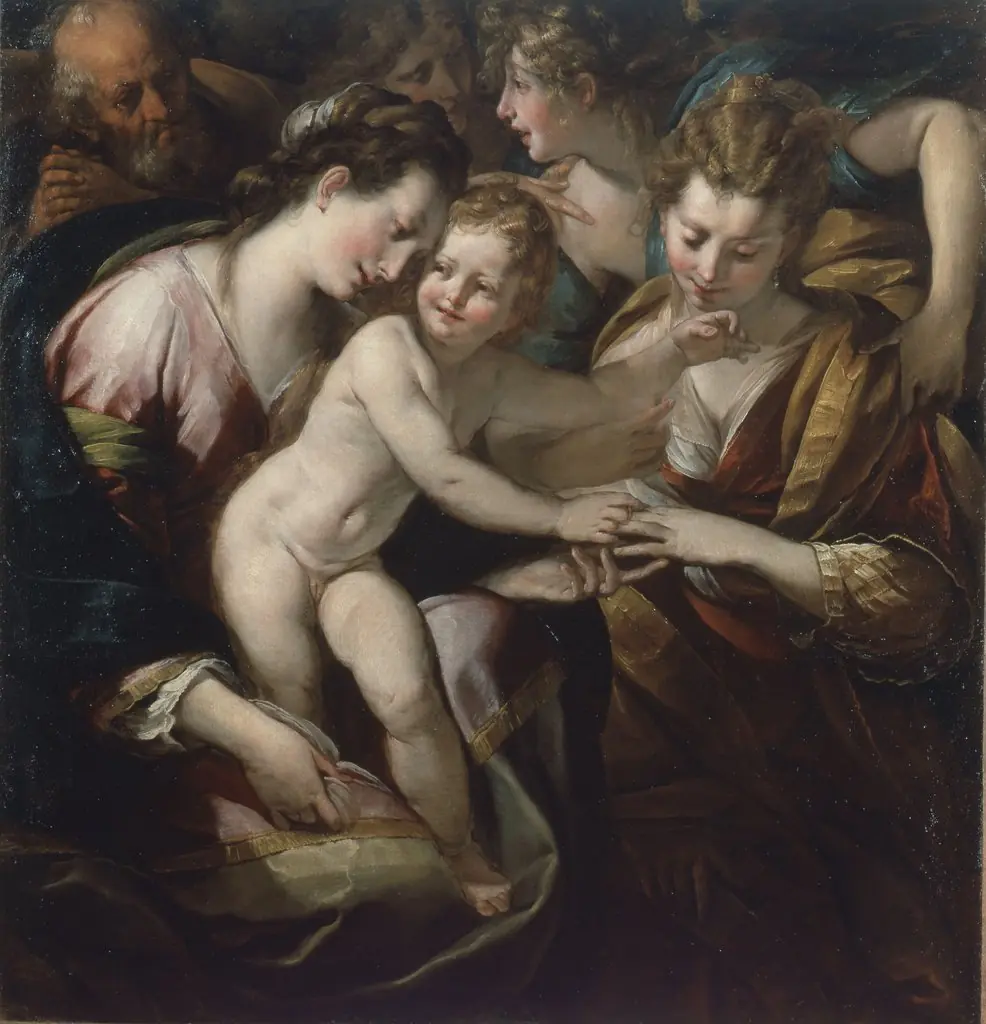
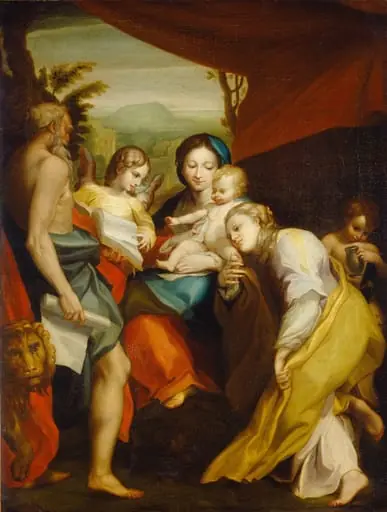
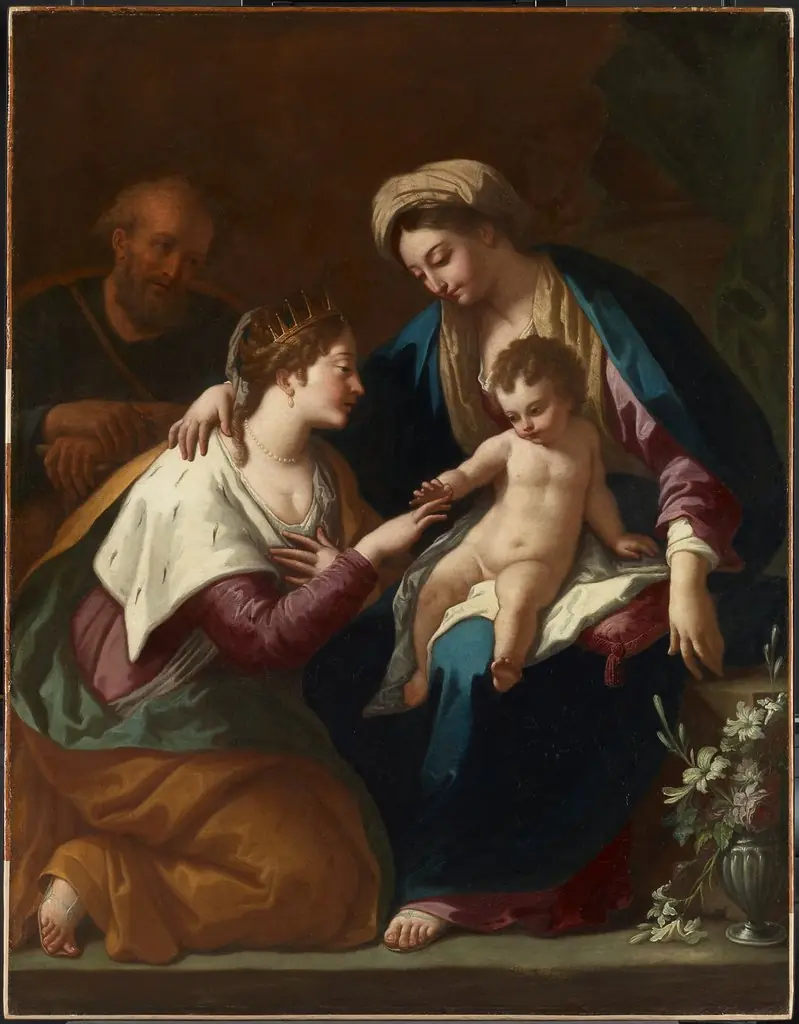
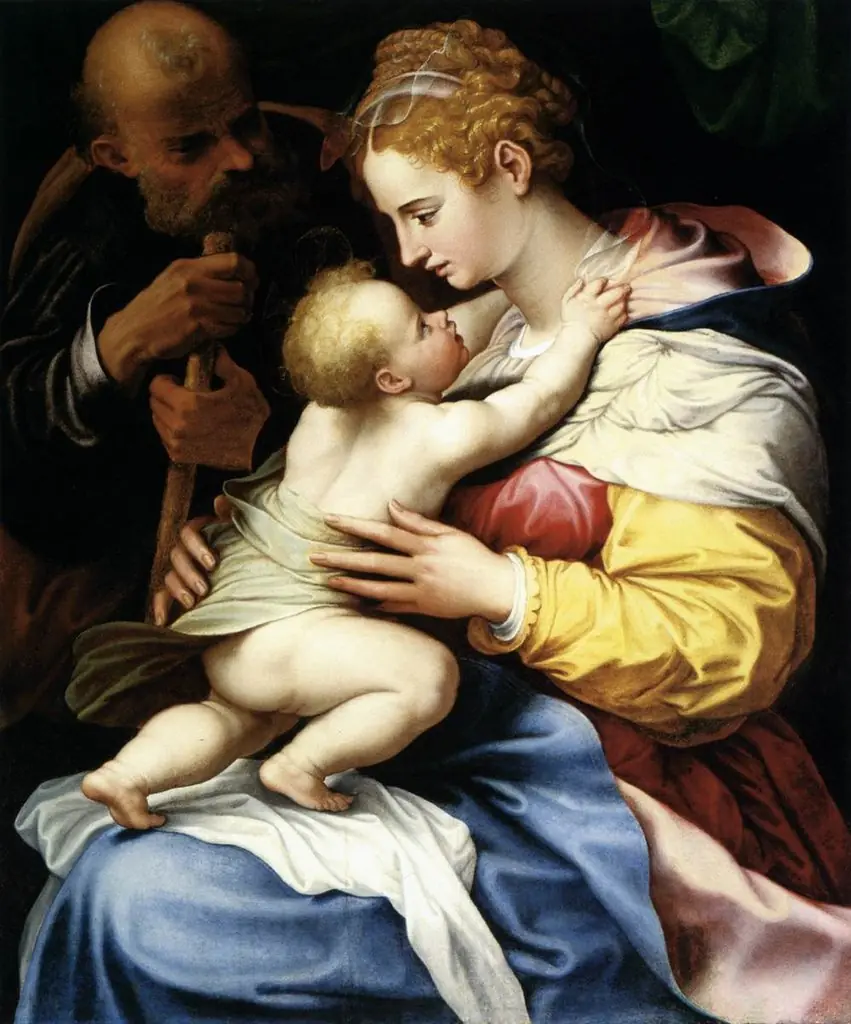
The painting presents a religious gathering centered on the Virgin and Child, joined by three venerated figures from Christian tradition: Saint Elizabeth, Saint John the Baptist, and Saint Catherine of Alexandria. The grouping reflects a common devotional theme in which the infancy of Christ is surrounded by holy relatives and saints, emphasizing both the sacred family and the broader community of the faithful.
Saint John the Baptist, often shown as a child in such compositions, points toward the Christ Child as the foretold Messiah, while Saint Elizabeth, his mother and the Virgin Mary's kinswoman, underscores the maternal lineage linking the two families. Saint Catherine of Alexandria is identified by the cogwheel, her attribute of martyrdom, signaling her role as a virgin martyr and a symbol of wisdom and steadfast faith. Together, the figures embody themes of divine incarnation, prophetic recognition, and spiritual devotion central to Counter-Reformation religious imagery.
Technique & Style
Created by Simon Vouet, this religious painting is executed in oil paint on a canvas support. The work measures 182 cm in height and 130 cm in width. It depicts a group of figures including the Virgin and Child, Saint Elizabeth, Saint John the Baptist, and Saint Catherine of Alexandria, the latter identifiable by the cogwheel associated with her martyrdom.
The piece was conceived in 1614 and is currently held in the collection of the Museo del Prado.
History & Provenance
Simon Vouet created the oil on canvas painting The Virgin and Child with Saint Elizabeth, Saint John the Baptist and Saint Catherine in 1614. The work depicts religious figures including Catherine of Alexandria, identifiable by the presence of a cogwheel, alongside the Virgin, Child, Saint Elizabeth, and Saint John the Baptist. While the primary inception date is recorded as 1614, some records also associate the work with a start date of January 1, 1624.
The painting measures 182 cm in height and 130 cm in width. It is currently held in the collection of the Museo del Prado.
Overview
Executed in oil in 1614, this work by Simon Vouet presents a compact group of holy figures gathered on a craggy shoreline. The central Virgin Mary cradles the infant Christ, while three saints, Elizabeth, John the Baptist and Catherine of Alexandria, stand nearby. The composition is anchored by a dramatic sky and a rugged landscape that frames the intimate tableau.
Context
Created while Vouet was absorbing the dramatic visual language of Caravaggio and his followers, the work reflects the cross‑cultural exchange between French and Italian Baroque. Its subject matter aligns with Counter‑Reformation ideals, presenting a clear, emotionally resonant image of holy intercession intended for devotional contemplation.
Artist & collection
Artist
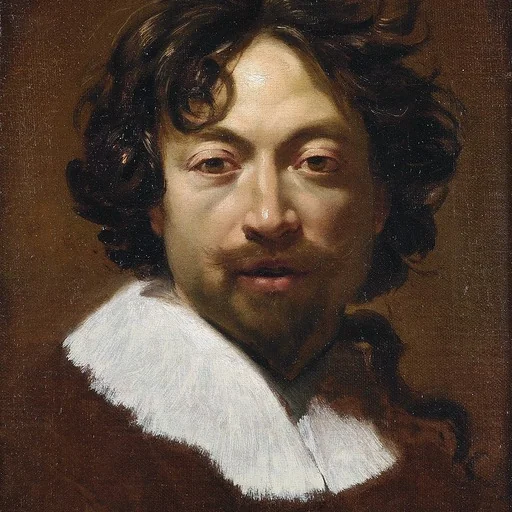
Simon Vouet (French pronunciation:; 9 January 1590 – 30 June 1649) was a French painter who studied and rose to prominence in Italy before being summoned by Louis XIII to serve as Premier peintre du Roi in France.