Artwork
Woman in Black
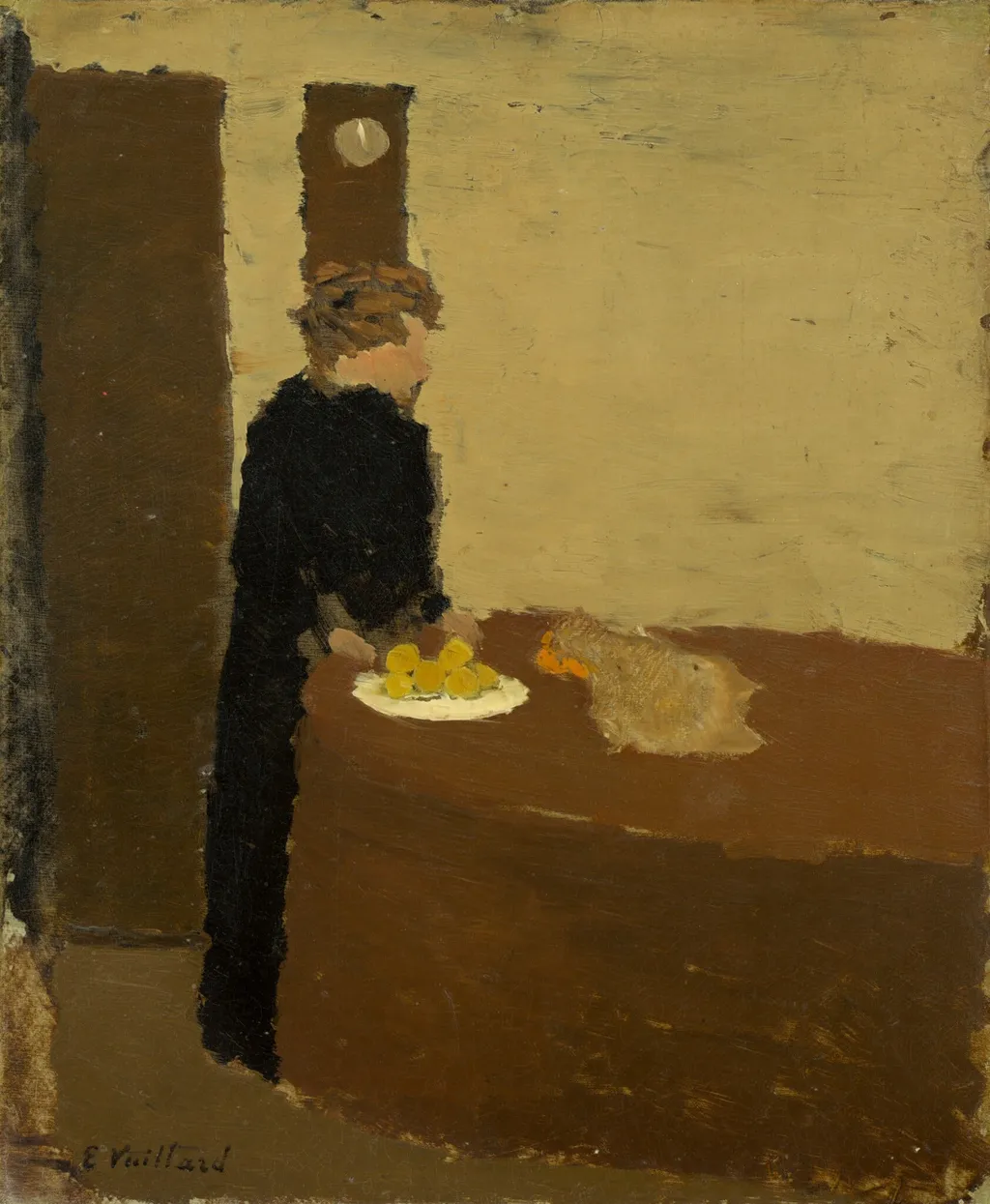
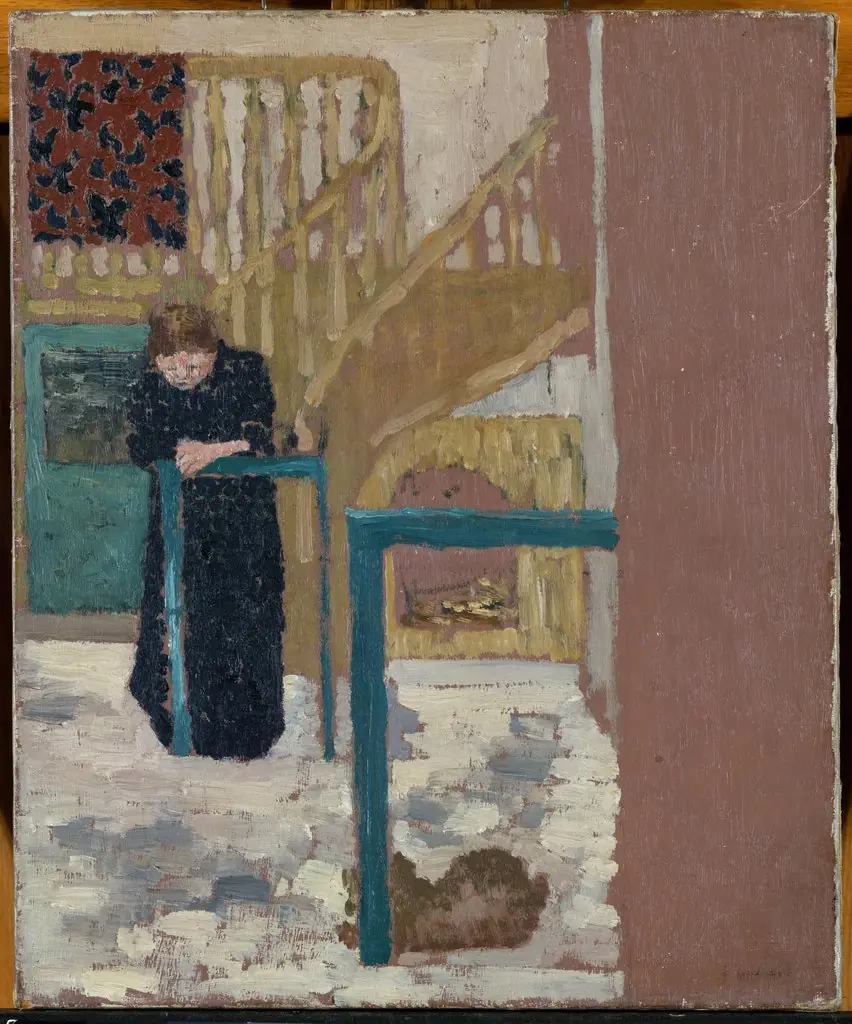
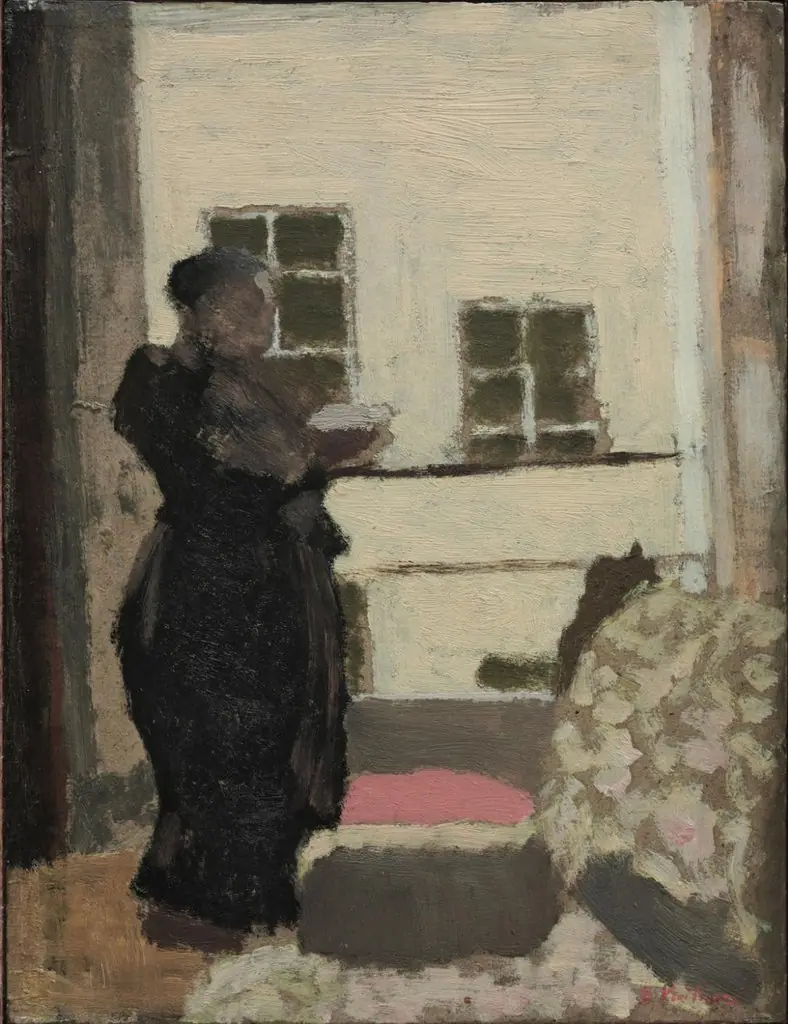
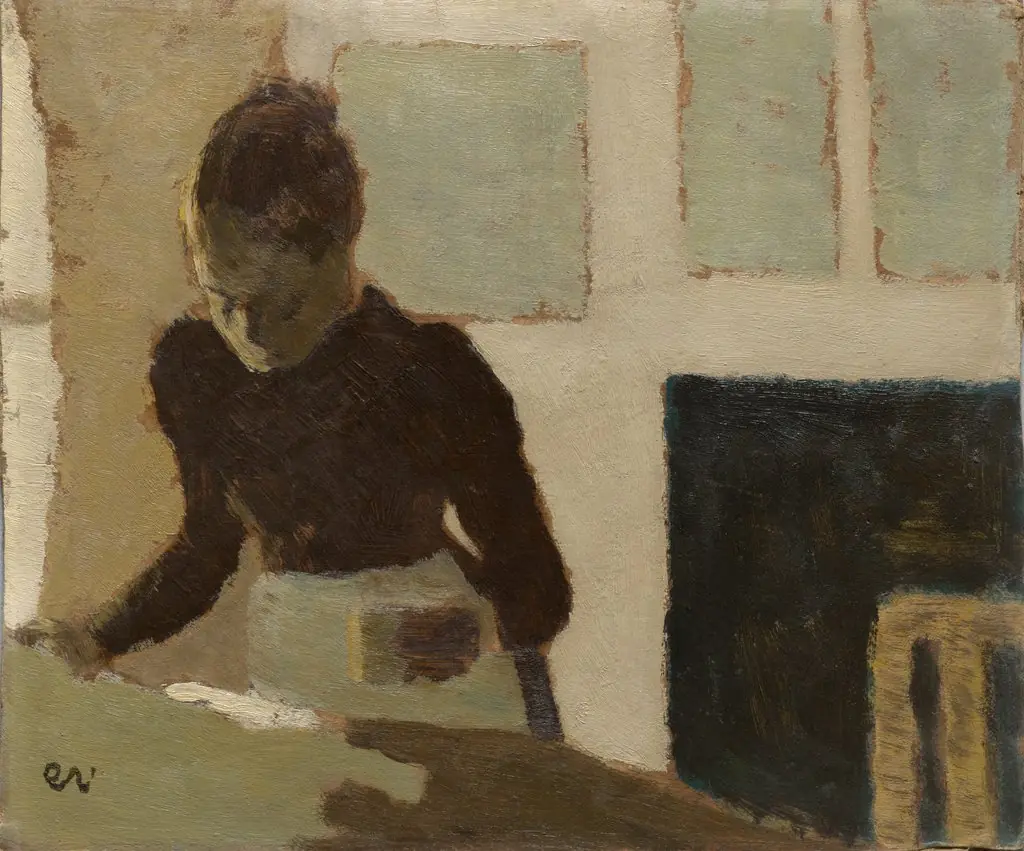
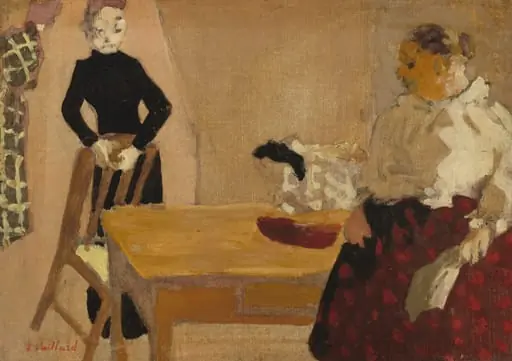
Woman in Black is an oil painting by the Impressionist artist Édouard Vuillard. It dates from 1891 and is held in the collection of the National Gallery of Art. Created around 1891, this oil painting on cardboard presents a solitary woman in a dark dress standing beside a modest table.
- Inscription
- Inscribed:lower left with atelier stamp: E Vuillard
About this work
Subject & Meaning
The painting Woman in Black depicts a solitary figure clothed entirely in mourning attire, a visual emblem of grief and social withdrawal that Vuillard rendered with restrained tonal harmony. The somber dress functions as symbolic shorthand for loss and the quietude of domestic solitude, while the enclosed interior space amplifies the emotional weight of the subject’s isolation. By situating the figure within a modestly furnished room, the work suggests an introspective contemplation of personal mourning that resonates with broader Symbolist concerns about interiority and the invisible currents of feeling.
The composition’s muted palette and flattened perspective underscore a symbolic reading of domestic space as both refuge and confinement, reinforcing the painting’s meditation on the quiet endurance of sorrow within everyday life.
Technique & Style
Edouard Vuillard executed Woman in Black in 1891 using oil paint applied to a cardboard support.
Edouard Vuillard executed Woman in Black in 1891 using oil paint applied to a cardboard support. The work measures 26.8 cm in height and 21.9 cm in width. As an oil painting on cardboard, the piece reflects Vuillard's tendency during this period to utilize unconventional, lightweight supports that allowed for intimate, small-scale compositions.
The medium and support contribute to the painting's specific handling characteristics, typical of the artist's approach to domestic and figure subjects in the early 1890s.
History & Provenance
Created in 1891, Woman in Black is an oil painting on cardboard by Édouard Vuillard. The work originated in the artist's atelier before being exhibited at Galerie Louis Carré in Paris in 1942. Following this exhibition, the painting passed through the New York gallery Georges Seligmann, Inc.
Between 1952 and 1955, Captain Edward H. Molyneux of Paris acquired the piece. On August 15, 1955, Molyneux sold the painting to Ailsa Mellon Bruce in New York. Upon her death in 1969, Bruce bequeathed the work to the National Gallery of Art in Washington, D.C., where it arrived in 1970.
Overview
Created around 1891, this oil painting on cardboard presents a solitary woman in a dark dress standing beside a modest table. The setting is an interior space with a pale yellow wall and a wooden floor, rendered in a loose, sketch‑like manner that avoids fine detail. The composition balances muted tones of the figure’s clothing with the brighter hues of lemons and bread on the plate.
Own this work as a print
Artist & collection

Artist
Jean-Édouard Vuillard (French:; 11 November 1868 – 21 June 1940) was a French painter, decorative artist, and printmaker.