Artwork
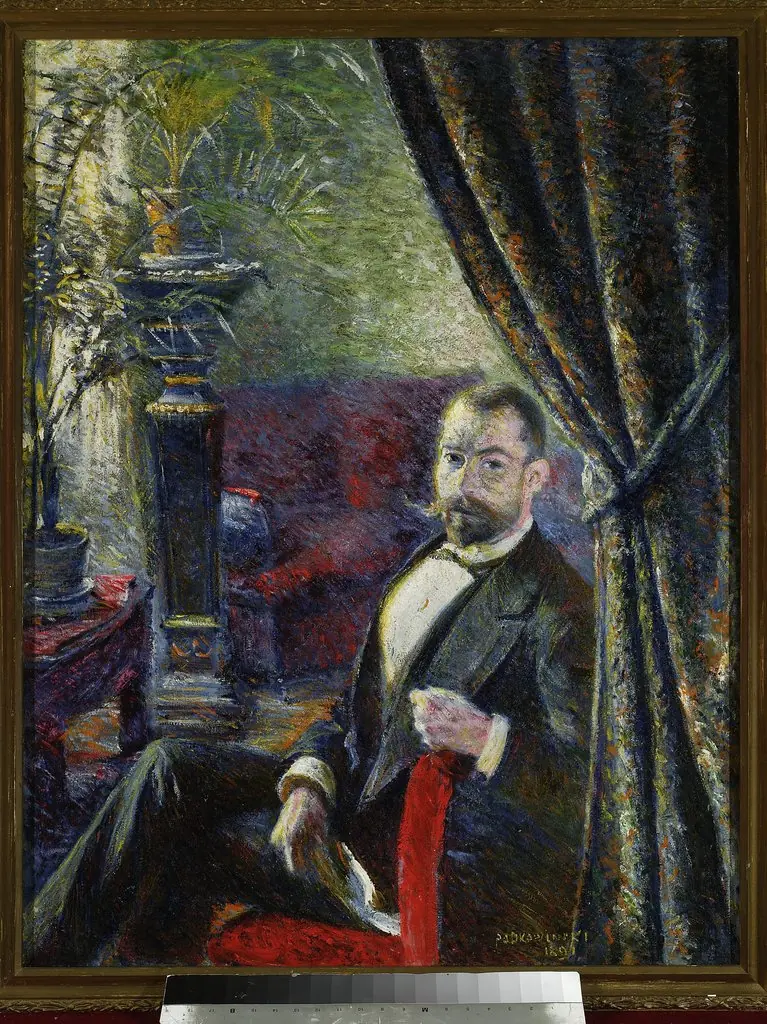
Portrait of Konrad Dynowski
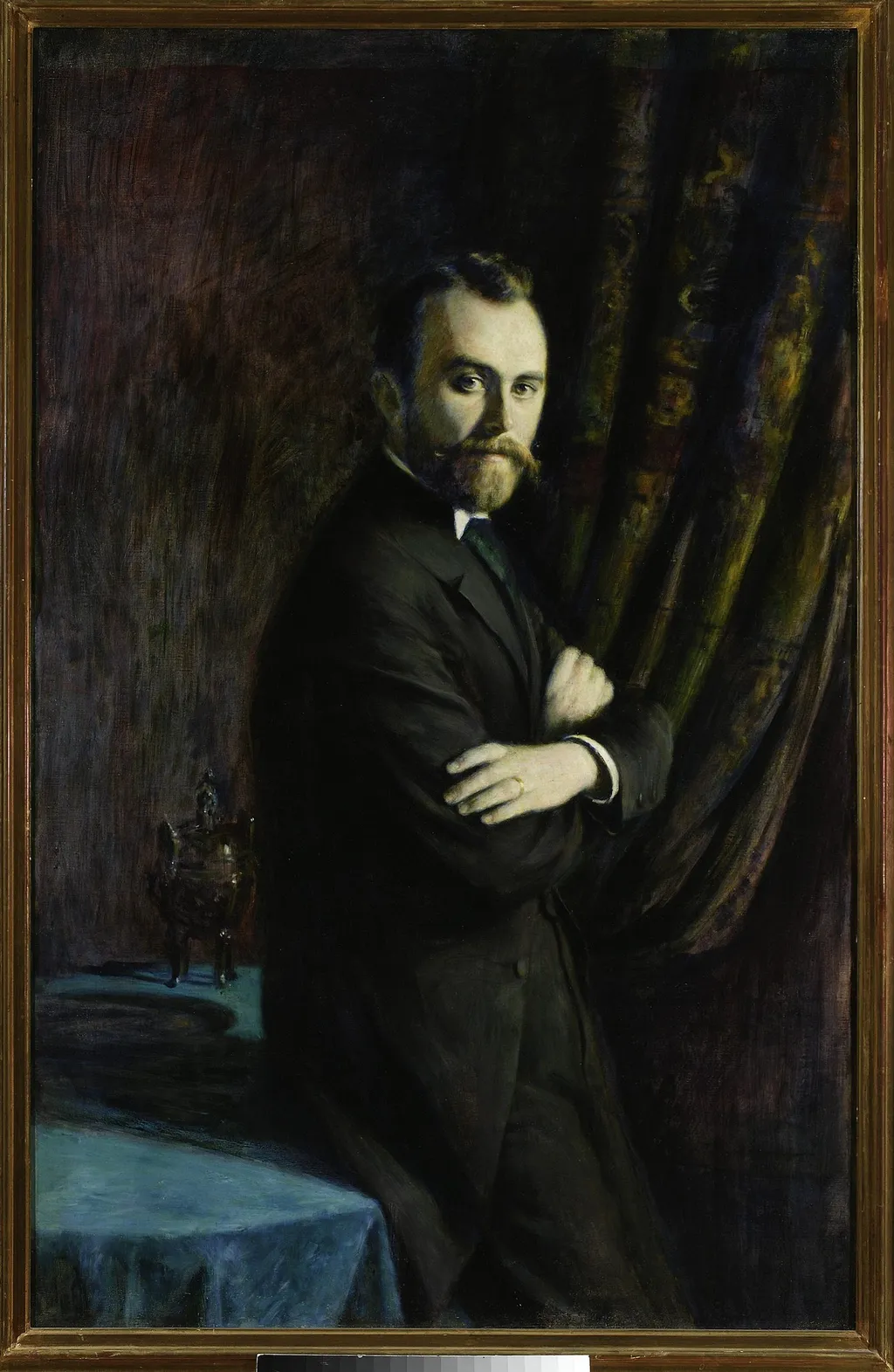
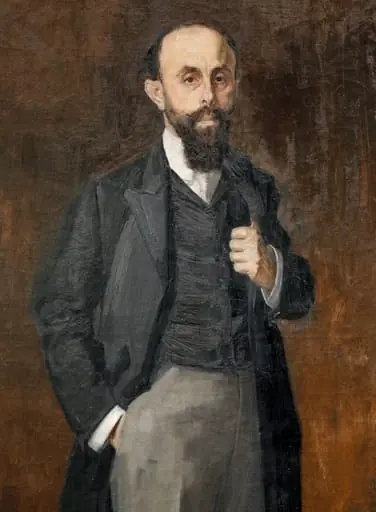
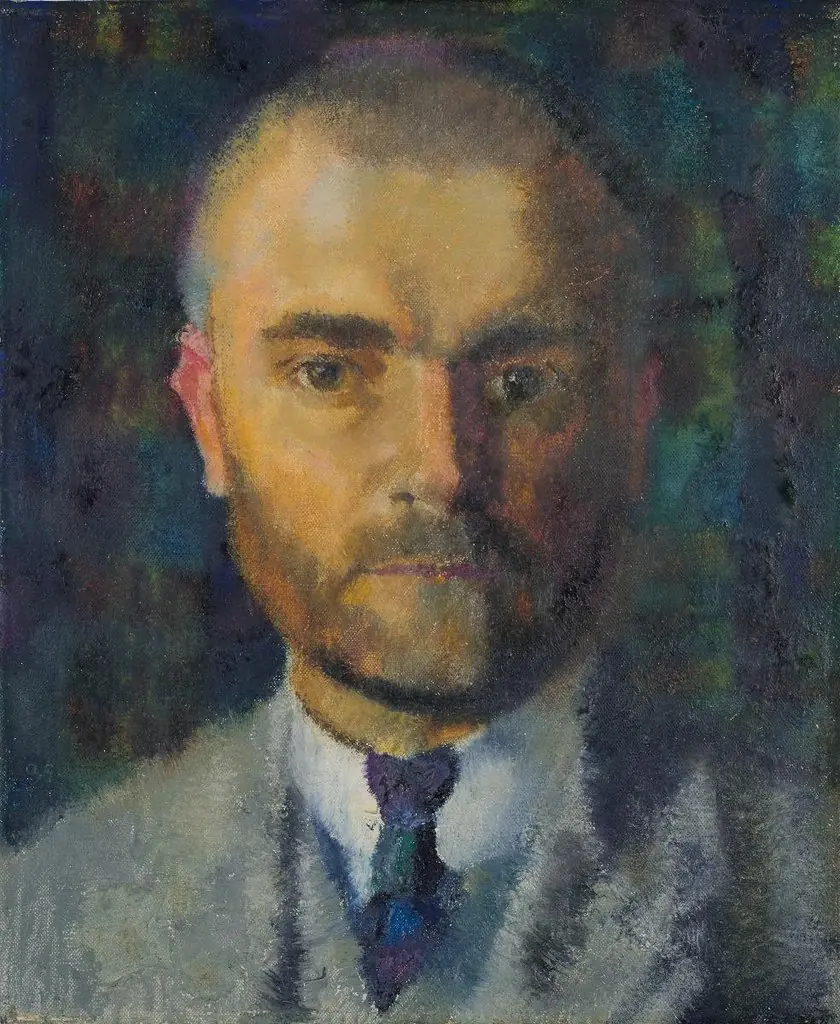
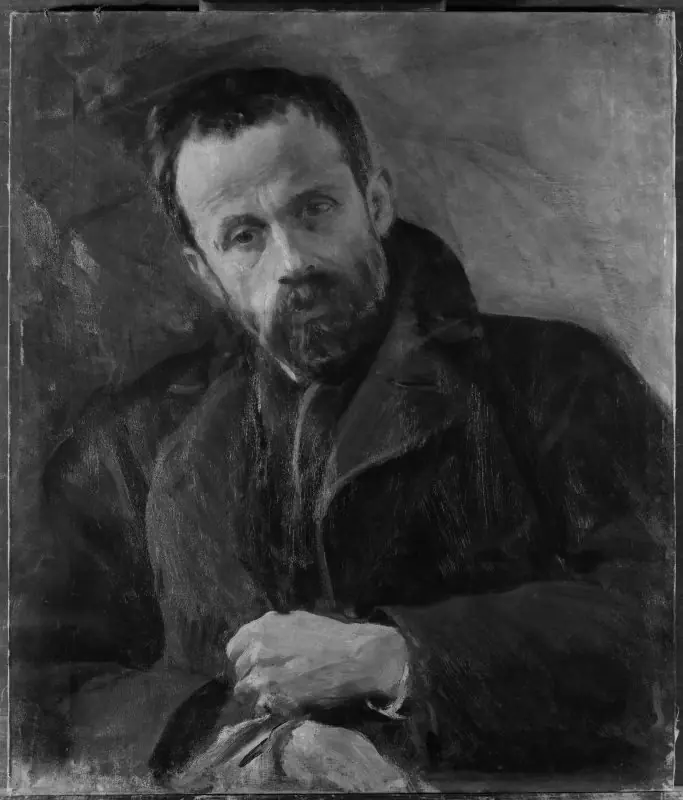
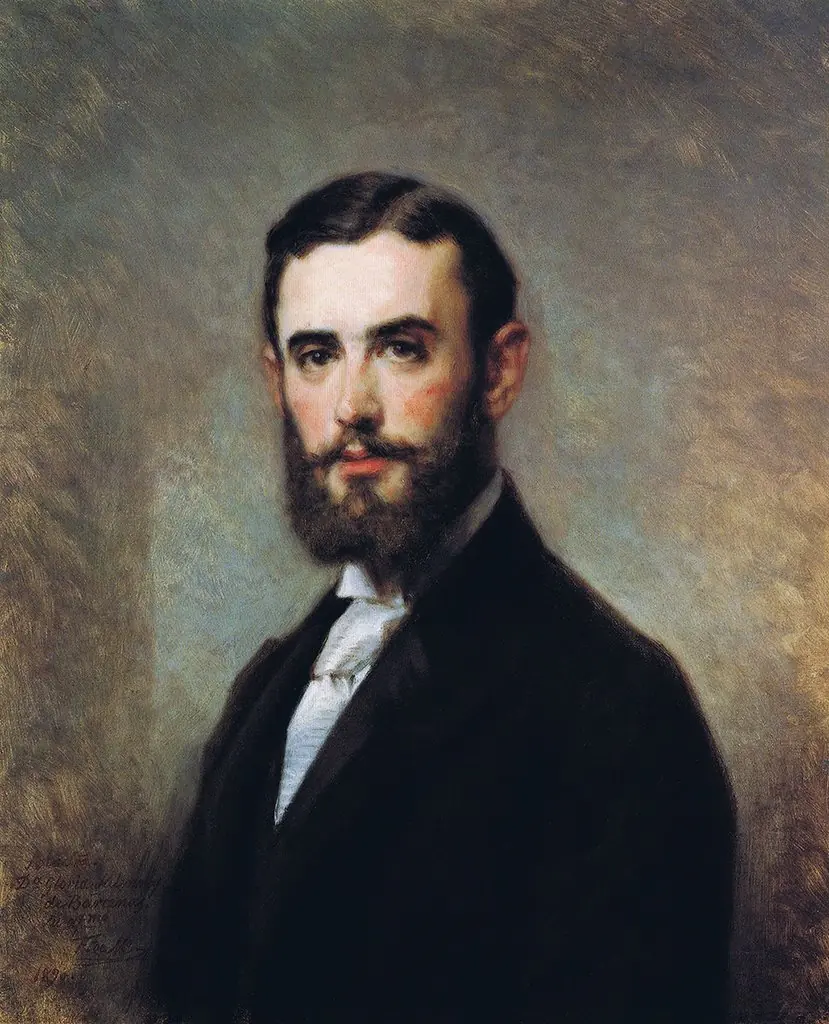
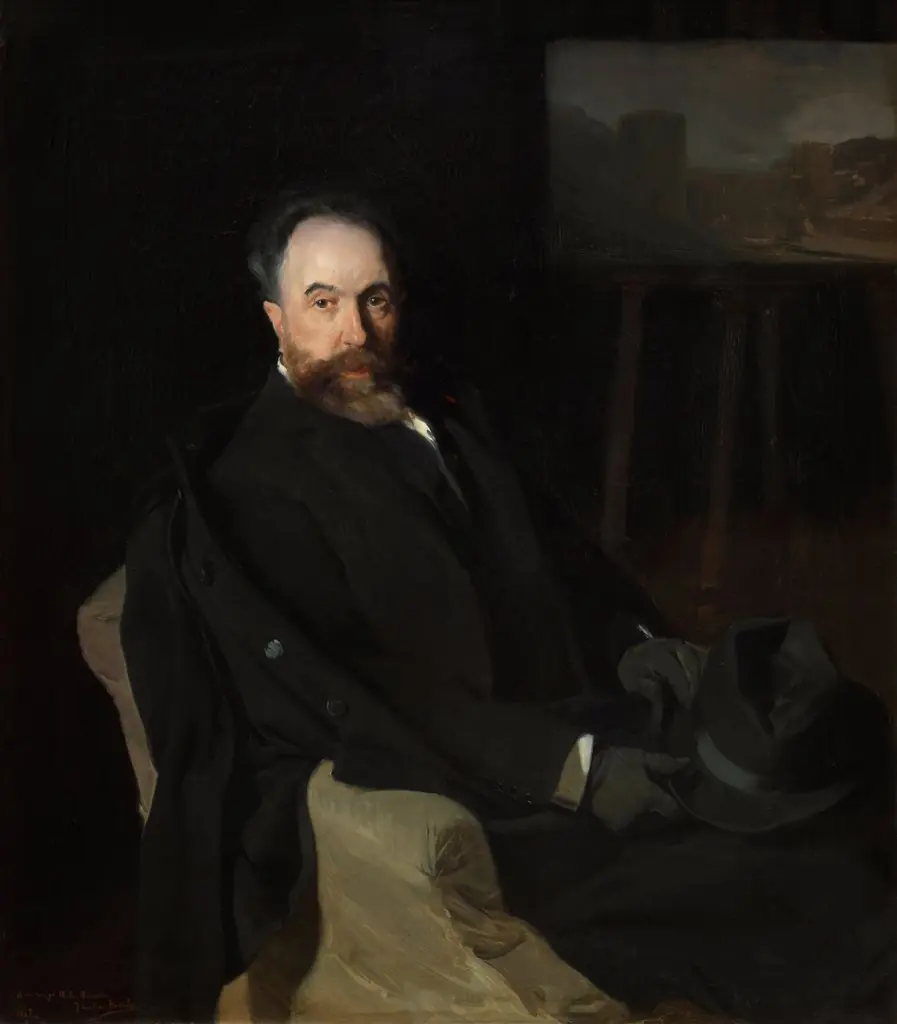
Portrait of Konrad Dynowski is an oil painting by the Post-Impressionist artist Władysław Podkowiński. It is held in the collection of the National Museum in Warsaw. Created in 1898, this oil portrait by Władysław Podkoviński captures Konrad Dynowski in a restrained pose.
About this work
Overview
Portrait of Konrad Dynowski is an oil on canvas painting created by the Polish artist Władysław Podkowiński in 1894.
Portrait of Konrad Dynowski is an oil on canvas painting created by the Polish artist Władysław Podkowiński in 1894. Measuring 140 by 89 centimeters, the artwork is a vertical, three-quarter length depiction of its subject. The painting is held in the collection of the National Museum in Warsaw. It stands as an important work from the final year of Podkowiński's short life, a period when the artist was shifting from his earlier Impressionist tendencies toward a darker, more symbolist-inflected visual language.
Subject & Meaning
The painting portrays Konrad Dynowski, who stands turned slightly toward the viewer with his arms crossed. He is dressed in a dark suit with a white collar and a dark tie, his face featuring a full beard and mustache. The crossed arms and the strong illumination of his face against a shadowed background convey a sense of dignity and psychological presence. Behind him to the right, a heavy draped curtain falls in deep folds, while a small ornate metal vessel rests on a surface covered with a blue cloth to his left. The juxtaposition of the figure with the draped curtain and the still life elements on the left anchors the subject in a traditional portrait format while allowing a moody, introspective atmosphere to surface.
Technique & Style
Podkowiński executed the portrait in oil paint on canvas. The composition is vertical, with the figure placed slightly off center. The palette is dominated by dark browns, blacks, and muted golds, punctuated by touches of blue in the cloth beneath the metal vessel. Light falls strongly on the face and hands of Dynowski, leaving much of his figure and the background in shadow. The brushwork varies across the canvas, appearing tighter and more precise in the facial features and hands, while the background and curtain exhibit a looser, more visible handling. This contrast between the tightly rendered flesh and the broader, atmospheric shadows reflects the stylistic transition of Podkowiński's late career, bridging his Impressionist foundations with a darker, more expressive approach.
History & Provenance
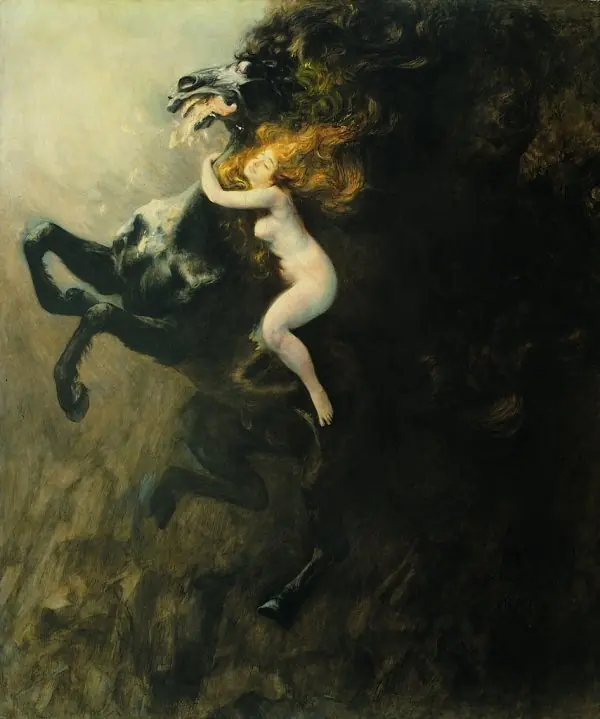
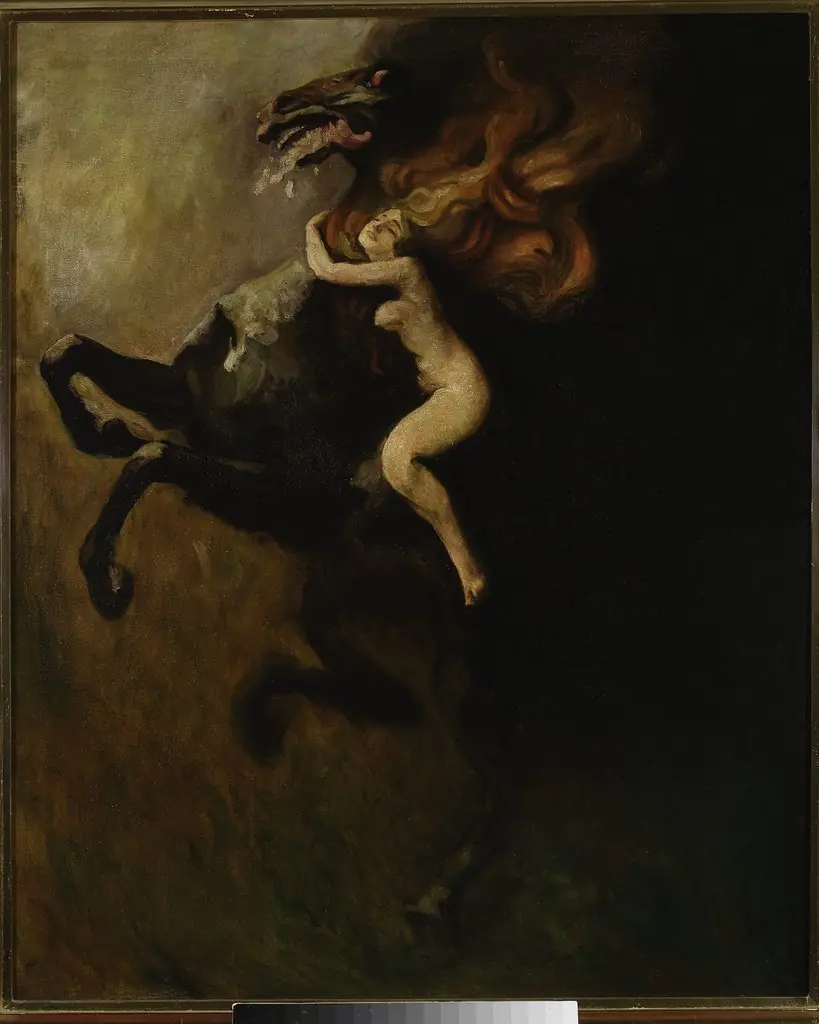
Created in 1894, the Portrait of Konrad Dynowski dates to the final year of Podkowiński's life. The painting is currently housed in the National Museum in Warsaw. While the specifics of its commission and early ownership chain are not detailed in surviving records, its presence in the National Museum in Warsaw establishes its status as a preserved work of cultural significance within Poland. The year 1894 was a tumultuous one for Podkowiński, marked by the public scandal and his dramatic slashing of his other major work, Frenzy of Exultations, at a Warsaw exhibition. The portrait of Dynowski, however, remains intact and was preserved without such incident.
Context
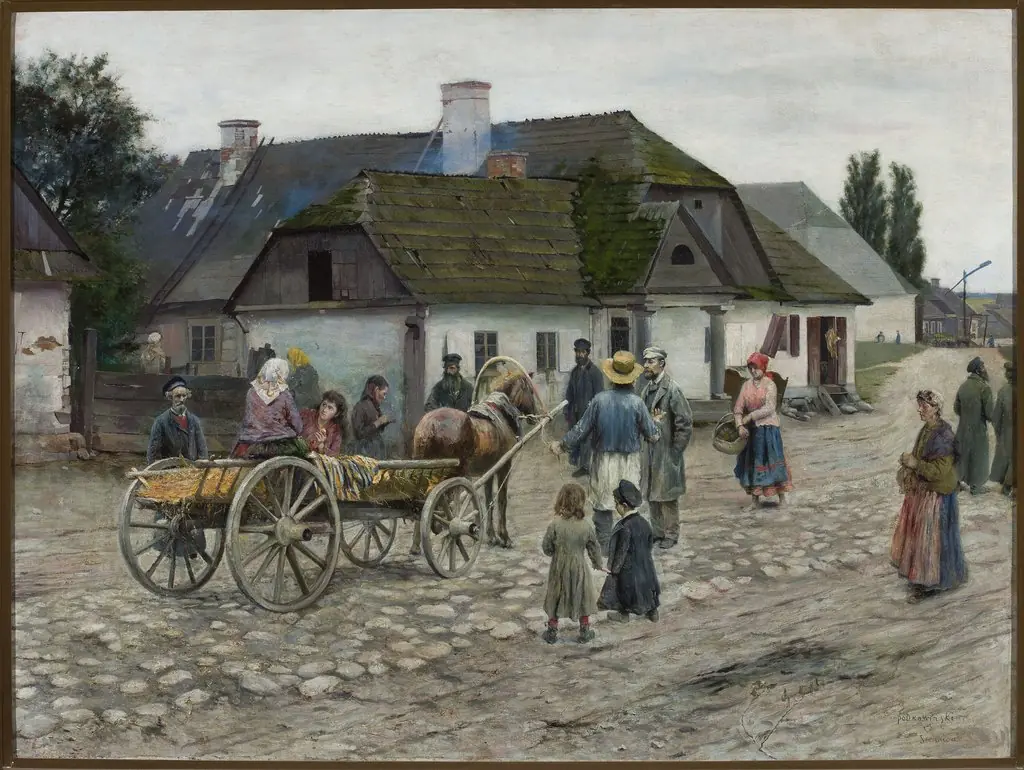
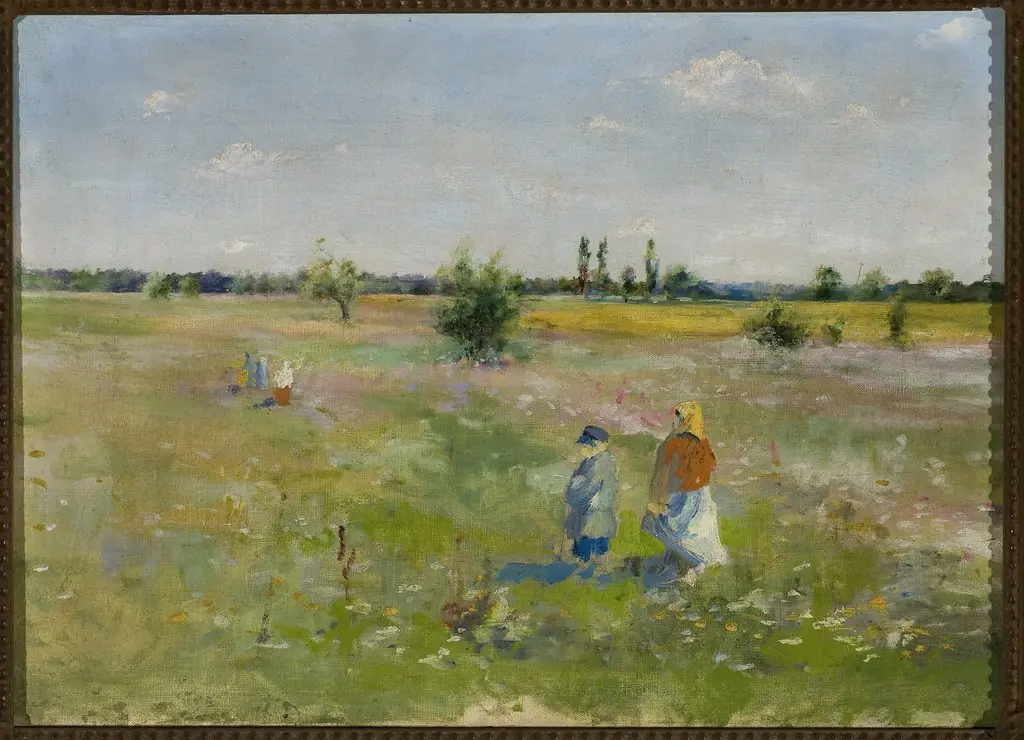
Władysław Podkowiński was a painter and illustrator associated with the Young Poland movement during the Partition period. Born in Warsaw in 1866, he trained at Wojciech Gerson's drawing school and the Warsaw Academy of Fine Arts before studying at the Imperial Academy of Arts in St. Petersburg alongside Józef Pankiewicz. After a transformative trip to Paris in 1889, where he encountered the work of Claude Monet, Podkowiński became credited with introducing Impressionism to Poland. By 1894, the year he painted the Portrait of Konrad Dynowski, his failing health from tuberculosis had pushed him toward Symbolism. The moody lighting and somber palette of this portrait align with this late shift, moving away from the vibrant brushstrokes of his earlier Impressionist phase toward a more introspective and atmospheric mode. He died in Warsaw in early 1895 at the age of 28.
Legacy
Although overshadowed in popular memory by the scandal and subsequent destruction of Frenzy of Exultations, the Portrait of Konrad Dynowski remains a vital example of Podkowiński's late portraiture. It demonstrates his capacity to merge traditional compositional structures with a modern, expressive handling of light and shadow. Preserved in the National Museum in Warsaw, the painting contributes to the understanding of Podkowiński's artistic evolution in his final year, offering a quieter, more psychological counterpoint to his more theatrical Symbolist works. It remains a significant artifact for scholars studying the transition from Polish Impressionism to the broader, mood-driven aesthetics of the Young Poland movement.
Own this work as a print
Artist & collection
Artist
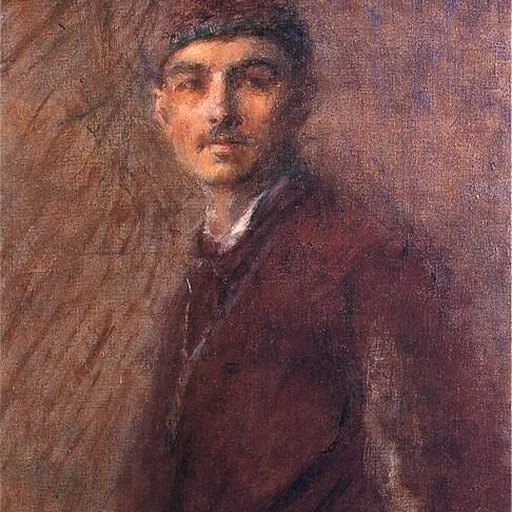
Władysław Podkowiński (Polish:; 4 February 1866 – 5 January 1895) was a Polish master painter and illustrator associated with the Young Poland movement during the Partition period.