Artwork
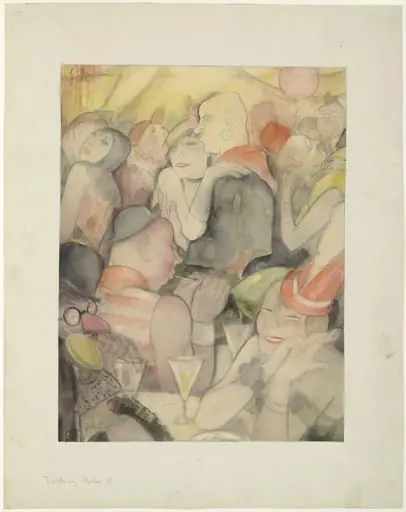
A Contortionist in a Cabaret
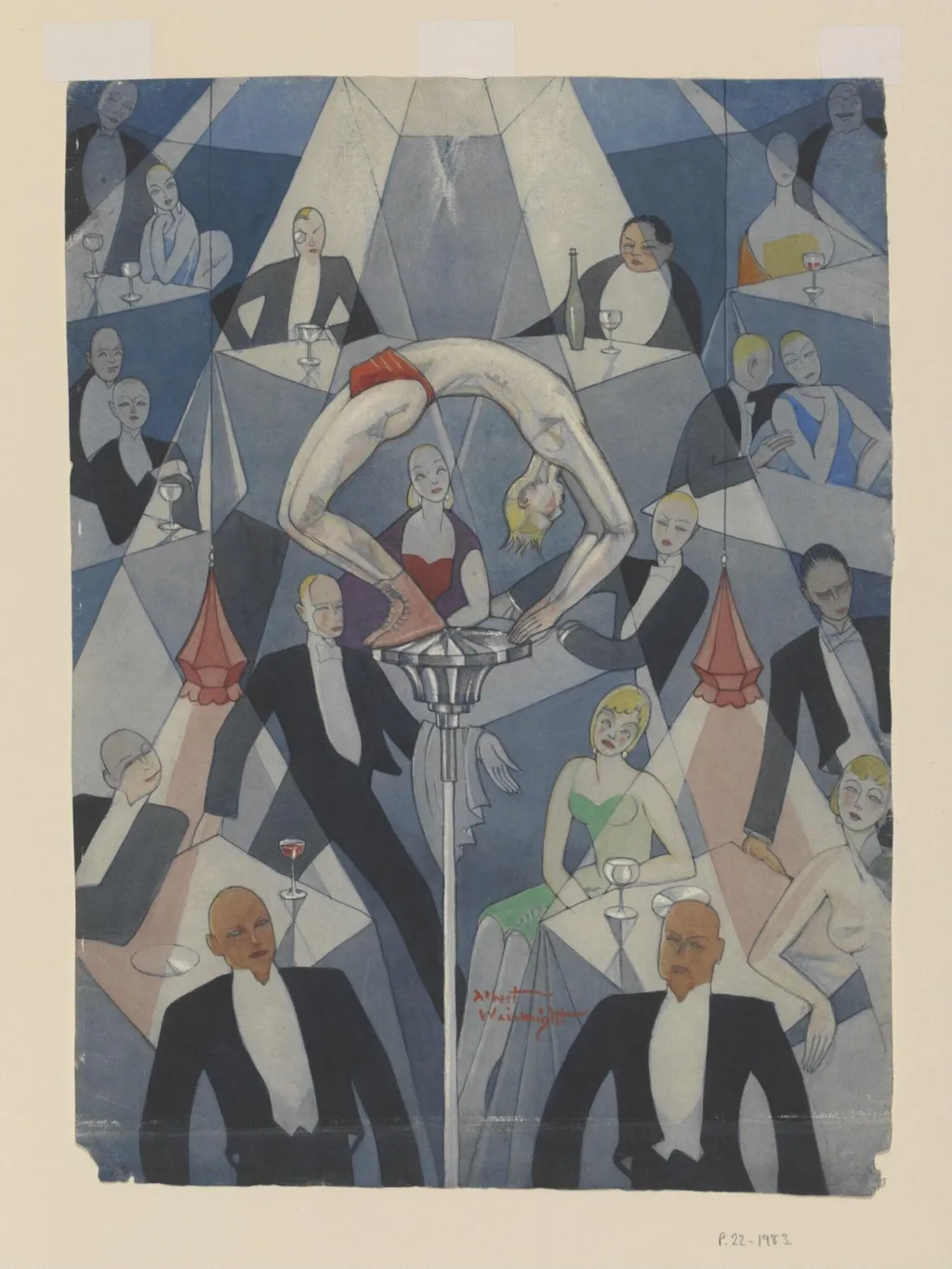
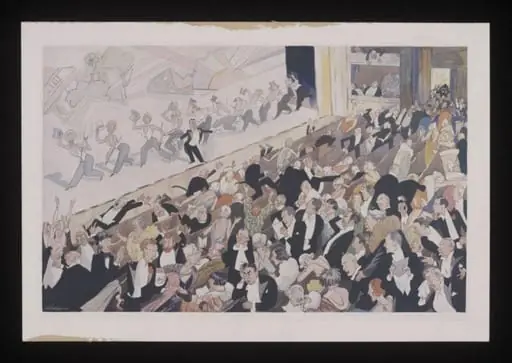
A Contortionist in a Cabaret is a watercolor work on paper by the Art Brut artist Albert Wainwright. It dates from 1934 and is held in the collection of the Victoria and Albert Museum.
About this work
Overview
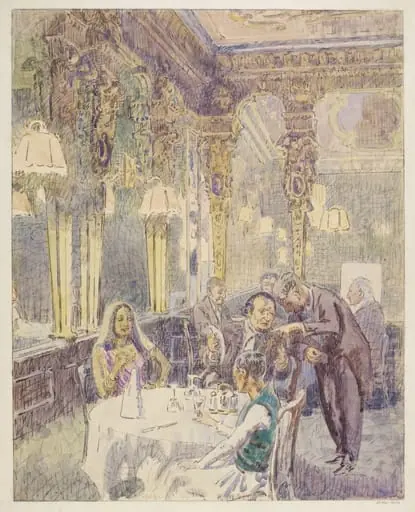
Albert Wainwright created this watercolour and gouache piece in 1934, capturing a moment from a cabaret performance. The work is signed by the artist and remains part of the Victoria and Albert Museum’s collection. It presents a single figure in motion amid a crowd, rendered with fluid brushwork that emphasizes spontaneity and atmosphere over detailed realism.
Subject & Meaning
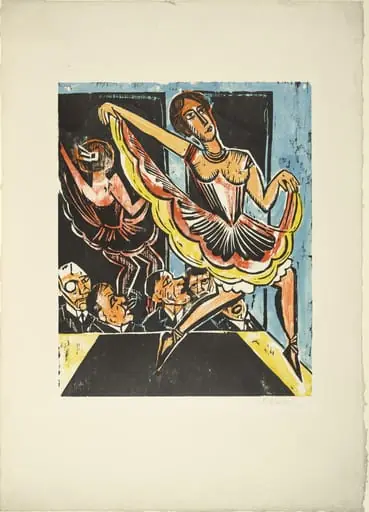
The central figure is a female contortionist, dressed in red, bending her body in an exaggerated arc over a table. Her physical extremity contrasts with the stillness of the audience, dressed in formal attire, engaged in conversation or drink. The scene suggests the spectacle of entertainment, where human flexibility becomes a commodity, observed but not deeply engaged with by those around her.
Technique & Style
Wainwright employed watercolour and gouache to achieve a luminous, translucent effect, allowing layers to suggest movement and depth. The contortionist’s form is defined with loose, confident strokes, while the background blends muted blues and greys to recede into ambiguity. The crowd is rendered with minimal detail, directing focus to the performer’s dynamic pose and the energy of her motion.
History & Provenance
The painting was completed in 1934 and entered the Victoria and Albert Museum’s collection, where it remains accessible to the public. It is one of several works by Wainwright documenting British performance culture of the interwar period. No record of prior ownership or exhibition history beyond the museum’s acquisition is publicly documented.
Context
In 1930s Britain, cabarets and variety shows were popular urban entertainments, often blending spectacle with social commentary. Wainwright’s interest in performers reflects a broader artistic trend of capturing working-class life and transient moments of public amusement. This piece aligns with contemporaneous depictions of theatre and nightlife, emphasizing observation over idealization.
Legacy
Though not widely known outside specialist circles, Wainwright’s watercolours offer quiet insight into mid-20th-century British entertainment. This work contributes to a modest but valuable archive of performance art documentation, preserving the physicality and atmosphere of cabaret culture without romanticizing its performers or patrons.
Artist & collection
Artist
Albert Wainwright made watercolours that dip into the everyday magic of performance.