Artwork
Fen Stanton
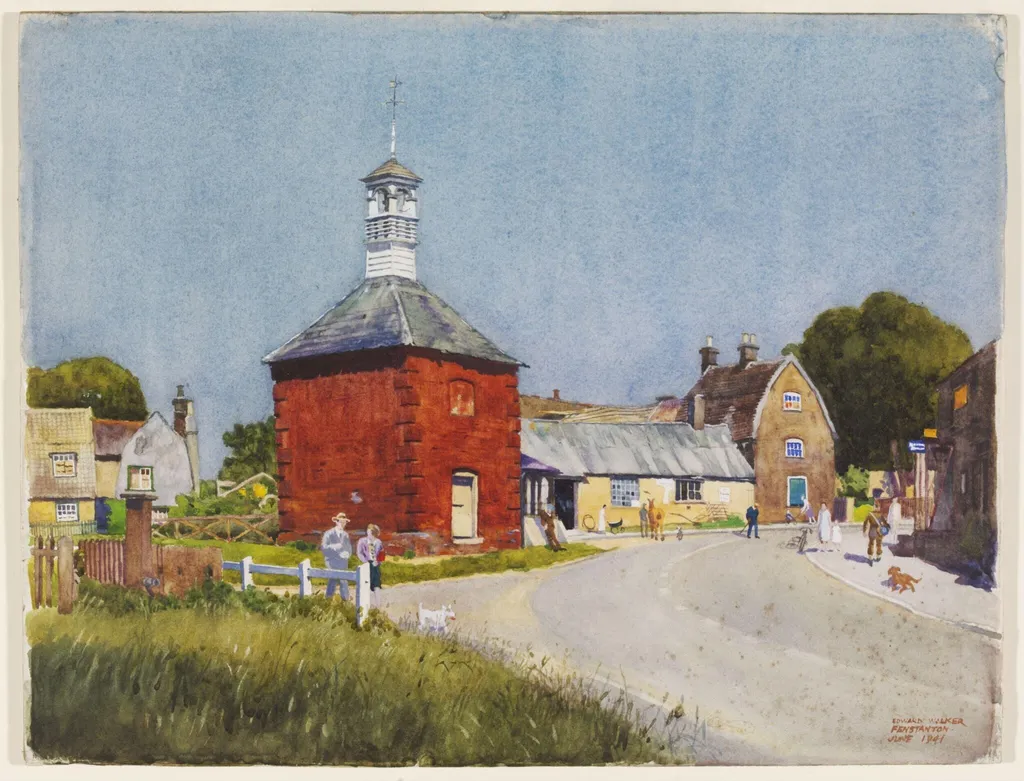
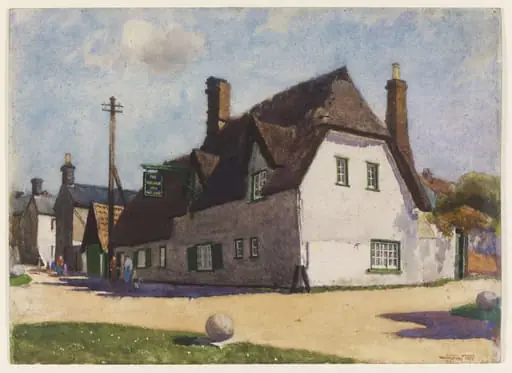
Fen Stanton is a watercolor work on paper by the American Folk Art artist Walker. It dates from 1941 and is held in the collection of the Victoria and Albert Museum. This watercolour, created in 1941, portrays the village of Fenstanton in Cambridgeshire.
About this work
Overview
The scene is rendered with soft washes and restrained detail, emphasizing the stillness of the landscape amid national upheaval.
This watercolour, created in 1941, portrays the village of Fenstanton in Cambridgeshire. Executed as part of the Recording Britain initiative, it captures a quiet moment in rural life during wartime. The scene is rendered with soft washes and restrained detail, emphasizing the stillness of the landscape amid national upheaval. The work belongs to a broader effort to document England’s vernacular architecture before potential loss.
Subject & Meaning
The composition centers on the village lock-up and clock tower, structures emblematic of local governance and timekeeping. Figures and a dog along the winding road suggest everyday activity, grounding the scene in ordinary life. The absence of war-related imagery underscores a deliberate focus on continuity, preserving the visual identity of communities perceived as vulnerable to change or destruction.
Technique & Style
The artist employed transparent watercolour washes to build subtle tonal gradations, avoiding heavy outlines. Warm earth tones in the brickwork contrast with the cool blue sky, creating gentle atmospheric depth. Brushwork is deliberate yet loose, conveying texture without overdetail.
Light is diffused evenly, avoiding dramatic chiaroscuro; the effect is one of calm observation rather than theatrical emphasis.
History & Provenance
Commissioned by the Victoria and Albert Museum under Sir Kenneth Clark’s leadership, the painting was one of over 1,500 works produced for the Recording Britain project. It was intended as a visual archive of threatened rural landscapes. The piece entered the V&A’s permanent collection shortly after completion and remains part of its wartime art holdings.
Context
Created during the Blitz and amid fears of invasion, the project responded to anxieties about cultural erasure. Artists were sent to rural areas to record buildings, lanes, and landmarks deemed representative of English identity. Fenstanton’s inclusion reflects its status as a typical village, unremarkable in scale but symbolically significant as a site of enduring tradition.
Legacy
The Recording Britain collection is now a key resource for understanding mid-20th-century British topography and wartime cultural policy. Fenstanton’s watercolour contributes to this archive not through grandeur, but through quiet fidelity. It endures as a testament to the value placed on ordinary places during a time of profound uncertainty.
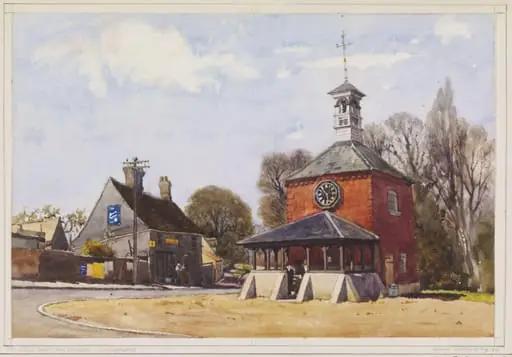
Artist & collection
Artist
An English watercolorist active in the early 1940s, this artist painted the spires, bridges, and inns of small-town England in quick, transparent washes.

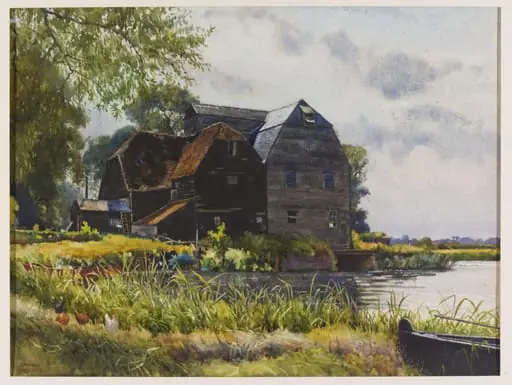
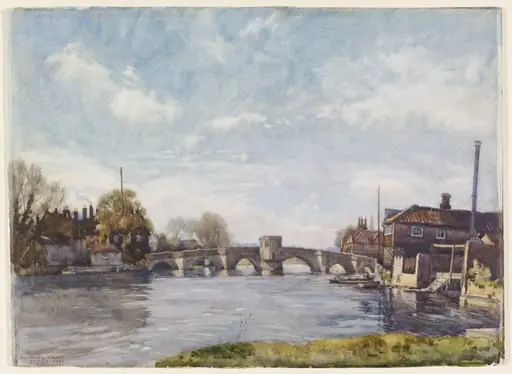
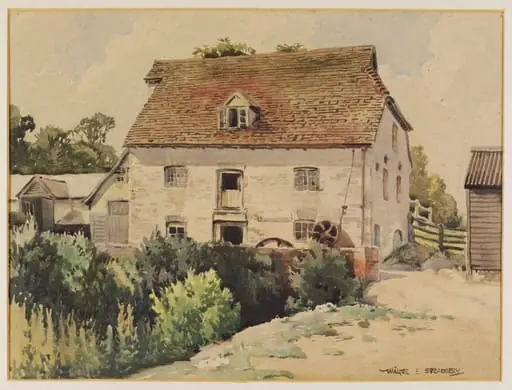 Mill House at Tilty, Essex
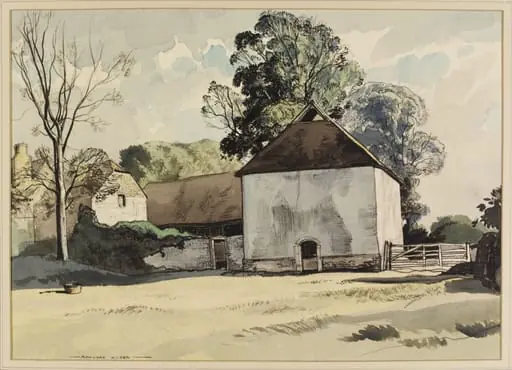 Saxon Dovecote, Lullington, near Alfriston, Cuckmere Valley
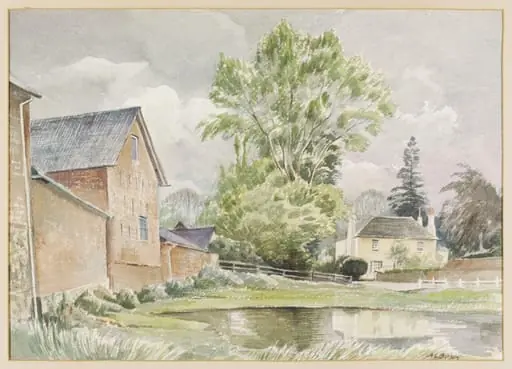 Bentworth, Near Alton
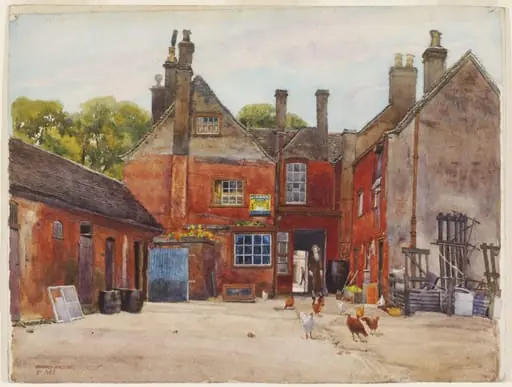 At the back of The White Hart, St. Ives
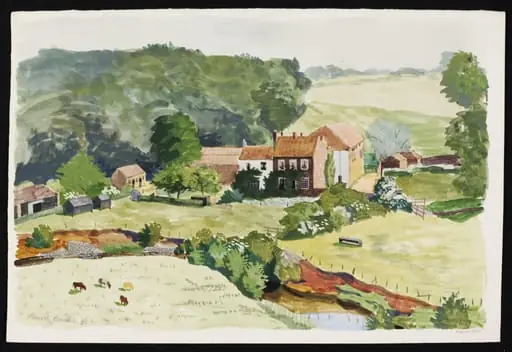 The Mill, Crathorne
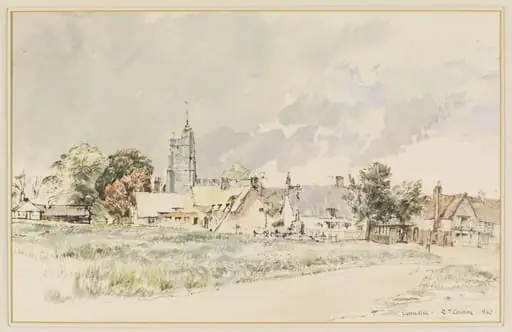 Cavendish
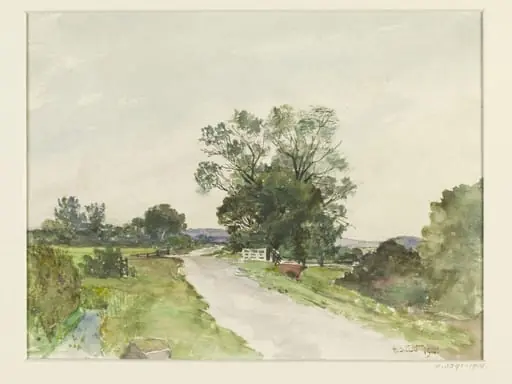 Landscape with road in flat country
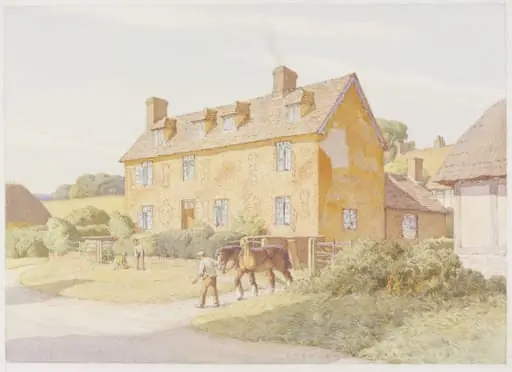 A 15th century cottage at Nether Wynchenden
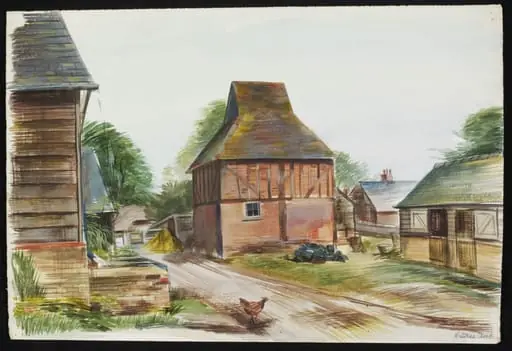 Sixteenth Century Dovehouse, Offley
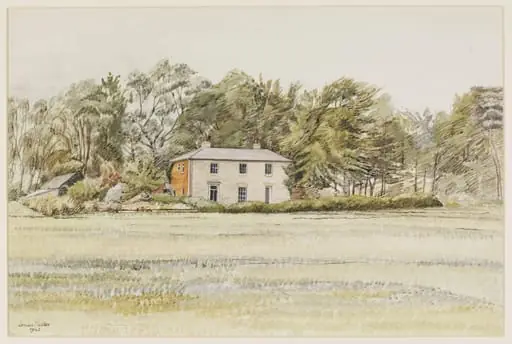 The Firs (Farmhouse) near Sudbourne