Artwork
清 王翬 太行山色圖 卷|The Colors of Mount Taihang
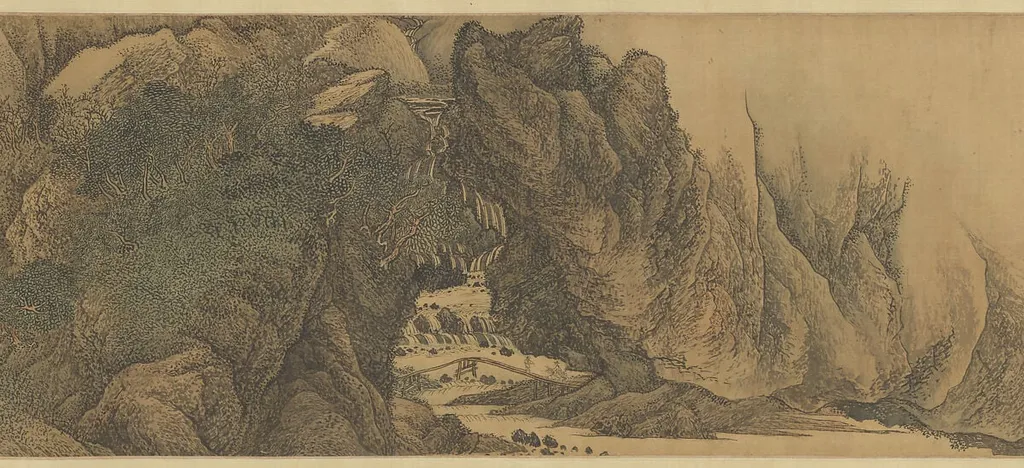
清 王翬 太行山色圖 卷|The Colors of Mount Taihang is an ink painting by the Baroque artist Wang Hui. It dates from 1669 and is held in the collection of the Metropolitan Museum of Art.
About this work
A long silk handscroll in ink and soft color: misty blue mountains, small trees, and a waterfall threading down the rocks. Wang Hui painted it in 1669, already known for copying old masters, but here he worked from the real peaks of northern China. The brushwork is light enough to feel the damp air.
Subject & Meaning
The composition emphasizes the grandeur and spiritual resonance of the natural environment, reflecting Daoist ideals of harmony between humanity and the cosmos.
The handscroll 清 王翬 太行山色圖 (The Colors of Mount Taihang), painted by Wang Hui in 1669, portrays a dramatic mountain landscape of the Taihang range, featuring towering peaks, a cascading waterfall, and winding streams rendered in ink with subtle color on silk. The composition emphasizes the grandeur and spiritual resonance of the natural environment, reflecting Daoist ideals of harmony between humanity and the cosmos. As documented in the Metropolitan Museum of Art's collection records, the work exemplifies the landscape genre of Qing dynasty painting, where rugged topography serves as a visual metaphor for endurance and transcendence.
Technique & Style
Created in 1669, The Colors of Mount Taihang is executed as a handscroll on silk, utilizing both ink and color. As a landscape painting by Wang Hui, the work depicts mountainous terrain and waterfalls, characteristic of the genre. The artist's handling of ink and pigment on the silk support facilitates the rendering of these natural elements.
The piece is currently held within the collection of the Metropolitan Museum of Art. Its formal qualities align with traditional Chinese landscape conventions, focusing on the depiction of mountains and flowing water within a continuous scroll format.
History & Provenance
The handscroll The Colors of Mount Taihang was painted by Wang Hui in 1669, as confirmed by both the internal corpus record and the Metropolitan Museum of Art's catalogue entry. The work was created during the Qing dynasty and depicts Mount Taihang's mountainous landscape with a waterfall. By the 20th century, it entered the collection of the Metropolitan Museum of Art, where it remains housed today.
Overview
The Colors of Mount Taihang is a handscroll executed in 1669 by the Qing dynasty master Wang Hui. Created when the artist was thirty-seven, this work marks a significant departure from his early reputation as a virtuoso copyist of ancient styles. Instead of relying solely on inherited models, Wang Hui synthesized direct observation of the northern Chinese landscape with rigorous academic brushwork.
The composition unfolds horizontally on silk, utilizing ink and soft mineral colors to depict the rugged topography of the Taihang Mountains. The scene features mist-shrouded peaks rendered in cool blue tones, interspersed with delicate vegetation and a waterfall cascading through rocky precipices. Tiny figures and structures are integrated into the vast terrain, emphasizing the sublime scale of nature.
The painting demonstrates Wang Hui's ability to merge the structural complexity of the Song dynasty tradition with a fresh, atmospheric sensibility. This piece stands as a pivotal moment in his career, foreshadowing his later role as the leading figure of the Orthodox School and his eventual commission to paint the Kangxi Emperor's southern inspection tours. It remains a definitive example of mid-Qing landscape painting, balancing technical precision with poetic evocation.
Artist & collection


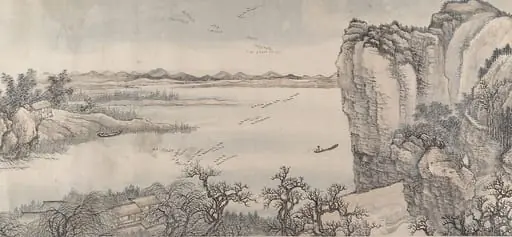 清 王翬 倣巨然燕文貴山水圖 卷|Landscape in the Style of Juran and Yan Wengui
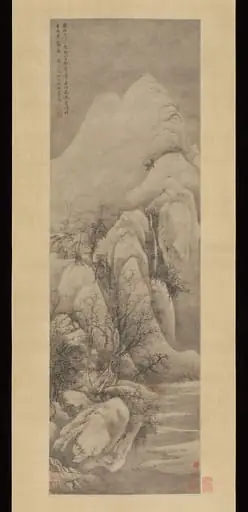 清 王翬 倣李成雪霽圖 軸|Snow Clearing: Landscape after Li Cheng
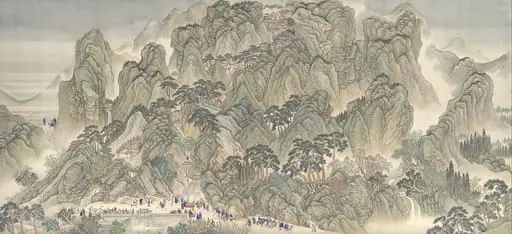 清 王翬等 康熙南巡圖 (卷三: 濟南至泰山) 卷|The Kangxi Emperor's Southern Inspection Tour, Scroll Three: Ji'nan to Mount Tai
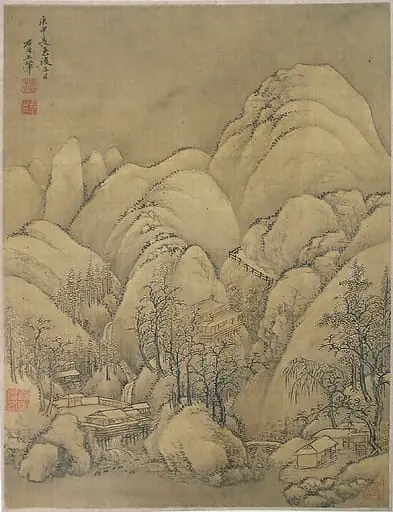 清 佚名 倣王翬 倣李成山水圖 軸|Landscape after Li Cheng
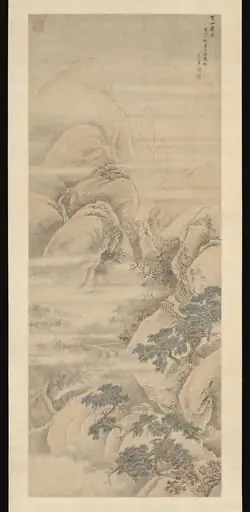 清 (傳)王翬 雪景山水圖 軸|Snowscape
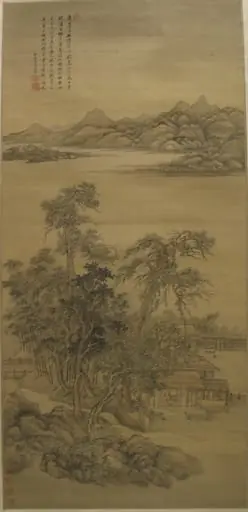 清 佚名 倣王翬 倣李公麟草堂圖 軸|Landscape in the Style of Li Gonglin
 清 佚名 倣王翬 倣仇實父採菱圖 扇|Gathering Water Chestnuts
 王翬、楊晉、顧昉、王雲、徐玫 仿古山水圖 冊 紙本|Landscapes after old masters
![The Prominent Rock (Sasso spicco) [plate I], by Jacopo Ligozzi](https://artifactworldgallery.com/img/jacopo-ligozzi--the-prominent-rock-sasso-spicco-plate-i--40aeadb353359cc6-w320.webp) The Prominent Rock (Sasso spicco) [plate I]
The Prominent Rock (Sasso spicco) [plate I] 清 蕭雲從 山水圖 冊|Landscapes
 明 沈周 , 文徵明 合璧山水圖 卷|Joint Landscape
 Reciting Poetry before the Yellowing of Autumn
 明 居節 石泉圖 軸|Recluse gazing at a waterfall
 Mountain Scene with Rocks
 Landscape
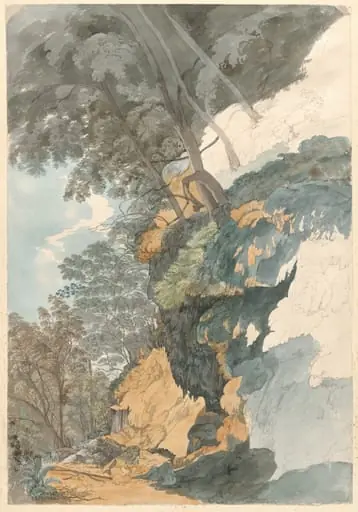 A Cliff Overhung with Trees
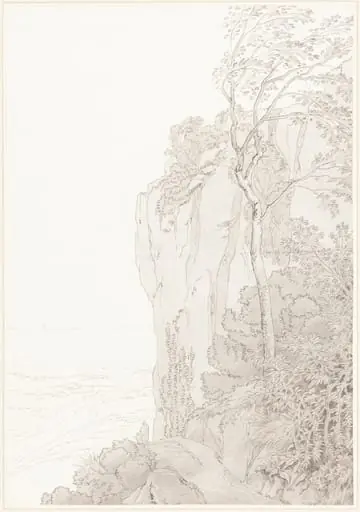 Sheer Cliffs above a Coastal Road
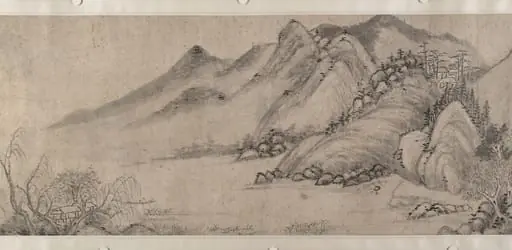 明 卞文瑜 谿山秋靄圖 卷|Streams and Mountains in Autumn Mist
 Meditative Visit to a Mountain Retreat: In Picture and in Words
- 明 趙左 谿山無盡圖 卷|Streams and Mountains without End