Artwork
清 佚名 倣王鑑 倣惠崇山水圖 扇|Landscape in the Style of Huichong
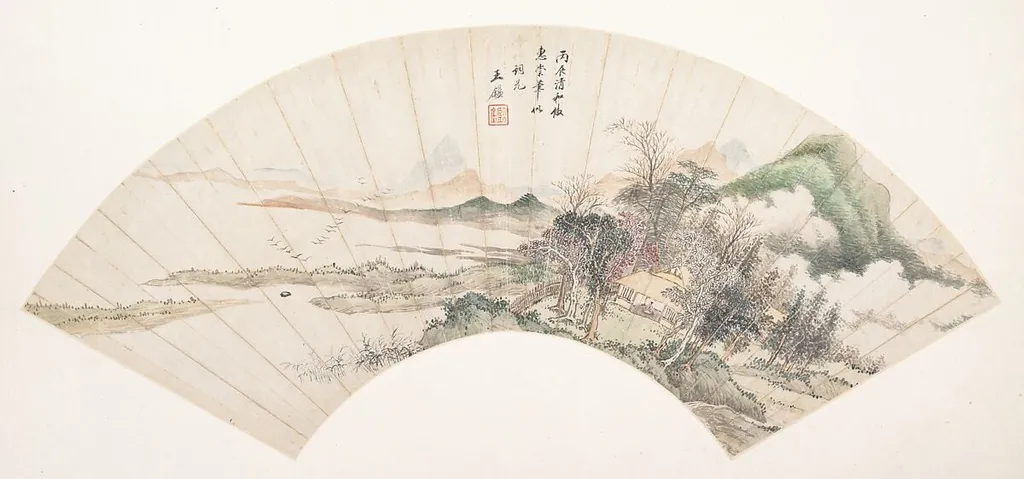
清 佚名 倣王鑑 倣惠崇山水圖 扇|Landscape in the Style of Huichong is an ink painting by the Baroque artist Wang Jian. It is held in the collection of the Metropolitan Museum of Art.
About this work
Subject & Meaning
Executed as a folding fan attached to an album leaf, it combines ink and subtle color on paper, measuring 16.
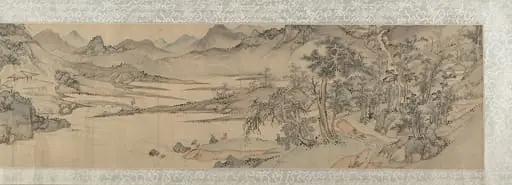
The painting portrays a Chinese landscape rendered in the manner of Huichong. Executed as a folding fan attached to an album leaf, it combines ink and subtle color on paper, measuring 16.2 cm by 52.1 cm. As a landscape work from 1805, it exemplifies the continuation of traditional Chinese landscape painting, emphasizing natural forms and the harmonious relationship between humanity and the environment. The piece is part of the Metropolitan Museum of Art's collection and was created in China.
Technique & Style
This landscape is executed in ink and color on paper, originally created as a folding fan before being remounted as an album leaf. The work measures 16.2 cm in height and 52.1 cm in width. Stylistically, the piece is a landscape painting that emulates the manner of the Song dynasty artist Huichong, filtered through the approach of Wang Jian.
Although attributed to Wang Jian in some records, other sources describe the creator as an anonymous painter working in China during the Qing dynasty. The composition adheres to traditional landscape conventions while reflecting the specific stylistic lineage of imitating earlier masters.
Overview
This anonymous painting from the Qing Dynasty, titled Landscape in the Style of Huichong, is rendered with ink and color on paper, originally a folding fan leaf. It depicts a serene natural scene, characterized by towering mountains, lush trees, and a secluded dwelling. The work consciously emulates the artistic traditions established by earlier masters, specifically drawing inspiration from Wang Jian, who himself looked to the Song Dynasty painter Huichong.
Context
The practice of creating works "in the style of" earlier masters was a significant aspect of Chinese painting, particularly during the Qing Dynasty. This approach allowed artists to study, interpret, and pay homage to revered predecessors, demonstrating their technical skill and understanding of art history. This particular piece, though anonymous, illustrates a multi-layered artistic lineage, referencing Wang Jian's interpretation of the Song Dynasty painter Huichong.
Artist & collection


 清 王鑑 倣巨然《溪山高士圖》 軸|Lofty Scholar among Streams and Mountains, in the manner of Juran
 Mountain Scenery with Streams and Pavilions in the Style of Fan Kuan
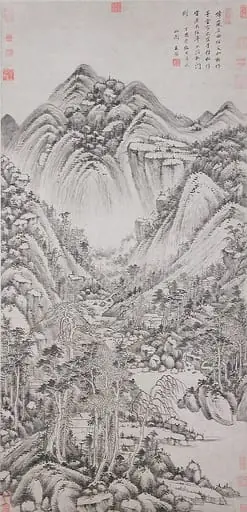 清 王鑑 倣黃公望秋山圖 軸 紙本|Landscape in the style of Huang Gongwang
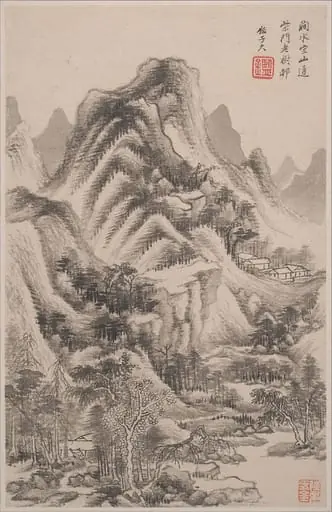 清 王鑑 仿古山水圖 冊 紙本|Landscapes in the styles of old masters
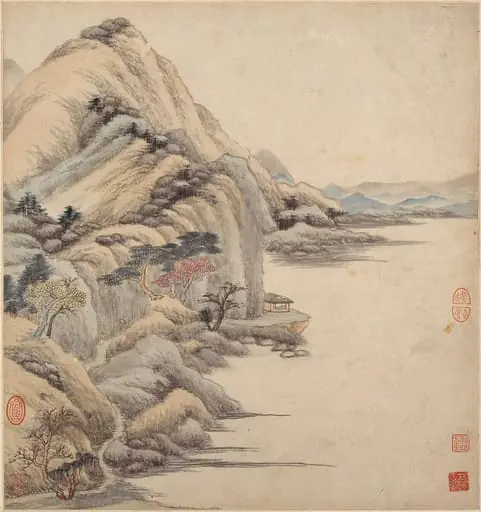 Untitled
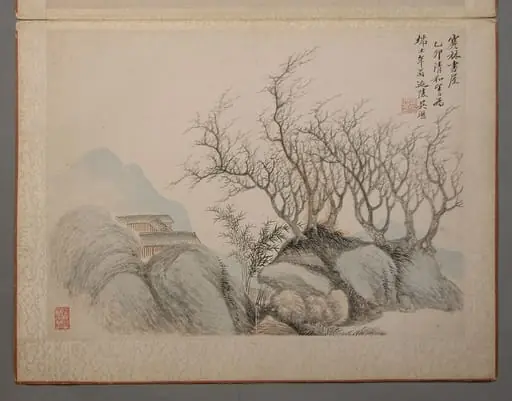 清 清初八大家山水冊|Landscapes Painted for Wang Kui
- 清 王宸 清溪柳橋圖 摺扇|Landscape
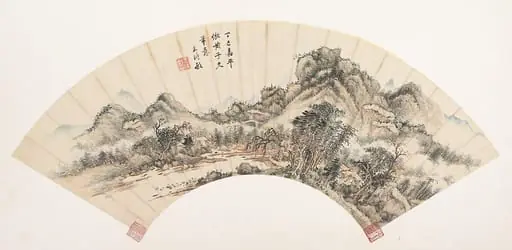 清 王時敏 倣黃子久筆意山水 扇頁|Landscape after Huang Gongwang
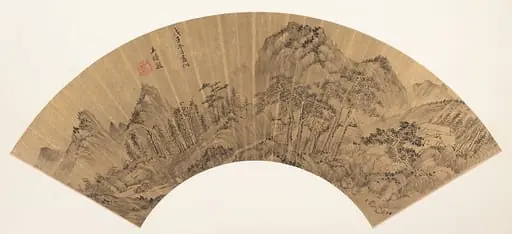 清 倣王時敏 山水 扇面|Landscape
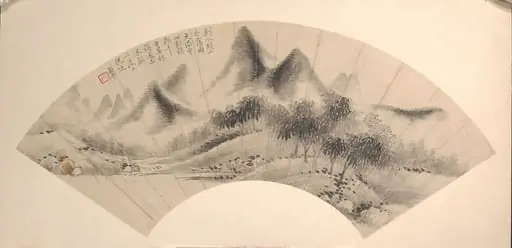 清 佚名 倣惲壽平 倣米家山水圖 扇|Landscape
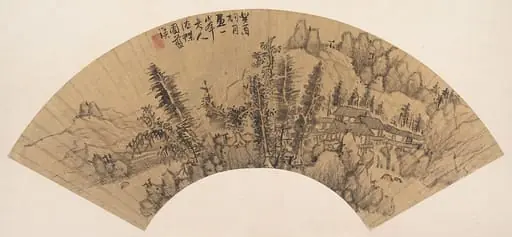 明/清 佚名 倣藍瑛 倣黃公望山水 扇|Landscape in the Style of Huang Gongwang
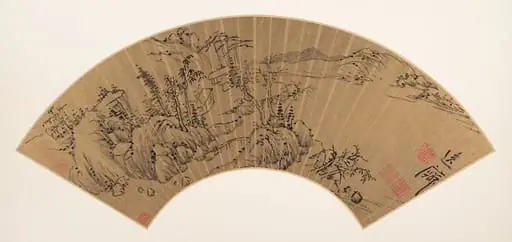 明 鄒之麟 山水圖 扇面|Landscape
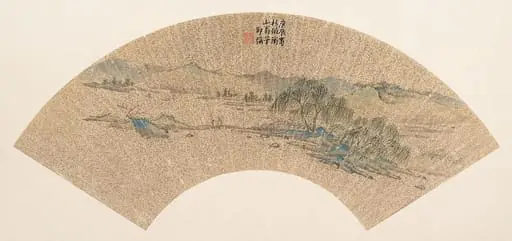 明 佚名 倣邵彌 倣文徵明山水 扇頁|Landscape After Wen Zhengming
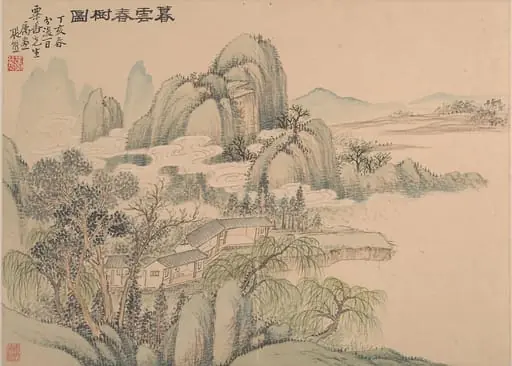 清 張熊 山水 冊頁|Landscape
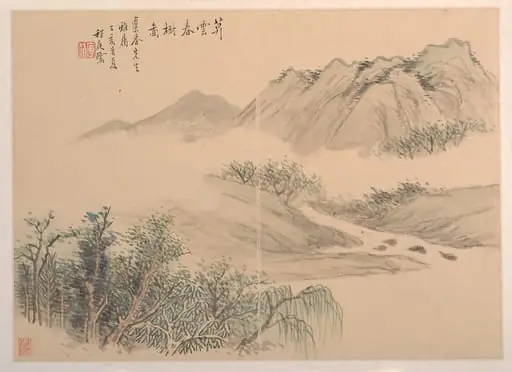 清 程庭鷺 山水 冊頁|Landscape
 明 佚名 傳文伯仁 山水圖 卷|Landscape