Artwork
清 王鑑 仿古山水圖 冊 紙本|Landscapes in the styles of old masters
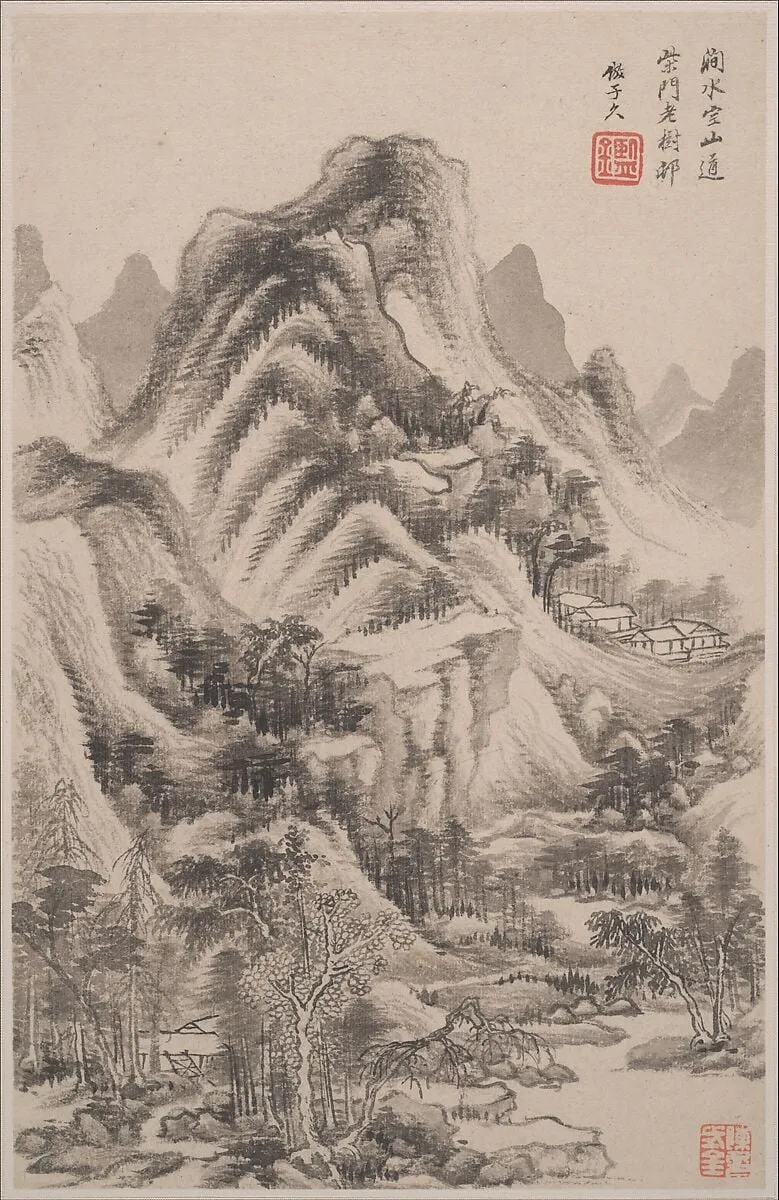
清 王鑑 仿古山水圖 冊 紙本|Landscapes in the styles of old masters is an ink painting by the Baroque artist Wang Jian. It dates from 1668 and is held in the collection of the Metropolitan Museum of Art.
- Accession no.
- 1979.439a–o
- Credit line
- Purchase, The Dillon Fund Gift, 1979
About this work
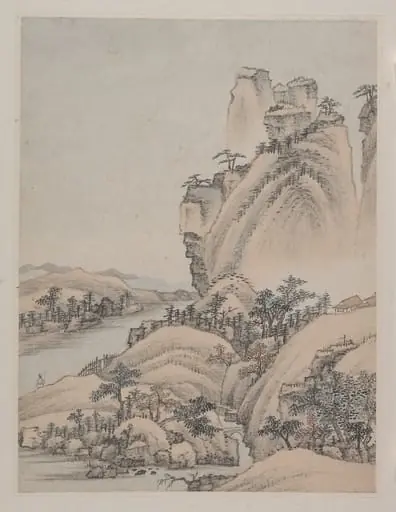
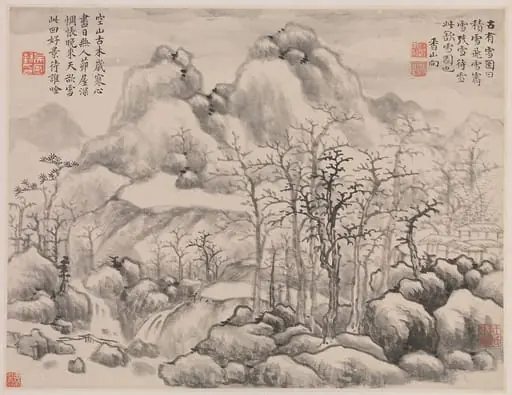
You see ten small ink landscapes on paper, each one a quiet mountain scene, misty peaks, winding rivers, tiny scholars in pavilions.
You see ten small ink landscapes on paper, each one a quiet mountain scene, misty peaks, winding rivers, tiny scholars in pavilions.
Wang Jian didn’t paint what he saw. He painted what he studied: the brushstrokes of artists who lived centuries before him. Each page copies a different old master, like a musician playing someone else’s song.
The album was made in 1668, a time when copying wasn’t lazy, it was how you showed respect and skill.
If you like these, look up the subject landscapes.
Subject & Meaning
The work depicts a mountain landscape, a subject typical of Chinese landscape painting. Its genre is identified as landscape, and the title indicates an imitation of the styles of old masters, suggesting that the composition serves as a study and homage to earlier artistic models. Created in 1668 in China, the piece reflects the historical practice of rendering natural scenery through ink and color on paper, emphasizing technical mastery and the cultural value placed on continuity with past masters.
By representing a mountain, a common motif in the tradition, the work conveys an engagement with established visual language rather than a personal narrative, situating it within the broader context of Qing‑era artistic education and stylistic reverence.
Technique & Style
The work is an album of ten paintings executed in ink and polychrome on paper in 1668 in China. It is mounted as a handscroll album (紙本) and currently housed in the Metropolitan Museum of Art, where it measures 25.7 cm × 16.5 cm. The medium combines ink wash with subtle color washes, a technique that imitates the compositional strategies of earlier masters while retaining a distinct Qing court aesthetic. Formal qualities include a restrained brushstroke, layered atmospheric perspective, and a compositional focus on rugged mountain forms that convey depth through gradations of ink tone, reflecting the "Landscapes in the styles of old masters" designation.
History & Provenance
The album Landscapes in the styles of old masters was created by Wang Jian in 1668 as a set of ten ink and color paintings on paper. According to the work’s records, it dates to that year and is presently held in the collection of the Metropolitan Museum of Art in New York. No further details about earlier ownership, commissions, or subsequent transfers are provided in the available sources.
The album of ten ink and color paintings on paper, titled Landscapes in the styles of old masters and created by Wang Jian in 1668, is held in the collection of the Metropolitan Museum of Art. The work is classified as a landscape painting within the museum's holdings. While the provided sources confirm the institution and the artist's name, they do not specify a unique inventory or accession number for this specific album.
Furthermore, the available documentation does not record any exhibition history for this piece, leaving its display record unlisted in the current data.
Legacy
The album of ten paintings by Wang Jian, created in 1668 in China, exemplifies Qing‑era landscape art that deliberately emulates earlier masters. Its presence in the Metropolitan Museum of Art’s collection has positioned the work as a reference point for scholars studying the transmission of Chinese landscape motifs into modern museum narratives. By being displayed alongside related works, the album has contributed to renewed scholarly attention on Wang Jian’s role in preserving classical compositional techniques, thereby influencing subsequent interpretations of Chinese mountain scenery in contemporary art history.
Overview
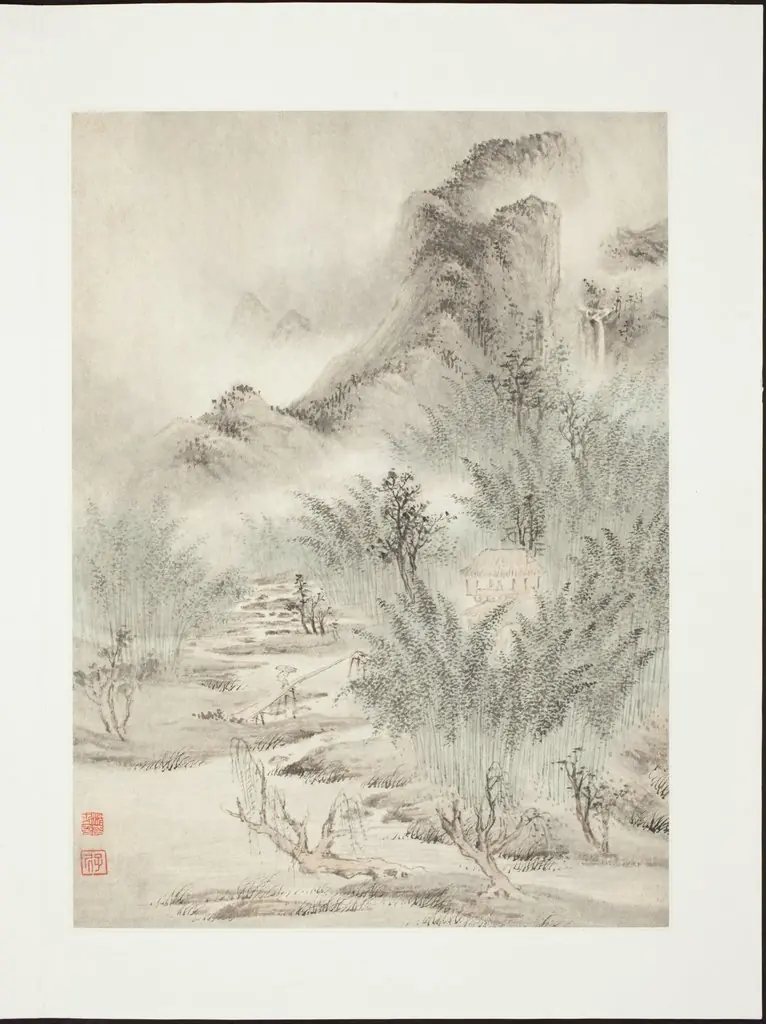
This album by Wang Jian, created in 1668, comprises ten individual paintings rendered in ink and color on paper. Each leaf presents a distinct mountain landscape, characterized by traditional elements such as misty peaks, winding rivers, and small figures within pavilions. The collection serves as an homage to historical painting traditions, demonstrating the artist's engagement with past masters.
Context
Created in 1668, this album exemplifies a significant artistic practice of its era. During the Qing dynasty, the act of emulating earlier masters was not perceived as a lack of originality but rather as a sophisticated means of demonstrating profound respect for tradition and exceptional technical skill. Such works showcased an artist's erudition and mastery of historical styles, solidifying their place within a continuous lineage of artistic excellence.
Artist & collection


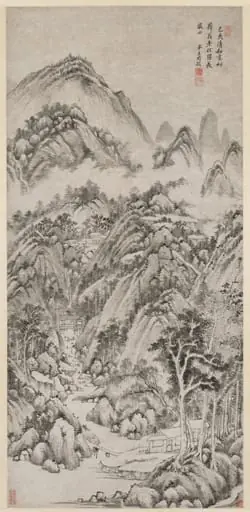
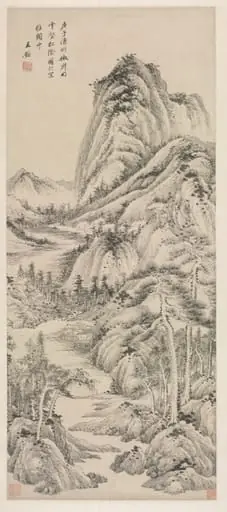
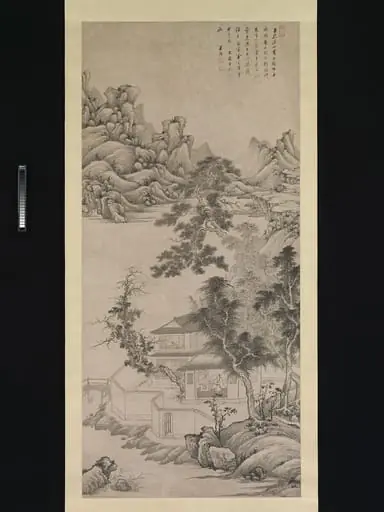 清 王鑑 倣巨然《溪山高士圖》 軸|Lofty Scholar among Streams and Mountains, in the manner of Juran
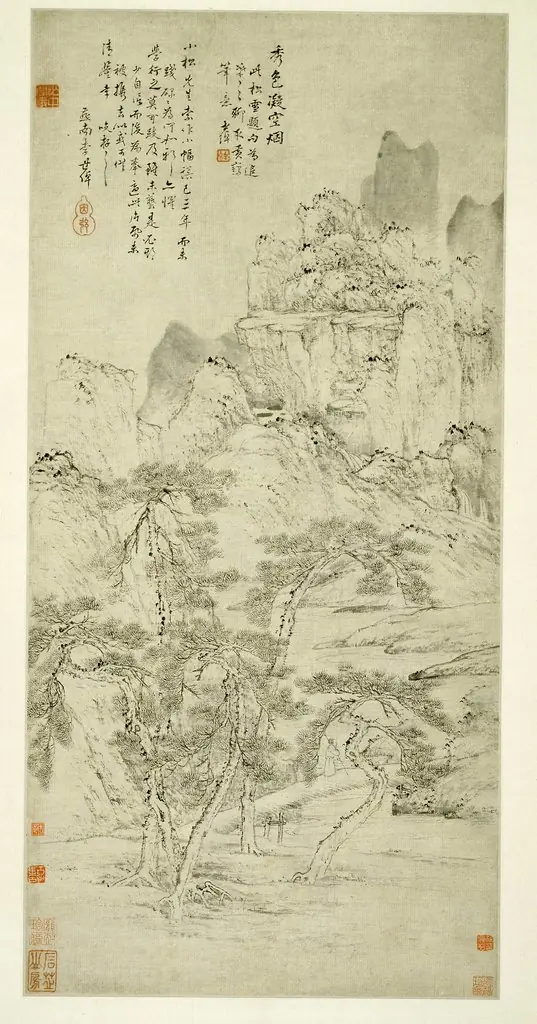
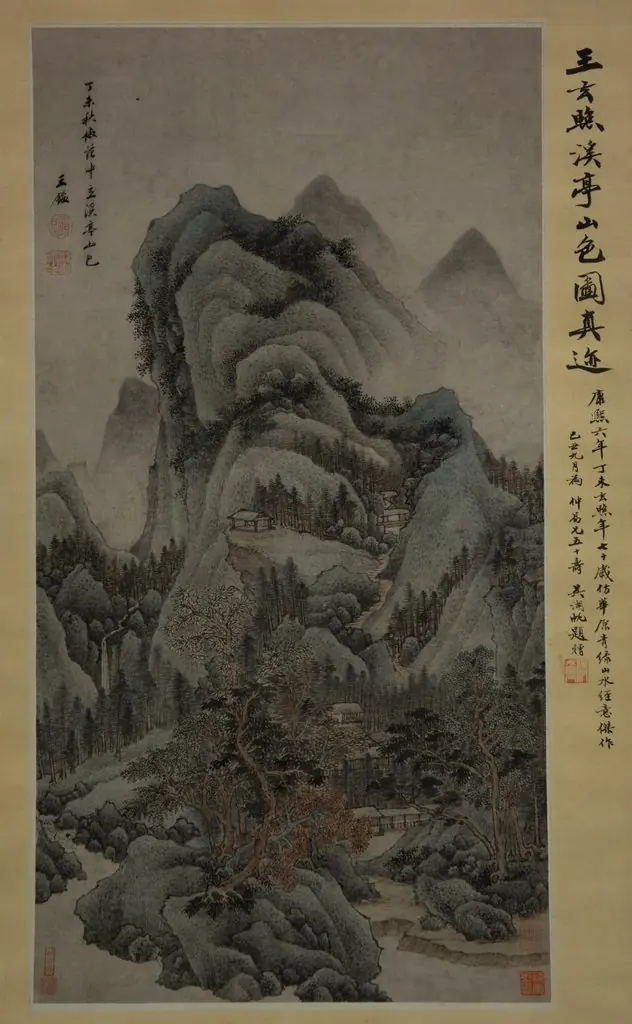 Mountain Scenery with Streams and Pavilions in the Style of Fan Kuan
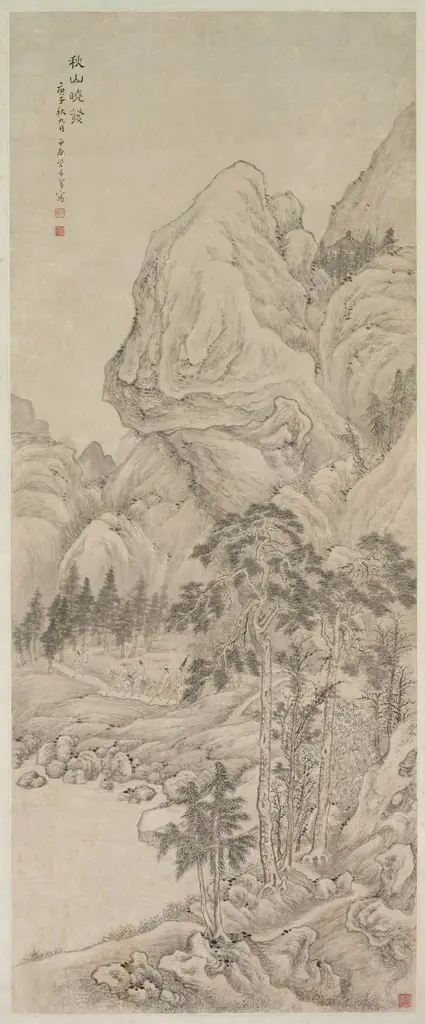
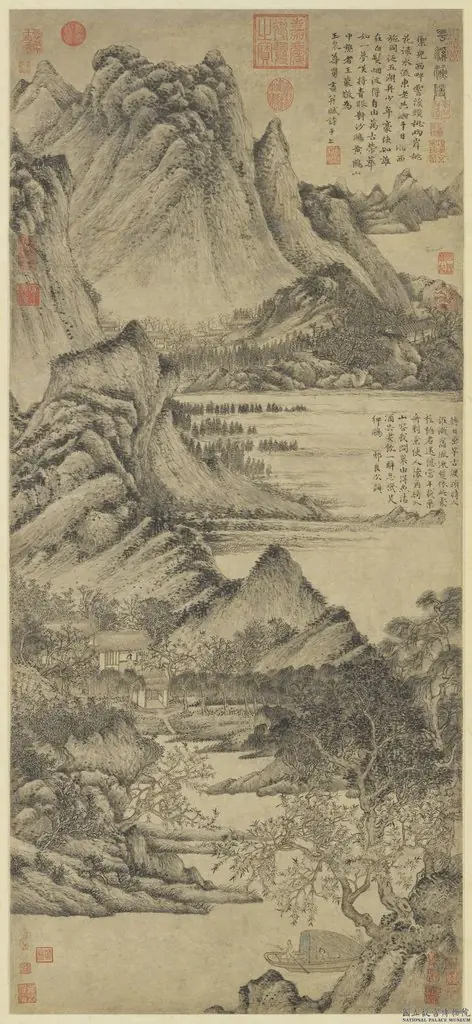
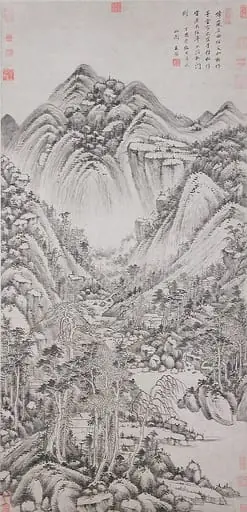 清 王鑑 倣黃公望秋山圖 軸 紙本|Landscape in the style of Huang Gongwang
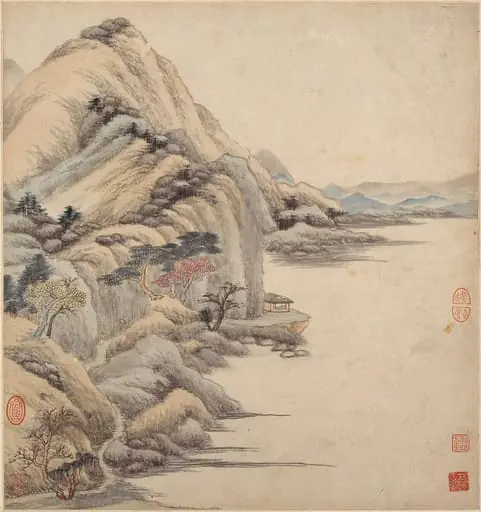 Untitled
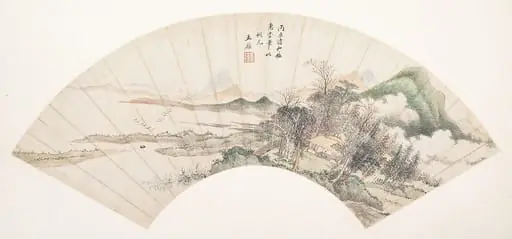 清 佚名 倣王鑑 倣惠崇山水圖 扇|Landscape in the Style of Huichong
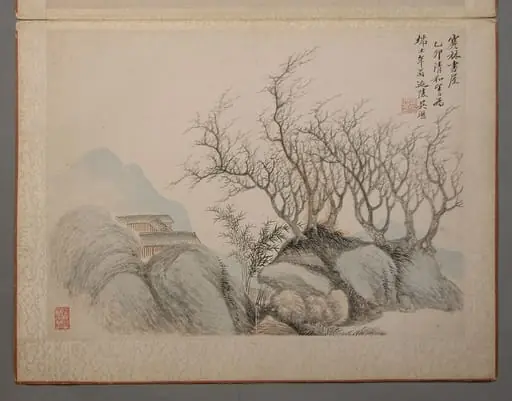 清 清初八大家山水冊|Landscapes Painted for Wang Kui