Artwork
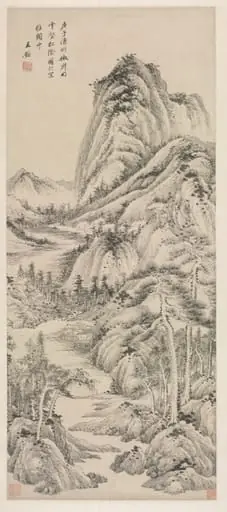
清 王鑑 倣黃公望秋山圖 軸 紙本|Landscape in the style of Huang Gongwang
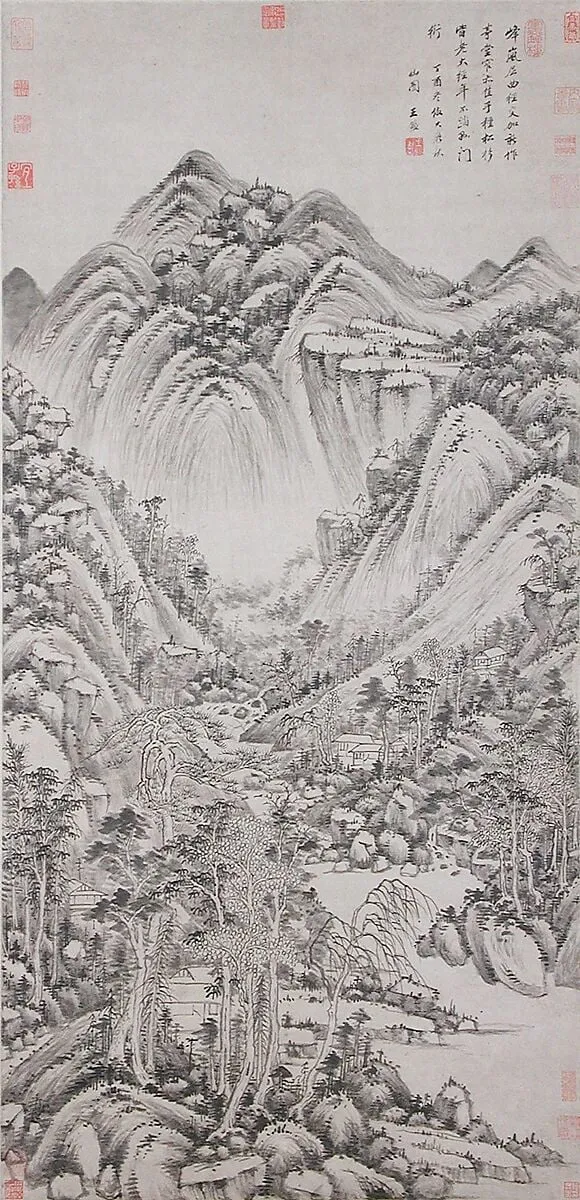
清 王鑑 倣黃公望秋山圖 軸 紙本|Landscape in the style of Huang Gongwang is an ink painting by the Baroque artist Wang Jian. It dates from 1657 and is held in the collection of the Metropolitan Museum of Art.
About this work
A tall scroll in ink and pale color: misty mountains, tiny trees, and a winding river. Wang Jian painted it in 1657, copying an older master's style as a mark of respect. The brushwork looks simple, yet each line carries the weight of centuries of Chinese landscape tradition, ink turned to air and rock.
Subject & Meaning
It follows the compositional and stylistic conventions of the Yuan master Huang Gongwang, as indicated by its title “Landscape in the style of Huang Gongwang.
The hanging scroll, painted in 1657 by Wang Jian, portrays an autumnal mountain landscape rendered in ink and color on paper. It follows the compositional and stylistic conventions of the Yuan master Huang Gongwang, as indicated by its title “Landscape in the style of Huang Gongwang.” The work thus exemplifies the Chinese literati tradition of venerating earlier masters while exploring themes of natural grandeur and contemplative retreat.
By depicting a solitary mountain scene, the painting embodies the symbolic association of mountains with permanence, scholarly reflection, and the moral ideal of harmonious coexistence with nature, reflecting the artistic and cultural values of mid‑Ming court patronage.
Technique & Style
The work is executed as a hanging scroll using ink and polychrome pigments on paper, a medium recorded for the 1657 piece by Wang Jian. Its support consists of a traditional scroll format, typical of Chinese landscape painting, and the composition follows the stylistic model of Huang Gongwang, rendering a mist‑shrouded mountain scene that exemplifies the genre. The painting was created in China and is now part of the Metropolitan Museum of Art collection.
The work depicts a conventional mountain landscape, aligning with its catalogued genre and depicting attributes associated with the style of the Yuan master.
History & Provenance
The hanging scroll titled 'Landscape in the style of Huang Gongwang' was created by the artist Wang Jian in 1657. Executed in ink and color on paper, this work depicts a mountainous landscape scene originating from China. The painting is currently held within the collection of the Metropolitan Museum of Art.
While the specific commission details or the original patron are not recorded in the available documentation, the work is firmly dated to the mid-seventeenth century, reflecting Wang Jian's engagement with the artistic legacy of Huang Gongwang during that period.
The hanging scroll by Wang Jian, dated 1657, is part of the collection of the Metropolitan Museum of Art in New York and is catalogued within its Chinese painting holdings. The work is recorded as a landscape painting in ink and color on paper, reflecting the style of Huang Gongwang. According to the available documentation, no specific accession number or exhibition history is documented in the sources.
Legacy
The work has come to be recognized as an important example of 17th‑century Chinese landscape painting, noted for its faithful emulation of Huang Gongwang’s compositional principles. Its inclusion in the Metropolitan Museum of Art’s collection has positioned it as a reference point for scholars studying the transmission of Yuan‑style aesthetics into the Qing period. The hanging scroll, executed in ink and light color on paper in 1657, exemplifies the genre’s technical refinement and thematic focus on mountainous terrain.
As a documented artifact of Wang Jian’s oeuvre, it contributes to the historical record of artists who deliberately engaged with earlier masters, shaping contemporary understandings of stylistic continuity and artistic homage.
Overview
Created in 1657, 'Landscape in the style of Huang Gongwang' is a hanging scroll executed in ink and pale color on paper by the Qing dynasty master Wang Jian. The work depicts a vertical composition of mist-shrouded mountains, sparse vegetation, and a meandering river, adhering to the classical literati tradition. Wang Jian, a leading figure of the Four Wangs, painted this piece as a deliberate homage to the Yuan dynasty master Huang Gongwang.
Rather than seeking originality through novel subject matter, the artist engaged in 'fǎ' (imitation), a scholarly practice intended to internalize and transmit the brushwork and spirit of past masters. The composition features layered peaks and rhythmic, textured strokes that emulate Huang Gongwang's distinctive dry-brush technique and atmospheric depth. This work exemplifies Wang Jian's mature style, where technical precision serves a deeper engagement with art history.
By replicating the aesthetic principles of the Yuan masters, Wang Jian reinforced the orthodox lineage of Chinese painting, positioning his own practice within a continuum of reverence for antiquity. The scroll stands as a testament to the Qing dynasty's scholarly approach to landscape, where the act of copying was a form of creative dialogue with the past.
Artist & collection


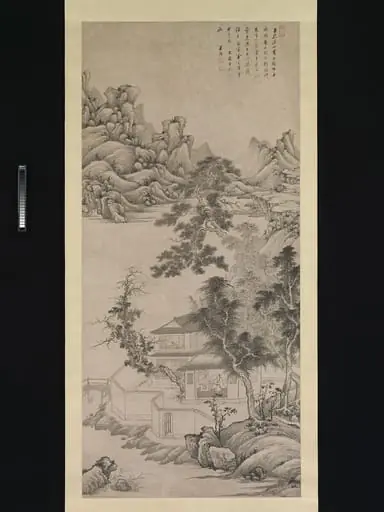 清 王鑑 倣巨然《溪山高士圖》 軸|Lofty Scholar among Streams and Mountains, in the manner of Juran
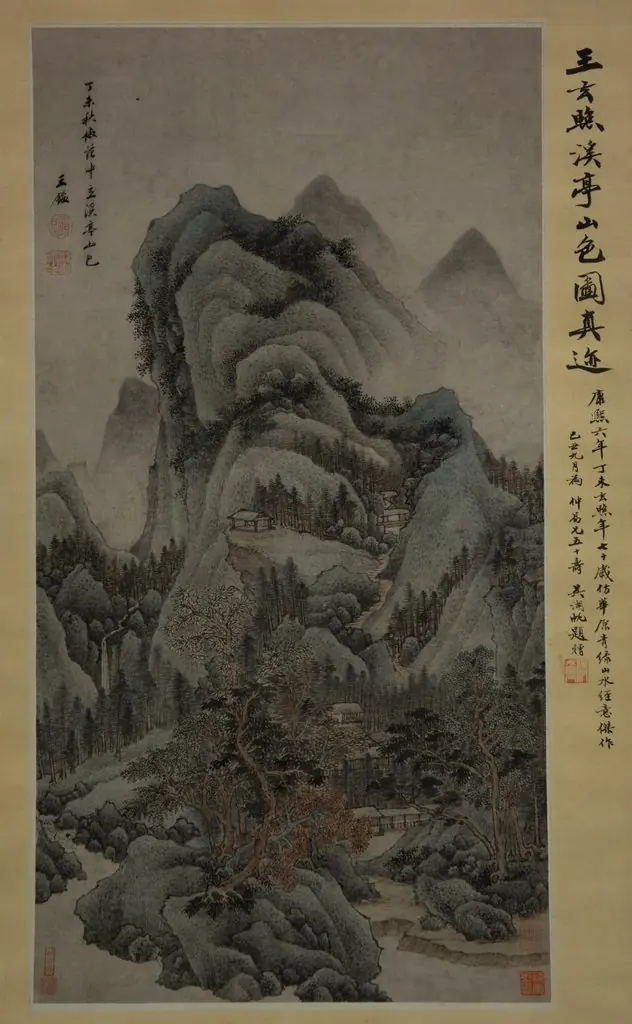 Mountain Scenery with Streams and Pavilions in the Style of Fan Kuan
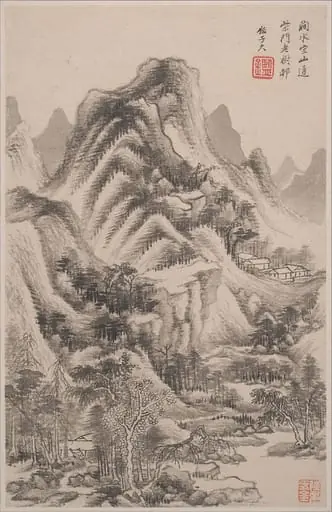 清 王鑑 仿古山水圖 冊 紙本|Landscapes in the styles of old masters
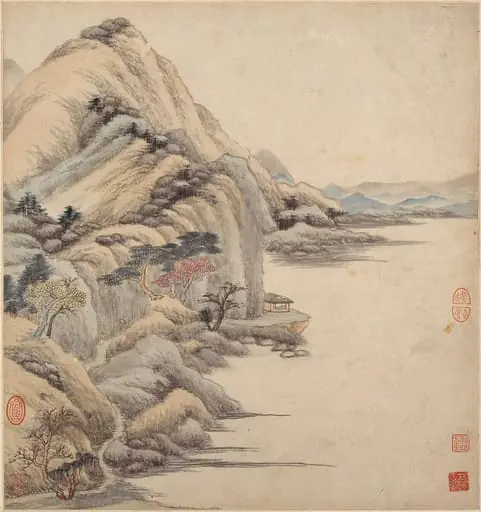 Untitled
 清 佚名 倣王鑑 倣惠崇山水圖 扇|Landscape in the Style of Huichong
 清 清初八大家山水冊|Landscapes Painted for Wang Kui