Artwork
清 石濤 (朱若極) 山水圖 扇頁|Landscape
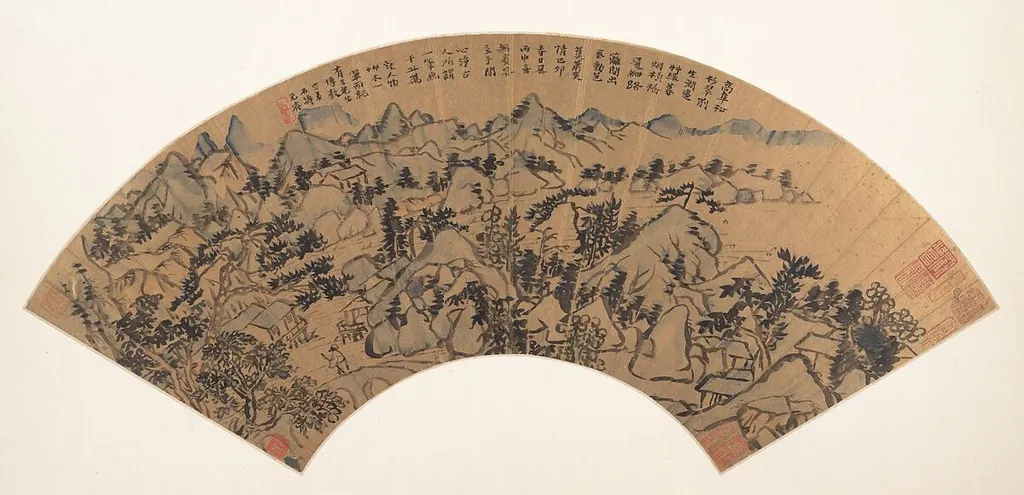
清 石濤 (朱若極) 山水圖 扇頁|Landscape is an ink painting by the Baroque artist Shitao. It dates from 1699 and is held in the collection of the Metropolitan Museum of Art.
- Accession no.
- 1989.363.153
- Credit line
- Bequest of John M. Crawford Jr., 1988
About this work
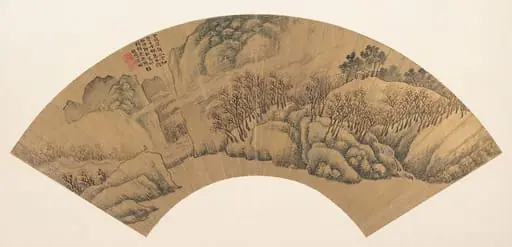
You see a small, gold-flecked fan with ink mountains rising from mist. A few strokes suggest trees, a bridge, and a tiny figure walking.
Shitao painted this in 1699, when most artists copied old styles. He didn’t. He used quick, uneven lines to make the scene feel alive, not perfect. The gold paper wasn’t common, it makes the ink glow like sunlight on rock.
If you like this, look up mountains.
Subject & Meaning
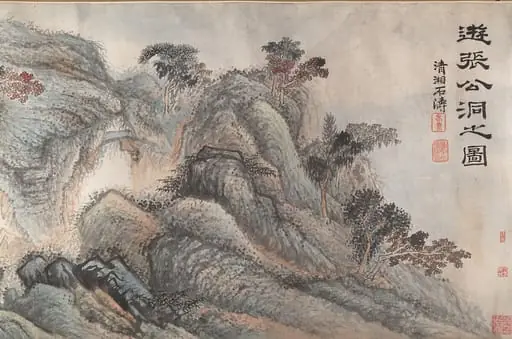
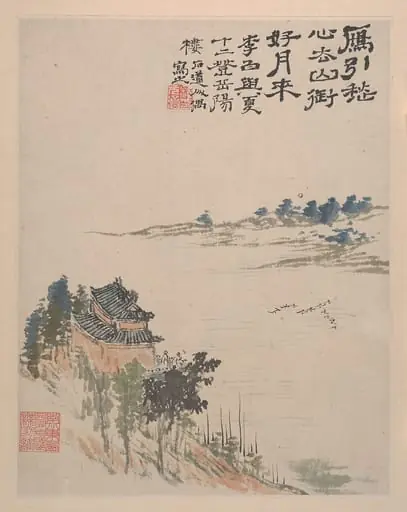
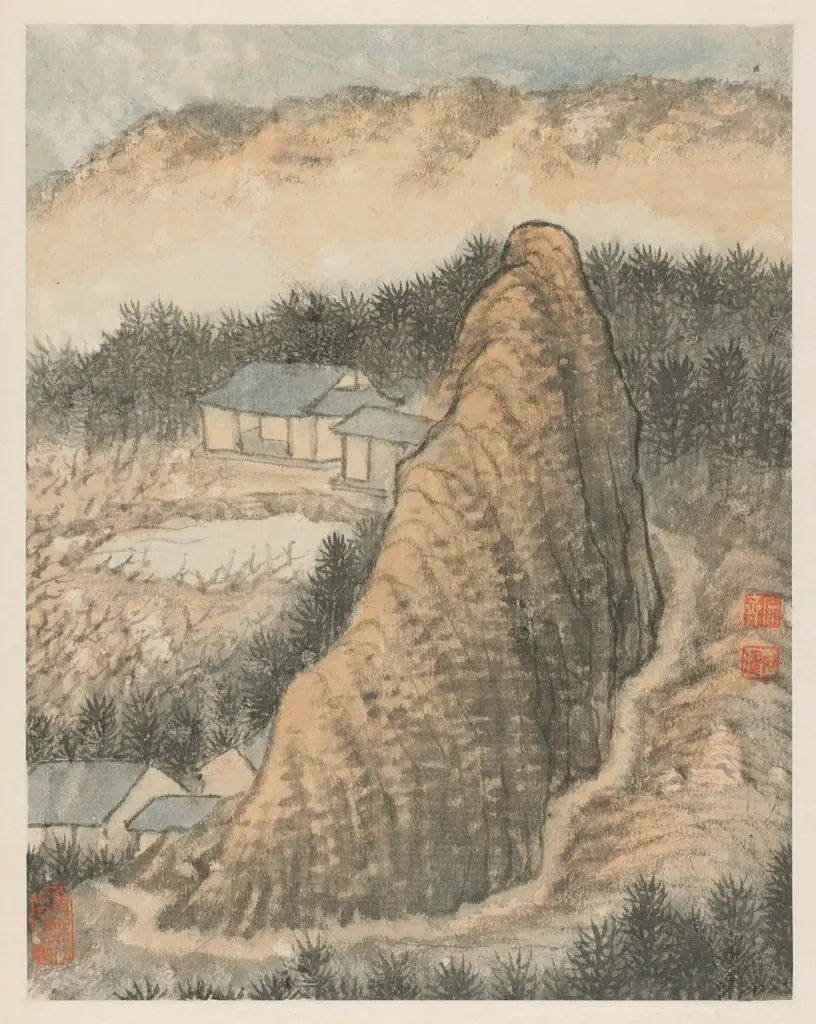
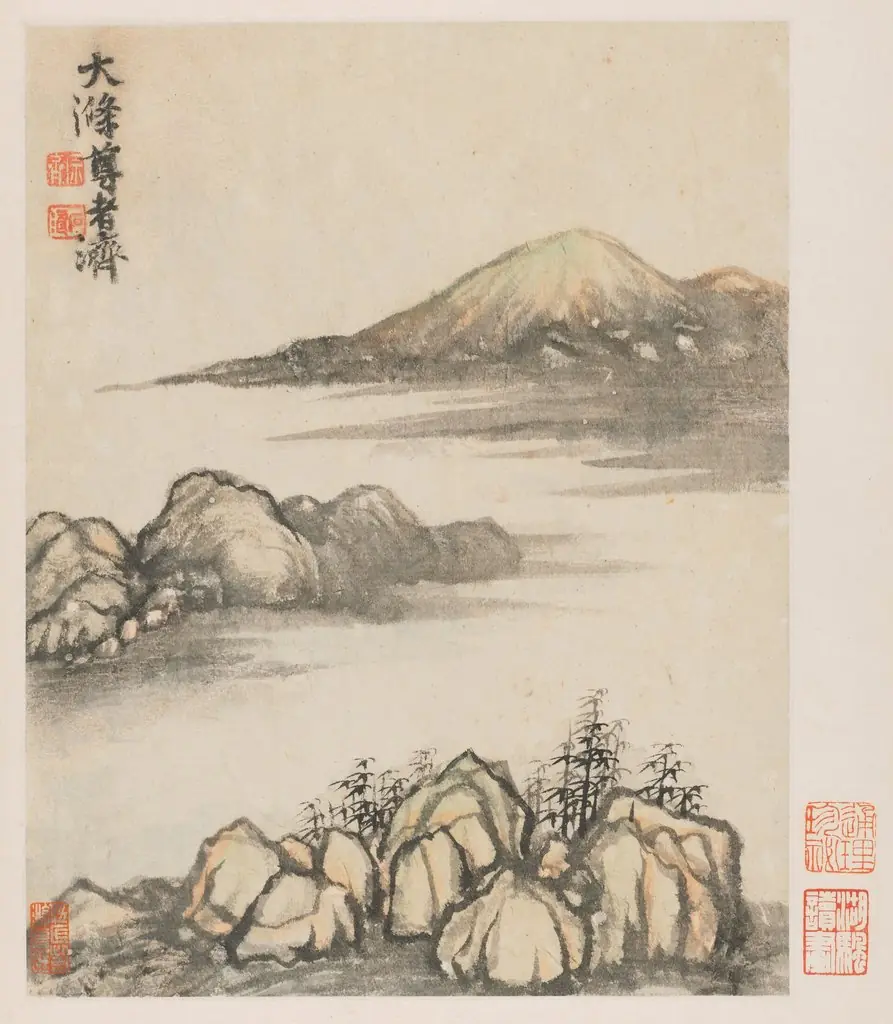
The work represents the artist's engagement with natural scenery, presenting the mountain as the core element of the scene without additional narrative figures.
Created in 1699, this work by Shitao (Zhu Ruoji) is a landscape painting that depicts a mountain. Executed in ink and color on gold-flecked paper, the composition focuses on the natural form of the mountain as its primary subject. As a genre painting classified within the landscape tradition, the piece centers on the representation of this geological feature.
The specific iconography is defined by the depiction of the mountain, serving as the singular visual anchor within the 17.5 by 44.5 cm format. The work represents the artist's engagement with natural scenery, presenting the mountain as the core element of the scene without additional narrative figures.
Technique & Style
The work is a folded fan remounted as an album leaf, executed in ink and color on gold-flecked paper and dated 1699. It displays Shitao's characteristic moist brushwork, with layered ink washes modulating from deep blacks to diluted greys to articulate recession in the crags and mist. Textured strokes define the rocky forms while diluted washes model spatial depth.
The narrow, curved fan format constrains spatial illusion, compressing the layered peaks into a rhythmic frieze along the fan's arc.
History & Provenance
The folding-fan landscape by Shitao (Zhu Ruoji) is recorded in the collection of the Metropolitan Museum of Art, where it is listed among the museum's holdings. Its precise accession number is not provided in the available documentation, and no exhibition record is cited in the sources consulted. The work is described as a landscape painting created in China in 1699, consistent with its genre and medium.
Overview
Created in 1699, this landscape fan leaf by Shitao (Zhu Ruoji) exemplifies the artist's rejection of rigid imitation in favor of expressive individualism during the early Qing dynasty. Executed in ink and color on gold-flecked paper, the composition features a compact arrangement where mountains rise dynamically from a misty void. Shitao employs rapid, uneven brushstrokes to define the rocky forms and vegetation, creating a sense of organic movement rather than static perfection.
The scene includes minimal yet distinct details: a few trees, a small bridge, and a solitary figure traversing the path, which anchors the vastness of the natural setting. This work reflects Shitao's theoretical stance that painting should convey the artist's unique perception of nature rather than replicate past masters. The use of gold-flecked paper adds a luminous quality that interacts with the ink washes, enhancing the atmospheric depth.
As a product of the 1690s, a period of significant artistic experimentation for the former prince-monk, this piece demonstrates his mature style where calligraphic freedom merges with landscape representation. It stands as a testament to his influence on the individualist school of the seventeenth century, prioritizing emotional resonance and spontaneous execution over formal convention.
Context
Created at the close of the 17th century, this painting exemplifies Shitao's independent artistic vision. During an era when many painters adhered strictly to the conventions and styles of past masters, Shitao consciously forged his own path. His approach prioritized personal expression and a direct engagement with the subject, marking a significant departure from the more imitative practices common among his contemporaries.
Artist & collection


 明 吳彬 翠壁丹楓 扇|Azure Cliff with Red Maples
 明 鄒之麟 山水圖 扇面|Landscape
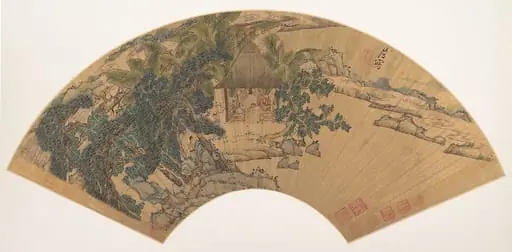 明 陳洪綬 山水圖 扇|Landscape
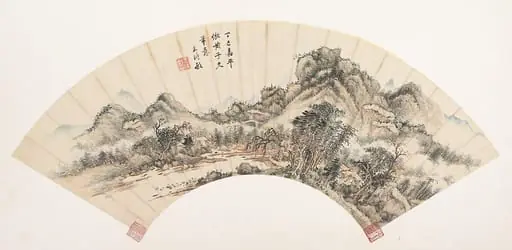 清 王時敏 倣黃子久筆意山水 扇頁|Landscape after Huang Gongwang
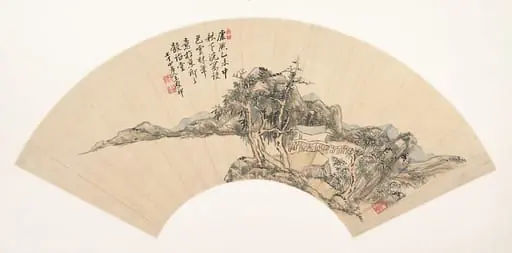 清 倣王原祁 倪雲林筆意山水 扇面|Landscape in the Style of Ni Zan
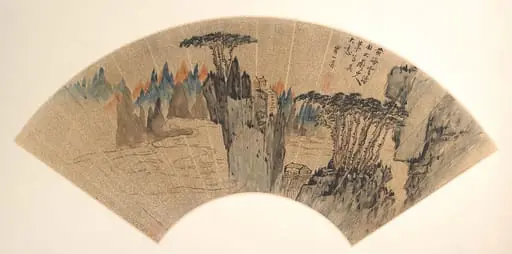 清 倣 梅清 黃海雲濤圖 扇頁|Peaks of Mount Huang
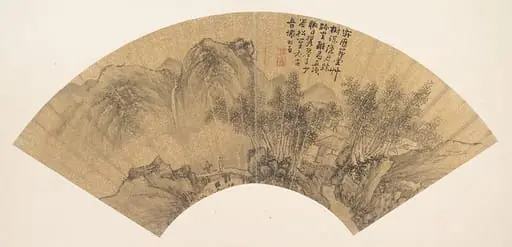 明 謝時臣 隱居圖 扇面|Landscape with Figure
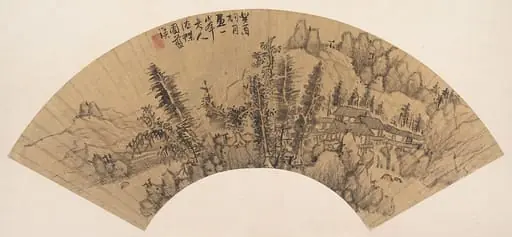 明/清 佚名 倣藍瑛 倣黃公望山水 扇|Landscape in the Style of Huang Gongwang