Artwork
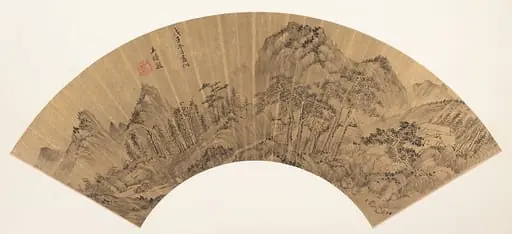
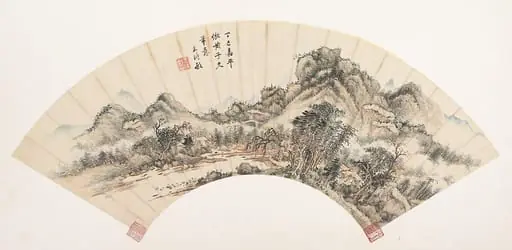
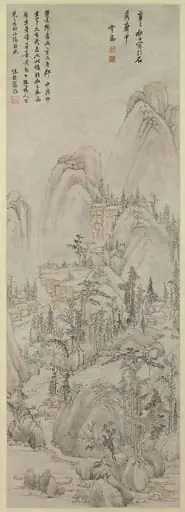
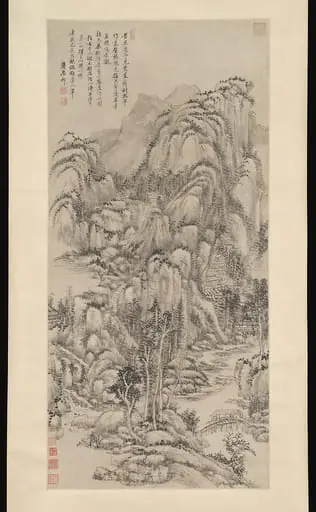
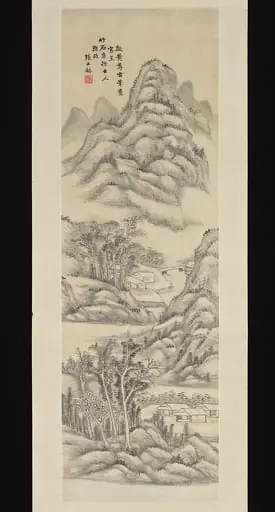
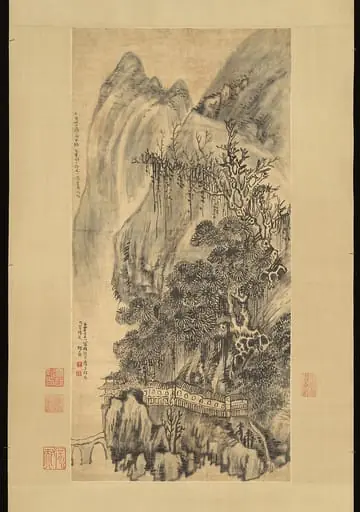
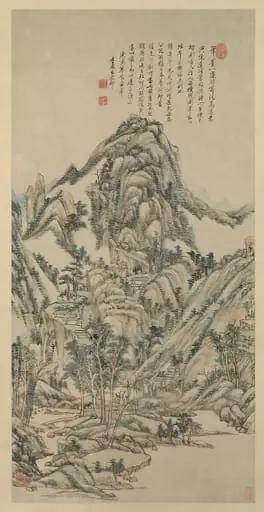
清 王時敏 仿黃公望山水圖 軸 絹本|Landscape in the style of Huang Gongwang
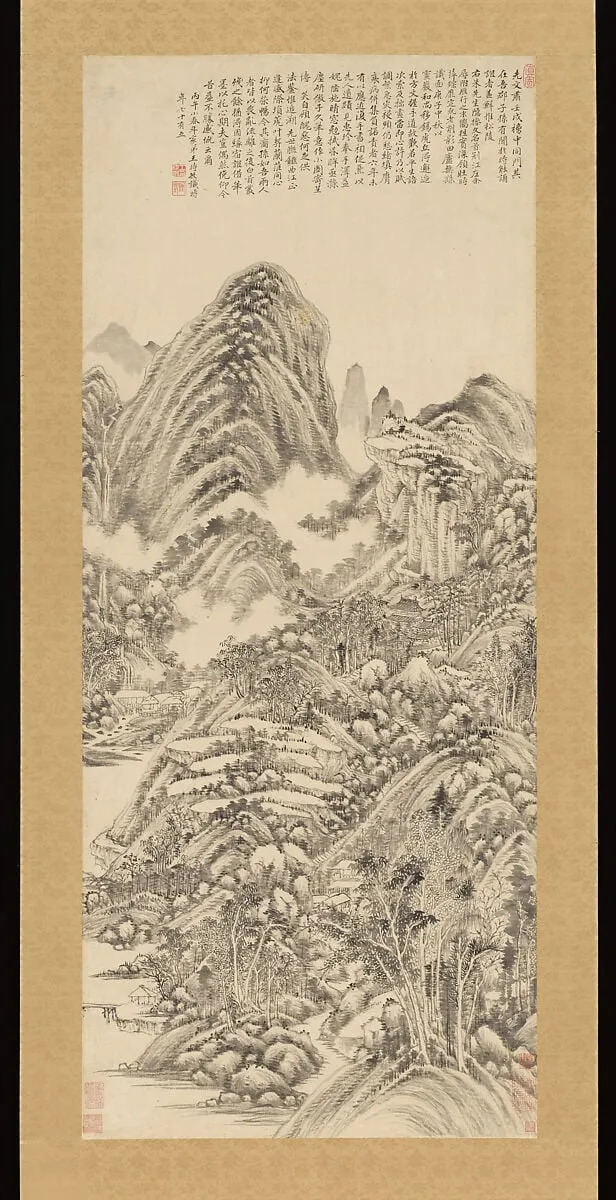
清 王時敏 仿黃公望山水圖 軸 絹本|Landscape in the style of Huang Gongwang is an ink painting by the Baroque artist Wang Shimin. It dates from 1666 and is held in the collection of the Metropolitan Museum of Art.
- Accession no.
- 1980.426.2
- Credit line
- Ex coll.: C. C. Wang Family, Gift of Douglas Dillon, 1980
About this work
Ink on paper: a tall scroll of misty mountains, soft trees, and a tiny temple tucked into the folds. Wang Shimin painted it in 1666 after the 1300s master Huang Gongwang. Copying like this was practice, not theft, and the brushstrokes stay light, almost like breath on cold glass.
Subject & Meaning
Created in 1666 by Wang Shimin, this hanging scroll depicts a traditional Chinese landscape dominated by mountainous terrain.
Created in 1666 by Wang Shimin, this hanging scroll depicts a traditional Chinese landscape dominated by mountainous terrain. As a work explicitly categorized within the landscape genre, the subject matter focuses on the natural environment rather than narrative figures or specific historical events. The title indicates the piece is executed in the style of Huang Gongwang, a renowned Yuan dynasty master, suggesting the imagery serves as an artistic homage or reinterpretation of Huang's established visual vocabulary.
Consequently, the work represents a scholarly engagement with past masters, where the depiction of mountains and nature functions as a vehicle for stylistic exploration and reverence for earlier artistic traditions rather than a literal topographical record.
Technique & Style
The work is a hanging scroll executed in ink on silk, a format typical of Ming-Qing literati practice. Dated 1666 and belonging to the landscape genre, it follows the compositional conventions associated with the Yuan master Huang Gongwang, whose style Wang Shimin reinterprets in the controlled manner characteristic of seventeenth-century Chinese landscape painting. The available sources do not detail the specific handling, brushwork, or current physical condition of the painting.
History & Provenance
The hanging scroll by Wang Shimin, dated 1666, is listed in the collection of the Metropolitan Museum of Art in New York; the entry records the work as part of the museum's holdings but does not provide a specific accession number. The sources do not mention any exhibition history for this piece. Its classification as a landscape painting and its creation in China are noted, confirming its genre and provenance. The work remains in the museum's collection.
Overview
Wang Shimin's Landscape in the style of Huang Gongwang, painted in 1666, is an ink on paper hanging scroll. This work exemplifies the artist's deep engagement with historical painting traditions. It presents a serene vista of misty mountains and soft foliage, subtly incorporating a small temple within the natural folds of the terrain. The painting reflects a scholarly approach to art, characteristic of its period.
Context
Wang Shimin, a painter from Jiangsu province, created this work during the tumultuous transition from the late Ming to the early Qing dynasty. He hailed from an influential scholarly family with strong artistic ties; his grandfather held a prime ministerial role, and his father received training from the prominent art theorist Tung Ch'i-ch'ang. This background firmly placed Wang within the literati tradition, valuing classical learning and the study of ancient masters.
Artist & collection

Artist
Wáng Shímǐn (simplified Chinese: 王时敏; traditional Chinese: 王時敏; Wade–Giles: Wang Shih-min; c.