Artwork
Album of Fifty-four Sketches
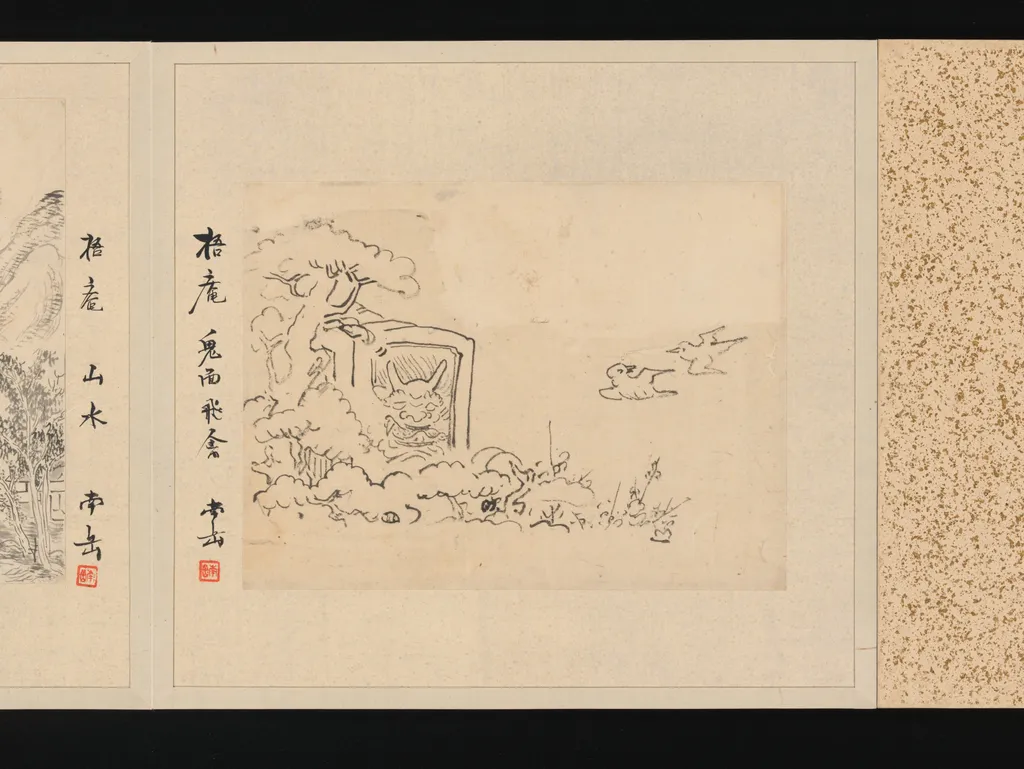
Album of Fifty-four Sketches is an unspecified painting by the Joseon dynasty painting artist Watanabe Kazan. It is held in the collection of the Metropolitan Museum of Art.
About this work
Subject & Meaning
Created in 1849 by Watanabe Kazan, the Album of Fifty-four Sketches presents a diverse array of subjects drawn from both the natural world and human experience.
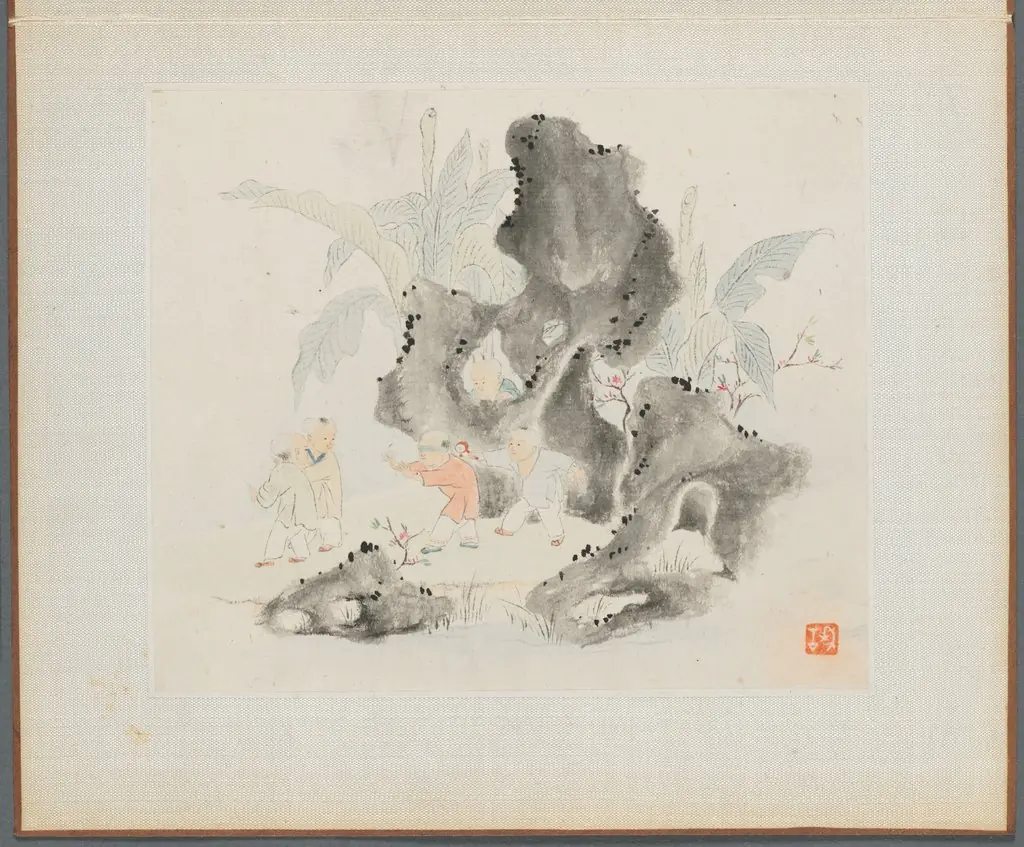
Created in 1849 by Watanabe Kazan, the Album of Fifty-four Sketches presents a diverse array of subjects drawn from both the natural world and human experience. The work's iconography encompasses flora and fauna, specifically depicting birds and flowers alongside horses. Beyond these natural elements, the album includes figural representations of men and women.
This combination suggests a broad observational scope characteristic of the artist's sketchbook practice, capturing a variety of living forms and activities within a single volume. The inclusion of both animals and human figures indicates a thematic interest in the coexistence of different elements of life, reflecting a comprehensive study of the visible world during the late Edo period in Japan.
History & Provenance
The Album of Fifty‑four Sketches is a painting by Watanabe Kazan dated 1849. It was produced in Japan as part of a personal sketch album. The work has been in the collection of the Metropolitan Museum of Art since its acquisition, and remains on display there.
No documentation of a specific commission survives, and the album is classified simply as a painting from that year.
The Album of Fifty-four Sketches, created by Watanabe Kazan in 1849, is held in the collection of the Metropolitan Museum of Art. The work, which depicts subjects including birds, flowers, horses, men, and women, was made in Japan. While the sources confirm the museum's possession and the work's creation date, they do not provide a specific inventory or accession number for the album. Furthermore, the available records do not document any specific exhibition history for this piece.
Context
The Album of Fifty‑four Sketches, produced by Watanabe Kazan in 1849, comprises a series of small paintings that document a range of quotidian and natural motifs, including birds, flowers, a horse, and figures of men and women. As a painting within the broader corpus of Edo‑period Japanese art, the album exemplifies the artist’s practice of combining meticulous observation with decorative composition. Its inclusion in the Metropolitan Museum of Art’s collection has enabled scholarly examination of how such sketchbooks functioned as both personal study tools and cultural records, influencing later approaches to visual documentation in Japan. Contemporary assessments highlight the work’s significance as a representative example of 19th‑century Japanese artistic documentation.
Overview
Watanabe Kazan's Album of Fifty-four Sketches, created in 1849, is a collection of ink drawings that exemplify the artist's spontaneous approach to depicting various subjects. This particular work, held at The Metropolitan Museum of Art, offers insight into Kazan's late career artistic practice. It presents a concise visual narrative through its minimalist composition and fluid execution, characteristic of a working artist's personal collection of studies.
Technique & Style
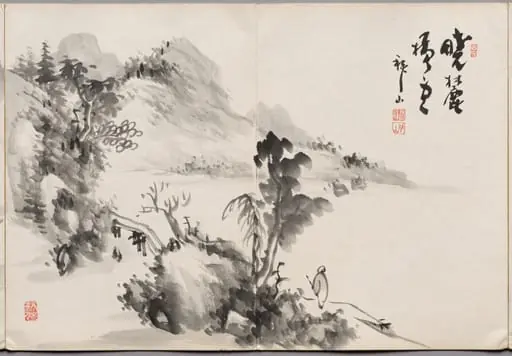
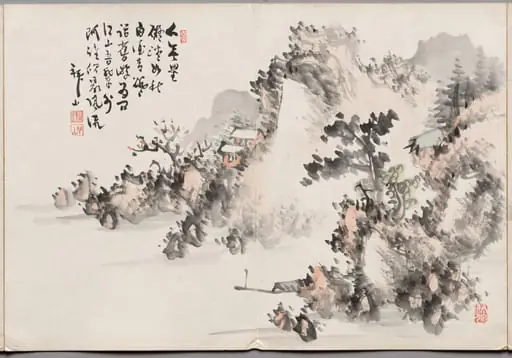
The artwork demonstrates a spontaneous and unconstrained drawing technique. Kazan employed quick, loose ink lines to define forms, leaving significant areas of the paper unworked, which contributes to its informal, sketchbook-like quality. The palette is largely monochromatic, relying on shades of gray, brown, and white, punctuated only by the occasional red seal. This approach emphasizes the artist's direct engagement with his subjects through rapid execution.
Own this work as a print
Artist & collection


- Painting Six from Album of Paintings by Haizan
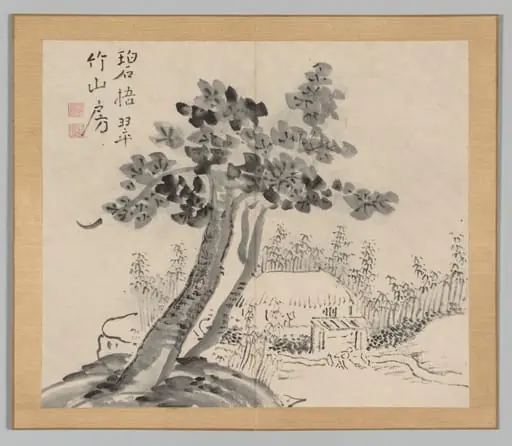 Reverberations of Taiga, Volume 2 (leaf 32)
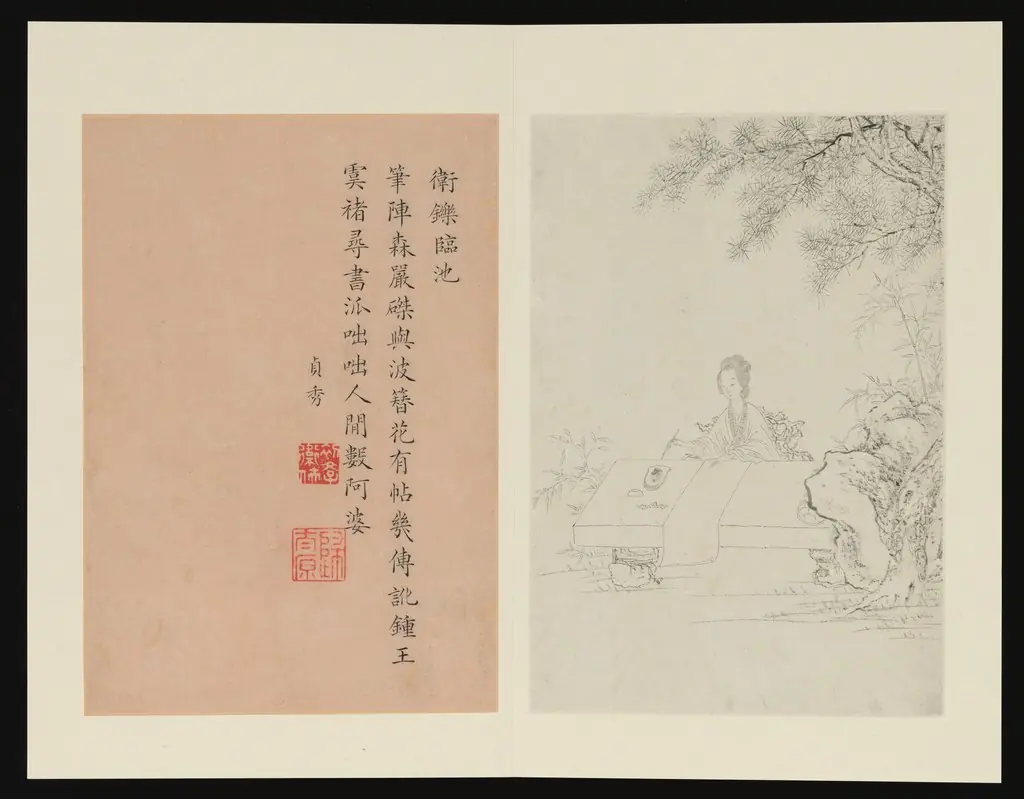 Famous Women
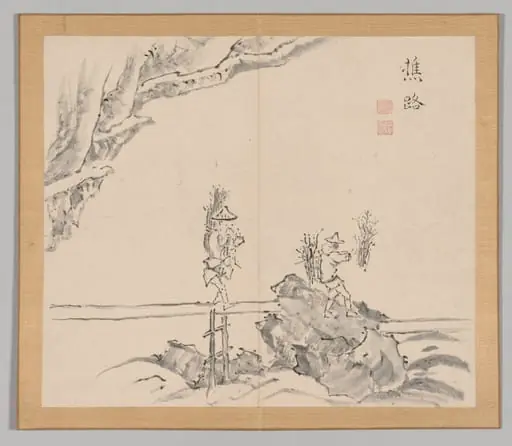 Reverberations of Taiga, Volume 1 (leaf 32)
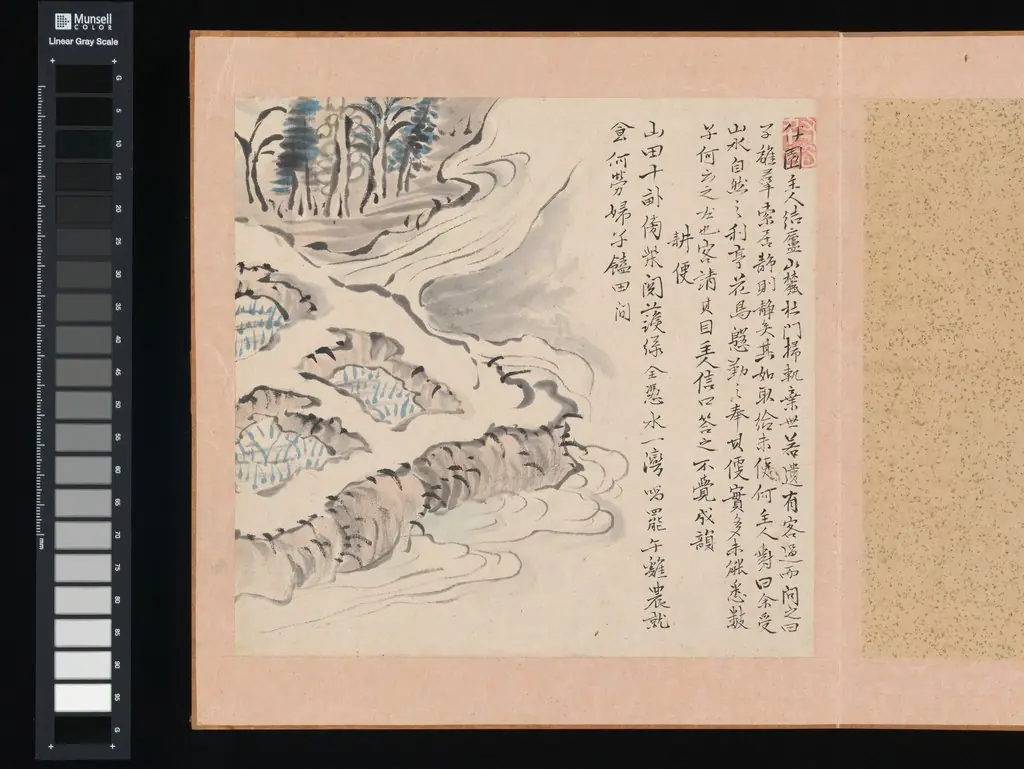 "Convenience in Drawing Water" from Jūben (Ten Conveniences); "Pleasure of Dawn" from Jūgi (Ten Pleasures)
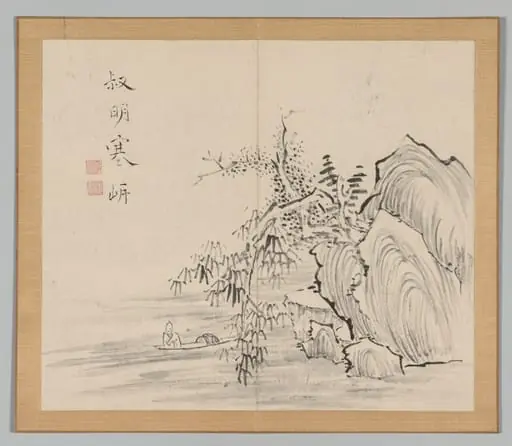 Reverberations of Taiga, Volume 2 (leaf 10)
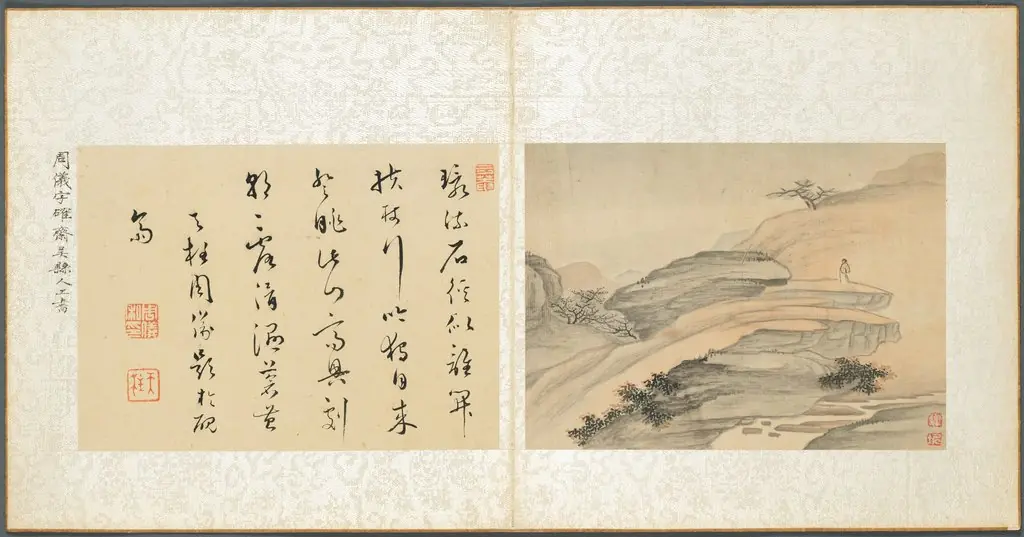 Album of Miscellaneous Subjects, Leaf 5
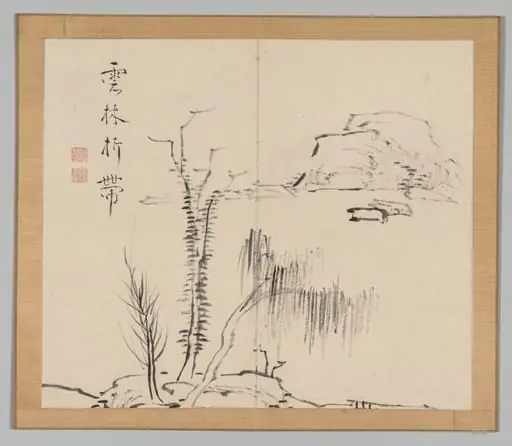 Reverberations of Taiga, Volume 2 (leaf 16)
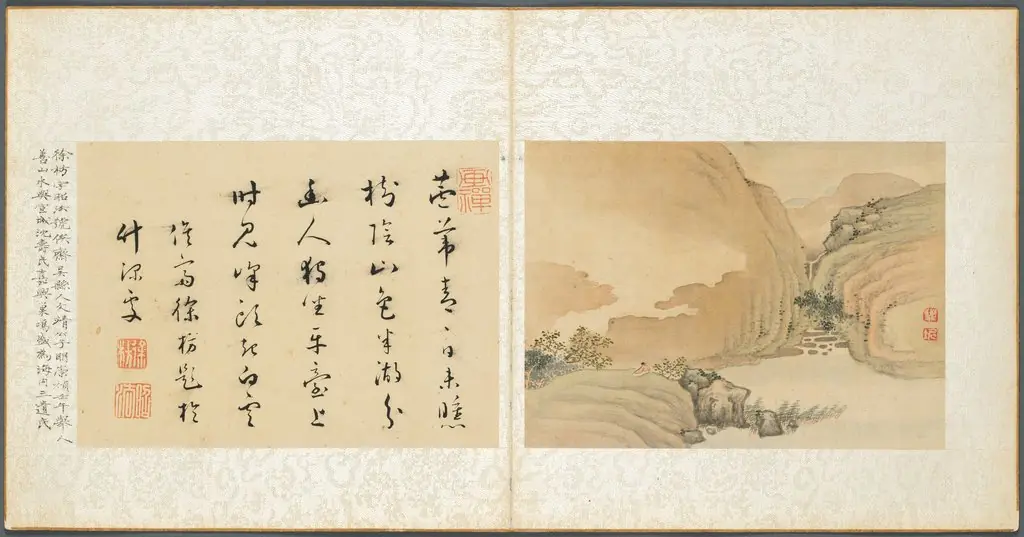 Album of Miscellaneous Subjects, Leaf 3
 Painting Three from Album of Paintings by Haizan
 Album of Landscape Paintings Illustrating Old Poems: Children Playing Blindman's Buff in a Garden
 Painting Eight from Album of Paintings by Haizan