Artwork
Portrait of Ōzora Buzaemon
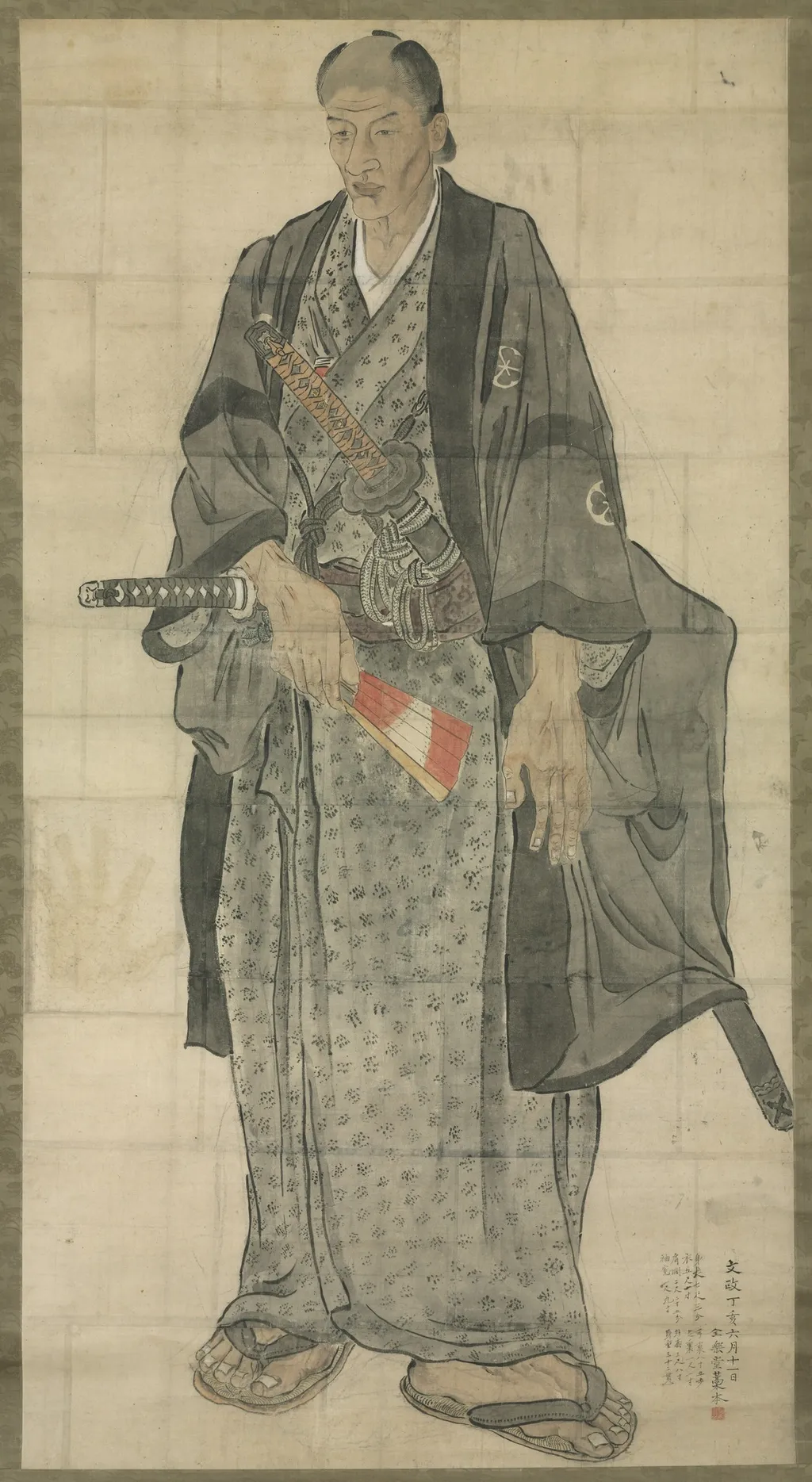
Portrait of Ōzora Buzaemon is an unspecified painting by the Joseon dynasty painting artist Watanabe Kazan. It dates from 1827 and is held in the collection of the Cleveland Museum of Art.
About this work
History & Provenance
The work was produced in Japan and later entered the collection of the Cleveland Museum of Art, where it is held under accession number 1980.
Portrait of Ōzora Buzaemon is a painting by the Japanese artist Watanabe Kazan, completed in 1827. The work was produced in Japan and later entered the collection of the Cleveland Museum of Art, where it is held under accession number 1980.177. It is classified as a portrait, reflecting the sitter's status in early nineteenth-century Japanese society.
The painting's provenance traces directly from its production to acquisition by the museum, with no recorded intermediate owners. The available sources do not contain specific records regarding the artwork's exhibition history or earlier provenance details.
Overview
Watanabe Kazan created the Portrait of Ōzora Buzaemon in 1827. This painting captures the likeness of an individual, presenting him in traditional attire. It is currently part of the collection at The Cleveland Museum of Art, where it offers insight into Japanese portraiture of the early 19th century. The artwork emphasizes the sitter's presence through its direct composition.
Subject & Meaning
The painting depicts a man, Ōzora Buzaemon, clad in traditional Japanese garments. He wears a dark outer robe over a lighter layer, with a distinctive red and white fabric tucked into his belt. His right hand firmly grasps a sword, while his left hand rests upon a scroll or document, suggesting aspects of his identity or profession. The unadorned background directs the viewer's attention entirely to the figure.
Technique & Style
Kazan employed a direct artistic approach, utilizing strong, unembellished colors and precise lines to define the sitter's form and attire. This clarity highlights the details of the clothing and accessories. Notable features include small white circular motifs on the robe, which may function as heraldic symbols or badges, adding a layer of specific identification to the portrait.
Artist & collection


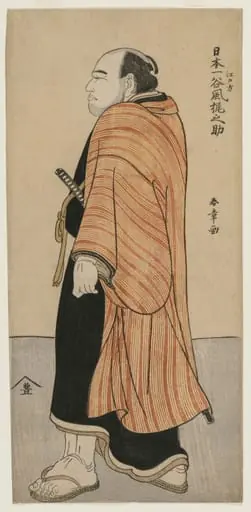 Tanikaze Kajinosuke
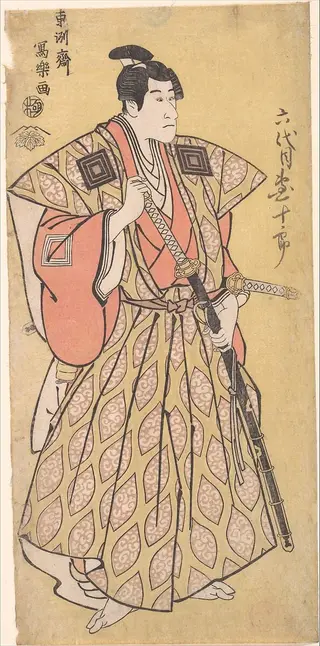 Untitled
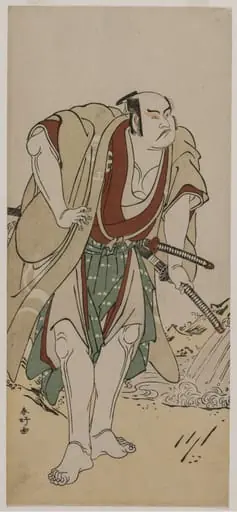 Otani Hiroji III as a Samurai Standing Beside a Stream
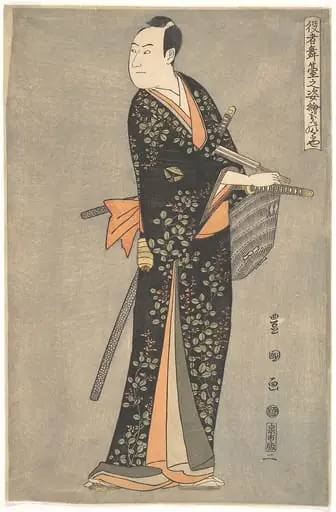 Untitled
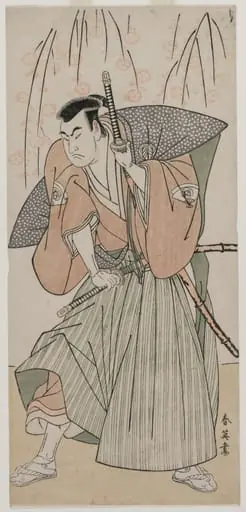 Onoe Matsusuke I as a Samurai Standing Beneath a Cherry Tree
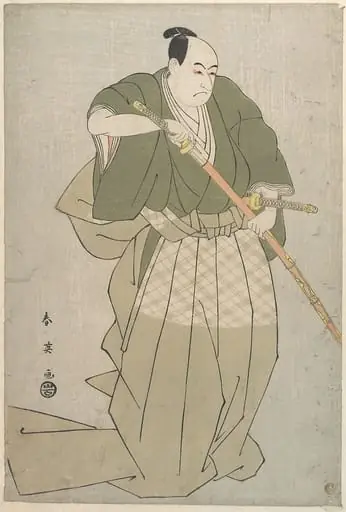 初代市川 男女蔵の桃井若狭之助|The Actor Ichikawa Omezō I as the Young Daimyo Momonoi Wakasanosuke
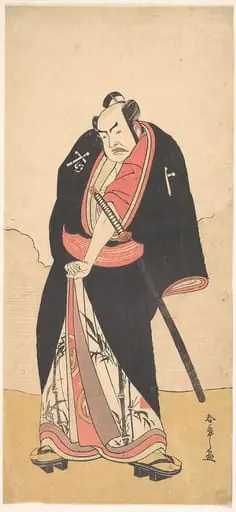 二代目中村助五郎|Kabuki Actor Nakamura Sukegorō II as Kaminari Shōkurō
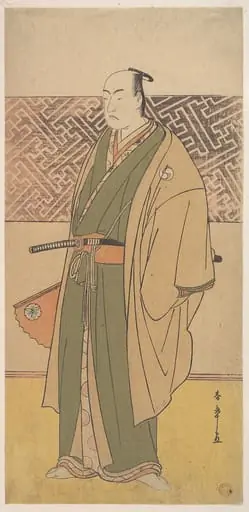 Untitled
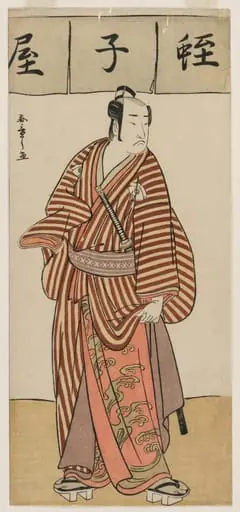 Onoe Matsusuke I as Ebisu, from The Stand-In Seven Gods of Good Fortune
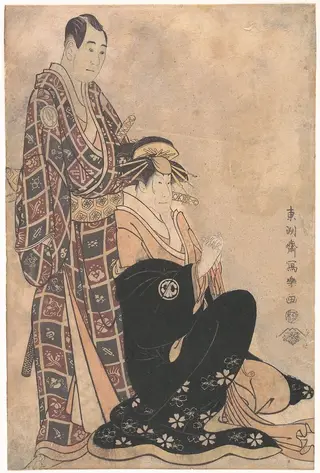 Untitled
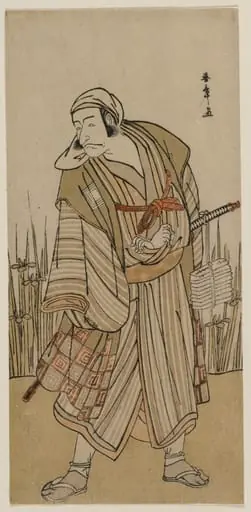 Ichikawa Danjuro V as a Traveller Beside a Clump of Iris
- Portrait of Ōzora Buzaemon