Artwork
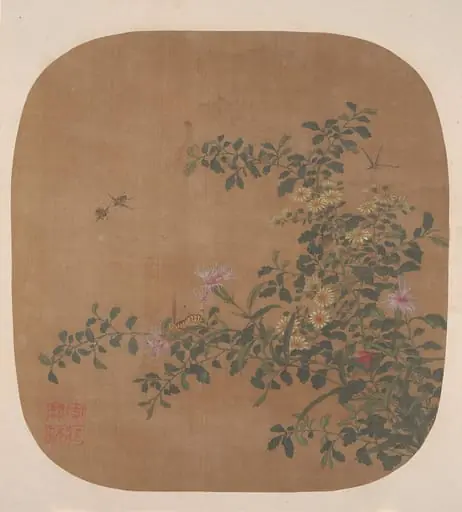
Crape Myrtle Sketched from Life
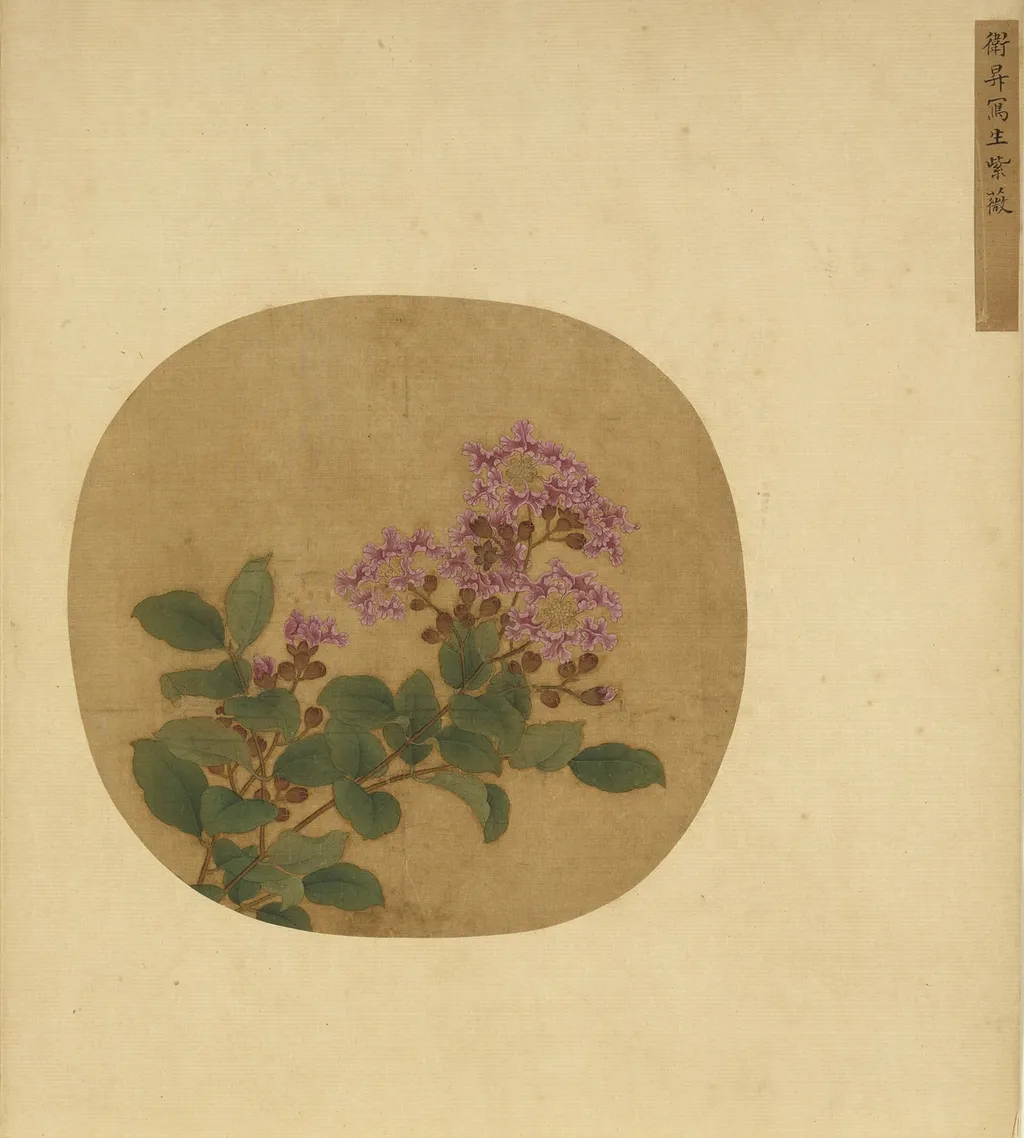
Crape Myrtle Sketched from Life is an unspecified painting by the Song dynasty landscape artist Wei Sheng. It dates from 1203 and is held in the collection of the National Palace Museum.
About this work
Overview
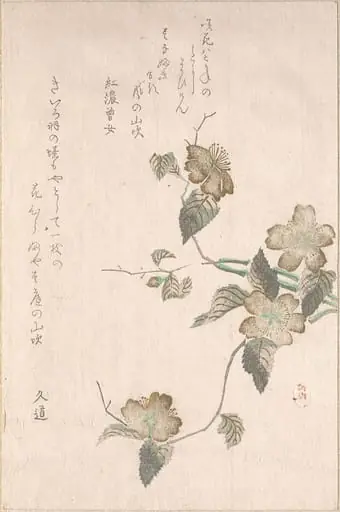
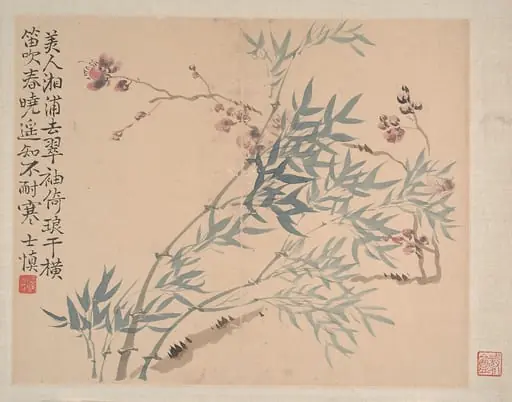
Created in 1203 by the artist Wei Sheng, this ink-on-paper painting captures a single branch of crape myrtle in meticulous detail. Rendered with quiet precision, the work belongs to a tradition of observational naturalism in Southern Song dynasty art. It is currently preserved in the collection of the National Palace Museum, where it stands as a quiet example of botanical study through painting.
Subject & Meaning
The painting focuses on a flowering branch of crape myrtle, depicted with botanical accuracy. The arrangement of small purple blooms and oval, pointed leaves suggests a moment of natural growth rather than idealized form. Rather than symbolic allegory, the work emphasizes direct observation, reflecting a scholarly appreciation for the subtle rhythms of the natural world.
Technique & Style
Executed in fine ink lines and subtle washes, the painting employs delicate brushwork to define each petal and leaf.
Executed in fine ink lines and subtle washes, the painting employs delicate brushwork to define each petal and leaf. The artist avoids bold outlines, instead using gradations of tone to suggest volume and spatial depth. The composition is centered yet asymmetrical, allowing the branch to extend naturally across the paper, embodying the restrained elegance characteristic of Southern Song ink painting.
History & Provenance
The painting was completed in 1203 during the Southern Song period and has remained within imperial collections since at least the Ming dynasty. It entered the National Palace Museum’s holdings following the relocation of artifacts from Beijing to Taipei in the mid-20th century. Its continuous preservation suggests it was valued as a refined example of scholarly painting.
Context
In early 13th-century China, artists increasingly turned to close study of plants and animals as part of a broader intellectual movement valuing empirical observation. This work aligns with court-sponsored naturalist projects and reflects the influence of Daoist and Confucian ideals that saw nature as a source of moral and aesthetic truth.
Legacy
Crape Myrtle Sketched from Life exemplifies a tradition of botanical illustration that influenced later generations of Chinese painters and naturalists. Its restrained aesthetic and attention to detail became a model for scientific and artistic renderings of flora, contributing to the enduring legacy of Song dynasty naturalism in East Asian art.
Own this work as a print
Artist & collection
Artist
Wei Sheng carried a bamboo brush like a traveler’s walking stick, sketching wherever he stopped, tea houses, temple steps, the bark of a crape myrtle in full bloom.