Artwork
明/清 王鐸 山水圖 軸|Landscape
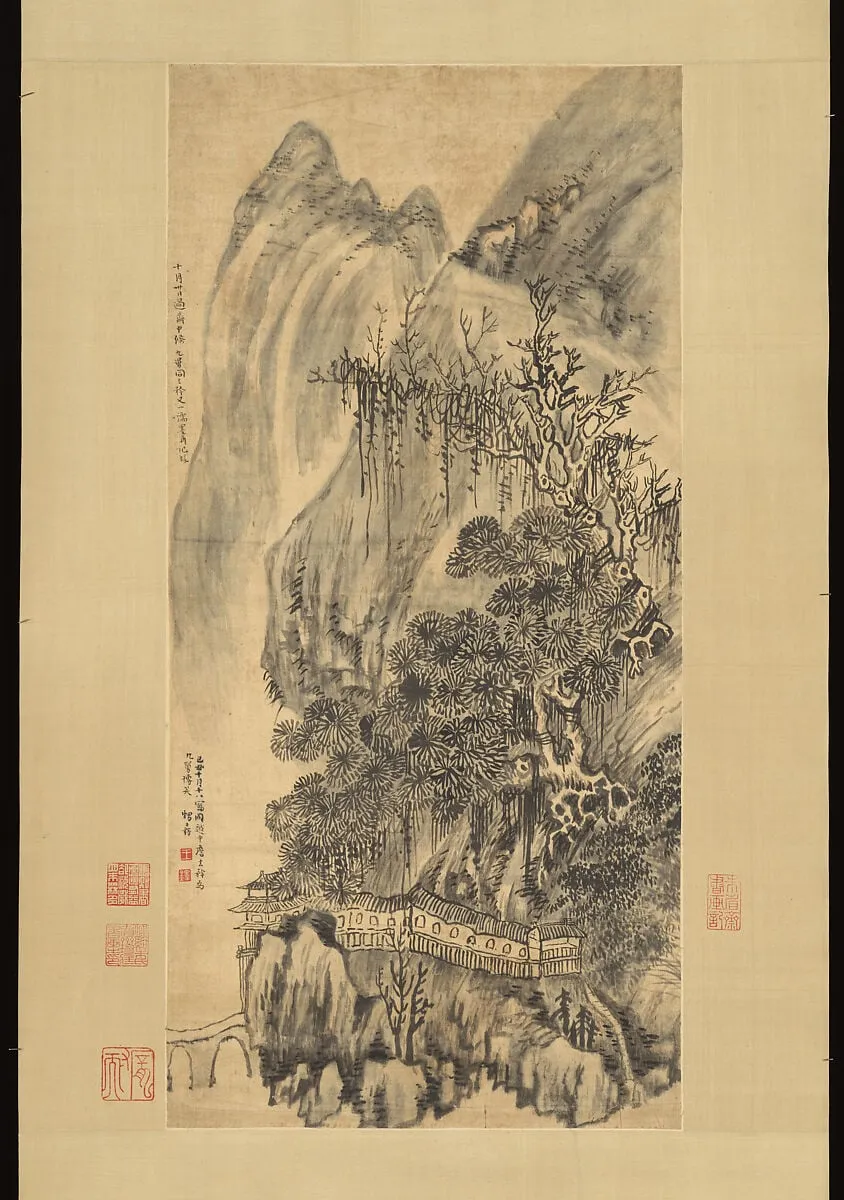
明/清 王鐸 山水圖 軸|Landscape is an ink painting by the Baroque artist Wang Duo. It dates from 1649 and is held in the collection of the Metropolitan Museum of Art.
About this work
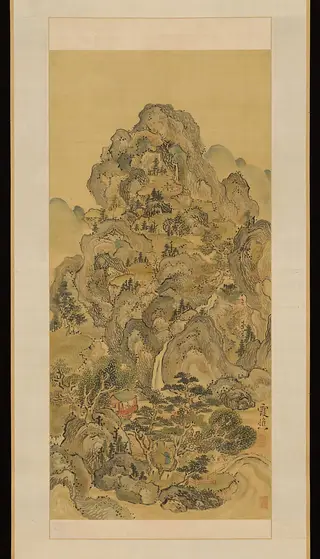
Jagged mountains and misty valleys rise on a tall scroll of ink on satin, a few tiny houses tucked into the folds. Wang Duo painted it in 1649, as the Ming dynasty fell. His brushwork is quick and bold, almost calligraphic, and the empty spaces sit quiet, letting the eye rest before the next peak.
History & Provenance
The hanging scroll titled Landscape was created by Wang Duo in 1649, during the transitional period between the Ming and Qing dynasties.
The hanging scroll titled Landscape was created by Wang Duo in 1649, during the transitional period between the Ming and Qing dynasties. Executed in ink on satin, the work originated in China and depicts traditional mountain scenery. It is held in the collection of the Metropolitan Museum of Art in New York, where it is classified within the paintings department as a landscape genre piece depicting mountains.
The available sources do not specify a unique inventory or accession number for the work, nor do they record any past or future exhibition history; the specific commission details and chain of ownership prior to the museum are not documented.
Overview
Wang Duo's Landscape (Shanshui tu) is an ink on satin hanging scroll created in 1649. This painting presents a dynamic mountainous vista, characteristic of traditional Chinese landscape art. The composition guides the viewer through towering peaks, veiled valleys, and subtle signs of human presence, rendered with a distinctive calligraphic brushwork.
Subject & Meaning
The scroll portrays a dramatic natural world, dominated by jagged mountain forms that rise through atmospheric mists. Within this expansive scenery, small, discreet dwellings are nestled into the terrain, suggesting a human connection to the vast environment. The deliberate use of unpainted areas provides visual pauses, allowing the viewer's gaze to navigate the complex topography and experience a sense of tranquility.
Technique & Style
Wang Duo employed a vigorous and expressive brushwork, reminiscent of calligraphic practice, to animate the mountainous forms. This rapid, confident application of ink imbues the landscape with a sense of movement and vitality, rather than static representation. The artist's control over the medium is evident in the varied textures and tonal gradations achieved on the satin surface.
Context
This work was completed in 1649, a pivotal year that marked the collapse of the Ming dynasty and the establishment of the Qing. Created amidst profound political and social upheaval, the painting may reflect the artist's personal response to a changing world. Such turbulent times often inspired artists to explore themes of endurance and retreat within the natural landscape.
Artist & collection

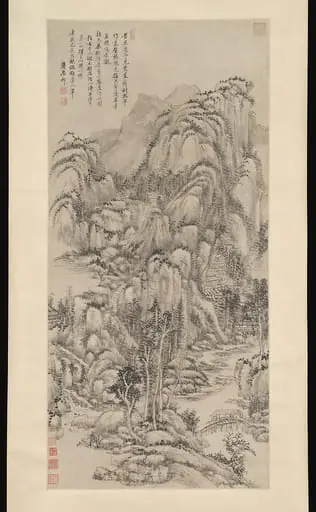
- 清 王原祁 倣吳鎮山水圖 軸|Landscape after Wu Zhen
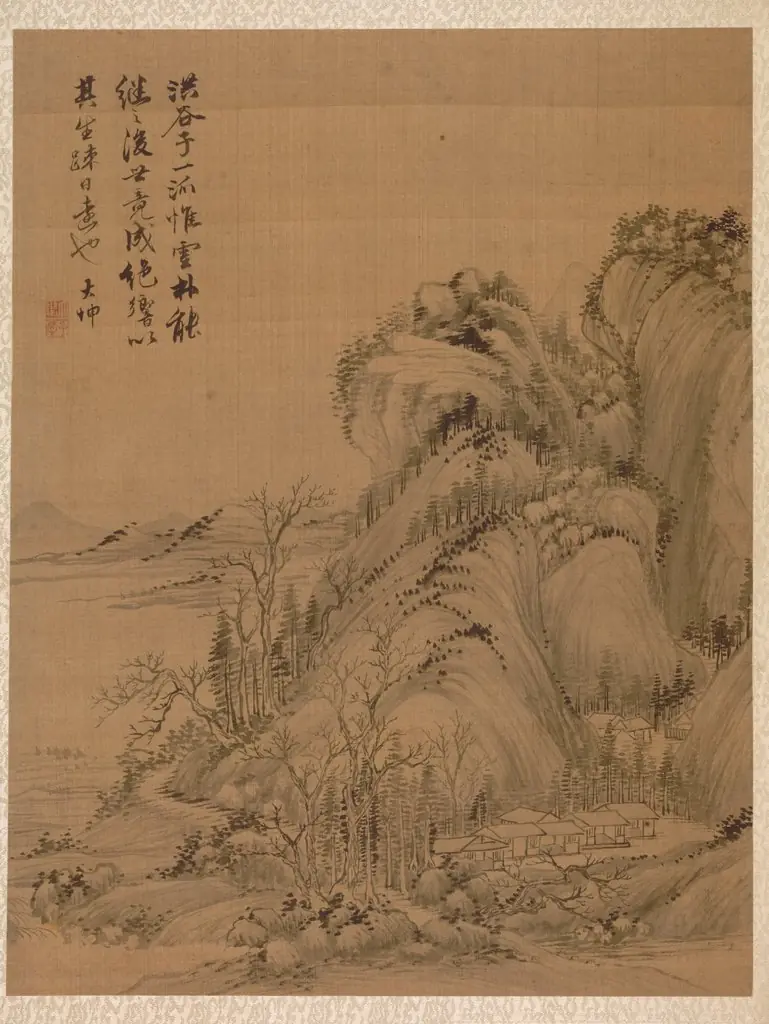 Landscape in the Style of Ching Hao
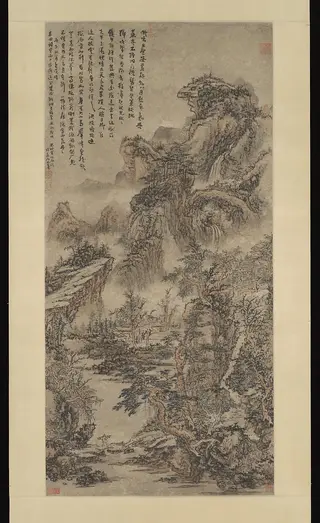 清 倣髡殘 蒸嵐昏巒圖 軸|Wooded Mountains at Dusk
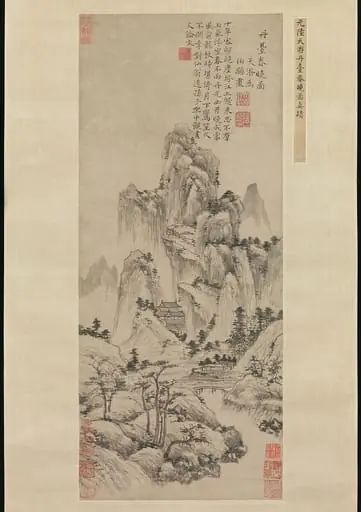 元 陸廣 丹臺春曉圖 軸|Spring Dawn Over the Elixir Terrace
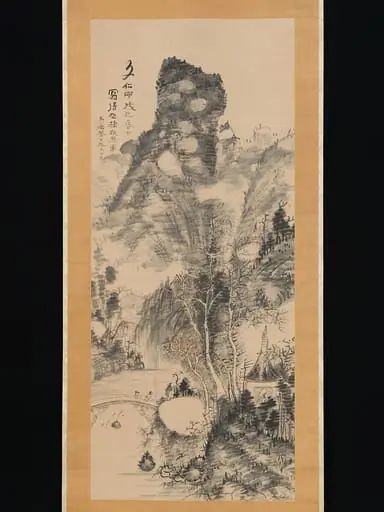 Untitled
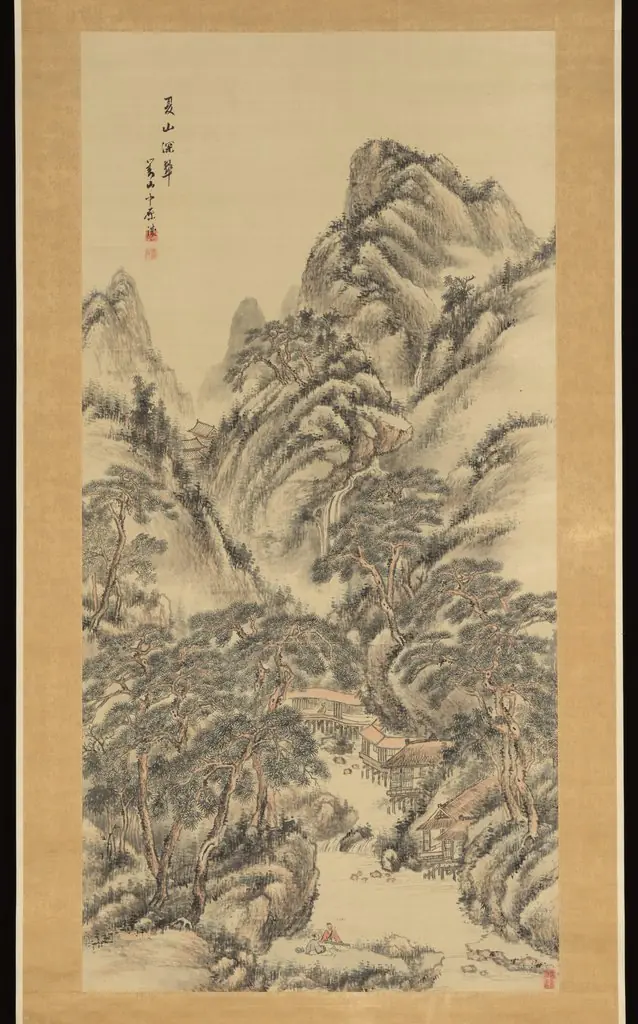 “The Deep Green of Summer Mountains”
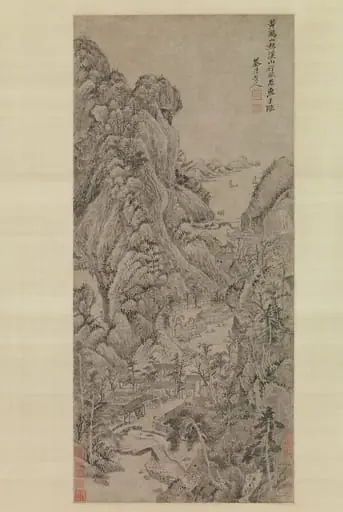 清 吳歷 倣王蒙溪山行旅圖 軸|Travelers among Streams and Mountains
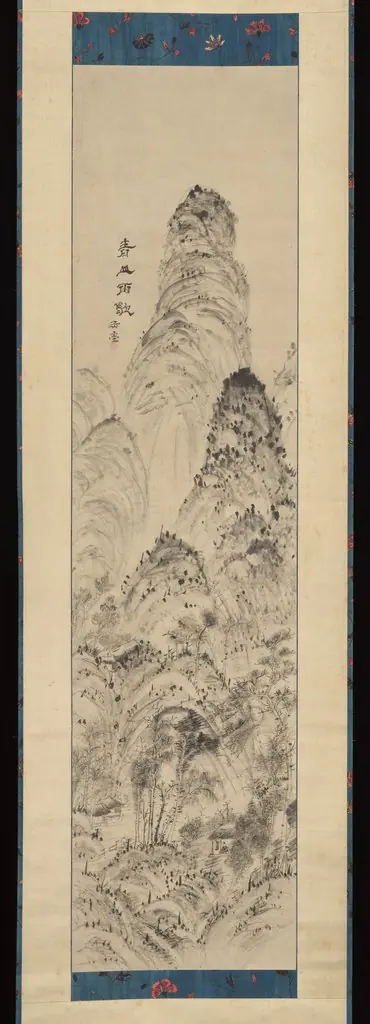 Green Mountains as the Rain Ceases
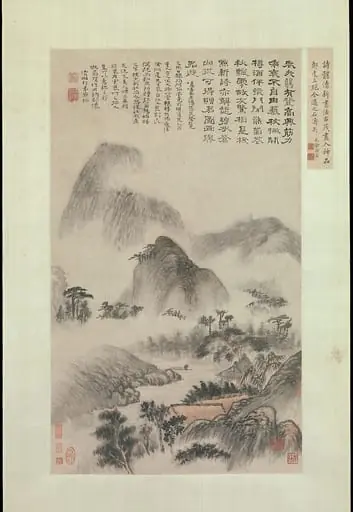 清 石濤(朱若極) 重陽山水圖 軸|Landscape Painted on the Double Ninth Festival
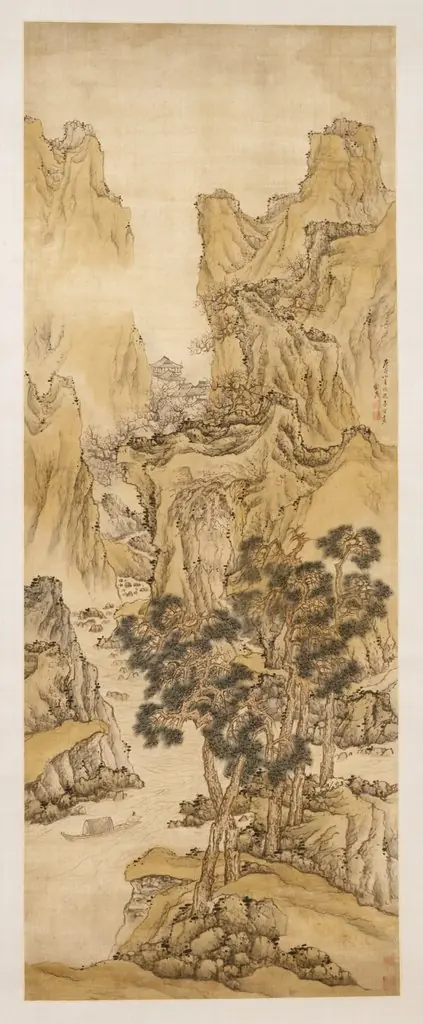 The Peach Blossom Spring
 Untitled
 清 張上龢 山水 軸|Landscape