Artwork
The dice-players
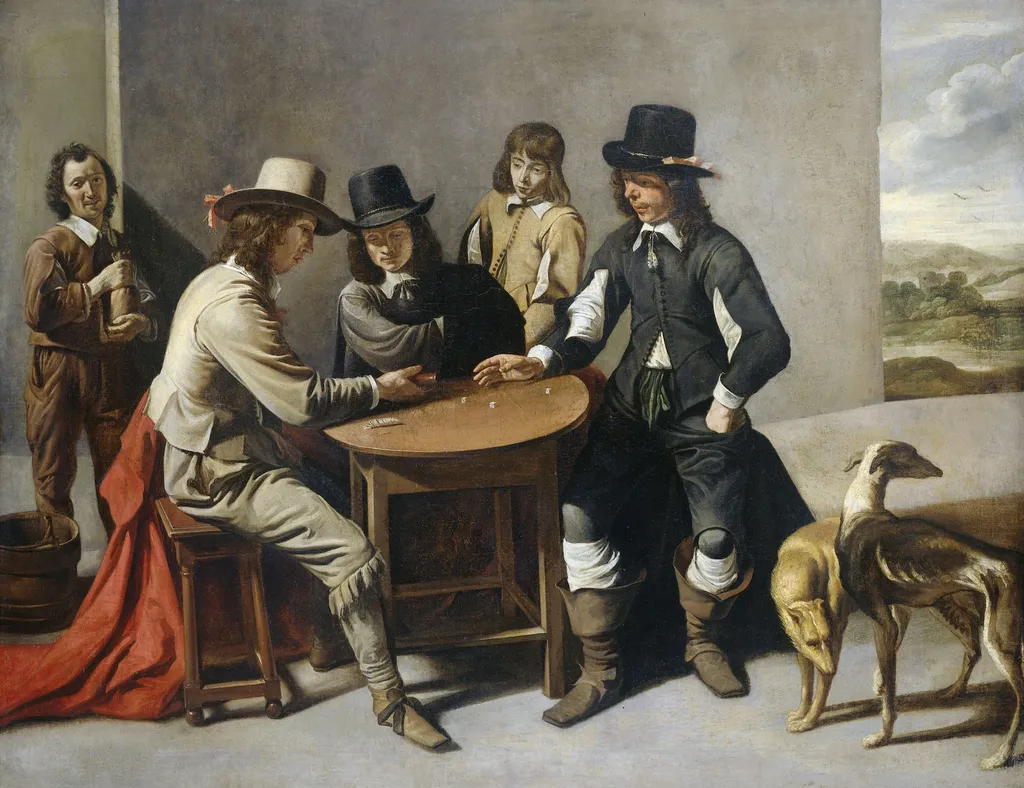
The dice-players is an oil painting by the Dutch Golden Age artist Unknown. It dates from 1650 and is held in the collection of the Rijksmuseum.
About this work
Technique & Style
The medium consists of oil paint applied to the woven canvas, a standard technique for Dutch and French genre paintings of the mid-seventeenth century.
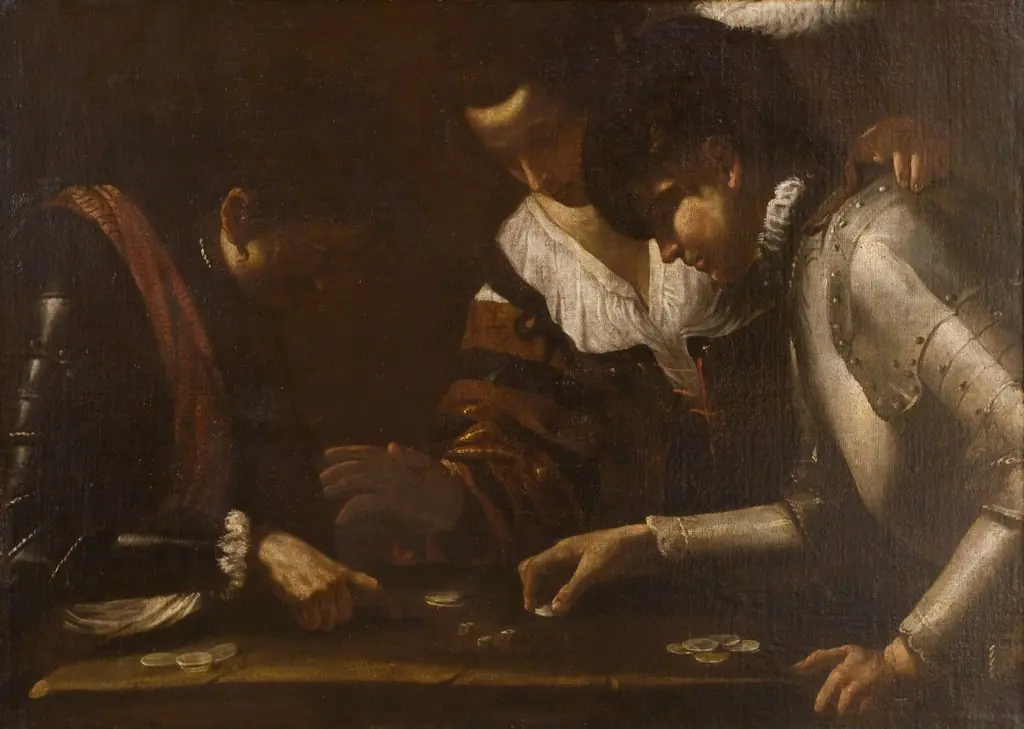
The dice-players is an oil painting executed on a canvas support. Created in 1650, the work measures 93 cm in height and 119.7 cm in width. Classified as a genre scene, the piece depicts figures engaged in the act of playing dice, reflecting the artistic focus on everyday life characteristic of the period.
The medium consists of oil paint applied to the woven canvas, a standard technique for Dutch and French genre paintings of the mid-seventeenth century.
History & Provenance
The painting known as The Dice-Players was created in 1650. Executed in oil on canvas, the work is attributed to a follower of Mathieu Le Nain rather than the master himself. The piece measures 93 cm in height and 119.7 cm in width.
It is currently held in the collection of the Rijksmuseum, where it remains on display as an example of genre art from the mid-seventeenth century.
The painting known as The dice-players is held in the collection of the Rijksmuseum in Amsterdam. The work, attributed to a follower of Mathieu Le Nain and dated to 1650, is executed in oil on canvas with dimensions of 93 cm in height and 119.7 cm in width. The provided sources do not contain specific inventory or accession numbers for the piece, nor do they list any exhibition history.
Context
The painting attributed to a follower of Mathieu Le Nain depicts figures engaged in dice play and was likely created around 1650. It is housed in the Rijksmuseum collection and exemplifies Dutch Golden Age genre painting, emphasizing everyday scenes with meticulous detail. The work's composition and technique reflect the influence of earlier genre masters while contributing to the development of group portraiture and narrative realism in 17th-century Dutch art.
Scholarship highlights its significance as a representative example of genre scenes that documented bourgeois leisure activities, offering insights into social dynamics of the period. Its stylistic analysis continues to inform studies on artistic workshops and the transmission of motifs within Dutch painting traditions.
Legacy
The work has been linked to the development of Dutch genre painting, influencing later artists who emphasized everyday scenes and meticulous detail. Its presence in the Rijksmuseum collection has ensured continued public visibility and scholarly attention, reinforcing its reputation as an exemplar of 17th-century Dutch realism.
Overview
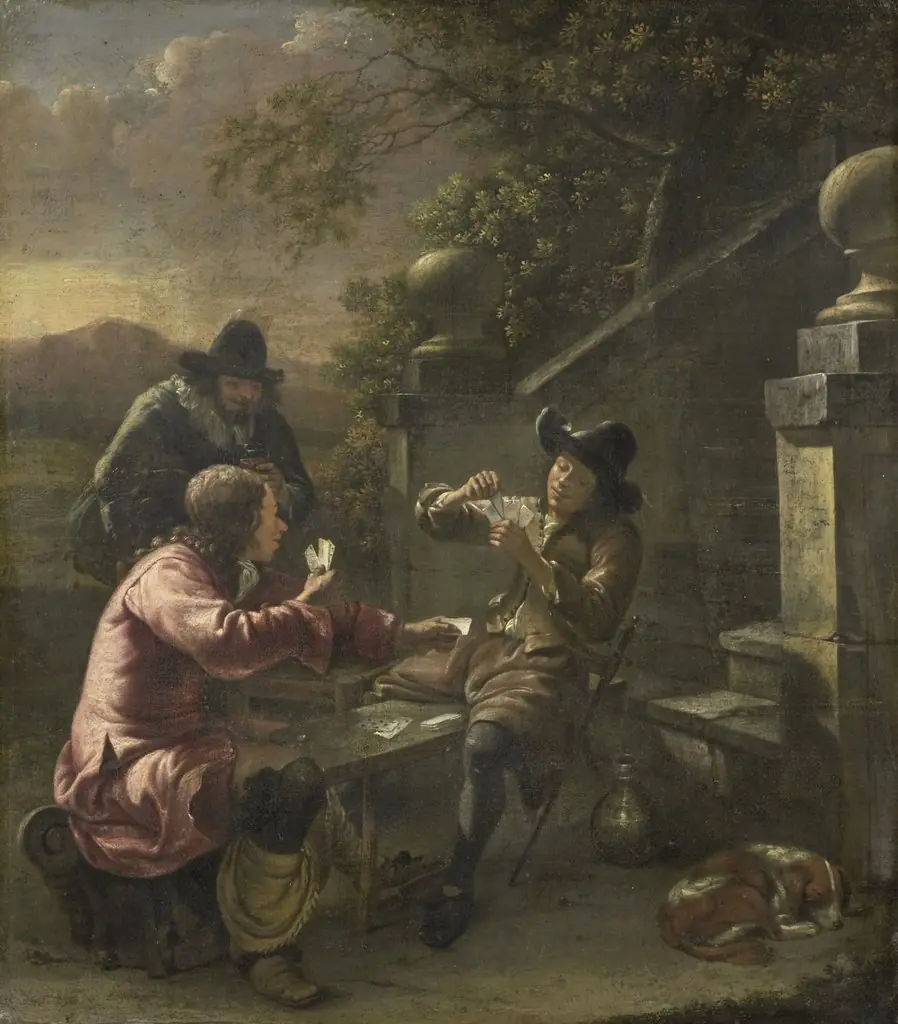
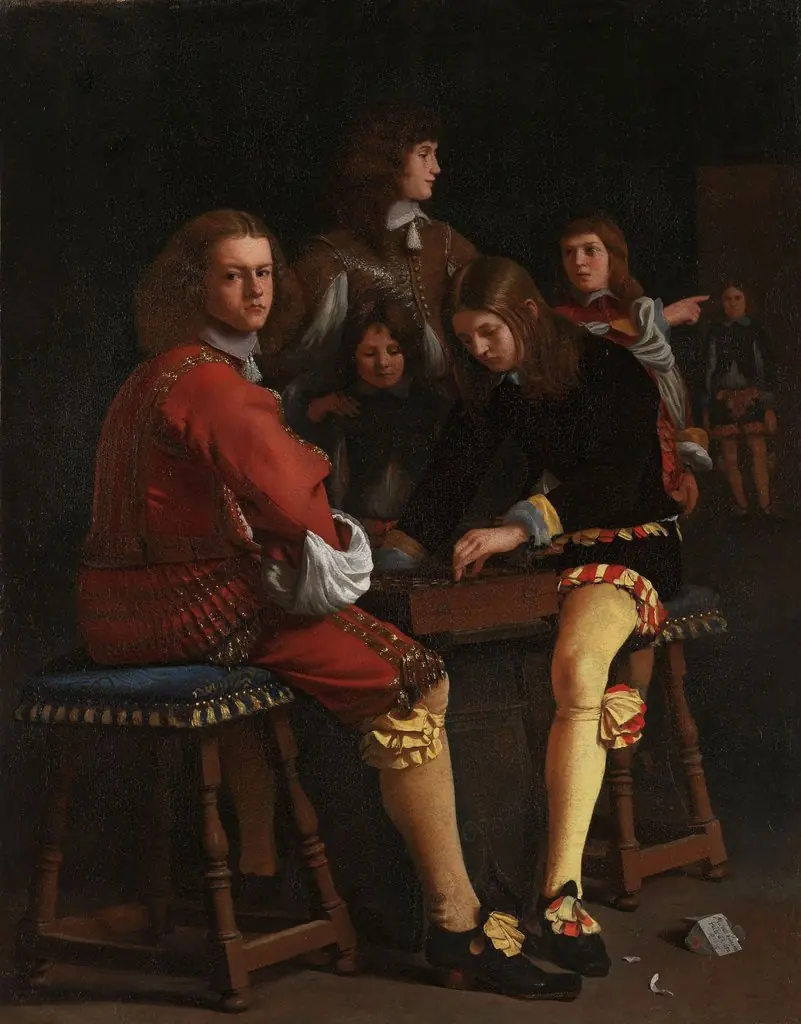
The Dice-Players is an oil painting depicting a scene of five men and a dog gathered around a wooden table, absorbed in a game of dice, set against the backdrop of 17th-century attire and casual social interaction.
Subject & Meaning
The painting captures a moment of everyday camaraderie among men from potentially different social strata, suggested by their varied hairstyles and hats, emphasizing a shared leisure activity over individual status.
Artist & collection