Artwork
Wind-Swept Sands
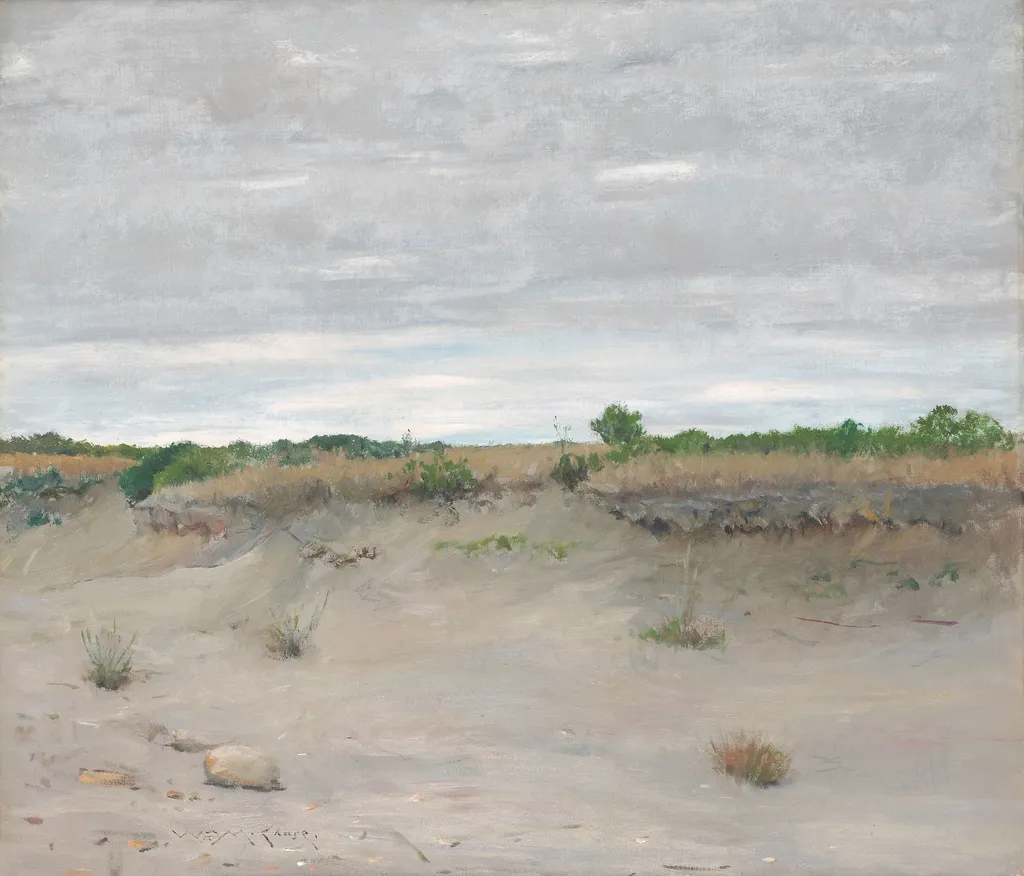
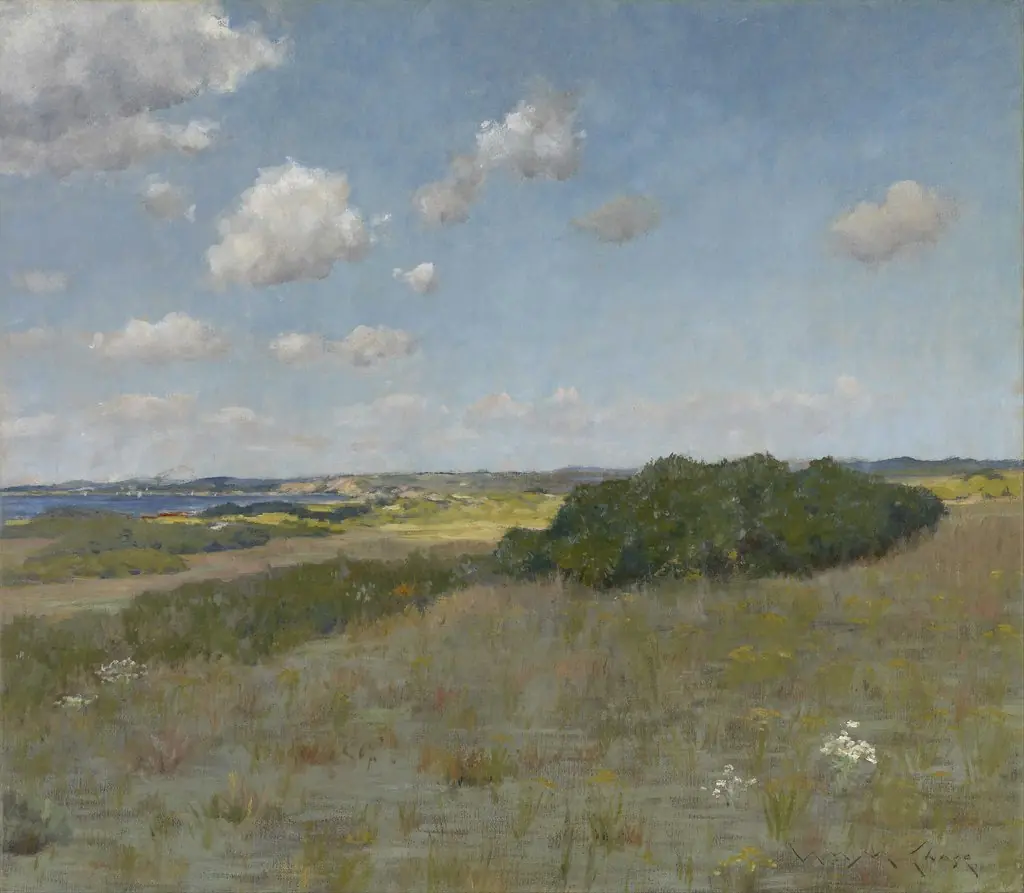
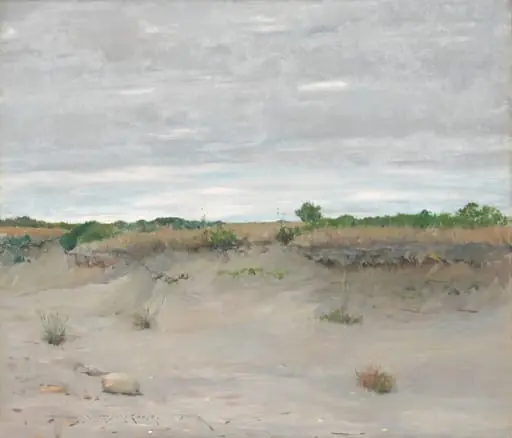
Wind-Swept Sands is an oil painting by the American Impressionist artist William Merritt Chase. It dates from 1898 and is held in the collection of the Art Institute of Chicago.
About this work
Overview
It stands as a significant example of Chase's landscape practice and his adaptation of French Impressionist methods to American subjects.
Wind-Swept Sands is an oil-on-canvas landscape painted in 1894 by the American artist William Merritt Chase. Measuring 87 by 101.5 centimeters, the work depicts the sandy coastal terrain of Long Island, New York, near the Shinnecock Summer Art School where Chase was an influential teacher. The painting is held in the collection of the Art Institute of Chicago, acquired in 1991, and is catalogued under accession number 1991.249. It stands as a significant example of Chase's landscape practice and his adaptation of French Impressionist methods to American subjects.
Subject & Meaning
The painting presents an unpopulated coastal landscape dominated by wind-sculpted sand dunes that occupy the lower two-thirds of the canvas. Sparse tufts of grass, scattered small stones, and a band of golden-brown vegetation separate the pale foreground from a distant line of green shrubs and low trees. The vast, overcast sky fills the upper portion, with layered gray clouds broken by patches of lighter areas near the horizon. No human or animal figures disturb the scene. The iconography emphasizes the raw, transient qualities of coastal nature, wind and weather as active sculpting forces, and the particular character of the Shinnecock landscape. The restrained palette of muted grays, beiges, dull greens, and soft browns reinforces a mood of quiet solitude and atmospheric subtlety rather than dramatic sublime effect.
Technique & Style
Chase executed Wind-Swept Sands in oil on canvas, employing techniques derived from French Impressionist practice. The brushwork is visible and loose: rapid strokes define the dunes and vegetation, while thinner washes create the overcast sky. The overall gray tone unifies the composition and indicates cloudy weather conditions. Textured application characterizes the grassy areas, contrasting with the more blended handling in the sky. The matte, atmospheric finish minimizes contrast between elements, creating a cohesive tonal field. The low horizon line and expansive sky treatment emphasize the flatness and openness of the coastal plain. This approach reflects Chase's commitment to painting outdoors to capture natural light and changing conditions, a pedagogical principle he instilled at the Shinnecock Summer Art School.
History & Provenance
Chase painted Wind-Swept Sands in 1894 as part of his sustained engagement with the Shinnecock landscape between 1891 and 1902. The Art Institute of Chicago acquired the painting in 1991 through multiple funding sources: Mrs. Eric Berg provided funds in honor of Milo M. Naeve; additional support came from the Friends of American Art, R. H. Love Galleries funds, the Walter Aitken Endowment, and prior acquisitions of the Charles H. and Mary F. S. Worcester Collection. The work is signed recto, bottom-left, on the ground, in dark paint: "Wm M. Chase." It is catalogued in Ronald G. Pisano's complete catalogue of Chase's oil landscapes as number L192, and was illustrated as plate 54 in Barbara Dayer Gallati's 1999 Brooklyn Museum exhibition catalogue. The painting was featured in The Age of American Impressionism: Masterpieces from the Art Institute of Chicago in 2011. As of the museum's last update, the work was listed as currently off view.
Legacy
Wind-Swept Sands occupies an important place within Chase's oeuvre as a document of his most sustained landscape project and as evidence of his pedagogical influence on American art. The painting's afterlife is tied to institutional preservation and scholarly attention: its inclusion in Ronald G. Pisano's authoritative catalogue raisonné, its illustration in Barbara Dayer Gallati's exhibition catalogue, and its acquisition by the Art Institute of Chicago have secured its place in the literature on American Impressionism. The work continues to serve as a reference point for understanding Chase's technical methods, his adaptation of European Impressionist approaches to American subjects, and the cultural significance of the Shinnecock art colony. Its presence in major museum collections and scholarly publications ensures ongoing visibility, even as its physical display status fluctuates.
Own this work as a print
Artist & collection

Artist
William Merritt Chase (November 1, 1849 – October 25, 1916) was an American painter, known as an exponent of Impressionism and as a teacher.