Artwork
The Old Road to the Sea
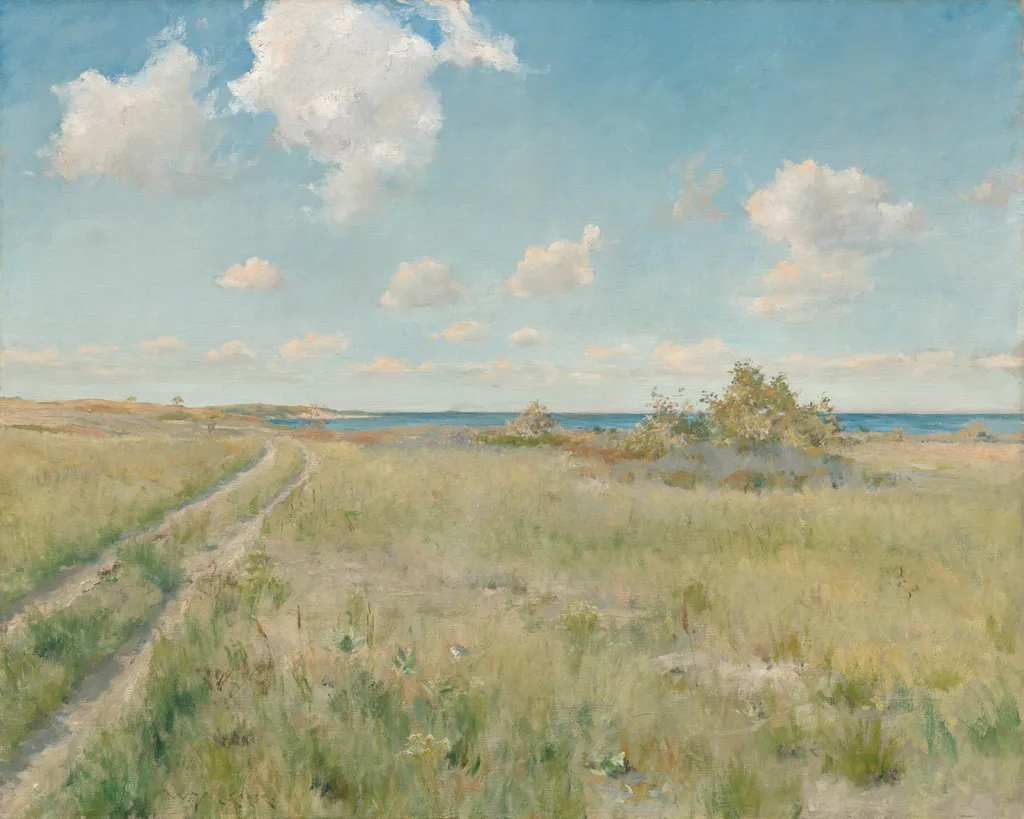
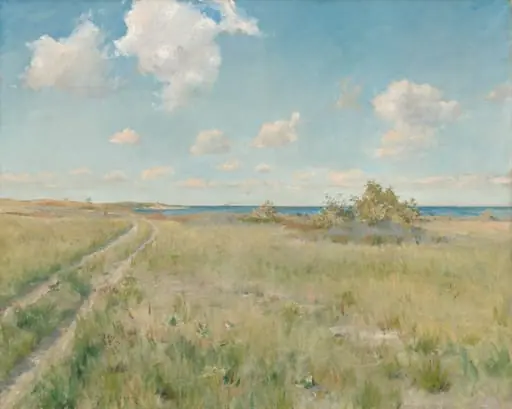
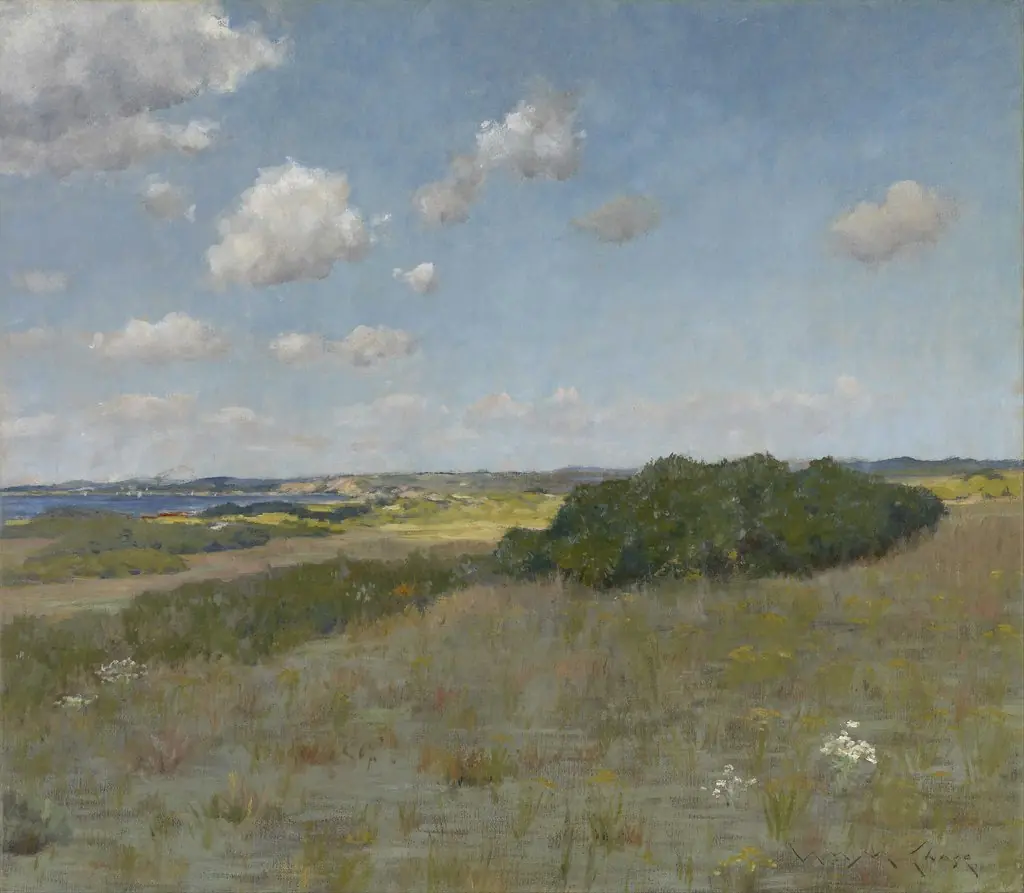
The Old Road to the Sea is an oil painting by the American Impressionist artist William Merritt Chase. It dates from 1897 and is held in the collection of the Cleveland Museum of Art.
About this work
Technique & Style
Forms dissolve into atmospheric effect, aligning with Chase’s Tonalist tendencies of the early 1890s.
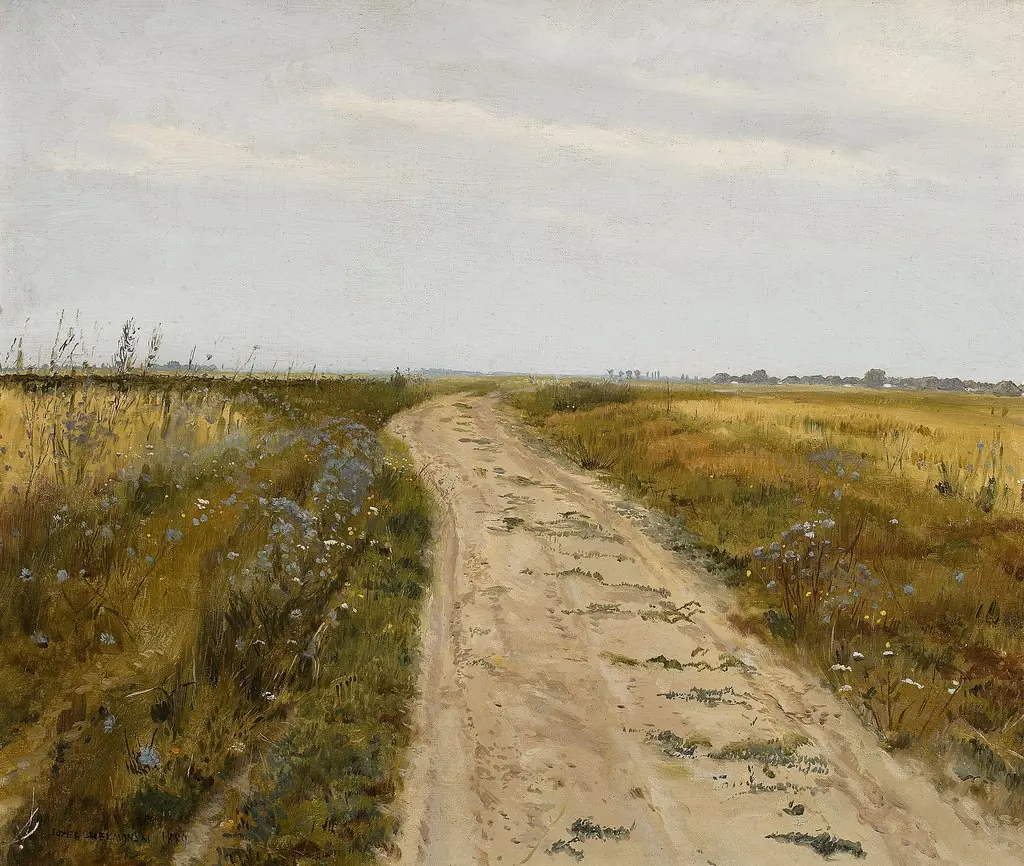
Executed in oil on canvas in 1893, the work employs a fluid handling of paint typical of Chase’s late plein-air manner, with loose, broken brushwork that registers light and atmosphere rather than detailed description. The composition organizes the winding coastal path and low horizon through a muted palette of silvery greys, soft greens, and earthen browns, emphasizing tonal harmony over local color. Forms dissolve into atmospheric effect, aligning with Chase’s Tonalist tendencies of the early 1890s.
The canvas measures 101.5 cm in height by 127.0 cm in width and remains in the collection of the Cleveland Museum of Art (accession 1938.333).
History & Provenance
The Old Road to the Sea is an oil painting by William Merritt Chase, dated 1893, when it was completed in the United States. According to the work's cataloguing, the painting entered the Cleveland Museum of Art collection under the accession number 1938.333, suggesting it was acquired by the museum in 1938. The sources do not provide further details on commission, intermediate ownership, or prior collecting history prior to that acquisition, nor do they specify the circumstances of its creation beyond the 1893 inception date.
William Merritt Chase's 1893 landscape painting, The Old Road to the Sea, is held in the permanent collection of the Cleveland Museum of Art in Cleveland, United States. The work is cataloged under the accession number 1938.333. The museum acquired the oil-on-canvas piece, which measures 101.5 cm in height and 127.0 cm in width, as part of its holdings. No specific exhibition history is detailed in the provided sources.
Overview
William Merritt Chase created The Old Road to the Sea in 1897, employing oil paint to capture a serene landscape. This painting exemplifies the artist's engagement with American Impressionism, characterized by its focus on light and atmospheric effects. The work is currently part of the collection at The Cleveland Museum of Art, representing a significant aspect of Chase's output.
Subject & Meaning
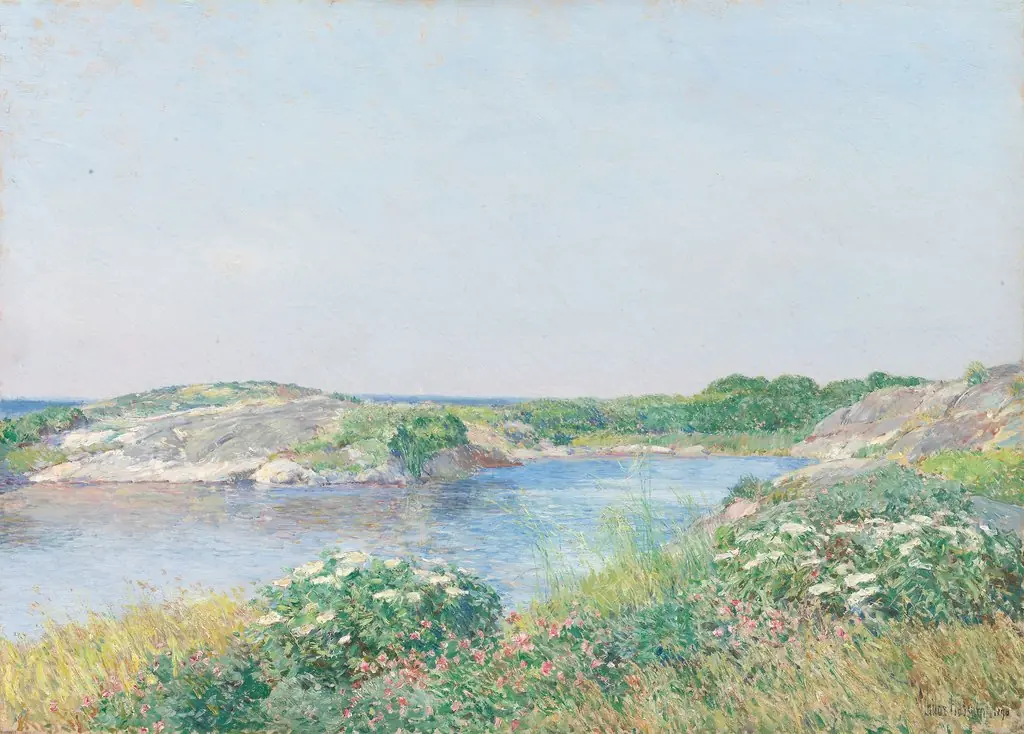
The painting depicts a tranquil scene, centered on a winding dirt path that recedes into the distance. Flanked by tall, dry grasses and dotted with small bushes and wildflowers, the path leads towards a softly defined horizon where land meets a distant body of water. A bright blue sky, adorned with fluffy white clouds, contributes to the overall peaceful and expansive atmosphere of the coastal landscape.
Context
William Merritt Chase was a prominent figure in American art during the late 19th and early 20th centuries, recognized for his contributions to American Impressionism. Beyond his painting practice, he was an influential educator, shaping a generation of artists. Chase established the Chase School, an institution that later evolved into the Parsons School of Design, underscoring his lasting impact on art education.
Own this work as a print
Artist & collection
Artist
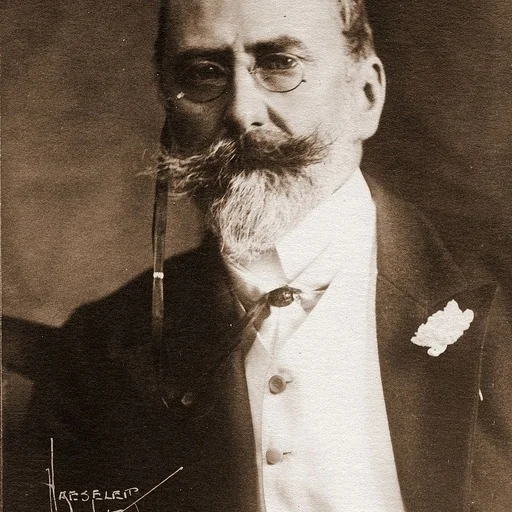
William Merritt Chase (November 1, 1849 – October 25, 1916) was an American painter, known as an exponent of Impressionism and as a teacher.