Artwork
Mount Chocorua and Lake
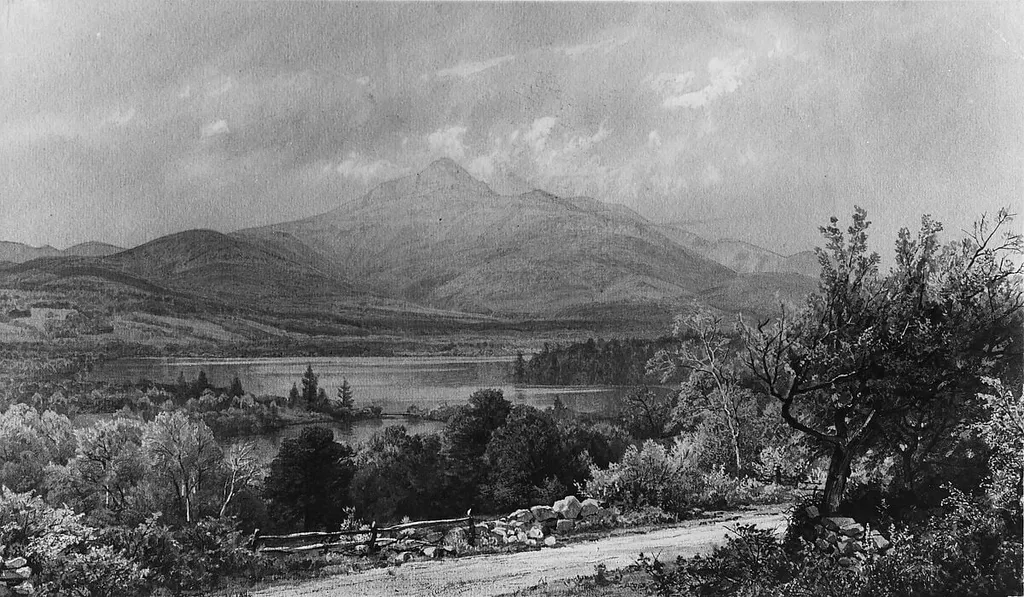
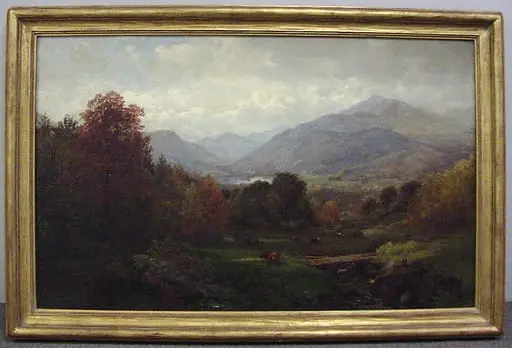
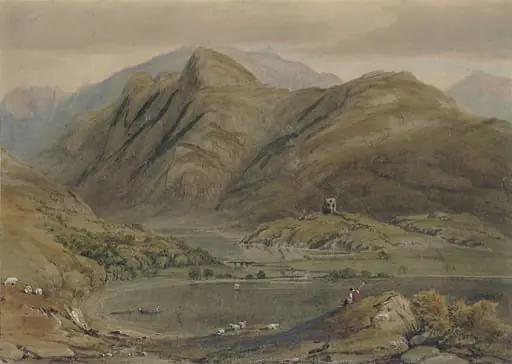
Mount Chocorua and Lake is a watercolor work on paper by the Hudson River School artist William Trost Richards. It dates from 1873 and is held in the collection of the Metropolitan Museum of Art.
About this work
Subject & Meaning
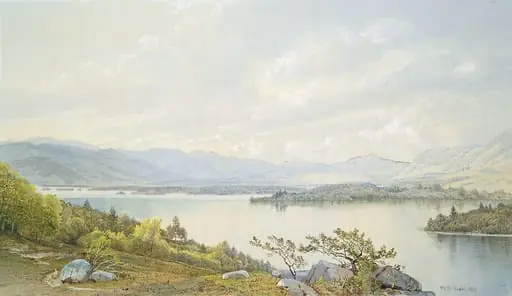
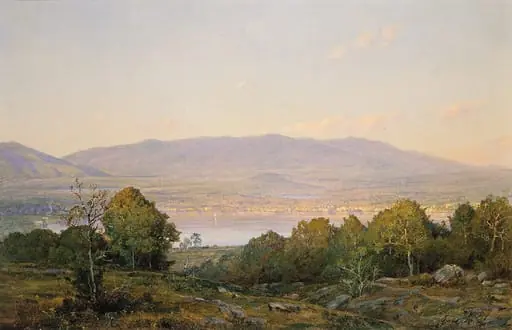
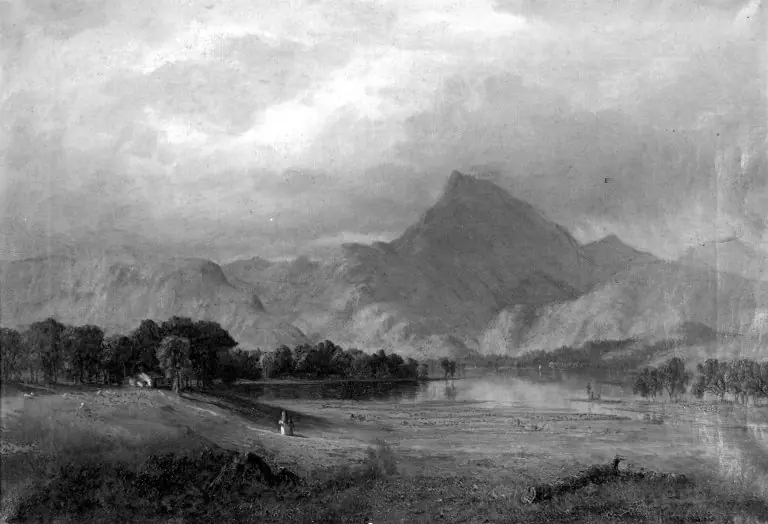
Created in 1873, William Trost Richards's work presents a landscape centered on Mount Chocorua and an adjacent lake.
Created in 1873, William Trost Richards's work presents a landscape centered on Mount Chocorua and an adjacent lake. The composition incorporates natural elements such as trees alongside the prominent mountain and body of water. As a piece classified within the landscape genre, the artwork focuses on the direct depiction of these specific geographic and botanical features found in the region.
The visual narrative is constructed through the arrangement of these topographical subjects on gray-green wove paper, utilizing watercolor, gouache, and graphite to render the scene.
Technique & Style
Mount Chocorua and Lake is executed in watercolor, gouache and graphite on a gray‑green wove paper support, a combination that allows layered translucency and fine linear detail. The work belongs to the landscape genre and is classified within The American Wing, reflecting Richards’s interest in precise natural observation. Its composition balances a rugged mountain peak with a reflective lake and a solitary tree, rendered with delicate tonal modulation and careful edge definition characteristic of Richards’s mature watercolor technique. The dimensions measure 20.8 cm in height by 36.2 cm in width.
History & Provenance
The watercolor Mount Chocorua and Lake by William Trost Richards was created in 1873. Executed in watercolor, gouache, and graphite on gray-green wove paper, the work measures 20.8 cm in height and 36.2 cm in width. It currently resides in the collection of the Metropolitan Museum of Art within its American Wing.
The painting depicts the landscape of Mount Chocorua, a lake, and trees. While the specific commission details and the complete chain of ownership prior to its museum acquisition are not detailed in the provided records, the work is firmly dated to 1873 and attributed to Richards.
Mount Chocorua and Lake is held by the Metropolitan Museum of Art, where it is classified within The American Wing.
The work was acquired as part of the museum's collection of American art, and no specific accession number, credit line, or donor is recorded in the available sources. Likewise, no exhibition history is documented beyond its current placement at the Metropolitan Museum of Art.
Context
William Trost Richards painted Mount Chocorua and Lake in 1873, a watercolor combining gouache and graphite on gray‑green paper that measures 20.8 × 36.2 cm. The work is classified as a landscape and is part of The American Wing at the Metropolitan Museum of Art, where it is displayed alongside other 19th‑century American scenery. Its subject combines a distinctive New England peak with a reflective lake, a motif that recurs in Richards’s oeuvre and underscores his precision in rendering natural detail. Scholars have noted the piece as an exemplar of Richards’s mature style, reflecting his engagement with the topography of the United States and his contribution to the development of American landscape watercolor in the post‑Civil War era.
Overview
Painted in 1873, Mount Chocorua and Lake is a watercolor, gouache, and graphite work on gray-green wove paper by William Trost Richards. The composition depicts the New Hampshire landscape featuring a tranquil lake bordered by dense, dark pine forests, with the pale, craggy summit of Mount Chocorua rising in the background beneath a soft, expansive sky. Richards employs a technique of tiny, layered strokes, applying watercolor and gouache over a graphite underdrawing.
The choice of gray-green wove paper allows the support to show through the translucent washes, creating a hazy, atmospheric glow characteristic of his mature style. Executed outdoors, the work reflects Richards' commitment to direct observation and the precise rendering of light and geological detail. As a leading figure of the Hudson River School, Richards moved away from the grandiose romanticism of his predecessors toward a more intimate, scientifically observant approach to nature.
This piece exemplifies his transition into a refined realism that balances meticulous botanical and topographical accuracy with a poetic sensitivity to the American wilderness.
Artist & collection